Blog Empowering Youth and Women through Land Restoration: A Grassroots Story

The Alliance of Bioversity International and CIAT - in partnership with SoS Sahel Ethiopia, through the Diversification in East and Southern Africa (Ukama Ustawi) initiative - placed a groundbreaking focus on capacity building and market-oriented improved forage cultivation integration with land restoration efforts in the Hawassa Zuria District of the Sidama Region.
By: Yodit Balcha, Regassa Bekele, Kalkidan A. Mulatu, Eyuel Girmay, and Kenneth Waluse
The engagement exemplifies how environmental restoration and sustainable livelihoods can go hand in hand, by showcasing an approach where community-driven initiatives can simultaneously restore degraded lands and create sustainable livelihoods. By placing youth and women at the center, this serves as a scalable model for achieving environmental restoration and improved livelihoods. With continued collaboration and support, this approach can scale to inspire similar efforts across Ethiopia and beyond, building a more sustainable and prosperous future.
The Goljamo Rehabilitation Site: A Model for Sustainability
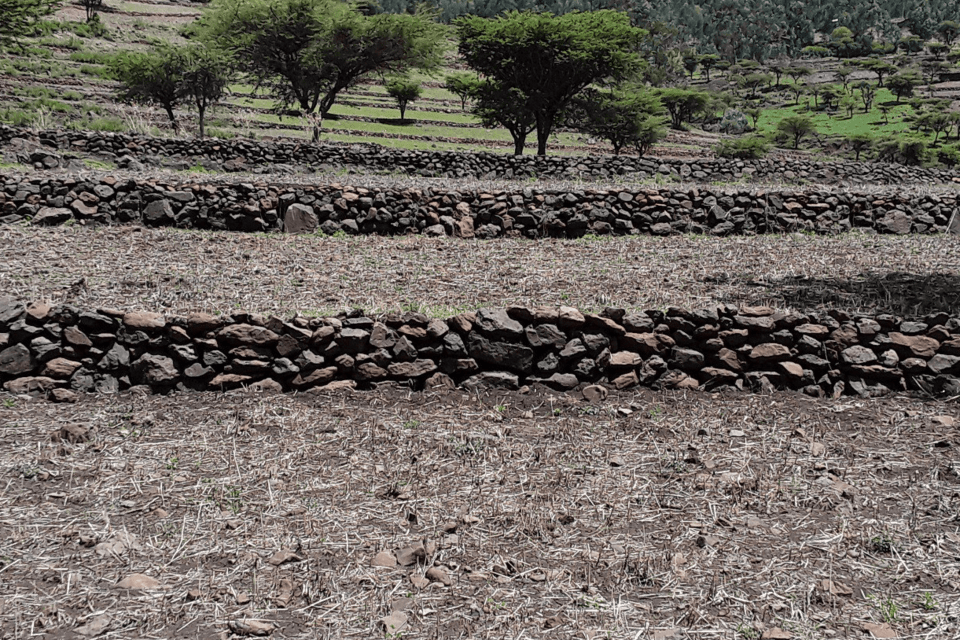
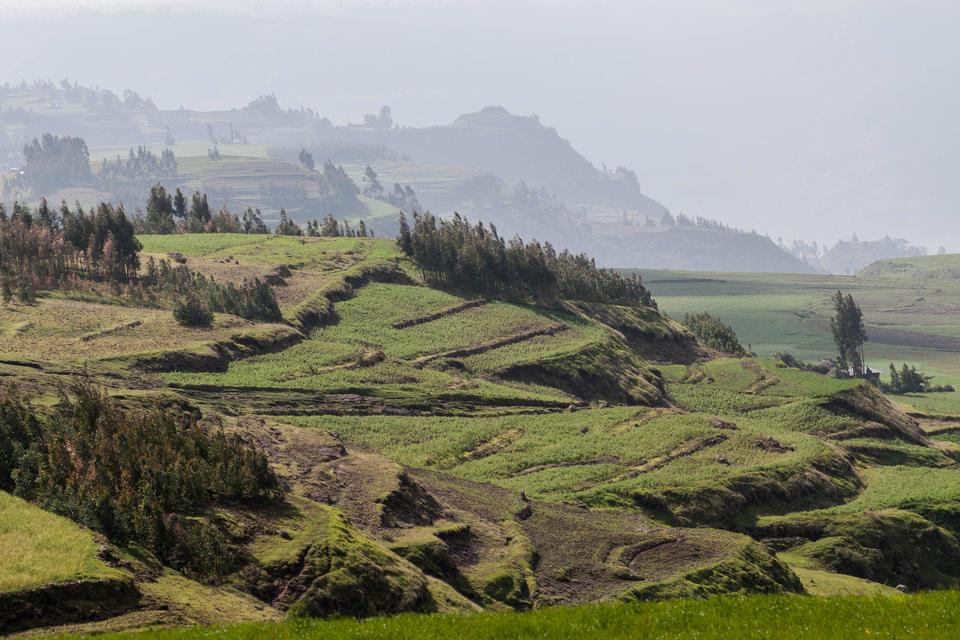
Land degradation is a critical concern to the natural environment and productivity of the agricultural sector of the Sidama region, due to heavy soil erosion, nutrient depletion, and gully formation. In addition, the region is among one of the most densely populated regions in the county. To reverse land degradation, large-scale efforts are being carried out by the government through physical and water conservation (SWC) work, integrating biological options with SWC platforms, and area closure. Some of these efforts also aim to benefit youth and women from such restored landscapes. Our partner, SoS Sahel, supported this effort from 2009 to 2020 by providing material contributions such as seedlings and hand machinery for ploughing, planting and sawing, as well as training youth and women groups in cooperative organization, management, bookkeeping and financial literacy. However, the benefits achieved have fallen short of their potential due to gaps in production capacity, the absence of an appropriate business model and a lack of a strong cooperative system. In particular, over the past four years since the completion of the SoS Sahel project, the youth group has become semi-functional due to high member turnover, limited follow-up and inadequate support.
Following a comprehensive needs assessment in July 2024, tailored capacity-building programs were launched through Training of Trainers (ToT) sessions and cascading trainings in October and November 2024, respectively.
A key partner in these efforts is the Beke Genet Mountain rehabilitation youth group, which has been active since 2010 in rehabilitating the Goljamo rehabilitation site. This youth group serves as a model for integrating land restoration with income generation, demonstrating the potential for scalability across Ethiopia and beyond.
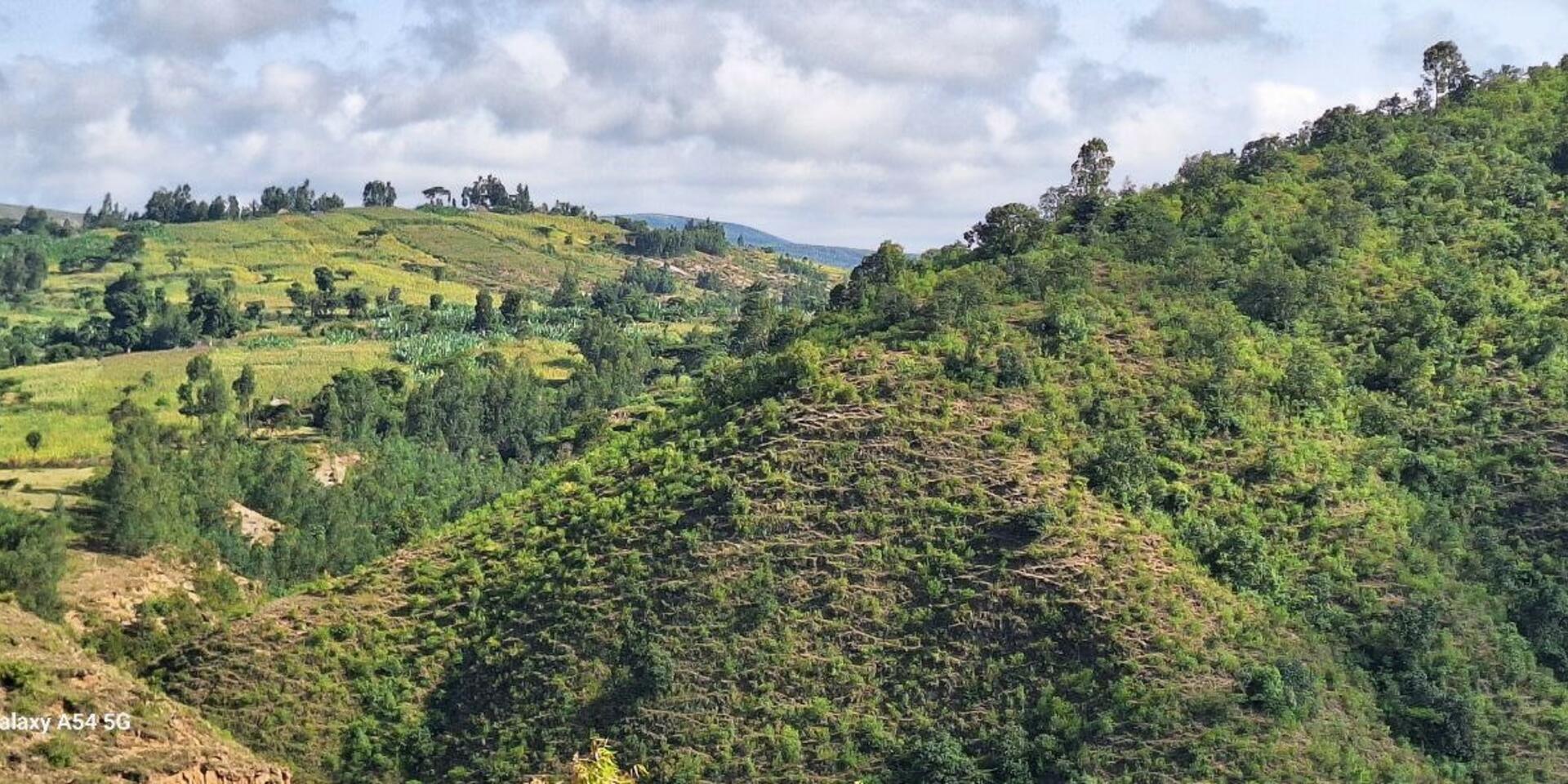
Located in Dala Samo village, Beke Lalima Kebele, the Goljamo rehabilitation site spans 113 hectares and is managed collectively by the youth group. With 520 members (260 men and 260 women aged 18–30), the group holds a green certification deed granted by the regional government under a long-term lease. Guided by a 13-member management committee, the group actively protects the land, implements restoration measures and engages in sustainable agribusiness activities.
Recognizing the youth group's dedication and cooperative membership, SoS Sahel, the district cooperative and extension offices, and the Alliance collaborated to develop and deliver training programs that combine environmental and economic benefits to local communities. The initiative equips participants with the necessary tools and knowledge for delivering sustainable business models that align with land restoration efforts.
The Intervention: Capacity Building for Sustainable Livelihoods
The capacity-building program, co-developed with consultation and inputs from the regional cooperative office, Hawassa University and SoS Sahel Ethiopia, integrates local knowledge and feedback to address specific needs. The training modules focused on key areas, including:
- Market-oriented forage production,
- Beekeeping,
- Entrepreneurship and financial literacy, and
- Cooperative management.
These modules were designed to empower participants to not only enhance their local capacities but also cascade the knowledge to peers, ensuring long-term sustainability in the region.
From Experts to the Grassroots: Training Implementation
The capacity building program was implemented in two phases:
1. Training of Trainers (ToT):
Conducted in October 2024, the ToT sessions brought together district-level livestock, agriculture natural resource, and cooperative offices, development agents (DA), youth members, and and kebele task force members. The training emphasized market-oriented income generation through land restoration, with interactive methods like visual presentations and discussions in Amharic and Sidama for inclusivity. Each group developed action plans to cascade the training to youth group members, ensuring knowledge transfer.
2. Cascading Training:
In November 2024, the cascading training reached 353 youth group members (45% women) from the Beke Genet Mountain rehabilitation youth group. Over two days, participants engaged in modules focused on forage agronomy including forage production and natural resource management, beekeeping, cooperative management, business models and financial literacy. Sessions - delivered in local languages - culminated in a plenary discussion where participants crafted actionable plans for the year ahead to refine the integration of income-generating activities with land restoration efforts.

Figure 2: Cascading training for the Beke Genet Mountain rehabilitation youth group in Dore Bafanna, Hawassa Zuria District, November 2024. Photo Credit: Bekele Regassa
Achievements: A Model for Community-Driven Development
This capacity-building activity has achieved remarkable milestones in empowering and reigniting youth and women action towards reversing land degradation. Key achievements include:
Community Ownership:
The capacity-building activity has successfully empowered local youth and women, enabling them to take active roles in land restoration while creating sustainable livelihoods. A key achievement has been the strong sense of community ownership that was fostered by integrating income-generating activities such as forage production and beekeeping into the restoration process. This ownership has driven local engagement and commitment, ensuring that the project’s impact is long-lasting. Moving forward, the community is poised to lead the way, implementing and scaling these initiatives with continued support, creating a model for sustainable land restoration and economic growth.
Empowerment:
The training program has successfully equipped youth group members with refreshment and new essential skills to engage in successful agribusiness practices, including entrepreneurship, financial literacy, and sustainable land restoration techniques. This empowerment has not only enhanced their ability to manage income-generating activities like forage production and beekeeping but also boosted their confidence in leading community-driven initiatives. Moving forward, these empowered youth groups are well-positioned to implement and expand these practices, driving both environmental restoration and local economic growth.
Collaborative Implementation:
Stakeholders, including SoS Sahel, local offices, and government staff, worked collaboratively to ensure effective coordination, knowledge transfer, and stakeholder buy-in. Moreover, key government staff - including 14 experts and development agents - gained valuable technical knowledge and are now ready to cascade the training to other youth cooperative members in the region. Additionally, five kebele task force members and five bureau heads from various sectors actively engaged, securing buy-in for the integration of land restoration with local income generation efforts.
The Way Forward: Scaling Sustainable Solutions
To sustain and expand the initiative, the youth group - supported by district-level offices and UU partners - has identified key next steps:
- integrating soil and water conservation measures in area closures,
- reseeding improved forage species for specialized forage markets,
- establishing and marketing beekeeping products, and
- protecting restored areas and connecting with markets.
The Team

Yodit Balcha
Climate Change Adaptation| Research Officer II
Kalkidan Ayele Mulatu
Research Management Coordinator
Kenneth Waluse, Sibiko
Postdoctoral Social ScientistSee Also