Blog "Land to Work, Eat and Live" in Cartagena: Our experience at ICARRD+20

Governments and global organizations gathered in Cartagena from February 24 to 28, 2026, for ICARRD+20 to renew commitments on land access and rural development, promoting actions grounded in science and communities.
Cartagena once again became a meeting port around the theme “Land to work, land to eat, land to live” at the Second International Conference on Agrarian Reform and Rural Development (ICARRD+20). The official agenda took place from February 24 to 28, 2026, with parallel activities energizing the entire city around the global conversation on land governance, rural development, and food security.
During those days, governments, multilateral organizations, development agencies, and civil society representatives from more than a hundred countries came together to relaunch an agenda that had not been convened for 20 years, since the first conference was held in Brazil. The scale and diversity of participants shaped the momentum of a gathering aimed at translating commitments into concrete actions for rural areas.
Bridging science, communities, and decision-making
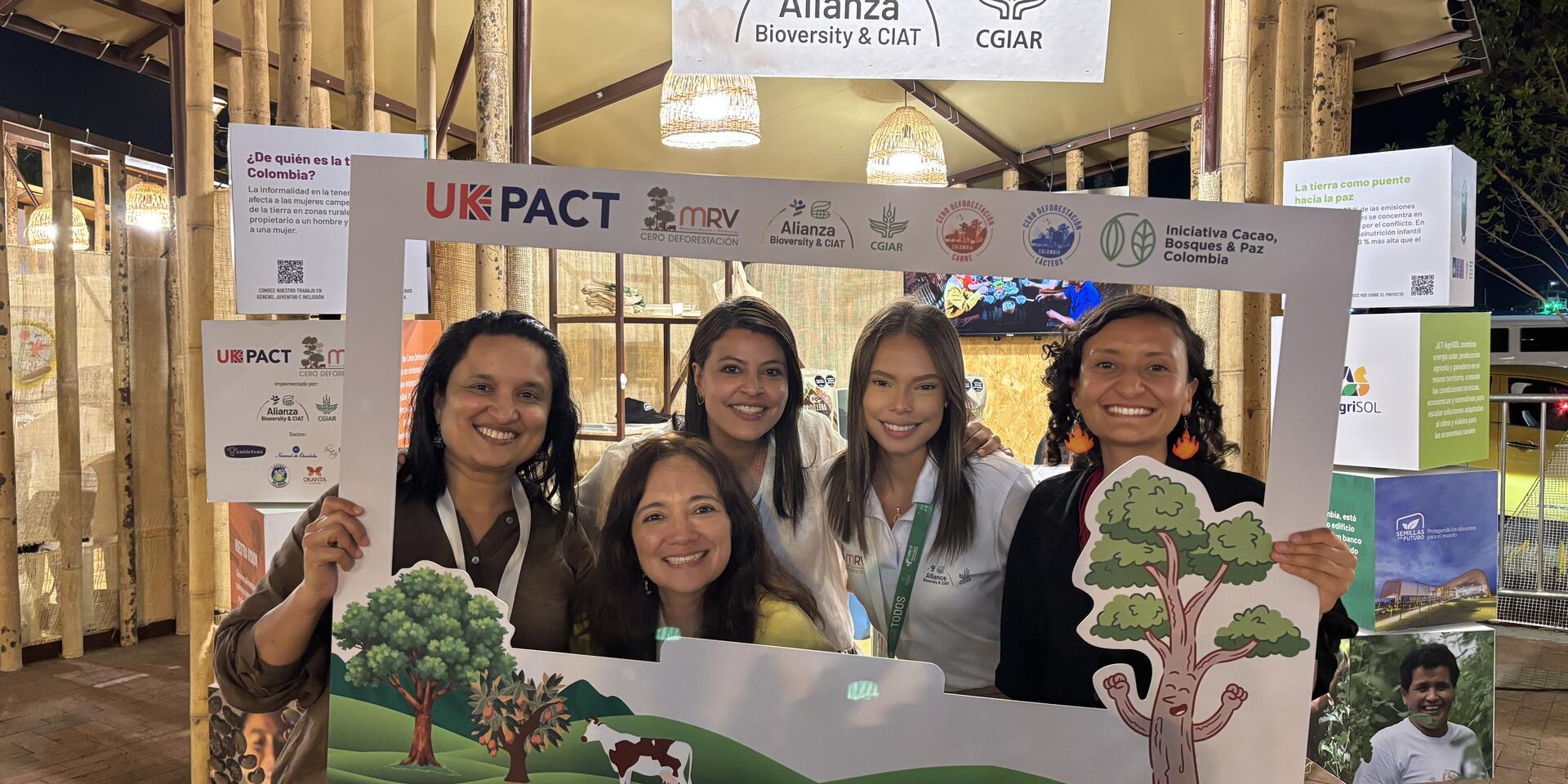
For the Alliance of Bioversity International and CIAT, ICARRD+20 was an opportunity to showcase what science co-created with communities can contribute to equity in land access, biodiversity protection, and sustainable productivity. In addition to our participation in the academic and high-level agenda, we were present at the “Land for All” exhibition—an open corridor of activities that formed part of the conference’s parallel program and helped bring the event closer to the public.
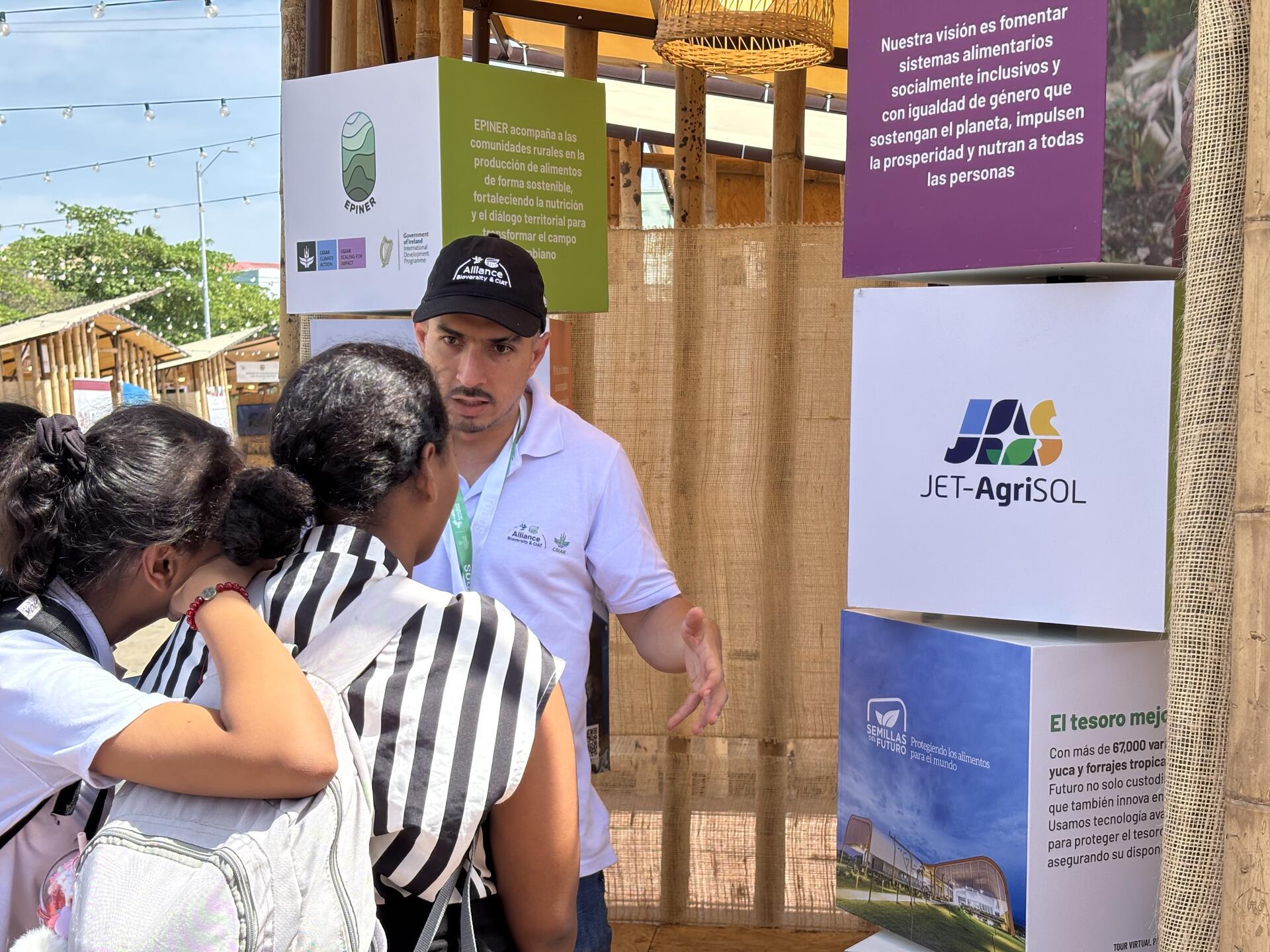
Our stand at Camellón de los Mártires became a vibrant and interactive meeting point. There, we highlighted three projects that reflect how we connect evidence, innovation, and territory, along with our vision of fostering socially inclusive, gender-equal food systems that sustain the planet and drive prosperity:
EPINER, which supports rural communities in sustainable food production, strengthening nutrition and territorial dialogue to help transform Colombia’s rural areas.
JET-AgriSOL, which combines solar energy with agricultural and livestock production within the same territory, creates the technical, economic, and regulatory conditions needed to scale climate-adapted solutions that are viable for rural economies.
Zero-Deforestation MRV, a public system that integrates farm-level traceability, official deforestation monitoring, and independent verification under state governance across key value chains.
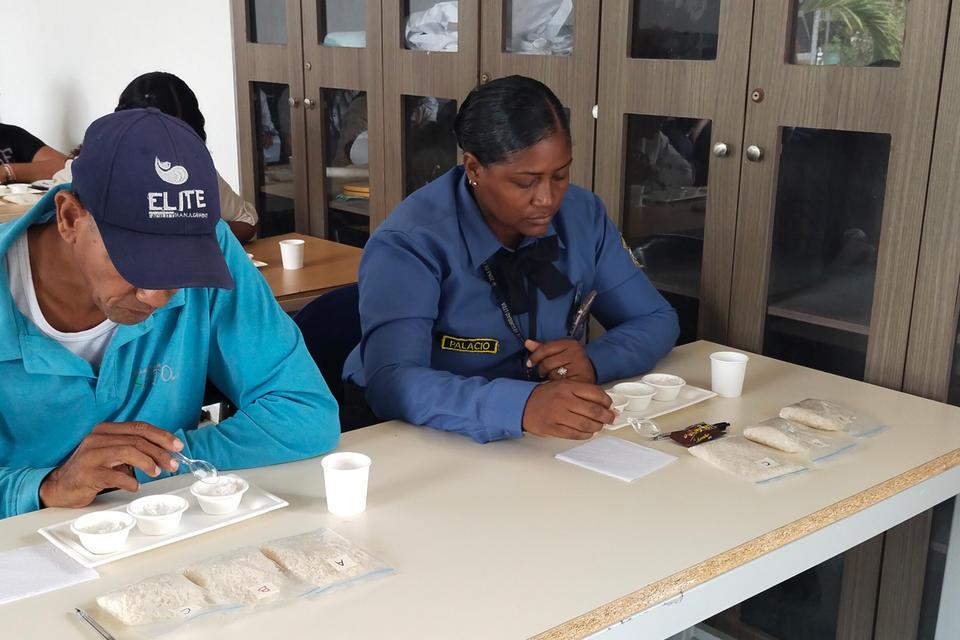
Beyond the technical showcase, it was an experience to be “tasted.” We offered chocolate tastings with varying cocoa concentrations to spark conversations about the importance of traceability in production to avoid deforestation and agricultural expansion. We also surprised visitors with cookies featuring a “secret ingredient”: biofortified beans—a crop already adopted by hundreds of smallholder families in Cauca and Putumayo, who are diversifying their production and improving their incomes in conflict-affected territories, contributing to environmental peace. Each conversation, each bite, became an entry point to discuss how consumption choices are connected to sustainable agricultural practices.
From silos to systems: unlocking finance and putting agroecology at the heart of rural transformation
On the technical agenda, our colleague Mark Lundy, Lead Scientist for the Food Environment and Consumer Behavior area, participated in a meeting of the Food Systems Transformation Leaders Alliance (ACF) to highlight a critical issue: coordination gaps that result in up to 30% of climate finance resources not being effectively utilized. His message was clear: as a pre-qualified partner of the Green Climate Fund (GCF) under its Readiness program, the Alliance can support countries in moving quickly from aligned policies to science-based actions through a phased approach that aligns national commitments, maps connections, and co-develops convergence plans that translate into bankable proposals.
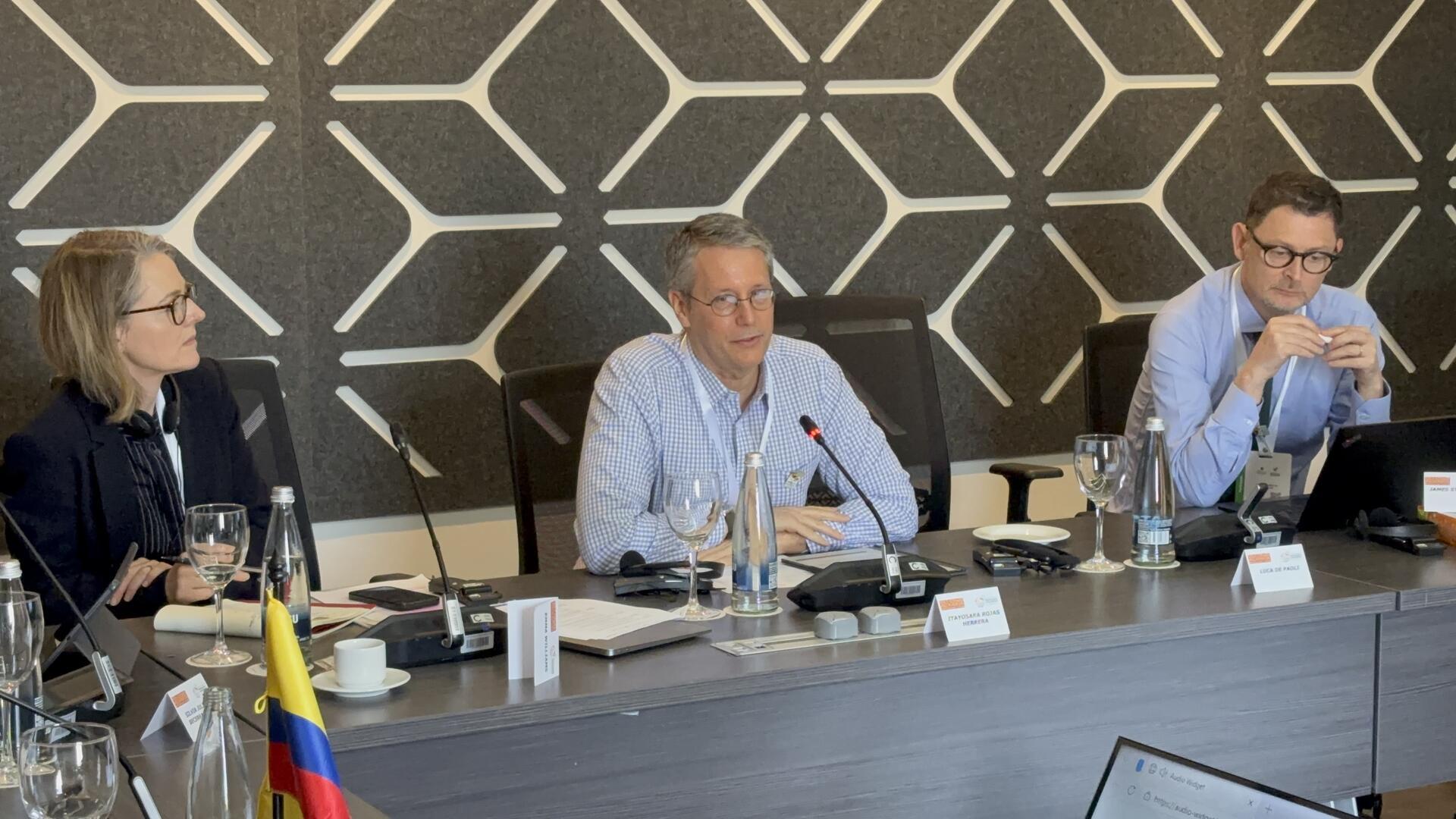
This emphasis on moving from silos to systems resonated with many delegations, particularly as ICARRD+20 put forward a framework to revisit global commitments on equitable access to land, responsible tenure governance, and sustainable rural development in dialogue with stakeholders at all levels.
We also took part in high-level discussions on agroecology alongside WWF, the Agroecology Coalition, IFAD, SwissAid, and senior officials from the Government of Colombia. From the Multifunctional Landscapes area, Sandra Durango represented the Alliance, underscoring that agroecology is not only a set of practices, but also a framework for aligning agrarian justice, climate resilience, and viable rural economies.
What ICARRD+20 left us with
We return from Cartagena with three key takeaways:
-
Traceability matters: not only to meet standards, but to honor the relationship between the land and those who care for it. Every piece of chocolate and every biofortified bean cookie told a story about avoiding deforestation, diversifying production, and producing with dignity.
-
Agroecology is a national pathway: it brings together equity, biodiversity conservation, and productivity, and is sustained when communities are at the center.
-
Finance must be better coordinated: if we want to move from declarations to transformation, we need readiness mechanisms and roadmaps that turn vision into bankable, measurable projects.
Maya Rajasekharan, our Managing Director for the Americas, summed it up clearly:
“We participated in this conference by showcasing our work and its impacts across Colombia, because now more than ever we need solutions that integrate equity, biodiversity conservation, and productivity. Our work across different regions of the country shows that when science is co-created with communities, it delivers results and contributes to lasting peace and food and nutrition security. It was also a very valuable space for engaging with partners, building new alliances, exchanging experiences with communities, and moving toward a future shaped by a more shared vision.”

Maya Rajasekharan
Managing Director, AmericasICARRD+20 reminded us that land is a living system: bringing together science, policy, and local knowledge is the only way to care for it, produce from it, and live off it—now and in the future. Cartagena was the starting point; the work continues in the territories.
Further reading