Blog Dakar sets course for AFSF 2025: Where green finance meets agropreneurs
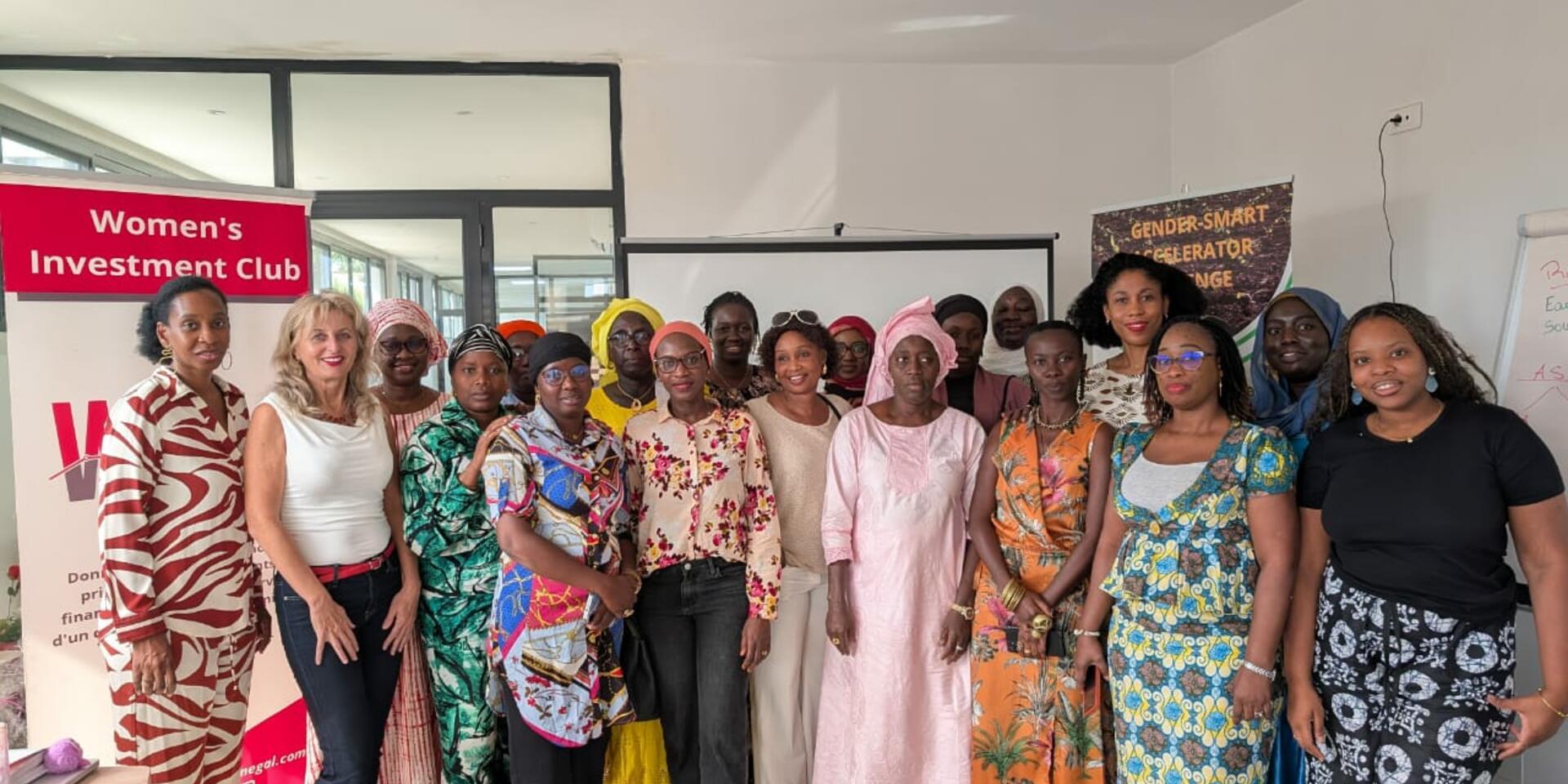

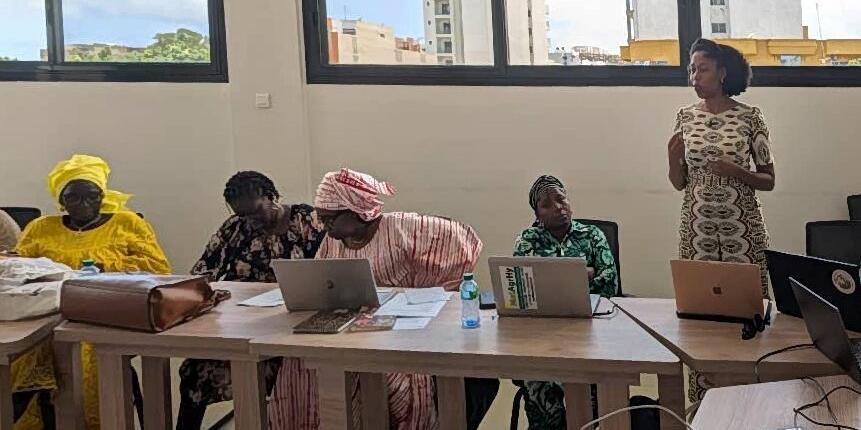
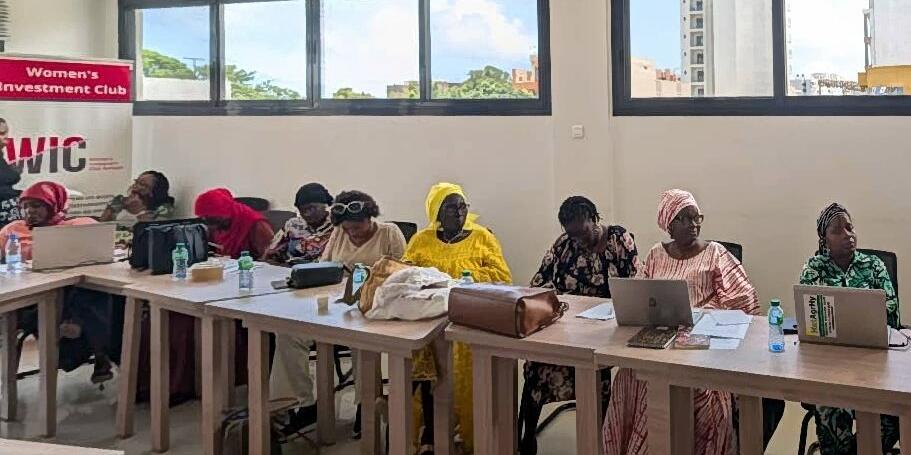
In Dakar, a bootcamp brought together women entrepreneurs, green finance practitioners, and climate-smart agriculture specialists to fast-track low-carbon, gender-responsive, and bankable business models.
Organized by the Alliance of Bioversity International and CIAT through AICCRA, ImpactSF and the Women’s Investment Club (WIC), the workshop mixed case studies, practical tools (such as the “Green” Business Model Canvas and sustainable business plans), and pitch preparation—all with the Africa Food Systems Forum, taking place in Dakar from August 31 to September 5, 2025.
A bootcamp aligned with AFSF: Turning national momentum into an investment-ready pipeline
Three days to move from intention to execution with 25 participants. That was the spirit of the WIC–AICCRA bootcamp: a smooth build-up—understanding the stakes (climate, deforestation, compliance), translating vision into a “Green” Business Model Canvas, then sharpening the pitch ahead of a strategic rendezvous: the Africa Food Systems Forum in Dakar. This was not just a matter of timing—it was a strategy of alignment. As Senegal hosts the African agrifood community, the goal is clear: to present investment-ready projects, led by women entrepreneurs able to demonstrate, with figures, how their products reduce ecological footprints, create decent jobs, and open new markets. Nationally, this fits into Senegal Vision 2050 and the green economy transition driven by public policy—reference points already understood and integrated into financial risk assessments.
The guiding thread of the bootcamp: speaking the language of investors without giving up on impact ambition. The workshops encouraged entrepreneurs to connect their technological choices (energy, water, production and processing methods, packaging) and organizational ones (governance, traceability, working conditions) to Senegal’s climate and adaptation commitments. The country’s NDC sets a 7% unconditional and 29% conditional reduction in emissions by 2030, compared to the baseline scenario. Senegal’s National Adaptation Plan (NAP) sets sectoral priorities to 2050 to reduce vulnerability and mainstream adaptation in public policies—covering areas like water management, climate risk management, and gender-responsive innovations. These policy anchors give entrepreneurs tangible national goals to align with. Meanwhile, the CGIAR/ImpactSF ecosystem equips banks and fund managers to integrate E&S criteria from due diligence onward, blending financial instruments (guarantees, green credit lines, blended finance) with SME pipelines. AFSF thus becomes the meeting point between ready projects and patient capital.
“Dakar will be a momentum: showcasing SMEs with a clear impact narrative, verifiable evidence, and a precise use-of-funds plan,” suggests Yovita Ivanova, capturing the ambition of a delegation eager to leverage the Summit’s visibility.
Deforestation, compliance, and value addition: Navigating tougher regulations without losing direction
On markets, the rules are changing. The EU Regulation on Deforestation-Free Products (EUDR) requires fine-grained traceability down to plots, strong due diligence, and robust MRV systems for key commodities (cacao, coffee, rubber, palm oil, timber, soy, and more). After months of debate, the EU granted a one-year transition: compliance by December 30, 2025 for medium and large firms, and by June 30, 2026, for micro and small ones—without easing the core requirements. In short: more time, but no loophole. The guidelines published in 2025 already lay out practical obligations and reporting procedures.
In Dakar, this was framed as a competitiveness opportunity. Case studies showed how to build traceable “zero-deforestation” offers, negotiate responsible purchase contracts, and turn compliance into an advantage: market access, quality premiums, and risk reduction. The other front, just as strategic, lies downstream: adding and capturing more local value. Too many products are still exported raw; upgrading (standardization, design, packaging), digital tools (B2B platforms, supply chain transparency), and diversifying into plant-based or “better-for-you” niches emerged as fast levers. But challenges remain: logistics costs, certification prices for small units, lack of standards. Solutions exist—pooling certifications through cooperatives, setting up community watchdog groups, or piloting blockchain tools to trace carbon footprints from farm to fork.
“Compliance is no longer a burden—it’s our bridge to the market,” says Ndeye Yacine Diagne (AGRIMAGE), who sees the EUDR as a driver to professionalize value chains.
Just days before AFSF, these “compliance-by-design” projects also tick the boxes for donors and impact investors: they combine ecological transition, job creation, and resilience—precisely the signals sought in a context where Senegal asserts its Vision 2050 green economy path.
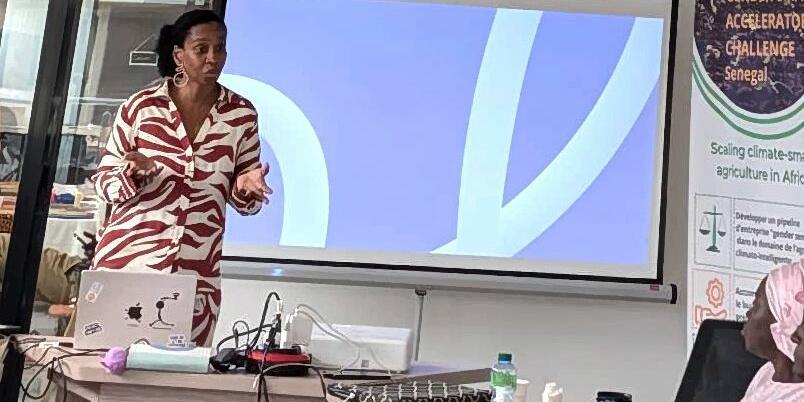
From “business model canvas” to a gender-sensitive green canvas: How equity boosts productivity and innovation
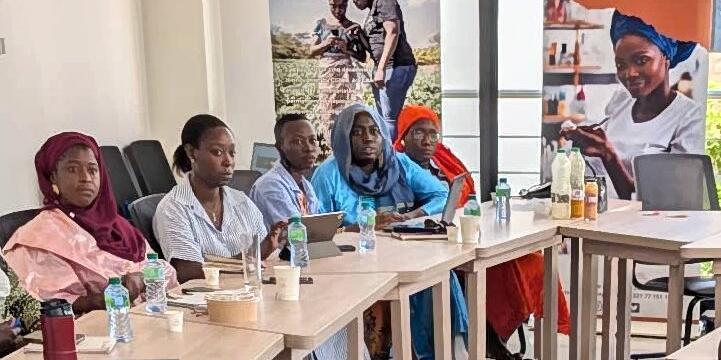
Here, the BMC became a framework for real trade-offs. In workshops, each team revisited its nine blocks: value proposition (nutrition, circularity, low footprint), segments/channels (sustainability-minded clients, digital circuits), resources/activities (water/energy efficiency, agroforestry, renewables, waste management), partners (cooperatives, technical centers, fintechs, responsible off-takers), and cost/revenue structures (green CAPEX/OPEX, resource savings, quality premiums, long-term contracts, monetized impact). The aim: move from rhetoric to concrete steps—packaging, traceability, grouped certifications—while quantifying cost, risk, and revenue implications.
Most importantly, gender was not treated as a “bonus,” but as a performance driver. The numbers are stark: less than 10% of agricultural credit reaches women farmers, less than 3% of venture capital goes to women-founded startups, and productivity gaps hover around 20–30%. Conversely, closing these gaps can increase production by up to 30% if women access the same productive resources—a potential documented by FAO and highlighted in the bootcamp. The Reach–Benefit–Empower–Transform (RBET/ABAT) framework guided the shift from symbolic inclusion to structural change: land rights, decision-making power, income control, and dismantling discriminatory norms.
“Gender sensitivity is not a box to tick; it’s a lever for productivity and innovation. When women access the same resources, production rises—and so does territorial resilience,” stressed Ena Derenoncourt, CSA/gender facilitator.
“We often think we’re too small to matter, but every choice—our inputs, packaging, markets—affects the value chain. This bootcamp gave me a framework to turn those choices into a competitive edge,” confides Ndeye Yacine Diagne (AGRIMAGE).
This equity–performance link was tied to tracked indicators: participation, productivity, income, leadership roles, hectares under good practices, avoided CO₂ emissions. Proof that impact and bankability can rhyme.
Impact finance and the art of the pitch: speaking bank, speaking impact, speaking evidence
Final step: accessing capital. The bootcamp clarified a common confusion: ESG and impact investing are not the same. ESG is about managing environmental and social risks in business; impact investing deliberately seeks measurable positive effects alongside financial returns. In West Africa, the momentum is real: impact vehicles, green credit lines, blended finance. The CGIAR Hub for Sustainable Finance (ImpactSF) supports this rise with due diligence tools, financial instruments, and SME pipelines. But each company must come prepared: three years of financial statements, org charts, E&S policies, georeferenced data when relevant, client/product lists, and an updated data room. At AFS, it’s this evidence that will matter.
“A good pitch is a credible promise: a real problem, a mastered solution, proof of traction, and an investment request linked to impact goals,” explains Ouma Sani, pitch trainer.
“Awareness is not enough—we need concrete, measurable steps. We’ll start by cutting plastics and standardizing on export-ready sustainable packaging,” adds Ndeye Bety Pene (BBMG Services).
With the Summit (August 31–September 5) just days away, the window is open: turn presentations into term sheets. This is even more relevant as national priorities (Vision Senegal 2050, NDC, NAP) and international frameworks (EUDR) converge. Companies that are ready—solid on accounts, operations, governance, and impact indicators—hold all the cards to win over investors who, in Dakar, will be looking for projects where resilience rhymes with profitability.