Blog Capacity Building for Context-Specific CSA Investment Plans and Business Case Development under SCALA Program

Key Messages
- A locally led approach to climate-smart agriculture, such as the SCALA initiative, enables communities and technical experts to co-design solutions rooted in their specific agroecological and socio-economic realities, ensuring that climate actions are inclusive, relevant, and scalable.
- Designing climate-smart business cases that are both context-specific and investment-ready is essential for bridging the gap between community needs and climate finance opportunities.
- The long-term success of transformative climate action depends on building local institutional capacity, fostering collaborative learning, and embedding robust monitoring systems to ensure accountability, impact, and sustainability at scale.
Background
As climate risks escalate across Ethiopia’s agricultural systems, marked by rising temperatures, erratic rainfall, and increasing frequency of droughts, the need to strengthen local capacities to design, mobilize finance, and implement transformative climate actions has become more urgent than ever. Agriculture, which contributes approximately 33% of the country’s GDP and employs over 70% of the population, remains highly vulnerable to climate shocks (World Bank, 2022). Smallholder farmers, in particular, face compounding risks due to limited access to climate information, finance, and adaptive technologies (MoA, 2021). In this context, enhancing the technical capacity of local actors is essential for operationalizing Ethiopia’s national climate strategies, including its Climate Resilient Green Economy strategy, Long-Term Low Emission Development Strategy (LT-LEDS), Nationally Determined Contributions (NDCs) and National Adaptation Plan (NAP), which emphasize decentralized, inclusive, and resilient development approaches.
The Alliance of Bioversity International and CIAT, in collaboration with the Food and Agriculture Organization of the United Nations (FAO) and Ethiopia’s Ministry of Agriculture, organized a training of trainers (ToT) workshop in Adama, Ethiopia, from July 16 to 18, 2025. The workshop was organized under the Accelerating Impacts of CGIAR Climate Research for Africa (AICCRA) program, and aligned with the CGIAR Climate Action Science Program and the broader goals of the Scaling up Climate Ambition on Land Use and Agriculture (SCALA) initiative in Ethiopia.
SCALA is a joint program being implemented by the United Nations Development Programme (UNDP) and FAO, whose goal is to support Ethiopia in achieving its climate adaptation and mitigation objectives within the agriculture and land-use sectors.
The program directly supports the implementation of Ethiopia’s NAP and updated NDCs, both of which emphasize sustainable land use and climate-resilient food systems.
SCALA Ethiopia operationalizes these commitments by focusing on three key systems that are both highly vulnerable to climate risks and critical for rural livelihoods:
- Irrigated value chains (e.g., vegetables, onions, and tomatoes),
- Small ruminant systems (primarily sheep and goats), and
- Community-based natural resource management, especially in degraded watersheds.
The three-day ToT workshop was specifically designed to enhance the knowledge and skills of local actors, including government experts, development agents, and frontline practitioners, on climate change fundamentals and climate-smart agriculture practices, business plan development, and the design of effective Monitoring, Evaluation, and Learning (MEL) frameworks. The Climate-Smart Agriculture Investment Plan (CSAIP) for Ethiopia, which was developed by the Alliance under AICCRA, served as a tool/framework for the training, whereby its methodology was adapted and applied within the SCALA Ethiopia program to guide the design of local-level climate-resilient business plans.
“The workshop aimed to equip participants to identify local investment priorities, develop tailored and finance-ready business plans to unlock finance from the SCALA program, and establish systems for tracking progress and scaling successful climate-resilient agricultural interventions”. Lydia Tesfaye, Research Officer II, Alliance of Bioversity International and CIAT
From a National Vision to Local Action
Investing in climate-resilient agriculture is not only essential for safeguarding livelihoods but also a strategic lever for sustainable economic growth in Ethiopia. Scientific evidence indicates that targeted investments in climate-smart agriculture (CSA) can simultaneously increase productivity, enhance adaptive capacity, and reduce greenhouse gas emissions (FAO, 2013). Ethiopia’s Climate-Smart Agriculture Investment Plan (CSAIP), developed under the AICCRA program through a collaboration between the Ministry of Agriculture and the Alliance, identified a portfolio of high-impact interventions with the potential to generate returns of up to 2.5 to 1 for every dollar invested, while reaching more than 17 million beneficiaries (Alliance of Bioversity & CIAT, 2021). These investments are pivotal to fulfilling Ethiopia’s climate and development goals and transforming the agriculture sector into a more resilient, inclusive, and sustainable system. However, mobilizing such investment requires more than financial capital; it demands institutional capacity, context-specific planning, and the ability to prepare finance-ready business cases.
Furthermore, unlocking the full potential of these investments necessitates a concerted effort to bridge critical implementation gaps. This includes strengthening local institutions to manage and deploy capital effectively and developing robust monitoring and verification systems to track climate benefits and ensure accountability to investors. Success will also depend on fostering innovative public-private partnerships that can de-risk projects and attract commercial finance, while ensuring that solutions are co-designed with smallholder farmers to be both technologically appropriate and culturally adopted. By building this enabling ecosystem, Ethiopia can move beyond isolated projects to catalyze a systemic shift, ensuring that climate-resilient practices are scaled across the nation's agricultural landscape, thereby securing food sovereignty and economic prosperity for generations to come.
Bridging the Gap
To address these gaps, SCALA supports a range of activities from local business case development and on-the-ground technical assistance to training programs and investment mobilization. For example, in Sofi woreda, organized women’s groups are being supported to adopt climate-resilient irrigation technologies and improved seed varieties, while in Enebse Sar Mider, smallholder cooperatives are piloting integrated livestock-crop systems that enhance food security and income diversification.
“By targeting interventions that are technically robust, socially inclusive, and economically viable, SCALA plays a critical role in bridging the gap between Ethiopia’s national climate strategies and the localized, investment-ready solutions essential for building long-term resilience at the community level,”. Mr. Addis Negash, Ministry of Agriculture, Ethiopia
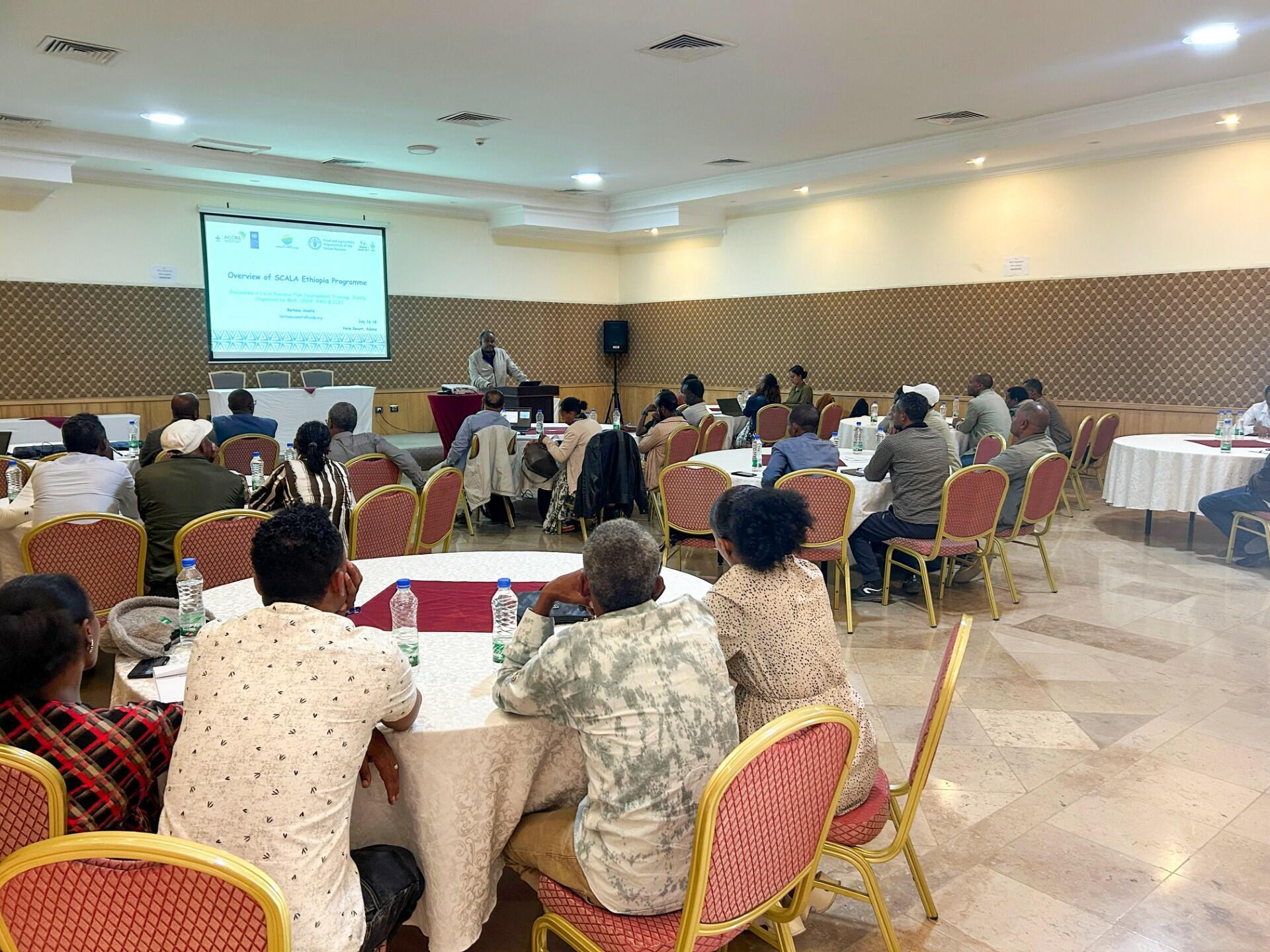
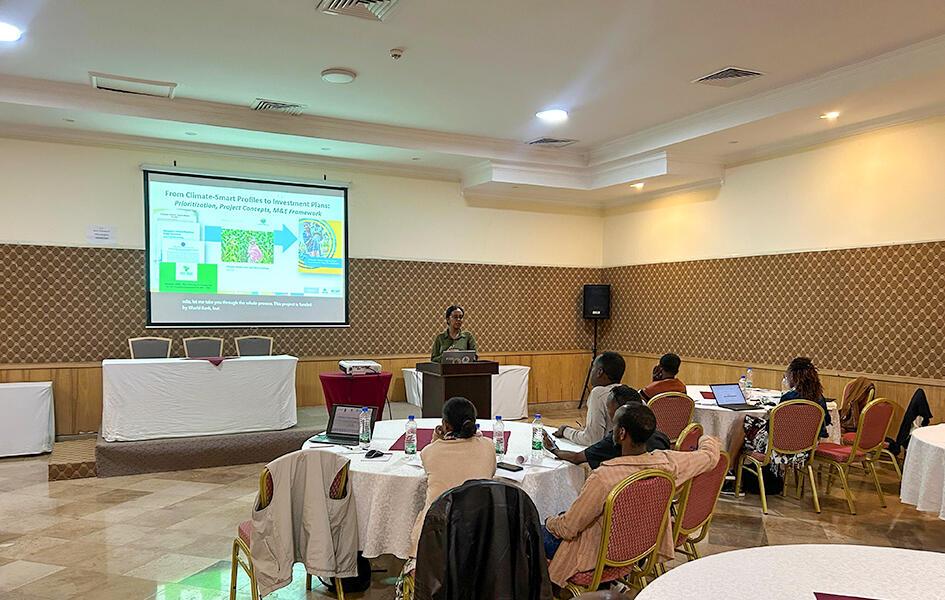
An extensive overview of the SCALA project by Mr. Addis Negash from the Ministry of Agriculture, Ethiopia.
The Ethiopia’s CSA Investment Plan forms the methodological foundation for SCALA’s localized investment efforts. In 2025, FAO and the Alliance launched a technical collaboration to translate SCALA’s prioritized investments, which are also the prioritized investments areas under CSAIP, into context-specific business cases in the woredas of Adama, Enebse Sar Mider, and Sofi. This local-level agri-business will incorporate comprehensive business plan components such as climate risk assessment related to climate variability in respective woredas, identify local adaptation and mitigation interventions, and financial planning to ensure sustainability and profitability. Also, it will enhance the capacity of local stakeholders to co-design a participatory monitoring, evaluation, and learning (MEL) framework that integrates climate resilience indicators, promotes adaptive management, and fosters continuous learning for improved climate-smart agricultural outcomes.
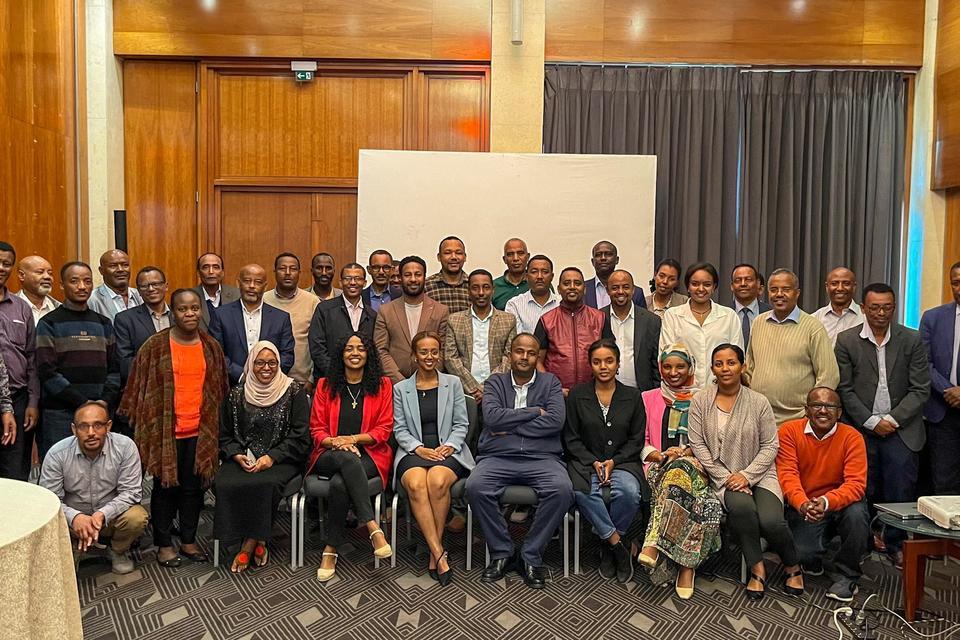
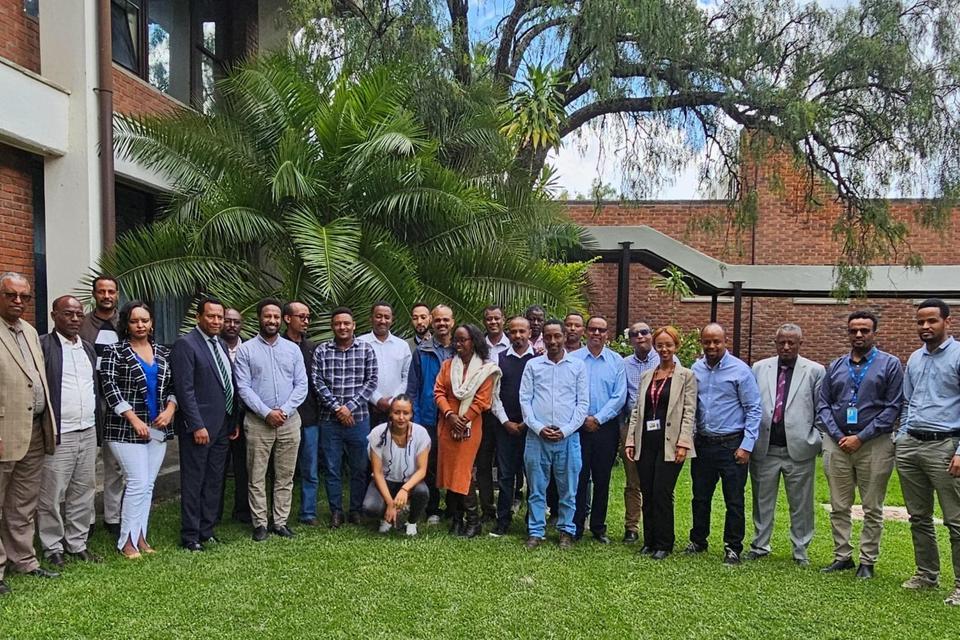
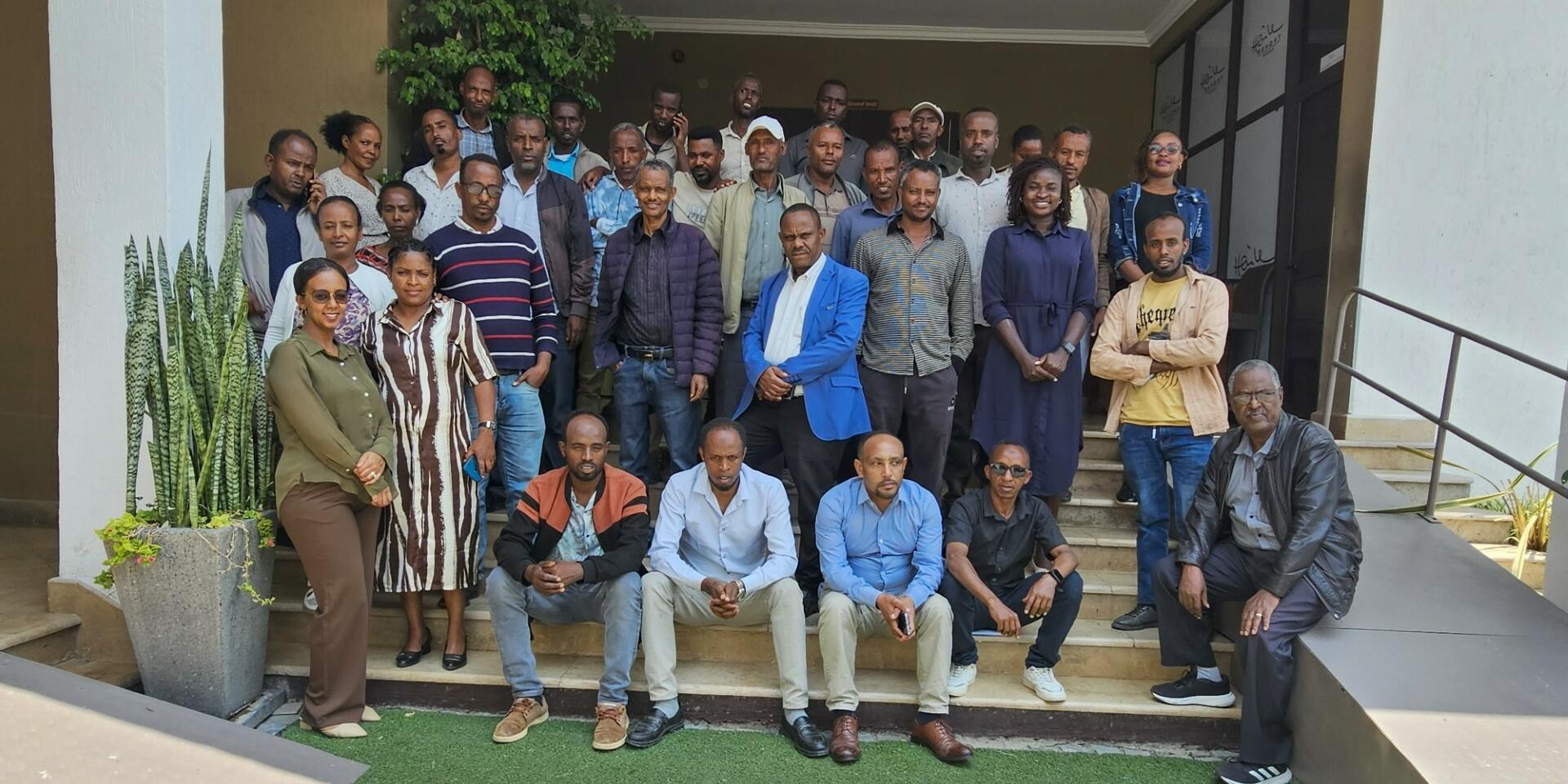
Over the three-day training, 38 participants from federal ministries, regional and zonal agricultural bureaus, development agents, and local offices in the Oromia, Amhara, and Harari regions took part in technical sessions covering CSA and climate change fundamentals, investment planning and business case development, monitoring, evaluation, and learning frameworks. Participants enhanced their understanding of CSA planning tools and developed draft business plans for three woredas: Adama (Oromia region), Enebse Sar Mider (Amhara region), and Sofi ( Harari). This effort will contribute to localizing Ethiopia’s National Adaptation Plan (NAP) and Nationally Determined Contributions (NDCs) by equipping stakeholders with the skills and tools needed to turn national climate strategies into bankable, on-the-ground investments.
Next Steps
The workshop concluded with a clear roadmap outlining the next steps, where the trained ToT participants will take the lead in facilitating and guiding the co-development of locally driven, finance-ready business plans in collaboration with common interest groups. These groups will be composed primarily of smallholder farmers from diverse backgrounds, including differences in gender, age, socioeconomic status, agroecological zones, and farming systems. By engaging such a wide range of local stakeholders, the process ensures that business plans are inclusive, context-specific, and tailored to the varied needs and realities of farming communities. Therefore, the inclusive approach will help to put the tools and knowledge gained during the workshop into practical use unlocking investment and scaling climate-smart agriculture in a way that is equitable and responsive to local priorities.
Keep exploring