Blog Can a regional transect profile contribute to fostering food systems transformation in ASEAN?

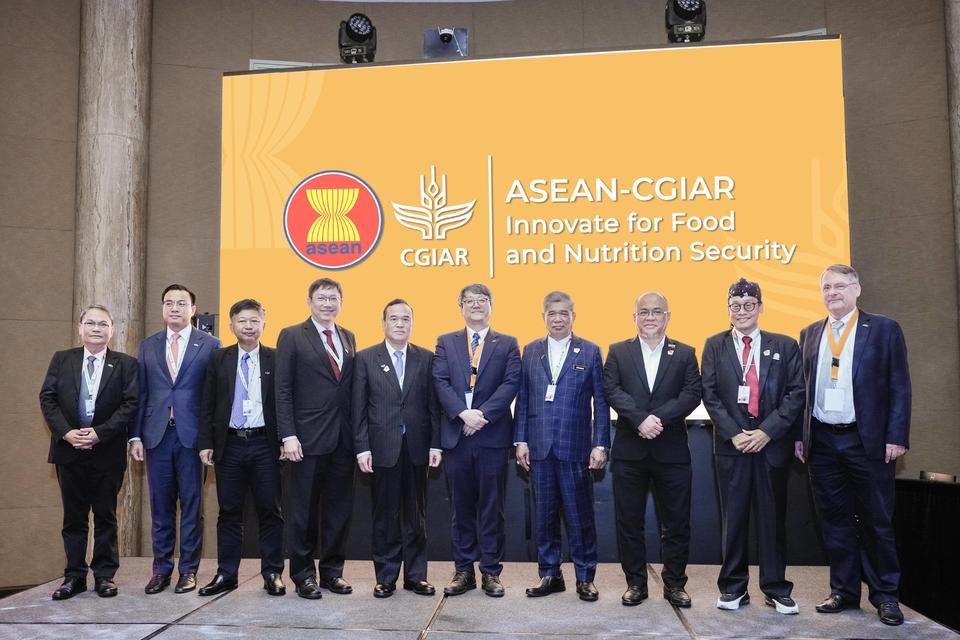
Following years of building regional evidence toward sustainable food systems transformation in select Southeast Asian countries, the Alliance has since scaled its efforts by leading collaborative work with national partners to achieve the shared vision for inclusive and nutrition-secure agri-food systems in the ASEAN region.
Since 2023, Food Environment and Consumer Behavior (FECB) researchers of the Alliance of Bioversity International and CIAT contributed to the development of country-level food system profiles for Cambodia, Vietnam, and the Philippines. The work, as part of Intervention Package 8 (IP8) under the ASEAN–CGIAR Innovate Program, closely collaborated with national partners to develop a regional transect food system profile, designed to capture variations across geographic, socio-economic, and food environment contexts within and across countries.
The transect approach allows researchers and policymakers to move beyond national averages and better understand differences across food environments, how livelihoods, market access, and dietary patterns shift, food system outcomes along the transect. By integrating multiple data sources and perspectives, these profiles provide a diagnostic tool to support more context-specific and cross-sectoral interventions for food system transformation.
In early 2025, the FECB team initiated engagement with the Food and Nutrition Research Institute (FNRI) under the Department of Science and Technology (DOST) of the Philippines, marking an important step toward strengthening collaboration on food systems transformation initiatives. This engagement aligns with the broader CGIAR commitment to fostering regional cooperation, evidence-based policymaking, and inclusive food system transitions across ASEAN.
Highlight from TARASA25: Sharing ASEAN Food Systems Evidence
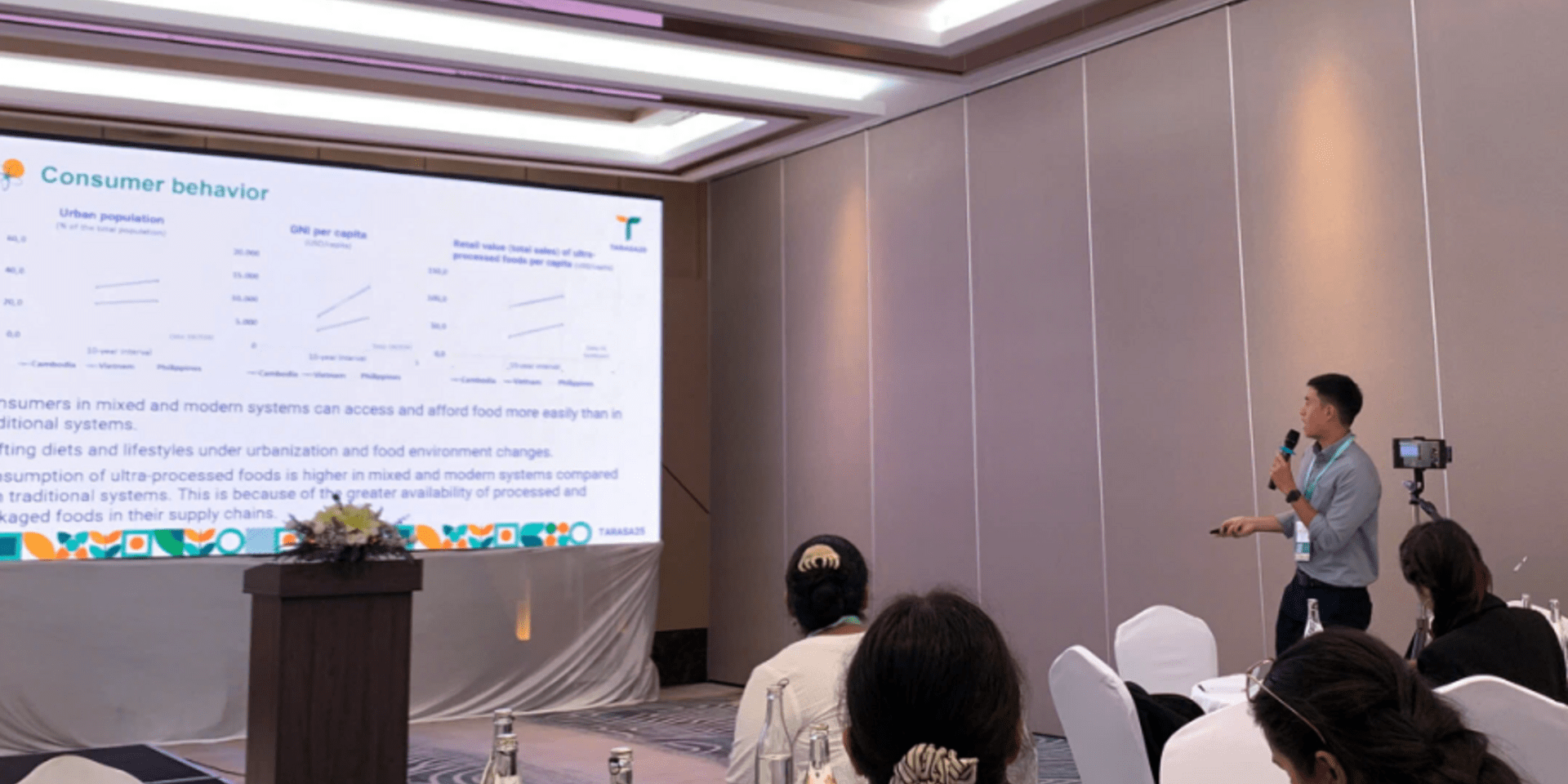
A key milestone in disseminating this work was the participation of FECB researchers Huong Pham and Quoc Nguyen at the Regional Workshop on Transitioning Towards Agroecology and Regenerative Agriculture: A Contribution to Food Systems Transformation (TARASA25). The workshop was held in Vientiane, Lao PDR, from 25–27 November 2025 and brought together policymakers, researchers, development partners, and practitioners from across the Asia–Pacific region.
The workshop focused on tackling urgent and complex challenges facing global food systems, with particular attention to the Asia–Pacific region. It aimed to support the transition toward agroecology and regenerative agriculture through inclusive dialogue, knowledge exchange, and multi-stakeholder collaboration.
The Hanoi-based FECB team joined a mix of policymakers, development partners, and practitioners from across the Asia-Pacific as they presented their findings in the parallel session on Approaches to Evaluation and Metrics.
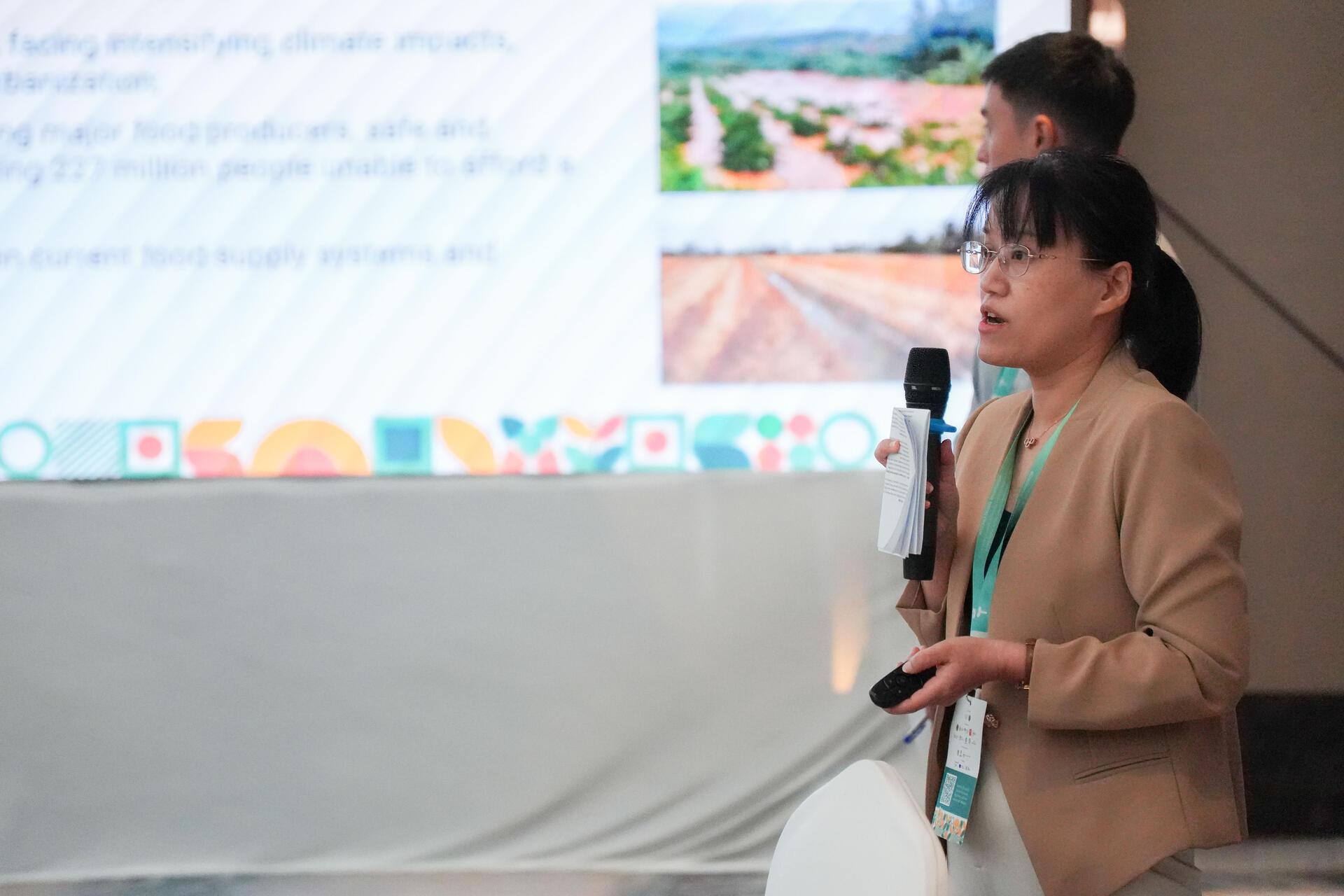
Huong[GB1.1] highlighted the current situation of ASEAN food systems and emphasized the need for countries to better understand their food system transformation pathways and their current food systems’ performance as well as using integrated evidence to inform policy and investment priorities. Quoc, meanwhile, presented some selected indicators illustrating patterns of changes across food system elements, while underscoring how transect profiles could be a valuable tool to encourage inclusive dialogues and guide the design of context-specific, cross-sectoral interventions for sustainable food system transformation.
Strengthening regional learning and collaboration
We also engaged with participants from Lao PDR, Cambodia, Myanmar, and other ASEAN countries on how to better utilize available data and information to track food system changes across the region, identify emerging risks and opportunities, and support more adaptive and resilient policy responses.
These exchanges reinforced the critical role of evidence-based tools, such as transect food system profiles, in accelerating progress toward resilient, sustainable, and equitable food systems across ASEAN.
The engagement with national partners of three countries combined with the insights and feedback gathered at TARASA25 strengthens the foundation for deeper regional collaboration on food systems transformation. Moving forward, the FECB team will continue to work with national and regional partners to refine food system metrics and evaluation approaches, support country-led transformation pathways, contribute to ASEAN-wide learning on agroecology, regenerative agriculture, and nutrition-sensitive food systems.
By linking robust evidence, regional dialogue, and policy-relevant tools, these efforts aim to support a shared vision of more sustainable, inclusive, and nutrition-secure food systems for ASEAN countries.