Transforming food systems using the Agrobiodiversity Index

The Agrobiodiversity Index (ABDI) provides a framework and methodology for monitoring agrobiodiversity to support the transition to sustainable food systems. The ABDI collects data on biodiversity across the often-disconnected pillars of the food system: Conservation, production and consumption. Besides measuring the status of agrobiodiversity, the ABDI proposes indicators for tracking commitments and actions to increase its use and conservation, and insights on the risks and opportunities of agrobiodiversity change, to people and nature.
Project name: Transforming food systems using the Agrobiodiversity Index – a framework and compilation of relevant indicators
Start and end year: 2017-present
Region and countries: Global
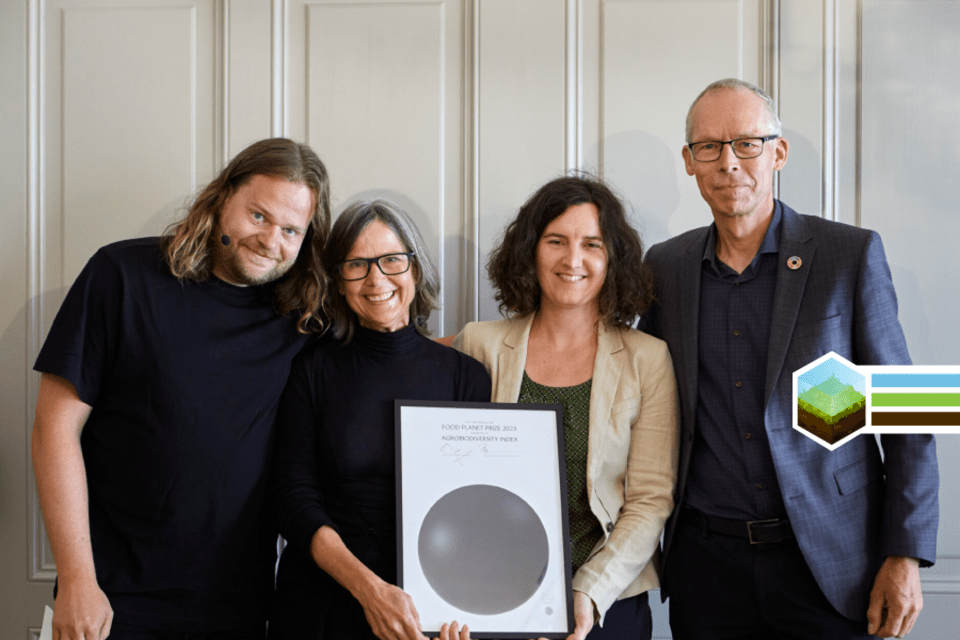
Funders: European Commission (EC), The Italian Agency for Development Cooperation, Food Planet Prize, CGIAR Research Program on Water, Land & Ecosystems, CGIAR Research Program on Agriculture for Nutrition and Health, CGIAR Initiative on Nexus Policies, CGIAR Multifunctional Landscapes Science Program, and CGIAR Policy Innovations Science Program
Contributors: All Bioversity International scientists who contributed to the Agrobiodiversity Index methodology, Clarmondial, The Royal Tropical Institute, Versant Vision, and Glocolearning
Collaborators: School Meals Coalition (SMC), Imperial College London, Professional Assistance for Development Action (PRADAN), the Alliance supported by CGIAR Policy Innovations and Multifunctional Landscapes science programs, SHN Research Consortium, Ashoka Trust for Research in Ecology and the Environment (ATREE), Foundation of Ecological Security (FES), M. S. Swaminathan Research Foundation (MSSRF), the Government of Madhya Pradesh – Department of Panchayat and Rural Development, INIA, Kew Royal Botanical Gardens, CIRAD, ERA, IPBES (supported by CGIAR Multifunctional Landscapes and Policy Innovations science programs), and individual scientists from CNRS-CEFE, ARCAD, CIRAD AGAP unit, SENS unit, IRD Montpellier, INRAE Montpellier, University of Montpellier, Institut Agro Montpellier, CEN Occitanie, and the Agrobiodiversity Montpellier network.
Photo with a story contest - Agrobiodiversity as roots of resilience
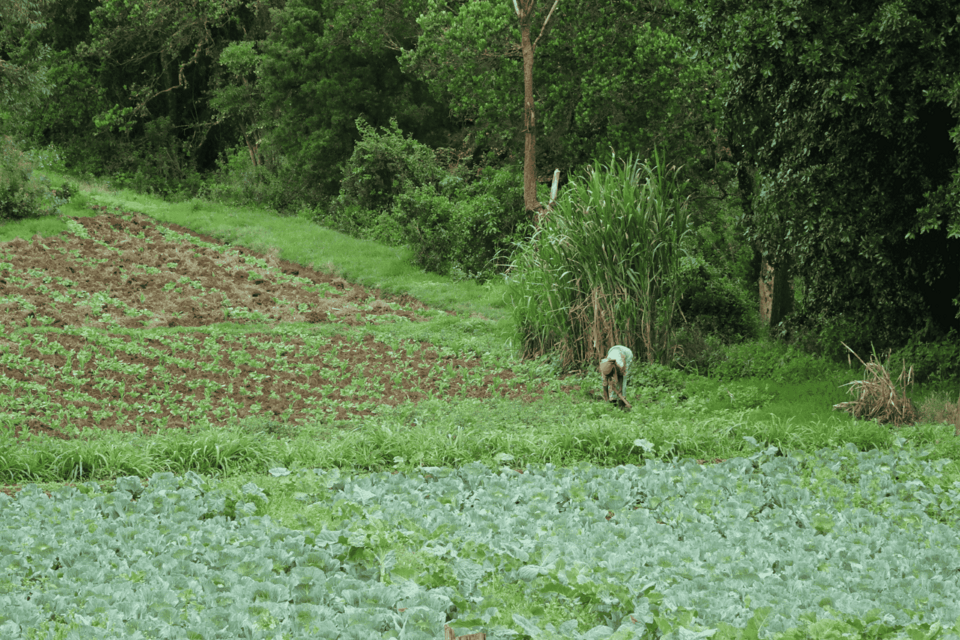
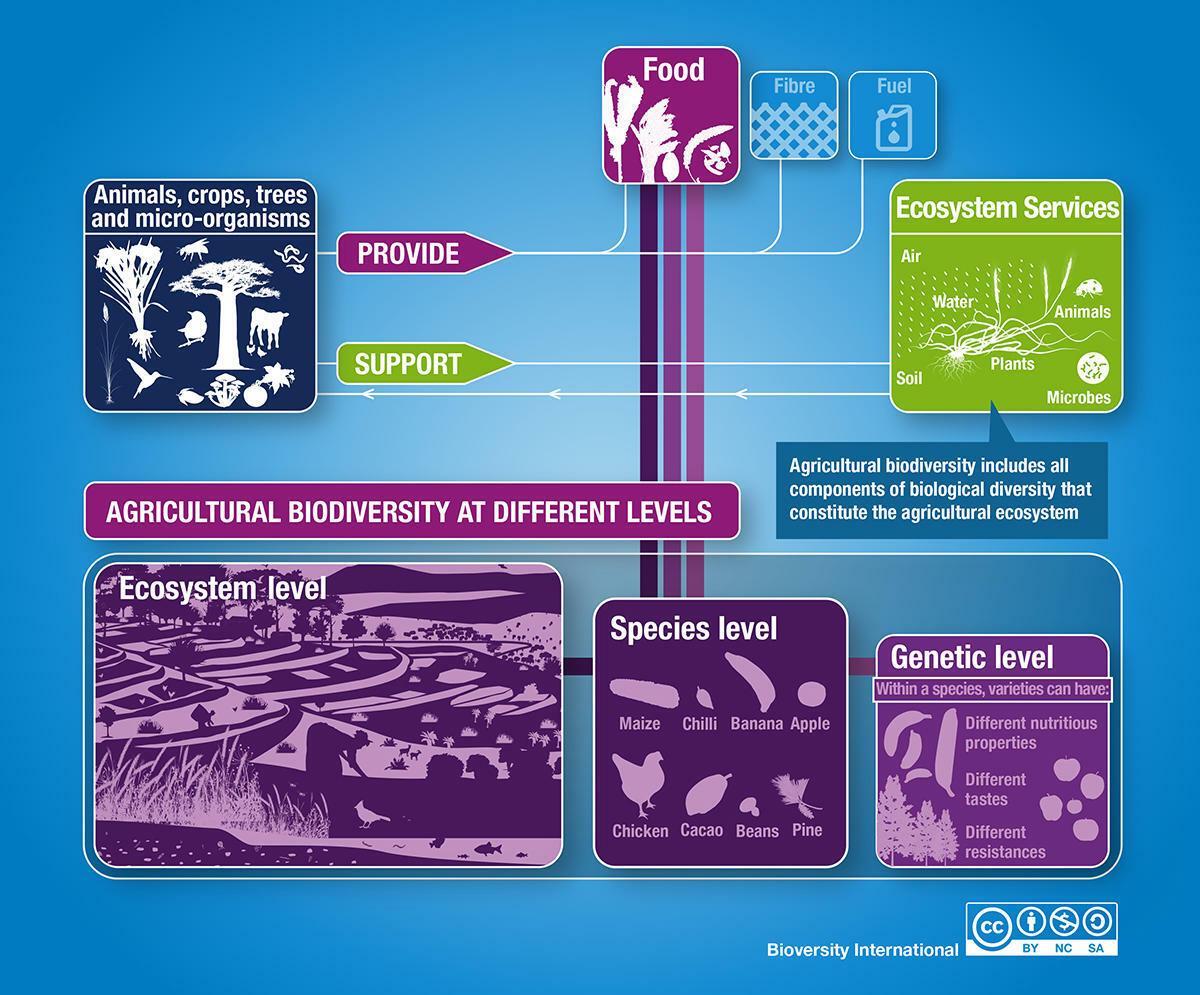
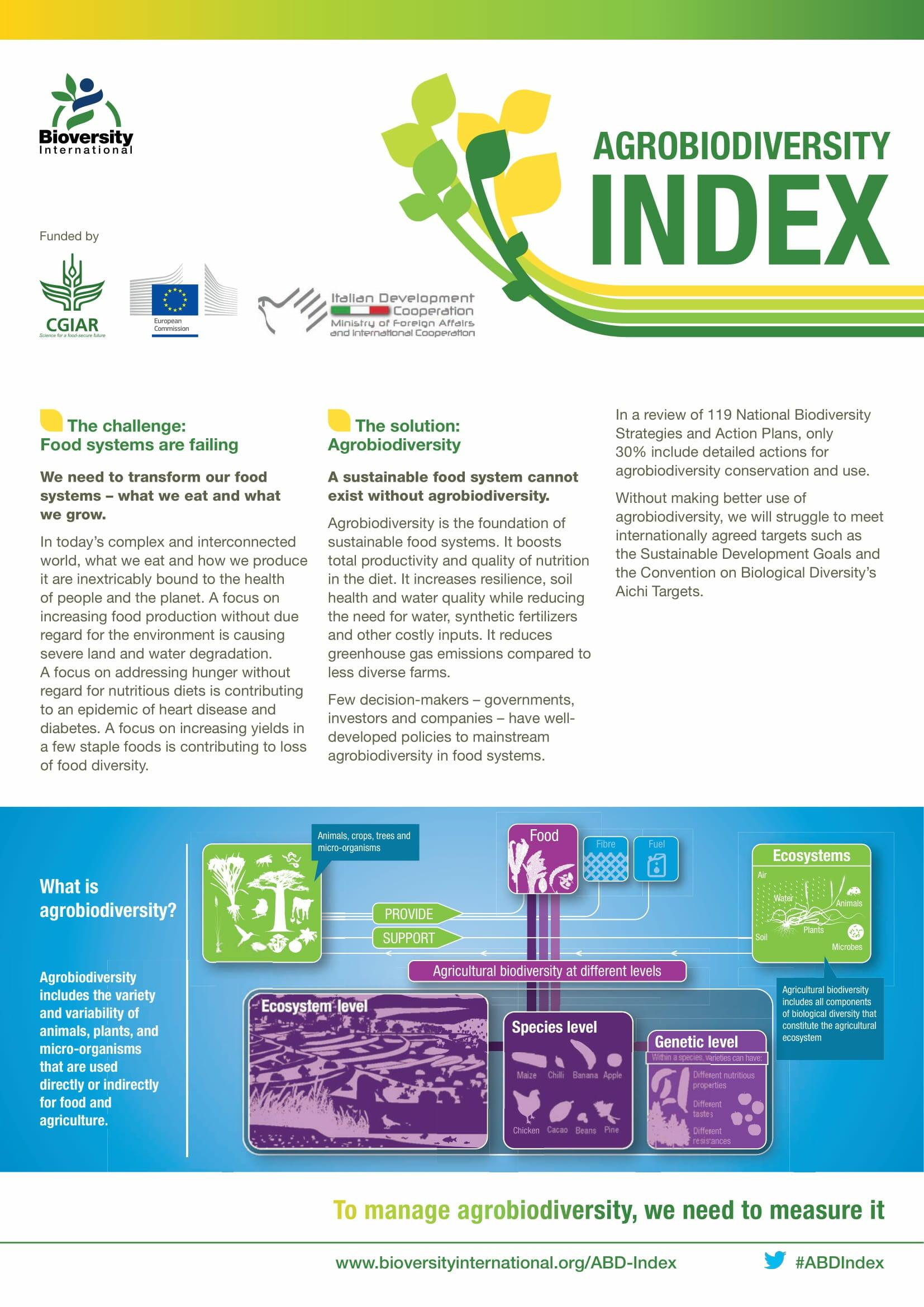
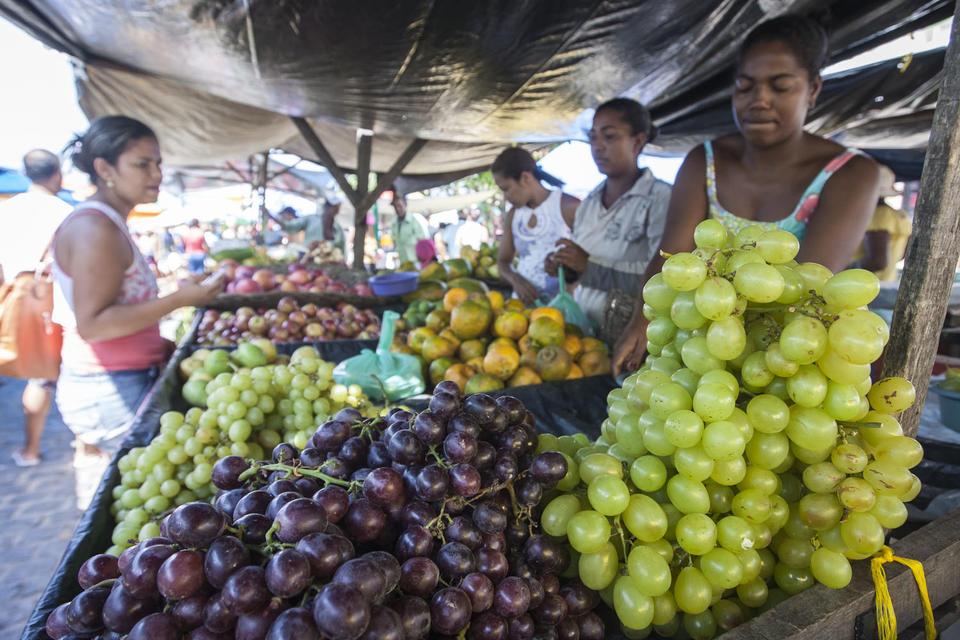
Agrobiodiversity - the variety of animals, plants, and microbes used for food and agriculture (FAO definition, 1999) is essential for food production, food security, and resilient food systems. Yet, it is difficult to capture: not only because it is dynamic and context-specific, but because data alone cannot tell the whole story.
Description
Despite its importance, little is known about the current state of agrobiodiversity (the wealth of plants, animals and microorganisms that support food and agriculture). As a result, it is often left out of dietary guidelines, agricultural and environmental policies, business strategies, and other areas that influence our food systems. The ABDI aims to correct this by collecting data on biodiversity across the pillars of the food system: Conservation, production and consumption. Besides measuring the status of agrobiodiversity, the ABDI identifies actions, risks and opportunities to increase its use and conservation. This tool is useful in a context where governments and development partners - including multilateral agencies and development banks - need to design and monitor policies and interventions and measure progress towards global targets. Also, where companies need help to reduce risks in the supply chain, enhance environmental stewardship and improve the sustainability of their production, responding to consumers and investors' needs. The Agrobiodiversity Index also supports global conventions and treaties to monitor how well countries are doing with their commitments towards agrobiodiversity and investors to rate the policies and performance of food and agriculture companies, and make appropriate decisions.
What is the Agrobiodiversity Index?
Applications of the Index
- Risk and resilience assessment: The tool provides insights on exposure to different risk areas when agrobiodiversity is low (such as malnutrition, poverty, climate change threats, land degradation, pests and diseases, and biodiversity loss), and opportunities to increase agrobiodiversity to build food system resilience.
- Intervention planning: The tool helps to plan and formulate evidence-based strategies for sustainable food systems by comparing the impact on agrobiodiversity of different interventions in food markets, supply chains, production or agricultural genetic resource management.
- Global policy alignment: Indicators of the Agrobiodiversity Index are aligned with several of the SDGs, and the ABDI is included as a complementary indicator for the Kunming Montreal Global Biodiversity Framework Target 10. Users interested in monitoring progress towards these global targets can track performance of relevant ABDI indicators (e.g. see).
- Ranking and benchmarking: ABDI scores can be used to compare performance on use and conservation of agrobiodiversity among countries, within a company or among projects. This can stimulate positive behavior change as part of the ‘race to the top’ to improve sustainable use and conservation of agrobiodiversity, as well as foster exchange of knowledge and best practices.
Activities
Agrobiodiversity in production systems is the crops, livestock, fish, pollinators, soil biodiversity, pest control species and other plants (e.g. flowers attracting pollinators, trees providing windbreaks), animals (e.g. large birds controlling small bird and mammal populations, maintaining ecosystem stability) and microorganisms (e.g. AMF boosting tree disease resistance), that actively and passively maintain healthy and productive agroecosystems.
Agrobiodiversity in production systems can be measured in various ways. Crop diversity, avoided agrochemical use and landscape complexity are indicators of biodiversity-friendly and resilient agricultural production (see box inset). Yet, looking at individual indicators can make it hard to understand overall trends. To help solve this problem, we combine a few key indicators into an Agrobiodiversity Index that can be used for monitoring the coverage of biodiversity-friendly and sustainable production systems for GBF Target 10. We also provide data on individual indicators to allow users to dig deeper.
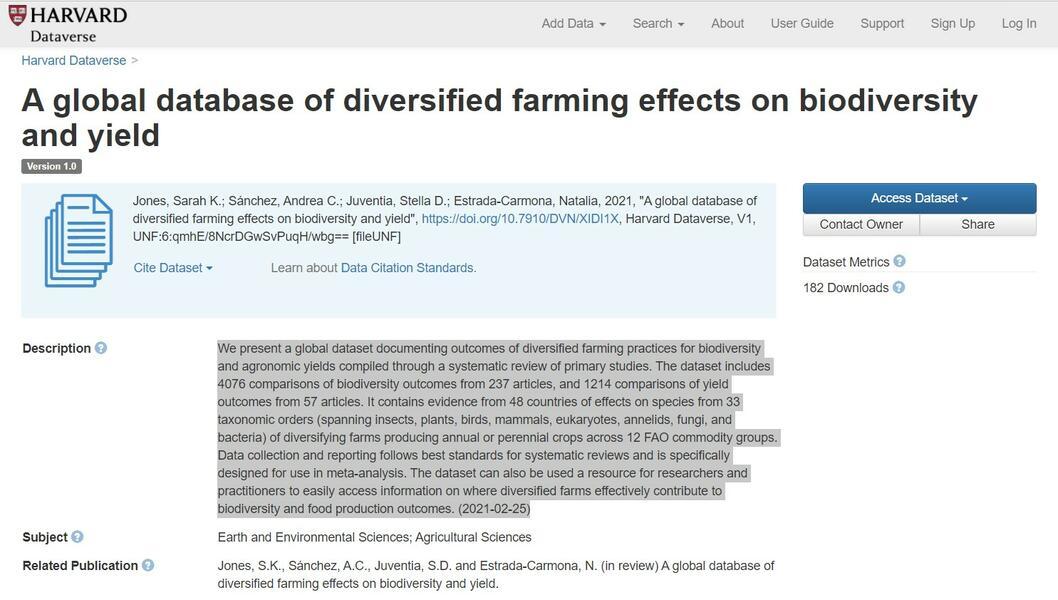
See how agrobiodiversity in production systems changes through time using the Agrobiodiversity Index in Jones et al. 2021. Note that the index does not consider the similarity of agrobiodiversity composition through time. This means it does not capture whether a crop species or habitat type has been permanently lost. For more on this topic, see Khoury et al. (2018) and our Diversity Lighthouse portal.
Ongoing activities:
1. Supporting national monitoring of agrobiodiversity in line with global agendas
198 countries have committed to achieving the Convention for Biological Diversity’s Global Biodiversity Framework (GBF) targets for global biodiversity conservation.
The Agrobiodiversity Tracker presents free and publicly available data on agrobiodiversity to monitor global progress towards achieving the GBF targets.
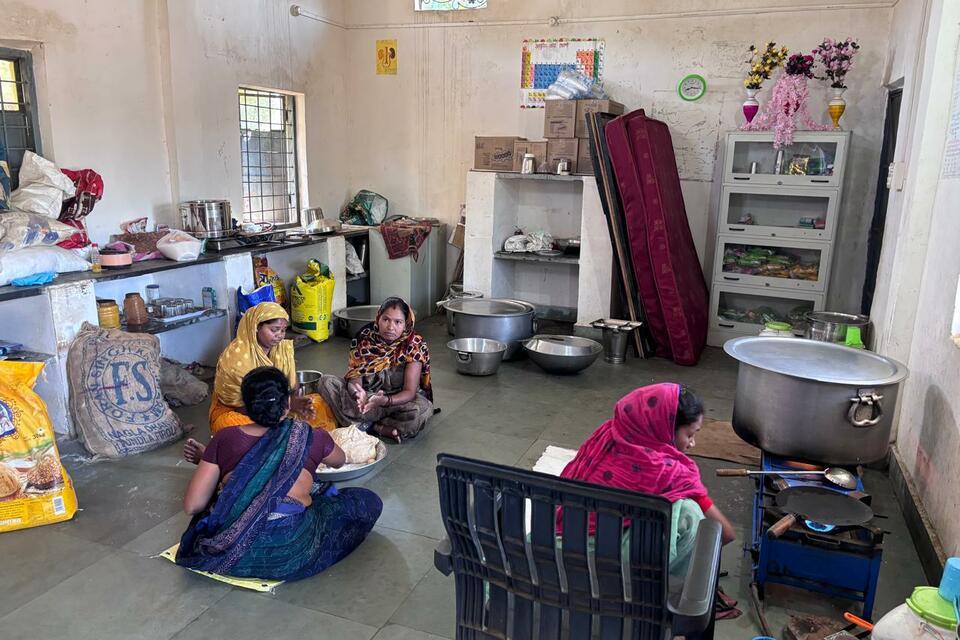
2. Collaborating with the School Meal Coalition to provide tools and identify pathways for achieving planet-friendly school meals
The project is mobilizing agrobiodiversity in India to support integrated landscape planning and planet-friendly school meal programs not only diversifying menus, but also inviting a rethink of how food, agrobiodiversity and public procurement can intersect to support more sustainable and contextually rooted food systems. Partners: Imperial College London, Professional Assistance for Development Action (PRADAN), and the Alliance of Bioversity and CIAT supported by the CGIAR Policy Innovations and Multifunctional Landscapes science programs. SHN Research Consortium and Imperial College London. This effort is in close collaboration with the Ashoka Trust for Research in Ecology and the Environment (ATREE), Professional Assistance for Development Action (PRADAN), Foundation of Ecological Security (FES), and the M. S. Swaminathan Research Foundation (MSSRF). The project is backed by the School Meals Coalition (SMC) and works in close coordination with the Government of Madhya Pradesh, particularly the Department of Panchayat and Rural Development.
3. Establishing tools and evidence for the establishment of ABD zones and ABD-based OECMs
The Alliance - in collaboration with INIA and Kew Royal Botanical Gardens - supports the development and harmonization of locally meaningful indicators and methods to monitor Peru’s Agrobiodiversity Zones and assess the nutrition, biodiversity, land, climate adaptation and mitigation, and socio-economic values of these zones. The objective is to analyze the diversity and outcomes across all the zones in a comparative manner and provide clear messages on the value of these zones. The Agrobiodiversity Zones are potential candidates for inclusion as Other Effective Conservation Management (OECMs) to contribute to Global Biodiversity Framework (GBF) Target 3.
4. Generating evidence of how diversification of fields, farms and landscapes supports people and nature
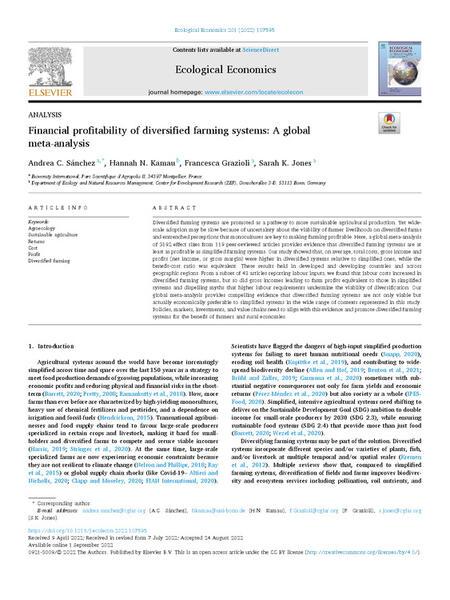
Since 2019, the project team has conducted multiple major global systematic reviews and meta-analyses to understand the multifunctionality of fields, farms and landscapes with varying levels of agrobiodiversity, and enablers and barriers to increasing agrobiodiversity at the local level. The team has published the results in peer-reviewed journals. This work continues in collaboration with CIRAD and ERA.
5. Collating geospatial data on agrobiodiversity to facilitate its use and access
In 2025, members of the team joined the author team for the IPBES spatial planning and connectivity assessment supported by CGIAR Multifunctional Landscapes and Policy Innovations science programs. This work will include updating and mobilizing geospatial data used in the Agrobiodiversity Index and facilitating access to these data through an online interactive dashboard.
6. Establishing a local network of researchers working on agrobiodiversity making use of proximity with French institutes based in Montpellier
In 2025, with CEFE and ARCAD, the team launched an agrobiodiversity network designed to foster exchange and collaboration between scientists and practitioners working on agrobiodiversity in Montpellier.
7. Advancing knowledge through capacity-building and collaboration
Each of these master’s and doctoral candidates is dedicated to advancing agrobiodiversity through innovative research, guided by expert mentorship from their universities and the Agrobiodiversity Index team. Their work doesn’t just explore the future—it helps build it.
Explore their profiles:
How we measure agrobiodiversity
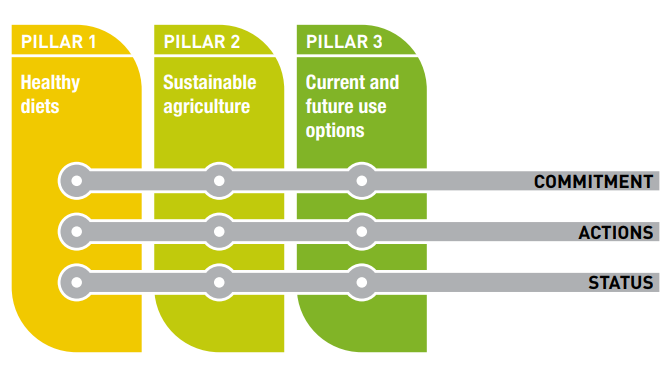
- Status – the current state of agrobiodiversity in markets and consumption, in agricultural production and in genetic resource management
- Actions – what countries, companies or projects are concretely doing to increase agrobiodiversity across the food system
- Commitments – to what extent country, company or project strategies, policies and codes of conduct are contributing to the sustainable use and conservation of agrobiodiversity for healthy diets, sustainable agriculture and future use options.
Stories
Publications
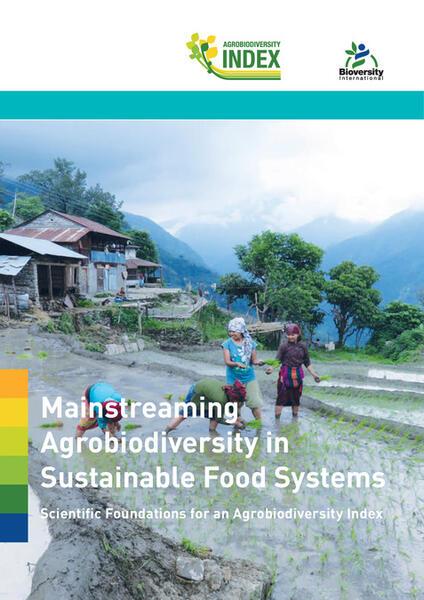
A publication about the Agrobiodiversity Index and cross-country comparisons, providing an overall view of countries' current status, actions, and commitments towards safeguarding and using agrobiodiversity in their food systems.
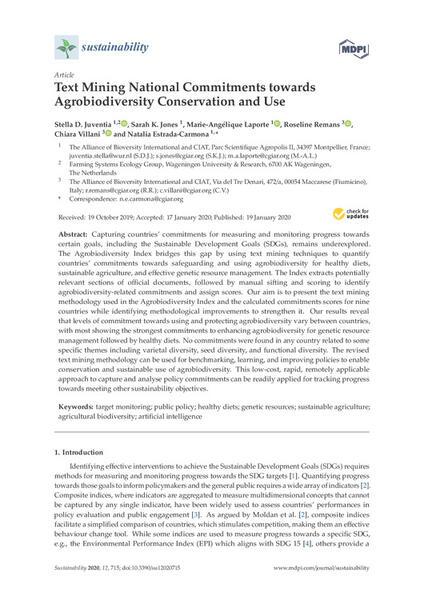
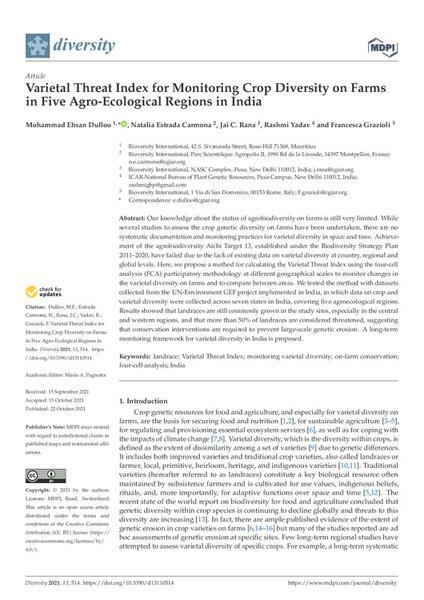
New methods to capture commitments to safeguarding and using agrobiodiversity for healthy diets, sustainable agriculture production and conservation.
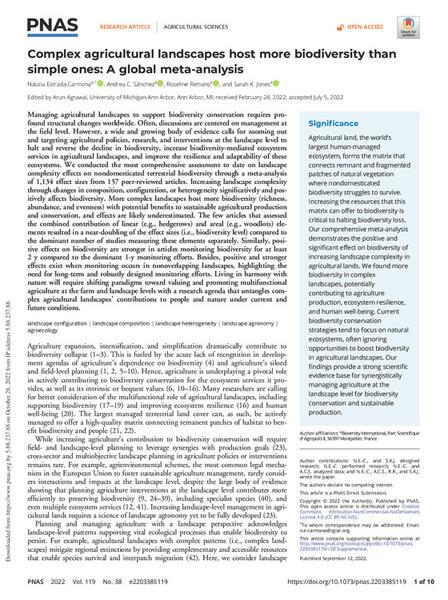
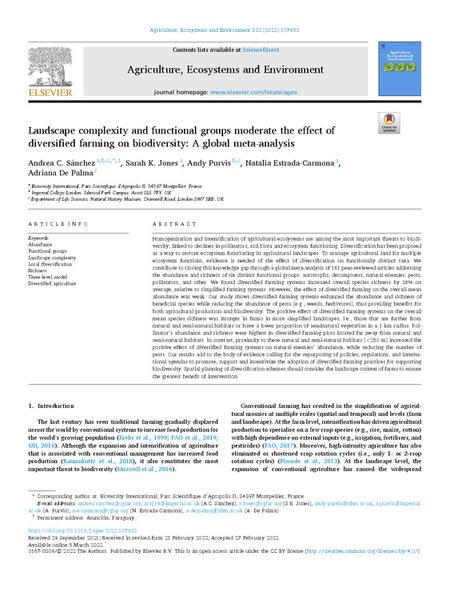
Here you can find a description and characterization of key indicators (i.e. landscape complexity) and how these contribute to biodiversity.
FAQ
Resources
Project leader

Sarah K. Jones
ScientistProject members

Roseline Remans
Honorary Research Fellow
Smitha Krishnan
Scientist II
Meghajit Sharma Shijagurumayum
Post Doctoral Fellow
Silvia Araujo de Lima
Senior Research Associate