2024 Annual Report A Roadmap for Food Systems Impact
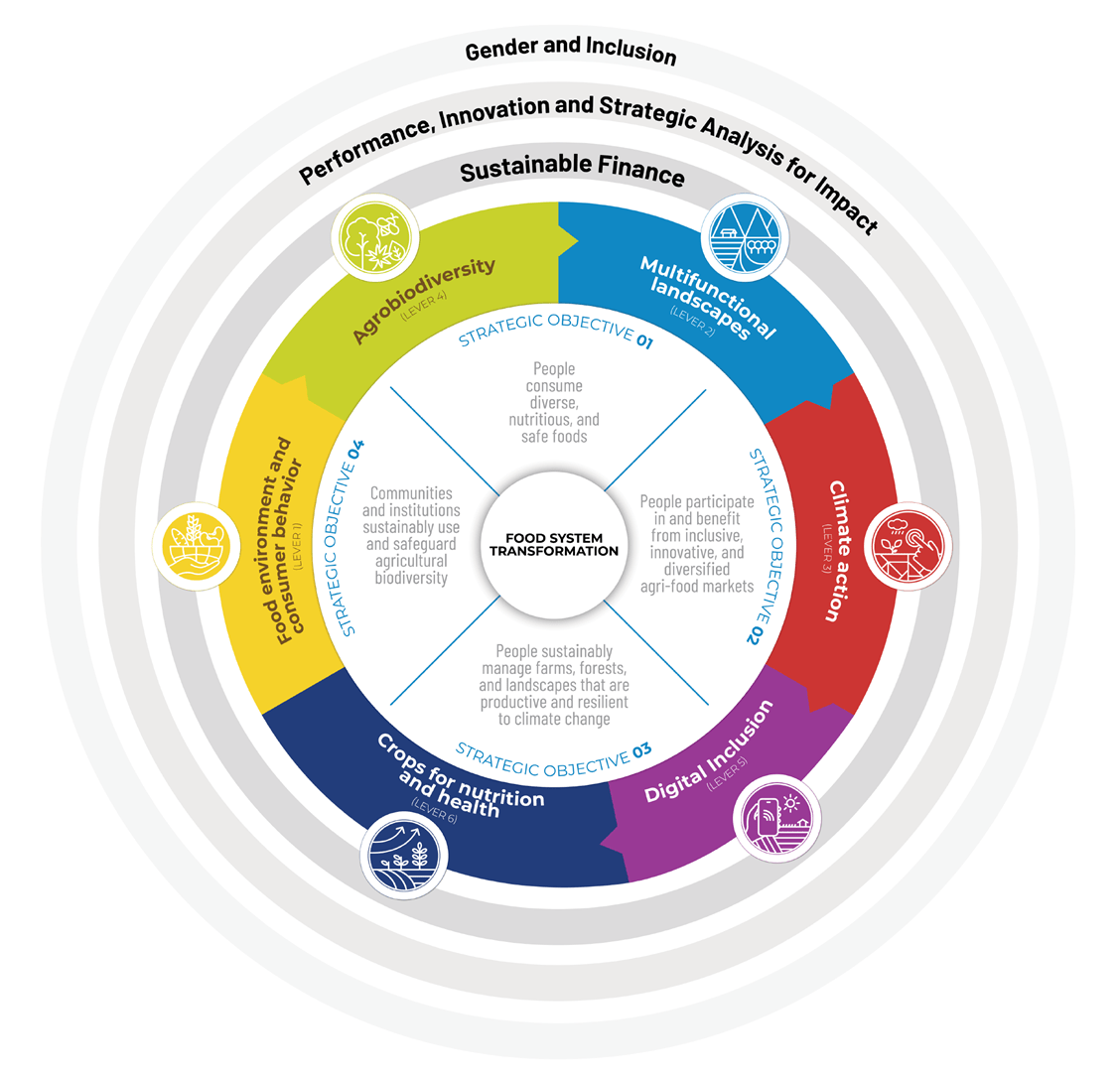
In 2019, Bioversity International and CIAT came together as an Alliance, united by a shared vision to sustainably transform food systems. We set our sights on research-based solutions for people to consume diverse, nutritious, and safe foods; access and benefit from agri-food markets; sustainably manage farms, forests, and landscapes, and sustainably use and safeguard agricultural biodiversity.
Examining the interactions– also known as the nexus– of agriculture, environment, and nutrition, we identified six research “levers” where our expertise could provide the best evidence, recommendations, and innovations to affect real change.
The Alliance at five: growth and diversification

Over the ensuing five years, the climate crisis, food insecurity, biodiversity loss, malnutrition, land degradation, conflict, and poverty have increased in gravity and scope, as we have surpassed the safe and just boundaries needed to maintain human and planetary health. But projections suggest that, with an integrated nexus approach, we can still advance on goals such as the SDGs, Global Biodiversity Framework, and Paris Agreement.
The Alliance has risen to this challenge by growing and diversifying. We are currently proud to count 2,255 full-time staff and 554 partners across Africa, the Americas, Asia, and Europe whose work spans an expanding portfolio. Increasingly relevant topics where we have cultivated expertise include: climate security and peacebuilding, sustainable finance, artificial intelligence and digital tools for breeding, circular economies, inclusive markets, school meals, agroecology and regenerative farming. Innovations and evidence in these areas are placing our scientists at global fora and key spaces for critical discussions and collaborations.
Addressing root causes
Last March, over 250 Alliance scientists convened in Nairobi for our second annual Science Week. With the theme “Think Global, Act Local”, we looked at what it takes to transform food systems.
As an international research organization, we are able to connect different disciplines, best practices, and lessons from over 30 countries where we work. By leveraging interdisciplinary methods and innovative tools from AI-powered restoration platforms to climate-smart investment recommendations, our scientists and partners are scaling up impactful, context-specific solutions that address root causes rather than symptoms.
Our research is only successful if it includes and empowers diverse populations. We are strong advocates for participatory approaches, in which scientists co-create solutions based on the lived experiences and contextual priorities and needs of farmers and consumers. Likewise we work closely with women, youth, and marginalized groups, recognizing their driving influence and essential role in transforming food systems toward greater sustainability, resilience and equity.
Accumulated impact
In the following pages, we explore the levels in which our research solutions are making an impact:
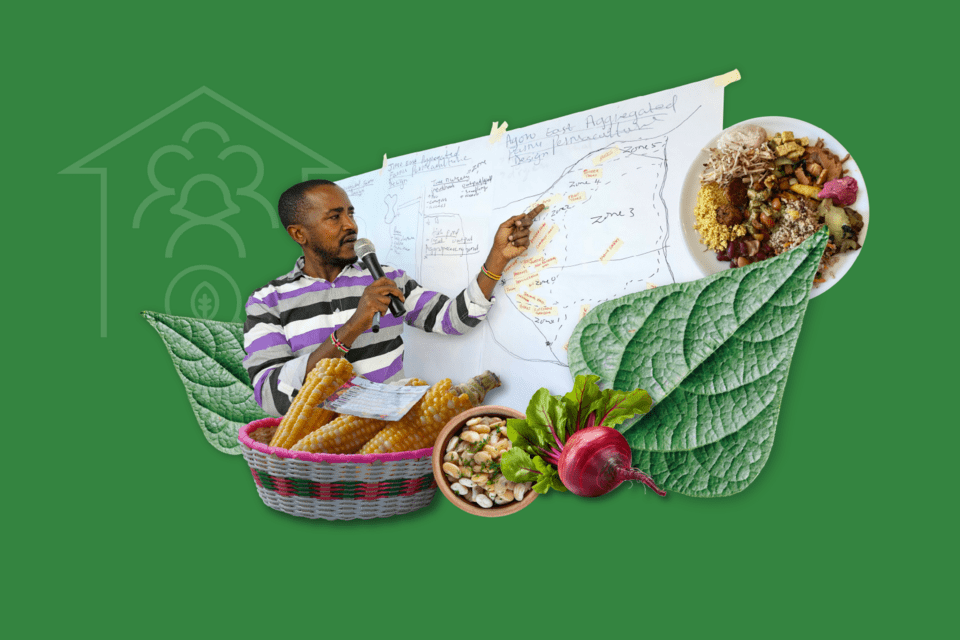
- Driving Community-Led Change: How we are working with smallholder farmers, consumers, women, and youth to create observable changes in behavior and discourse, from nutritious diets to restoration initiatives.
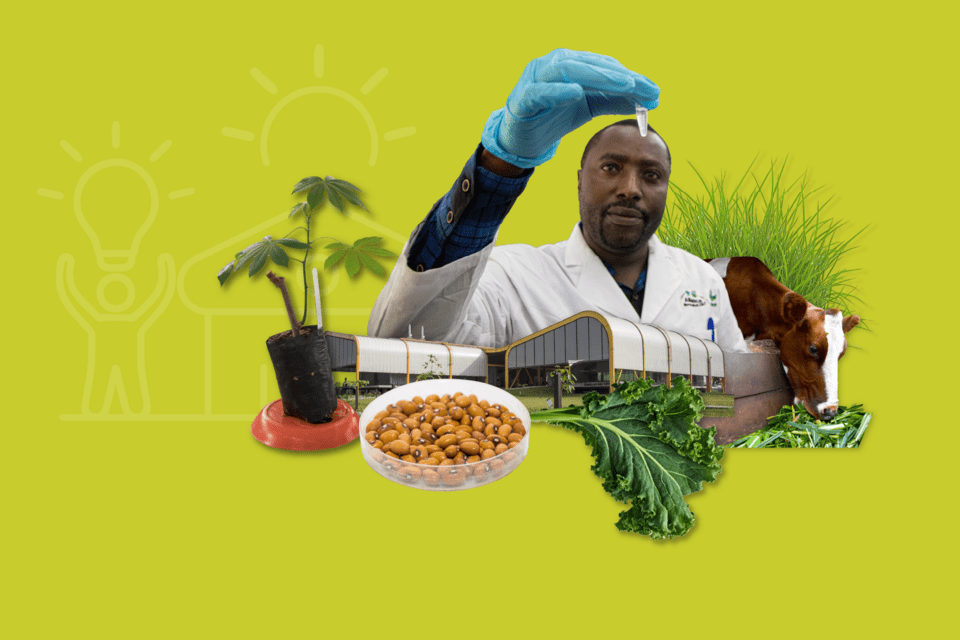
- Scaling Innovations to Institutions: The wider uptake or “adoption at scale” of our tools, methods, and outputs, including AI platforms, resilient crop varieties and sustainable investments.
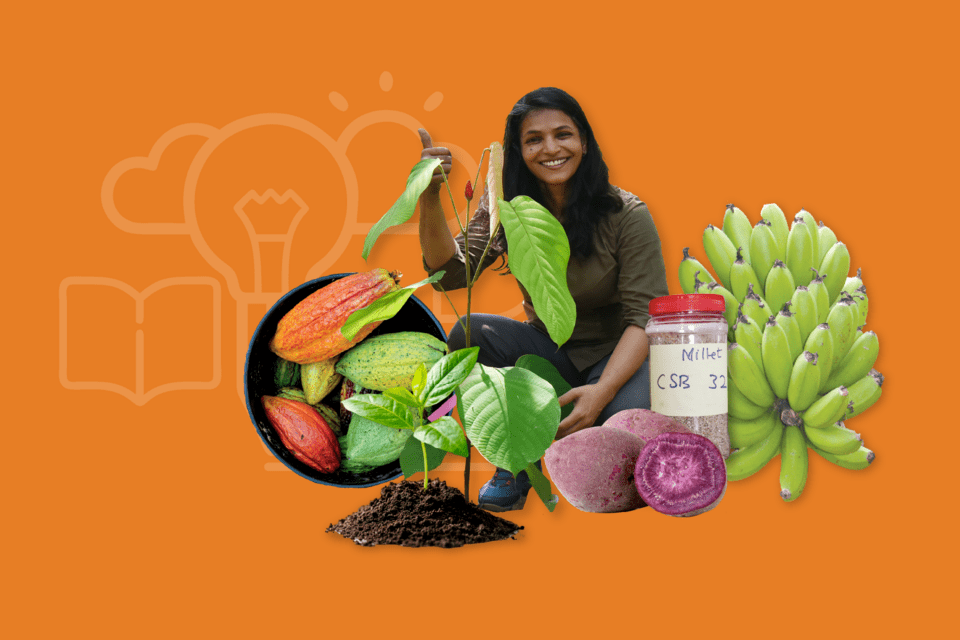
- Shifting Policy and Practice: Our policy-oriented research enables us to contribute to conservation and adaptation policies, sustainable markets, and next user decision making; for example, our expertise influenced negotiations at UN Biodiversity COP16.
2025 is already well underway, with the exciting new CGIAR research and innovation strategy launched during the first ever CGIAR Science Week in Nairobi. The new science programs correlate with the Alliance’s research areas; We are proud of leading the strategic formulation of all these programs, especially in Climate Action and Multifunctional Landscapes, where our scientists currently hold ad interim directorate roles.
We are participating in high-level events, most notably the Climate COP30 occurring this fall in Brazil, and engaging new audiences with online pages dedicated to the Alliance in Africa and the International Agrobiodiversity Congress (counting its third edition this May in Kunming, China).
We are also looking forward to a refreshed Alliance Research Strategy that concentrates on unlocking nexus solutions in agriculture, environment and nutrition to address food systems’ interconnected challenges including sustainability, resilience, nutrition, and equity. We will be emphasizing partnerships co-create solutions across diverse contexts for lasting and scalable impact.
Stay tuned for more in the coming months!

Juan Lucas Restrepo
Director General, and Trustee, Bioversity International UK/USA
Julia Marton-Lefèvre
Chair, Alliance Board of Trustees