
ACLIMATAR - Climate adaptation planning tool
ACLIMATAR is a climate adaptation support platform designed for smallholder perennial crops like cocoa, coffee, and tea. It offers site-specific climate risk assessments and portfolios of prioritized adaptation practices. By linking climate change analysis to actionable advice, ACLIMATAR provides a coherent framework for climate adaptation.
The platform helps local projects and technicians understand the impacts of climate change and explore strategies to mitigate these effects. Through a map-based interface, users can select a location of interest and access data on past, present, and future precipitation and temperature. This information is paired with crop-specific hazards and a change map of agro-climatic suitability in the region.
Results can be viewed online, saved to a dashboard, or exported to a PDF for easy field use.
In what context is this tool useful?
ACLIMATAR can be used at multiple stages of adaptation planning, from sensitizing producers and scoping future impacts to detailed input for discussion on available adaptation options.
Use cases:
- Sensitization on change
- Discussing adaptation options
- Project planning
Results achieved
The platform is available in English, Spanish, and French.
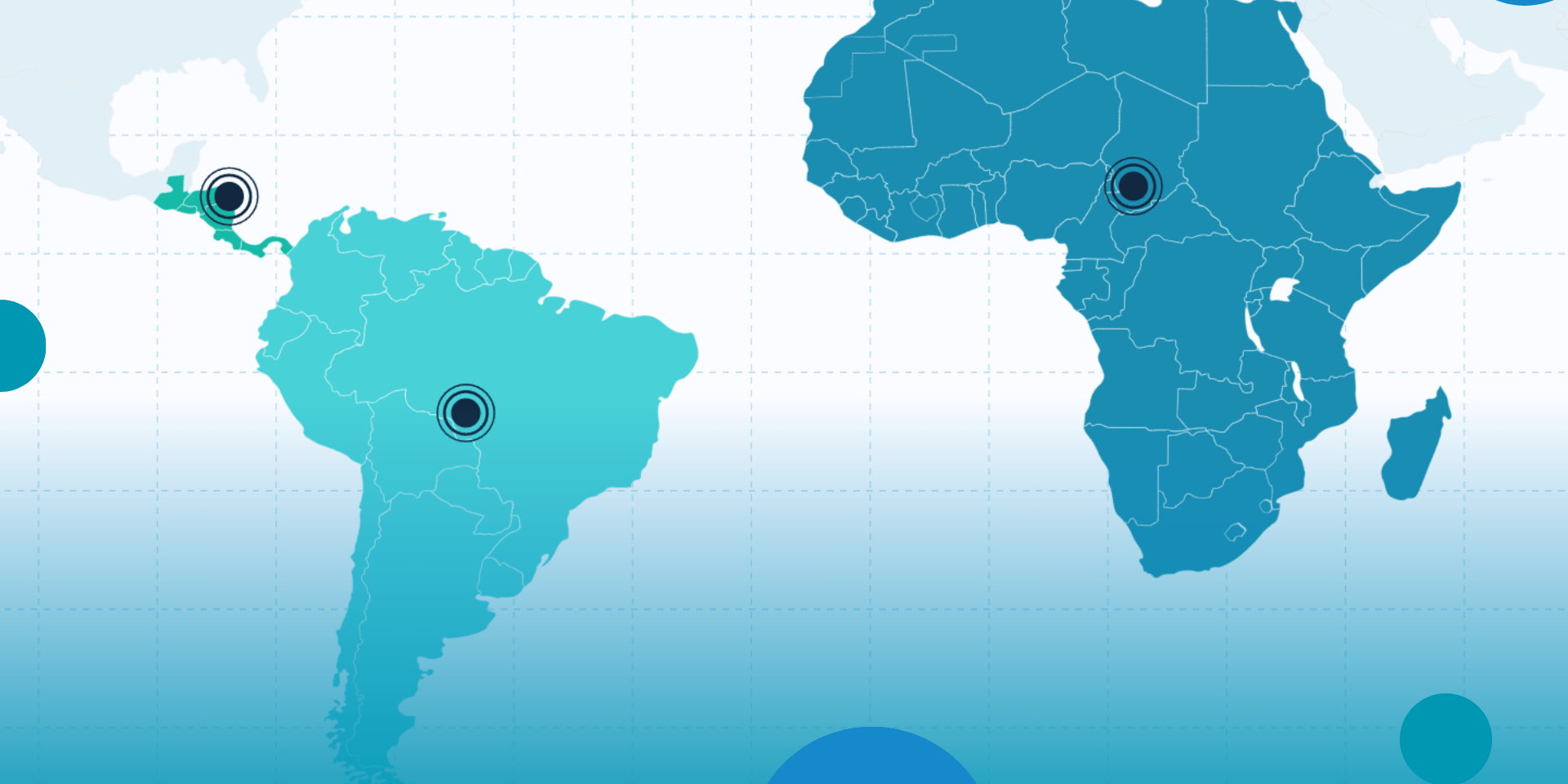
Climate data and adaptation options are accessible for four macro-regions across 10+ countries. In West Africa, cocoa-related data covers key growing regions in Cameroon, Côte D’Ivoire, Ghana, and Nigeria. In East Africa, data for both coffee and tea is available for Uganda and Kenya. In South America, cocoa data is available for Colombia, Ecuador, and Peru, while Central America provides data for both cocoa and coffee.
Additionally, a learning course and user tutorials have been developed to support users in navigating the platform effectively.
Variations, scaling and adaptations
The platform’s data and capabilities can be scaled to cover additional crop-growing regions in the tropical belt. Its approach to climate risk analysis and participatory adaptation planning can also be applied to other perennial crops.
An API is available for integrating platform data into third-party tools. If more detailed crop or environmental data is available for a specific region, the platform can further tailor its adaptation options to suit local needs.
Contact Us
Christian Bunn
Scientist II
Paul Günter Schmidt
Researcher
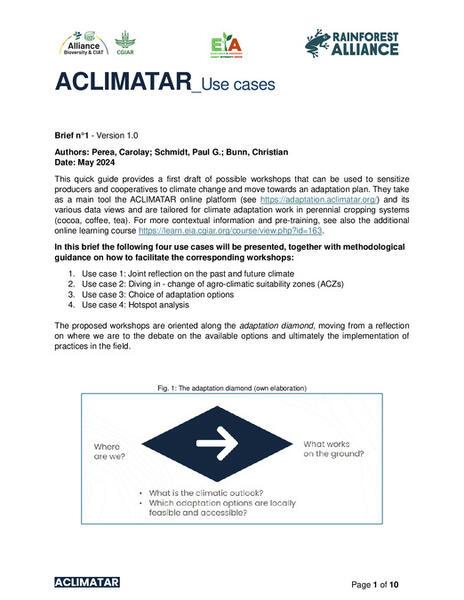
Datasets
Additional Resources
Funders
Excellence in Agronomy (EiA)
Rainforest Alliance