From the Field Weaving hope drop by drop: The network of community climate observers in Honduras
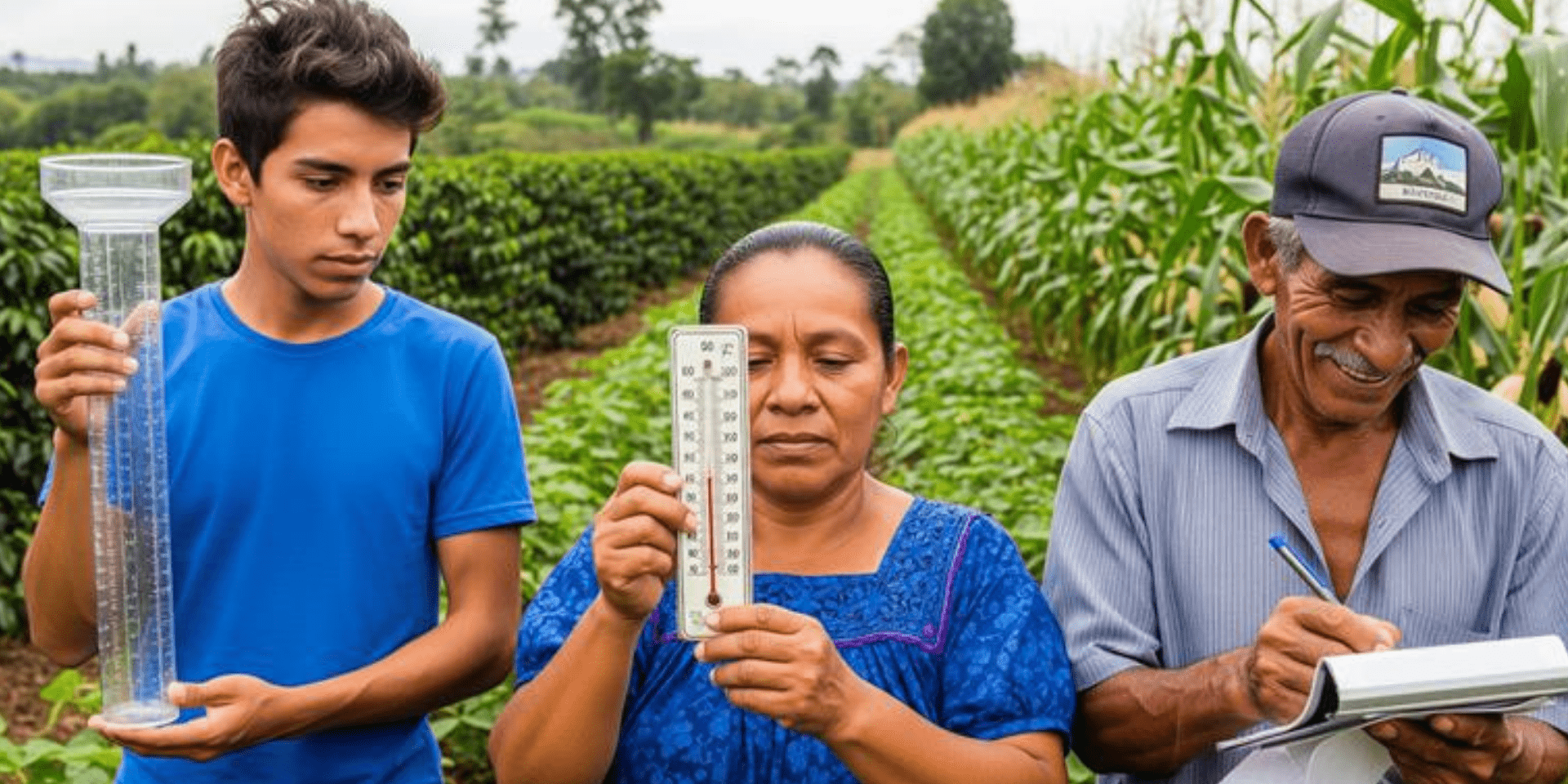

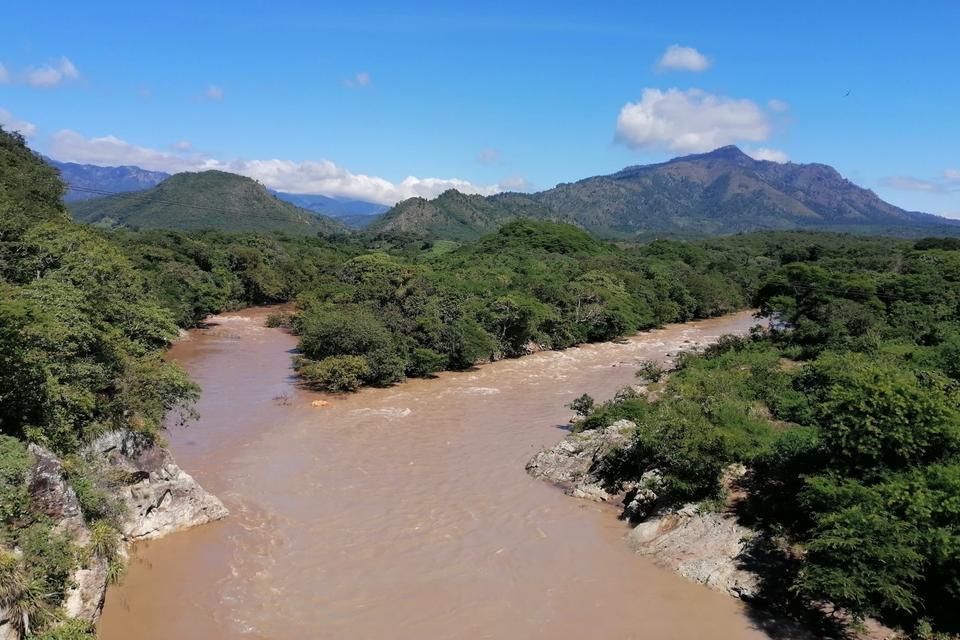
In the mountains, valleys, and plains of Honduras, when the sky hints at rain or the sun bears down relentlessly, there are watchful eyes observing, hands measuring, and voices reporting. These are farmers who, beyond tending their crops, have taken on a crucial role in climate change adaptation: becoming community climate observers.
This is how the National Network of Community Climate Observers has taken shape, organically and steadily, a living initiative that now reaches 14 of the country's 18 departments. What began as a pedagogical exercise within specific projects has grown into a committed, interconnected, and resilient network for Honduras.
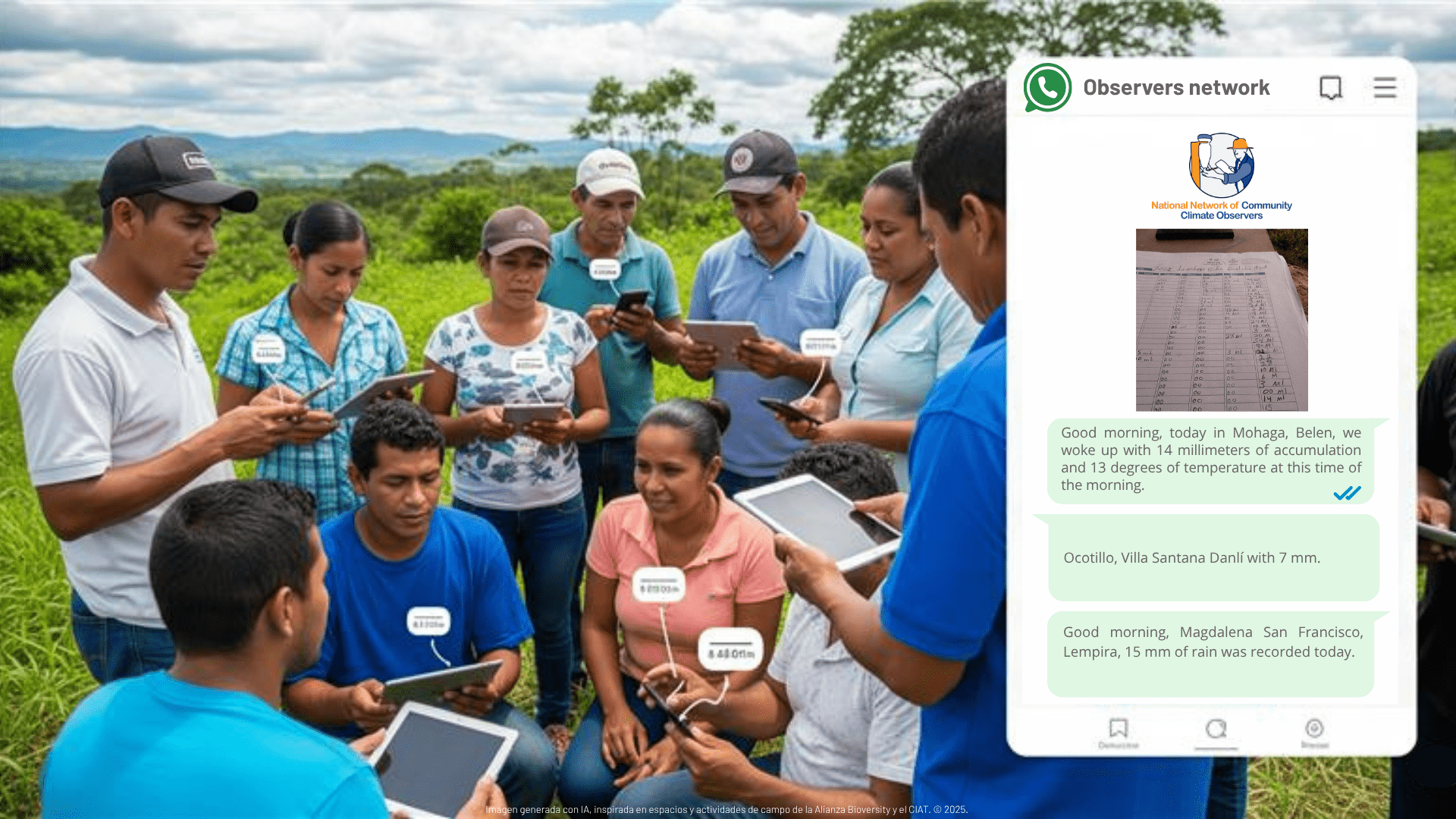
“It’s like a domino effect,” explains the network coordination team. “Someone in the west sends in their data, and then someone from the south replies, ‘Me too!’” This way, information flows through WhatsApp, breaking geographical barriers and creating a sense of national belonging among people who may have never met in person but know they are united by a shared cause: caring for their land.
A Network Born from the Land
This network has deep roots in rural communities. With rain gauges placed on their plots, these individuals measure rainfall every morning before 10:00 a.m. and share the data via WhatsApp. These reports feed into national maps and agroclimatic bulletins prepared by COPECO–CENAOS, the official meteorological agency in Honduras.
But the information doesn’t flow in just one direction. “It used to be one-way. Today, it’s a chain, producers are also contributing to the national meteorological service,” explains Oscar Martínez, a Climate Action Researcher based in Honduras. This two-way exchange turns communities into active participants in the country’s climate services.
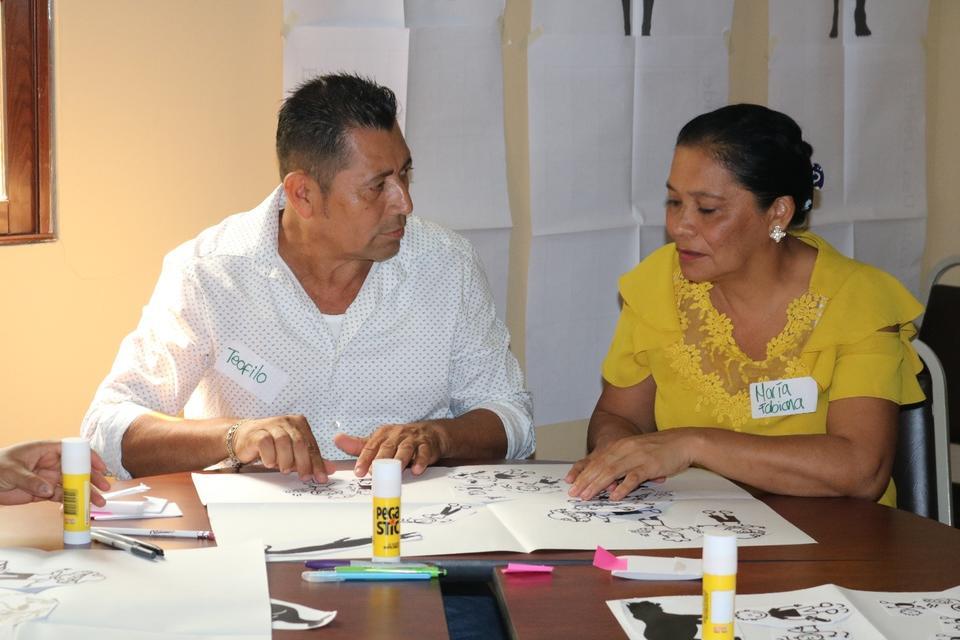
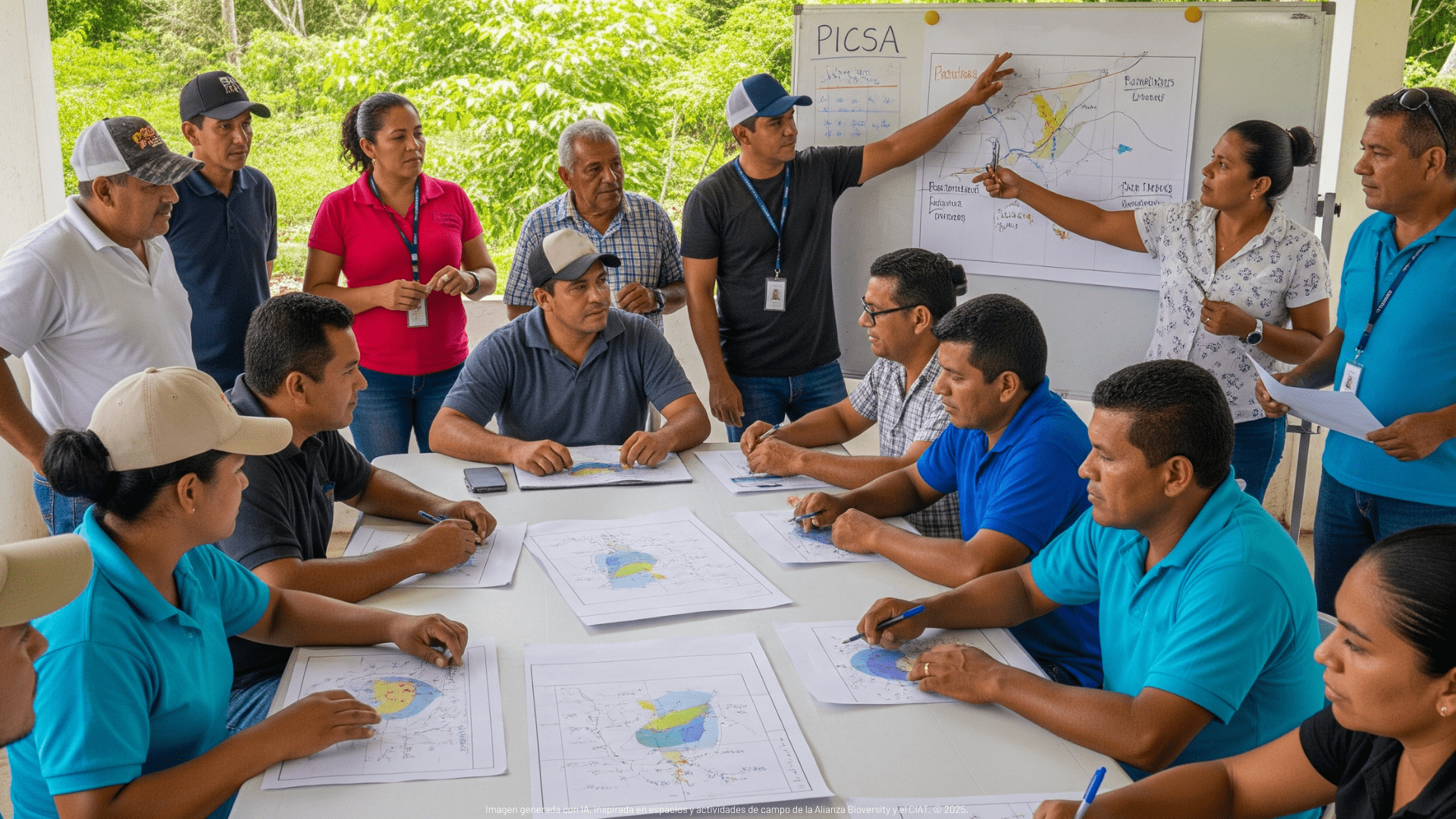
The network not only generates data, it transforms lives. Through participatory methodologies like PICSA (Participatory Integrated Climate Services for Agriculture), producers learn to interpret rainfall patterns, analyze risks, plan their crops, and even produce their own bio-inputs.
One of the most compelling signs of this network’s impact is that even when projects end, farmers continue reporting on their own. “That showed us this wasn’t just because of the project, it’s because communities found real value in what they do,” says Martínez.
That value has also been recognized by other organizations. Institutions such as GOAL International, CASM (Mennonite Social Action Commission), the Center for Human Development, local governments, and initiatives like CGIAR’s AgriLAC Resiliente have joined in—integrating their own networks, adapting the model, or seeking to replicate the experience.
With more than 120 active members in the main WhatsApp group, dozens of functioning rain gauges, bulletins written on municipal chalkboards, and even audiovisual reports shared on social media by the farmers themselves, the network continues to grow.
Now, there's a vision to innovate, incorporating tools like Melissa, a chatbot to automate rainfall recording, while preserving the human essence that has made this initiative so strong. There’s also interest in expanding the observers’ role to include reporting forest fires or other threats during the dry season.
These types of sustainable initiatives are a clear example of climate change adaptation because they connect local knowledge with informed decision-making. Rather than relying solely on centralized systems, they empower communities to understand, anticipate, and respond to the effects of climate on their livelihoods. The persistence and evolution of this network, beyond the projects that gave rise to it, show that when solutions are born from the territory and respond to real needs, they have the power to transform not only the present, but also the country’s climate future.
Because this network doesn’t just measure rainfall: it cultivates hope, strengthens community organization, and positions rural Honduras as a key actor in facing the challenges of climate change.
In every drop counted, in every piece of data shared, beats the commitment of a country that, from its rural heart, is building a more informed, fairer, and more resilient future.