From the Field Vegetables are plentiful in the lean seasons
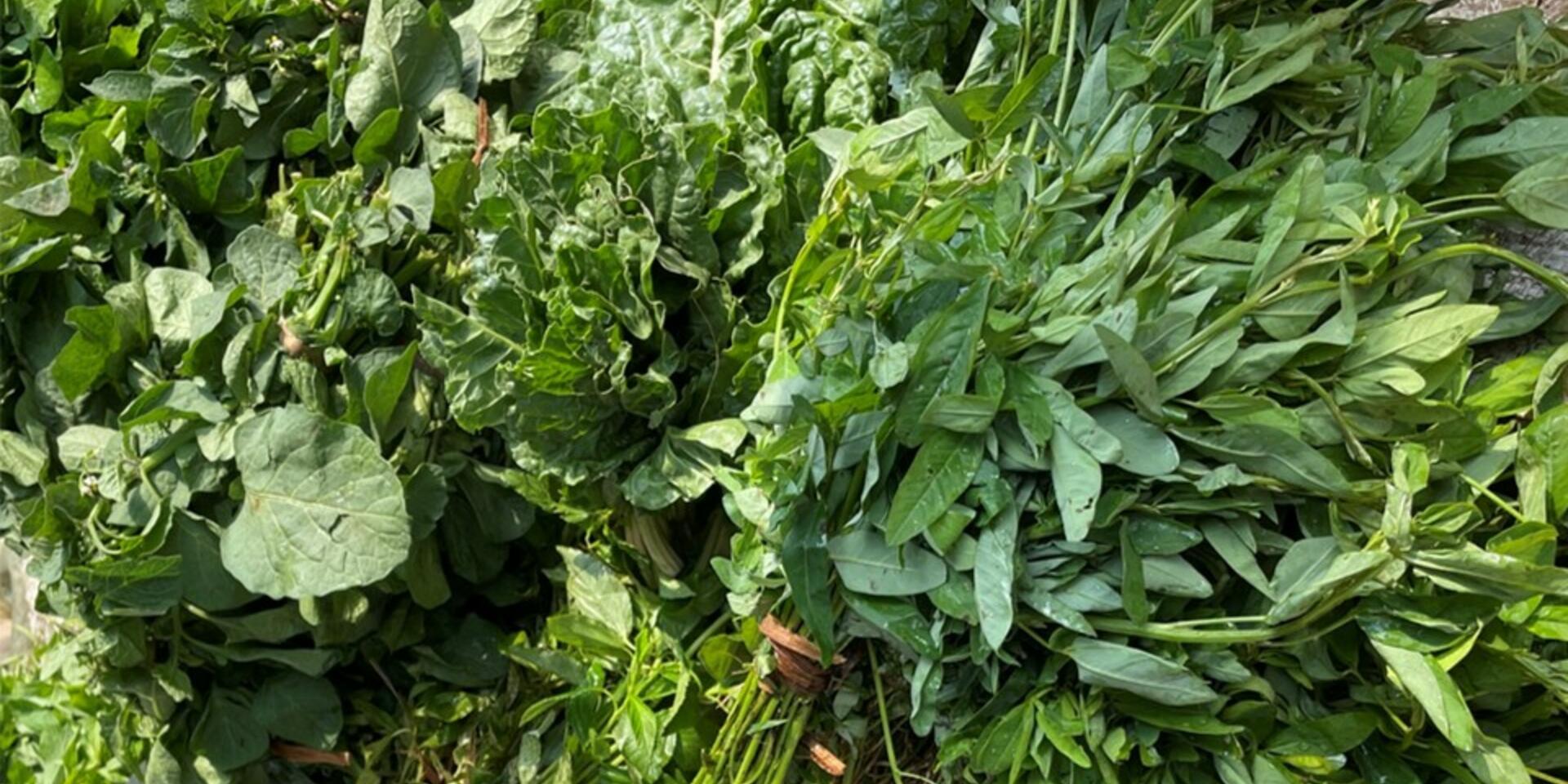

In the lean seasons, stored food supplies are low and food prices rise. Seasonal availability calendars reveal that lean seasons are actually a peak season for many vegetable species. Creative use of vegetables as essential rather than secondary foods could be a solution for diversifying diets.
What to do when local food stocks are depleted?
In Africa, periods of food shortage (often right before the harvest) are widely considered as the ‘lean’ or ‘hungry’ season. During these months, the situation can be dire. Not only are local food supplies dwindling, food prices can also be elevated. The common response during this critical period tends to be focused on cereal imports and securing calories to meet domestic demand. By contrast, limited attention is devoted to other food groups, including dark green leafy vegetables such as amaranth or other vegetables such as tomatoes. These foods provide important sources of micronutrients vital to human health and can serve as crucial complements to the more calorie-dense staples. Yet, the simplistic focus on how to secure more staples risks overlooking the potential of local wild and cultivated vegetables for food and nutrition security during the lean seasons.
Using seasonal availability calendars to reveal promising foods and food groups
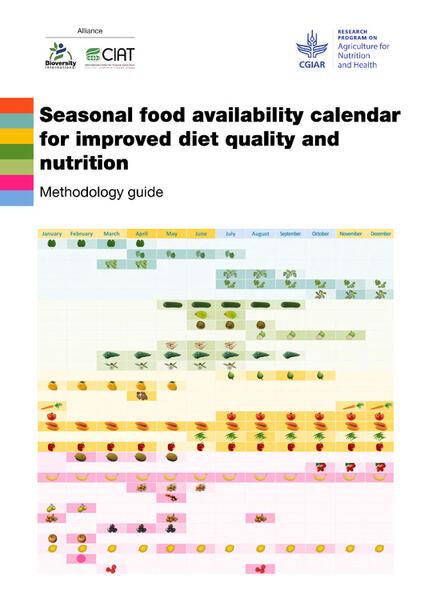
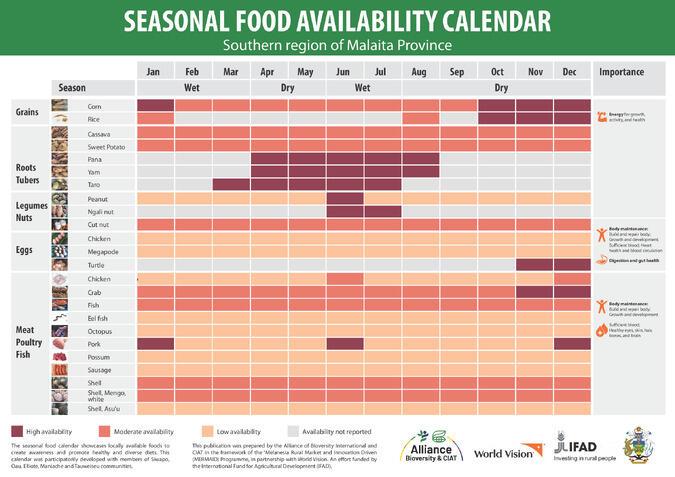
Seasonal availability calendars are an emerging tool to showcase the availability of different food groups and the species within each group available in the landscape in each month of the year. As such, they are well suited to reveal variations in the diversity of different foods throughout the year. Seasonal availability calendars are particularly promising as both a data collection and communication tool because they are typically developed through a participatory process with local communities (see the Methodology Guide) . Once the calendars are created, they can be presented back to the communities where data were collected. The calendar format allows for transforming data into colorful visuals of food availability trends throughout the year. Importantly, the calendars are easily understandable, including for people with a low level of literacy.
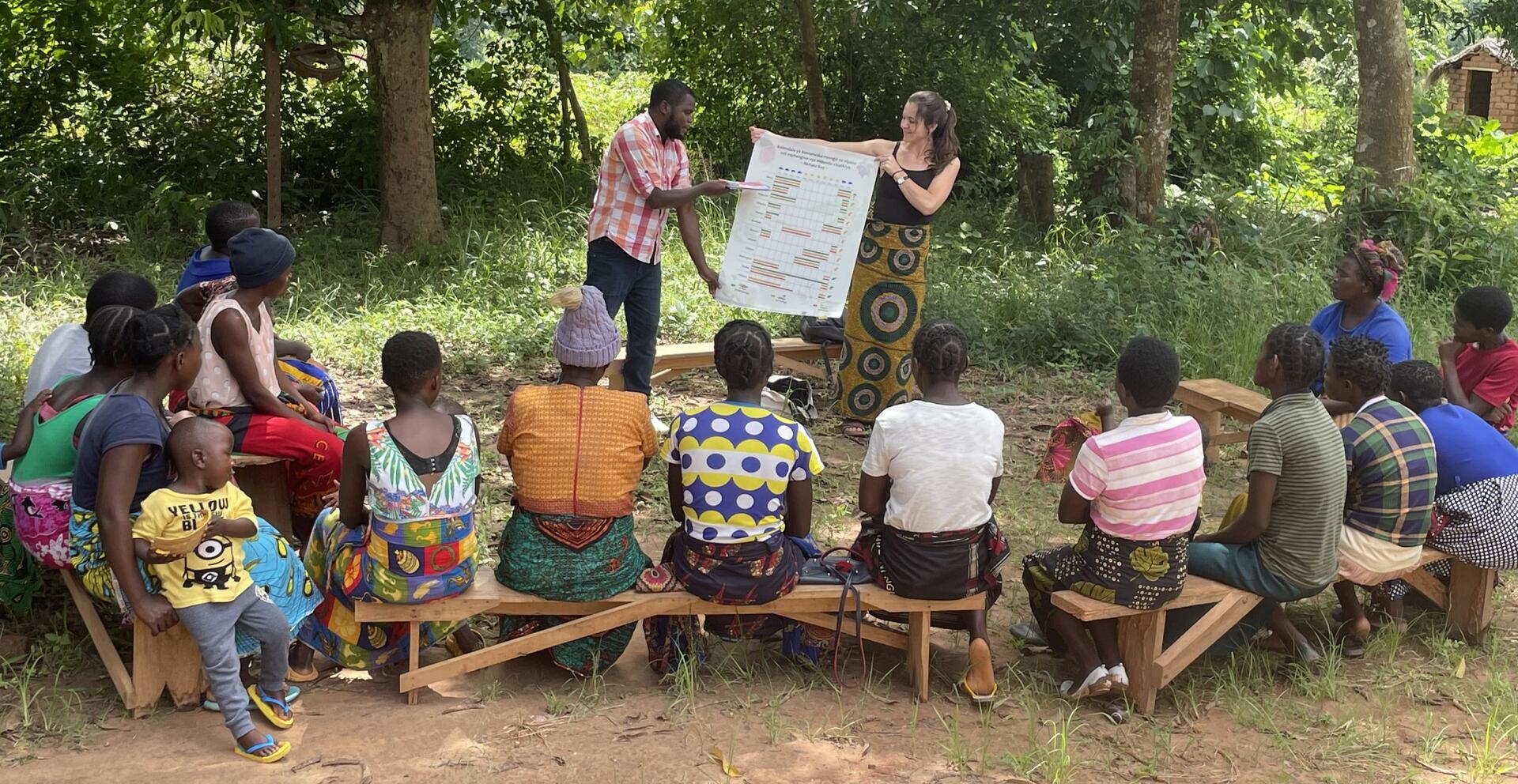
Sharing seasonal calendars with communities - Nkhata Bay, Malawi (March 2023). Photo credit: Temwa Luhanga
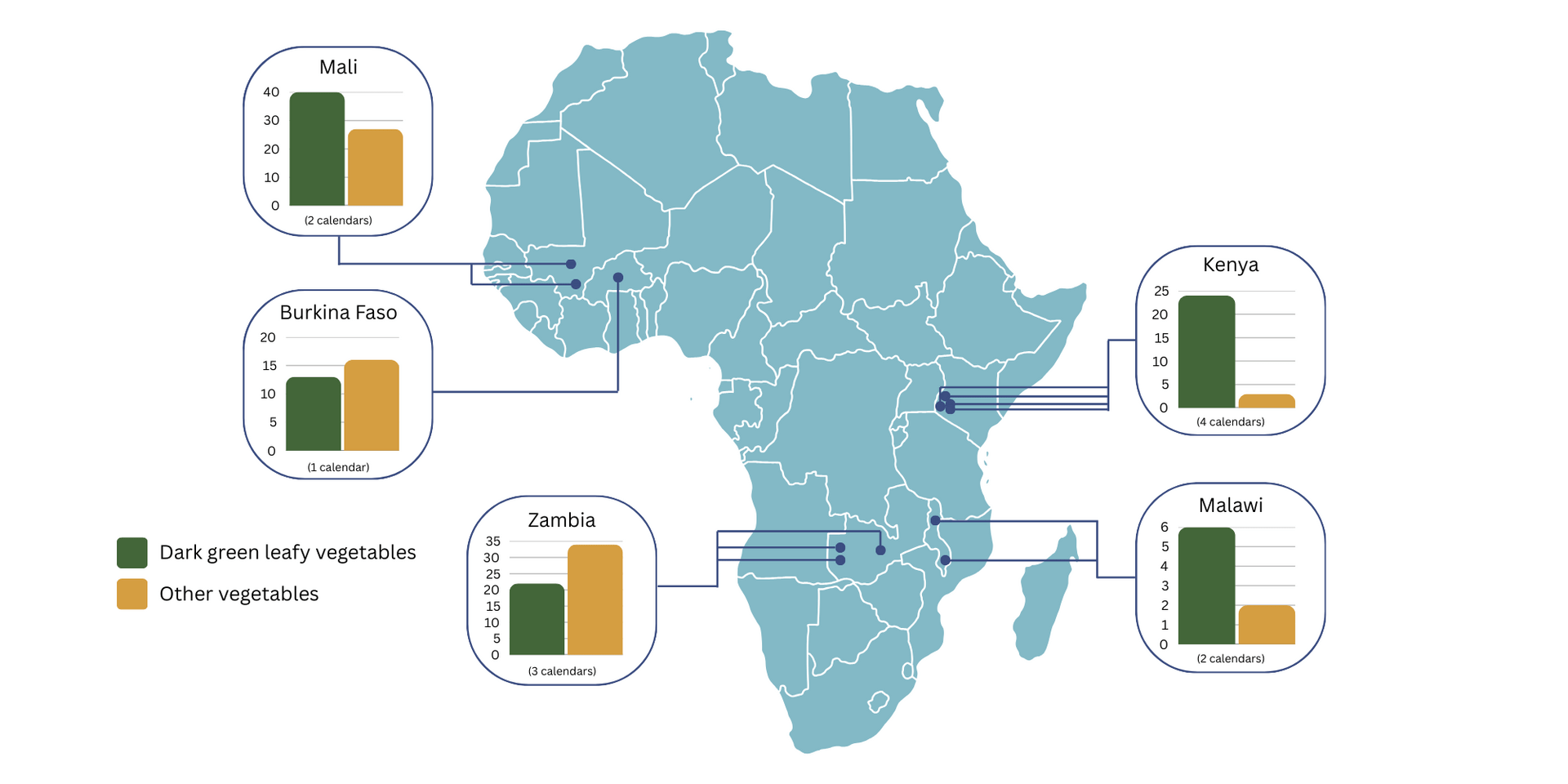
Figure 1: Locations of 12 seasonal calendars from Burkina Faso (whole country), Mali (Sikasso and Segou), Malawi (Mulanje and Nkhata Bay), Zambia (Mapungy, Lealui, and Nalitoya), and Kenya (Bondo, Mumias, Teso, and Vihiga). Also shown is the number of recorded species of dark green leafy vegetables and other vegetables.
The calendars are specific to the site where data is collected as food availability is highly dependent on climatic conditions. Also, because they are based on local peoples’ observations rather than a botanical survey, seasonal availability calendars are not representative of all species available in any given area.
Here, we set out to compile existing seasonal availability calendars from previous participatory research in Africa. We identified 12 different seasonal availability calendars from 5 countries: Burkina Faso, Mali, Malawi, Zambia, and Kenya (Figure 1). The aim of the compilation effort was to identify potential patterns in periods that are considered as lean and non-lean seasons in each location.
The promise of dark green leafy vegetables and other vegetables during the lean season
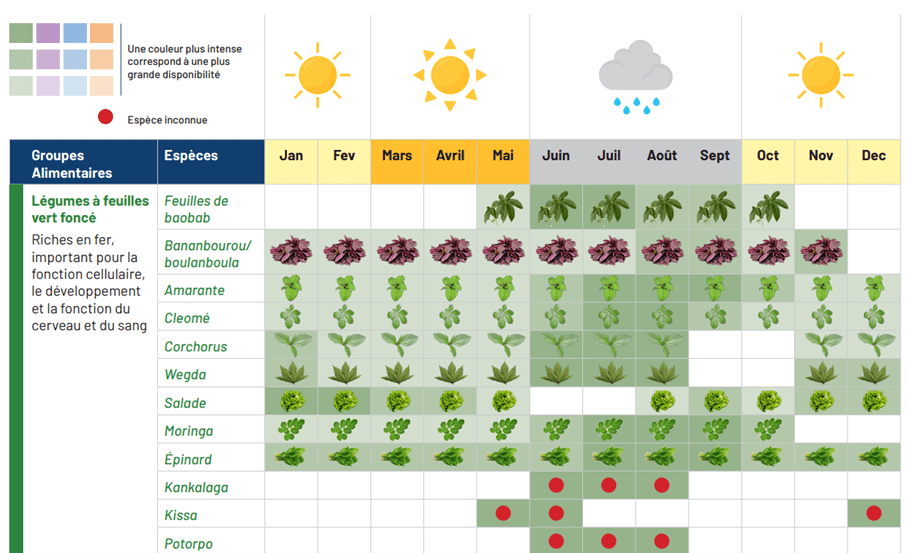
An (excerpted) example of a seasonal calendar developed by communities in Burkina Faso as part of the SUSTLIVES project (funded by the EU).
Our compilation of 12 seasonal availability calendars revealed the importance of dark green leafy vegetables and other vegetables during the lean seasons in Africa when the supplies of staple foods are less abundant. The calendars show how this period is actually a peak season for numerous species of dark green leafy vegetables and other vegetables. For example, baobab leaves and jute leaves were available throughout the lean season in Mali (Segou and Sikasso) but not throughout the non-lean season.
The diversity of other vegetables was also higher in the lean seasons. We observed that 64% of all other vegetables were available in the lean seasons as compared to only 38% being available in the non-lean seasons.
Time to shift dialogues on how to cope with the lean seasons towards a focus on local agrobiodiversity
Although our sample size is small, our compilation of the 12 calendars provides evidence that there should be a new focus on the potential of seasonal food availability, especially during lean seasons. With the diversity of different dark green leafy vegetables and other vegetables being higher during the lean seasons as compared to the non-lean seasons, investments in education and information sharing can be used to demonstrate how to use diverse foods across the landscape. Actions such as promotional materials, cooking demonstrations and convenient and tasty recipes should be used to further promote consumption of wild and cultivated vegetables and provide consumers with tools for greater uptake and use of these nutritious resources. While these nutritious vegetables might not address calorie gaps, they can go a long way in addressing nutrient gaps.
The new addition in 2025 of an indicator of healthy diets – the Minimum Dietary Diversity – to track progress toward the United Nations Sustainable Development Goal 2 on zero hunger, marked the importance of moving beyond calories. This was a big step forward in recognizing that the diversity of our diet is essential. Our compilation of 12 seasonal availability calendars illustrates that wild and cultivated vegetables can be key to diversify diets – both in the critical lean seasons as well as outside the lean seasons.
Acknowledgments
ECV, BdB, CH, and LVR were funded by the European Research Council (ERC) under the European Union’s Horizon 2020 Research and Innovation Program (grant agreement 853222 FORESTDIET).
Related publications