Research Articles Turning the feed crisis into an opportunity: How improved forages can transform livestock systems in sub-Saharan Africa

Livestock are at the heart of rural livelihoods across sub-Saharan Africa. From pastoral systems in drylands to mixed crop–livestock farms in high-potential areas, cattle, sheep, and goats provide food, income, traction, manure, and social security for millions of households. Yet despite hosting nearly a quarter of the world’s ruminants, the region produces less than 3% of global meat and milk. One reason stands out above all others: A chronic shortage of quality livestock feed.
A new multi-country analysis shows that this feed crisis is not only a constraint – it is also a major economic and development opportunity. With targeted investments in improved forages and seed systems, sub-Saharan Africa could significantly boost livestock productivity, farmer incomes, and climate resilience over the coming decade.
The scale of the feed gap
Across ten countries in East, Southern, and West Africa – South Sudan, Sudan, Somalia, Malawi, Zambia, Zimbabwe, Mozambique, Mali, Senegal, and Nigeria – the study estimates an annual livestock feed deficit of more than 82 million tons of dry matter. Of this, over 19 million tons would need to come specifically from cultivated forages to stabilize and sustainably intensify livestock systems.
This deficit is not abstract. It translates directly into low milk yields, poor animal growth, high mortality during dry seasons, and heavy reliance on expensive feed supplements. Feed costs can exceed 60% of total livestock production expenses, pushing many smallholders out of markets and reinforcing cycles of poverty.
Climate change is making matters worse. More frequent droughts, erratic rainfall, and land degradation are reducing rangeland productivity just as demand for animal-source foods is rising rapidly due to population growth and urbanization. Without action, the gap between livestock demand and supply will continue to widen.
Why improved forages matter
Improved tropical forages – high-yielding grasses and legumes such as Urochloa hybrids, Megathyrsus maximus, Lablab purpureus, and Vigna unguiculata – offer a proven solution. Decades of research show that these species can:
- Increase milk and meat production
- Reduce seasonal feed shortages
- Improve labor efficiency
- Lower feed costs
- Enhance soil health and carbon sequestration
- Reduce greenhouse gas emissions per unit of product
In short, improved forages are a cornerstone of climate-smart and sustainable livestock systems.
Yet adoption remains surprisingly limited. Most forage expansion to date has been project-driven, localized, and difficult to sustain. The bottleneck is not the technology, it is the system that delivers it.
What it would take to close the gap
The study quantifies, for the first time at this scale, what it would actually take to bridge the forage deficit:
- Land: About 1.2 million hectares of cultivated forages across the ten countries
- Farmers: Engagement of over 1.1 million smallholder farmers
- Seed: Up to 100,000 metric tons of forage seed over a 10-year horizon
These numbers are large – but they are not unrealistic when spread over time and across regions. A gradual adoption pathway, starting at 10% and scaling up annually, aligns far better with current institutional and market capacities than an immediate, full-scale rollout.
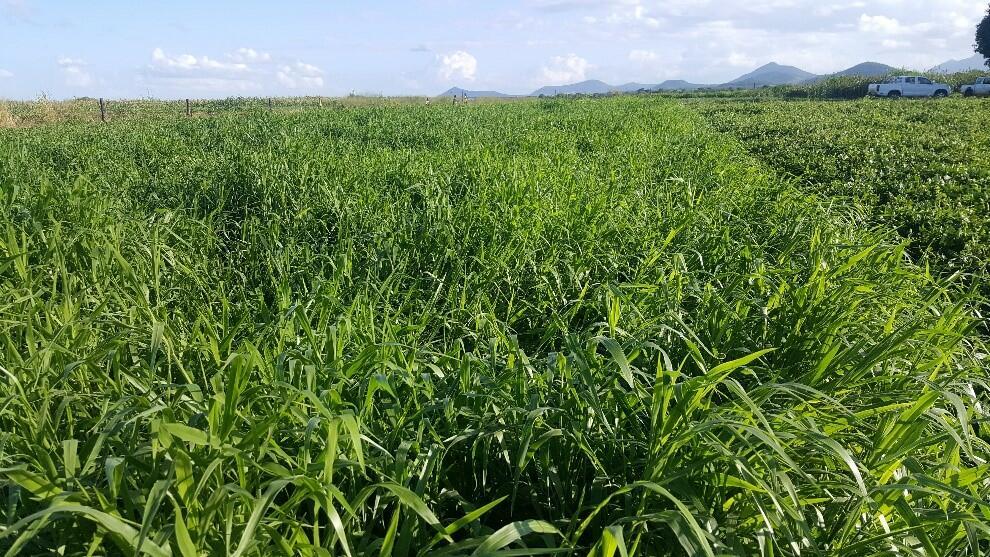
Urochloa forage grass nursery established at Sussundenga Research Station, Mozambique. Credits: I. Nyagumbo / 2017.
A billion-dollar opportunity hiding in plain sight
Perhaps the most striking finding is the economic potential of forage development.
Even under conservative assumptions, the projected forage seed market across the ten countries is valued at US$247–424 million over ten years. At the same time, the value of cultivated forage production itself could reach US$3.4–6.2 billion, depending on adoption rates.
These figures matter for two reasons. First, they show that forage development is not just a public-good intervention – it is a viable business opportunity for seed companies, agro-dealers, and service providers. Second, they underline the multiplier effects of forages across livestock value chains, rural employment, and national economies.
Why forage seed systems are the missing link
Despite growing policy recognition of feed shortages, most countries still lack robust forage seed systems. Markets are often informal, fragmented, and heavily dependent on imports from Latin America or Asia. Quality is inconsistent, prices are high, and availability is unreliable, especially for smallholders in remote areas.
The study highlights several systemic barriers:
- Weak local seed production and processing capacity
- Limited private-sector engagement
- Poorly harmonized seed regulations
- Under-resourced extension services
- Competition for land and insecure tenure
Where seed systems are stronger, such as in parts of Southern Africa, adoption is already more advanced, demonstrating what is possible with the right enabling environment.
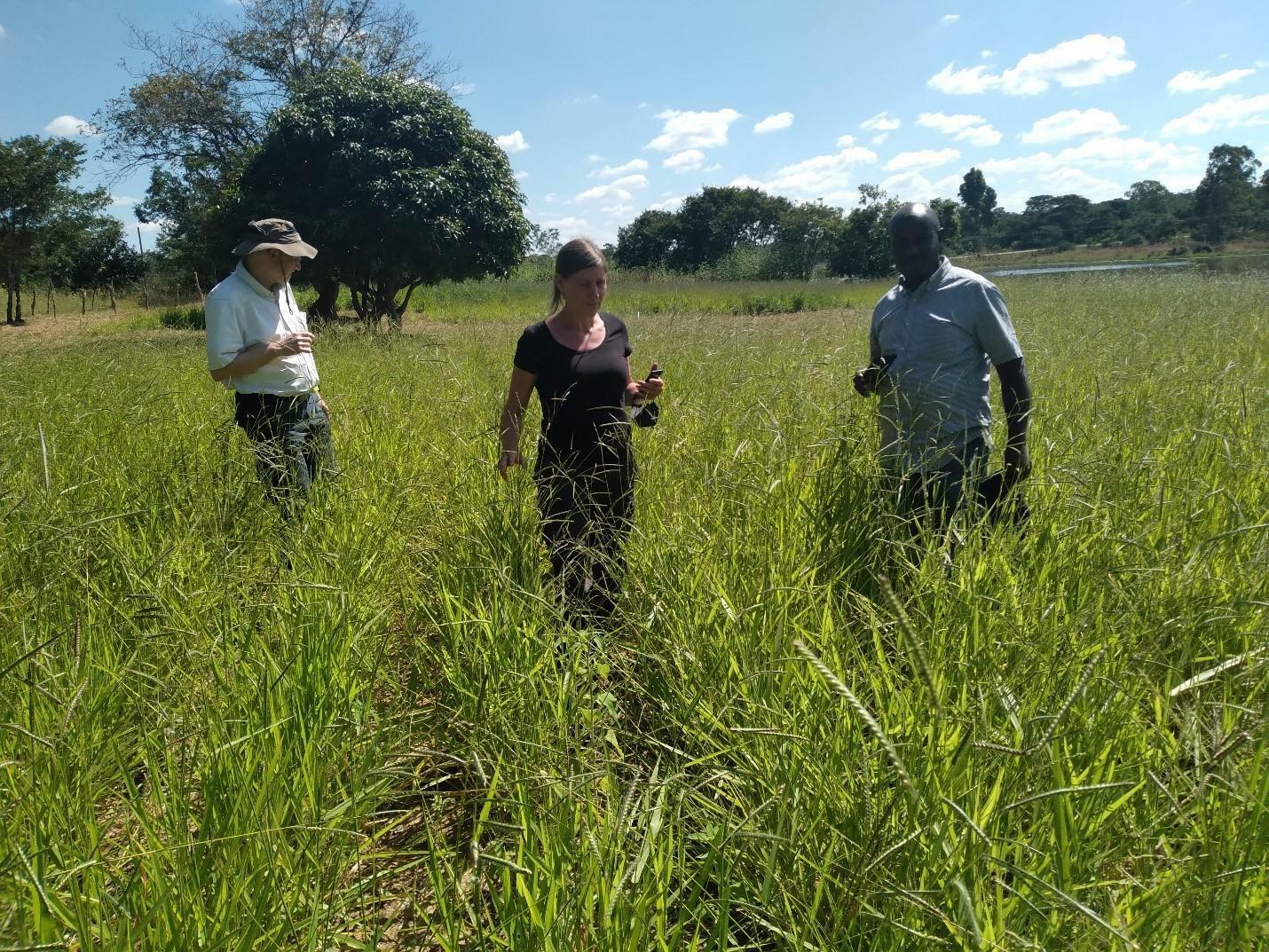
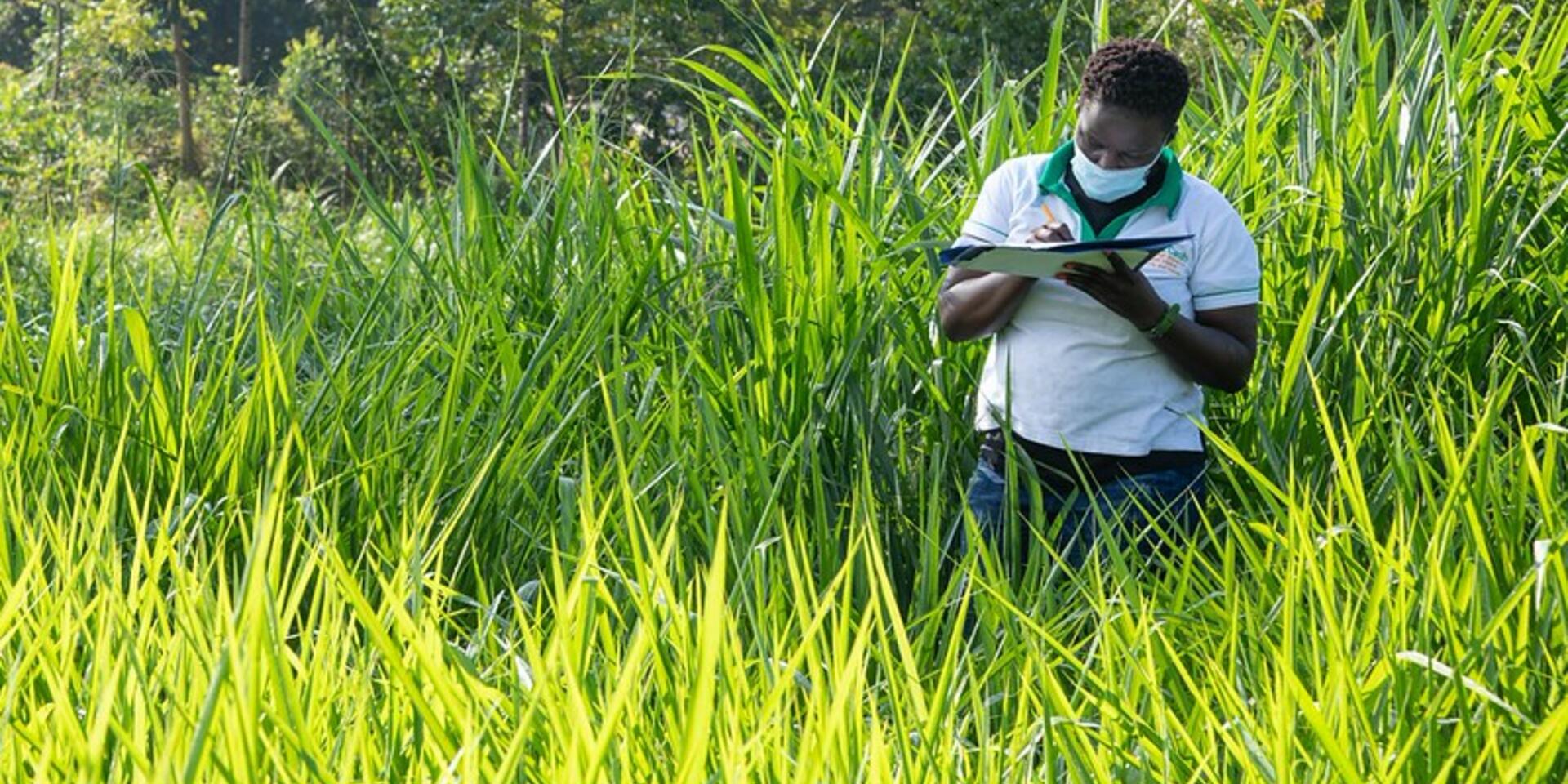
Alliance and Tropical Seeds co. teams observing a field of Stylosanthes guianensis in Kasama, Zambia. Credits: CIAT / 2022
Policy ambition meets implementation reality
Across all ten countries, livestock strategies increasingly emphasize productivity, resilience, and feed security. Many national plans mention fodder banks, pasture improvement, or drought-tolerant forages. Regional frameworks under ECOWAS, SADC, COMESA, and IGAD further support these goals.
Yet the gap between policy ambition and on-the-ground impact remains wide. Without coordinated investments in seed systems, extension, and farmer incentives, forage development risks remaining stuck at pilot scale.
From pilots to transformation: What needs to change
To turn improved forages into a true engine of livestock transformation, the study calls for integrated action across multiple fronts:
1. Strengthen local seed systems: Invest in domestic forage seed production, quality control, and distribution to reduce import dependence and costs. Zambia is a promising seed production hub.
2. Embed forages in livestock and climate policies: Move from generic references to clear targets, budgets, and accountability for forage deployment.
3. Rebuild extension and training capacity: Farmers need practical support to establish, manage, and conserve forages – not just access to seed.
4. Crowd in the private sector: The economic case exists. What’s needed are incentives, risk-sharing mechanisms, and predictable demand.
5. Address land and gender constraints: Secure land access and inclusive approaches are essential for long-term adoption, especially for women farmers.
6. Leverage regional trade frameworks: Harmonized seed regulations can unlock regional markets and economies of scale.
A foundation for resilient food systems
Improved forages are more than a technical fix for feed shortages. They are a strategic investment in resilient food systems, healthier ecosystems, and inclusive rural development.
By aligning research, policy, markets, and farmer realities, sub-Saharan Africa can transform its livestock sector – turning today’s forage deficit into tomorrow’s growth opportunity.
The evidence is clear. The opportunity is real. What remains is the collective commitment to scale.
Acknowledgements: This work was carried out as part of the CGIAR Science Programs on Sustainable Animal and Aquatic Foods (SAAF), Breeding for Tomorrow (B4T), Multifunctional Landscapes (MFL), and Sustainable Farming (SF). We thank all donors who globally support our work through their contributions to the CGIAR System. The views expressed in this document may not be taken as the official views of these organizations. CGIAR is a global research partnership for a food-secure future. Its science is carried out by 15 Research Centers in close collaboration with hundreds of partners across the globe.