Research Articles TerraSocio: new methodology helps evaluate socio environmental impact

Sustainability is also about ensuring that peoples and communities have their needs met and improve their quality of life. For impact investment projects, this is one of the goals, coupled with environmental goals. Having monitoring and evaluation tools that take into account socio environmental characteristics is essential to ensure that sustainable projects also measure their human impact properly.
In 2023, the Alliance and the Soros Economic Development Fund (SEDF) collaborated to develop a tailor-made methodology for evaluating the socioeconomic impact. This tool, called TerraSocio, seeks to generate information that can be used by projects, donors, investors and other stakeholders to make long- and short-term strategic decisions, identify areas for expanding project work and other needs or expectations beneficiaries have.
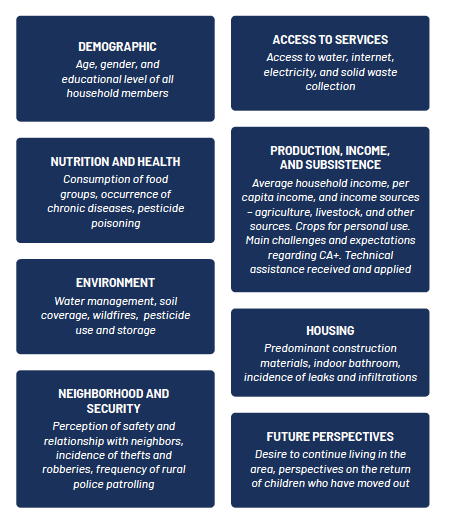
TerraSocio is comprised of two parts: the Socio Environmental Development Index (SDI), and Complementary Information. It uses quantitative and qualitative methods to capture data on demographics, nutrition, health, housing, environment, production, and future
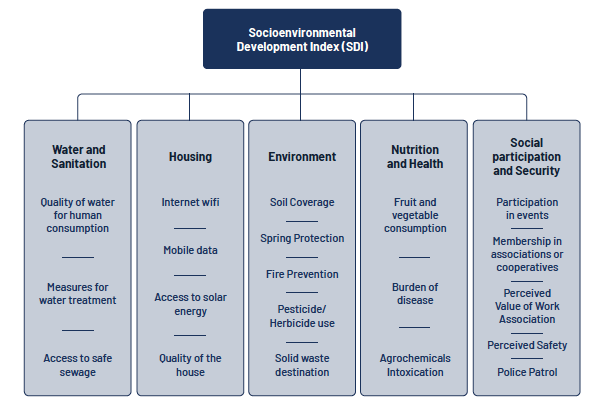
aspirations. The complementary information can be tailored to each project’s needs, and focus on demographics, gender roles, access to basic services and agricultural practices. Data is initially gathered through a survey focusing on the eight themes described in the image below.
The Socioenvironmental Development Index (SDI)
The SDI is a composite index that measures progress across five critical dimensions: (1) Water and Sanitation,(2) Nutrition and Health, (3) Housing, (4) Environment, and (5) Social Participation and Security. Rooted in the axiomatic literature of composite indices, it employs a multidimensional framework inspired by global best practices, including the Alkire-Foster methodology. The index generates a score on a 0-to-100 scale, reflecting a continuum from minimal to optimal socioenvironmental conditions. Its adaptive methodology aligns with international quality-of-life benchmarks established by the United Nations and other global bodies, ensuring cross-program comparability and investment-oriented accountability.
Since it’s based on survey data with a strong methodology, TerraSocio is easily adapted to different project and institutional needs. It is designed to be implemented in collaboration with the project’s technicians, who will receive training in TerraSocio. This allows for a smoother application, and knowledge transfer, with the project appropriating and internalizing the methodology.
Successful Pilot
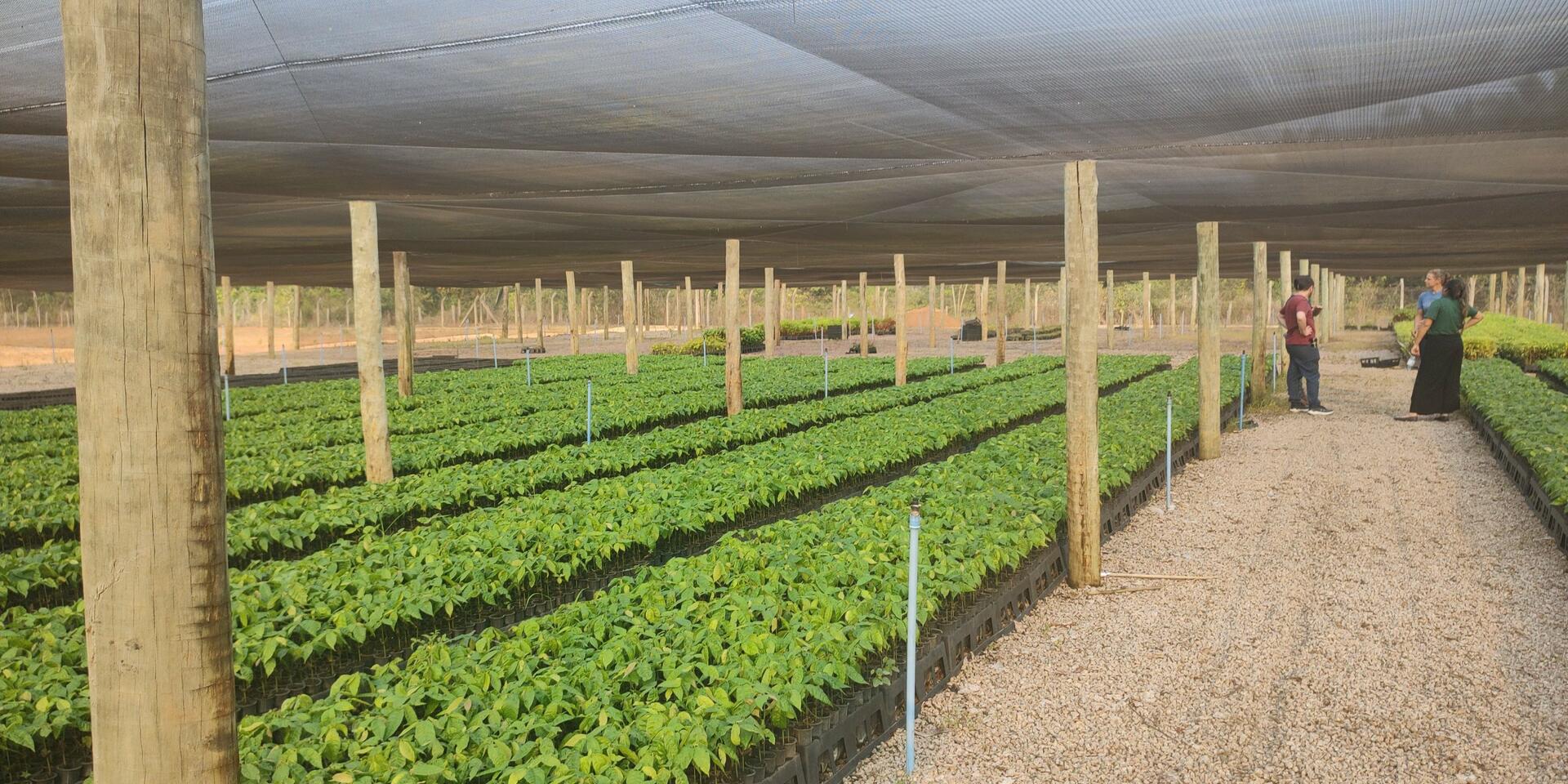
TerraSocio is currently being applied to evaluate one of the Amazon Biodiversity Fund (ABF) invested project, an impact investment fund supported by the Alliance Bioversity & CIAT. This pilot was conducted in 2024 with Cacau Amazônia + (CA+). It aims to promote sustainable cocoa cultivation by supplying high quality seedlings, technical support, infrastructure and training, while also facilitating carbon-credit sales and Payment for Environmental Services (PES). CA+ comes from pilot projects developed by Rioterra to scale up the value chain from technological showcases implemented in past restoration initiatives.