Research Articles Research shows socio-economic status of impact investment initiative
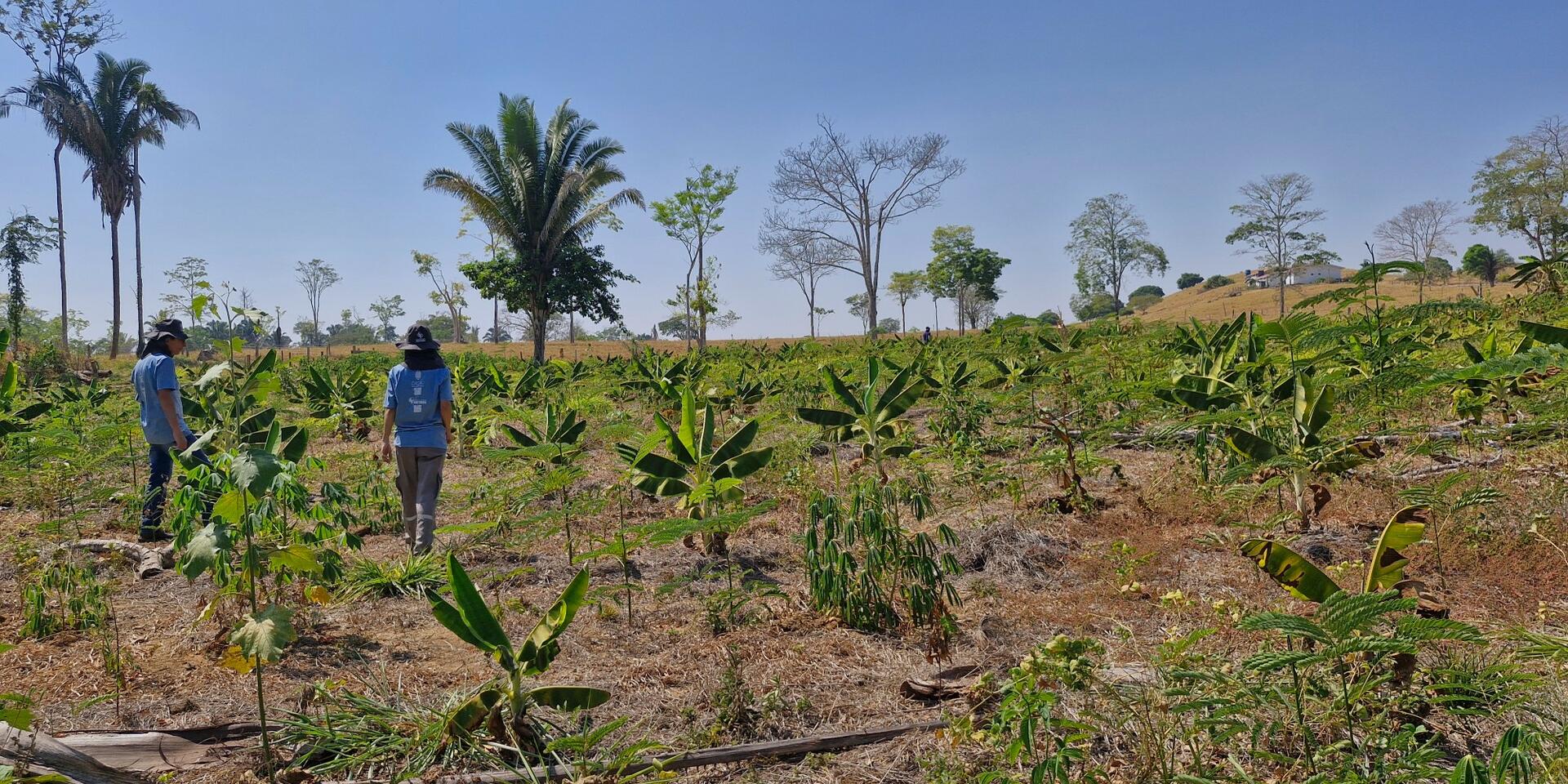

The Amazon Biodiversity Fund invested in Cacau Amazonia and created an innovative index to measure social-economic status of rural producers in Rondônia, Brazil.
Cacau Amazônia + (CA+) aims to promote sustainable cacao cultivation by supplying high quality seedlings, technical support, infrastructure and training, while also facilitating carbon-credit sales and Payment for Environmental Services (PES). The project is implemented with the support of Rioterra - Amazon Innovation Center. This approach seeks to strengthen rural livelihoods, reduce environmental degradation, and encourage climate change mitigation through agroforestry systems. CA+ originated from pilot projects developed by Rioterra to scale up the cacao value chain, using technological showcases implemented in past restoration initiatives.
CA+ is funded by Amazon Biodiversity Fund (ABF), an impact investment fund advised by Impact Earth and supported by the Alliance of Bioversity International and CIAT, particularly through ABF’s impact monitoring and evaluation efforts. Cacau Amazônia+ was chosen as a pilot for TerraSocio, a methodology that measures social, economic, and environmental impacts. The study was funded by the Soros Economic Development Fund.
Scott Abrams, Director of Impact & Operations at the Soros Economic Development Fund, noted that “SEDF invested in the Amazon Biodiversity Fund to create local jobs, preserve standing forests, and advance inclusive, sustainable development in the Amazon basin. The TerraSocio survey positions Impact Earth, SEDF and our investment partners to better understand the impact we’re having, over time, at community level.”
TerraSocio is part of the Alliance’s effort to support science-based evaluation approaches. “We develop custom monitoring and evaluation solutions to increase the transparency of sustainable businesses. These methodologies can help them make decisions to adjust their approaches. We have TerraBio, which focus on biodiversity impact, and are starting TerraSocio, for the social-environmental impacts”, said Bernardo Caldas, Research Team Leader at the Alliance.
The study - made possible with the support of CES Rioterra - interviewed 292 people in 86 households that have contracts with Cacau Amazonia + in ten municipalities to capture baseline data on demographics, nutrition, health, housing, environment, production and future aspirations. The evaluation integrated both quantitative and qualitative methods that led to the development of an Index that measures social-environmental conditions of each household.
“The Index we created allows us to compare the situation of the households and also evaluate the situation of the project as a whole”, explained Sacha Senger, Socioeconomic Assessment Coordinator for CAL-PSE, who organized the study.
The research showed that the producers have strong community ties, balanced diet and high-level of water treatment. However, environmental indicators ranked the lowest, due to the lack of proper solid waste disposal in the region.
For the executive director and CEO of Cacau Amazônia+, Marco Curatella, taking part in the research process was a valuable experience for the transparency of the project, and the data will help to improve its activities and efforts towards certifications: “TerraSocio gave us access to data to create a clear profile of the producers, to understand their aspirations, challenges and necessities. This will allow us to improve our work and measure the impact Cacau Amazônia + will have in time.”
In addition to the Index, TerraSocio also captured the producers’ socio economic profile with details such as income, condition of the household, education levels and health problems. The research also identified the challenges the producers face and expectations with Cacau Amazônia +. Among them, were the lack of knowledge to scale agroecological practices, market access for cocoa and unstable prices, which they would like help with from Cacau Amazônia +.
Another challenge was farm succession, the average age of the producers is 41 years old, and many of the local young people have left the farms in search of higher education and income but would come back if the farms produced steady revenue. “A benefit from the data is that it showed us how important income is to transform the families, so it is important to have a clear vision of their income sources. It will help us improve Cacau Amazonia + activities to support the families’ objectives”, highlighted Curatella.
The study also serves as a rich source of impact data for the investors in CA+. “Information is particularly relevant to ABF and Impact Earth as better understanding of the smallholders’ profile and feedback will help to gradually position Cacau Amazonia+ in line with the fund’s objectives” highlighted Vincent Gradt, co-founder of Impact Earth.
The study results have been presented to SEDF, Impact Earth and Cacau Amazônia +, which will share with the local producers so they can have access to their data. A new round of the study is planned to be implemented in 2026 to monitor the project’s impact.