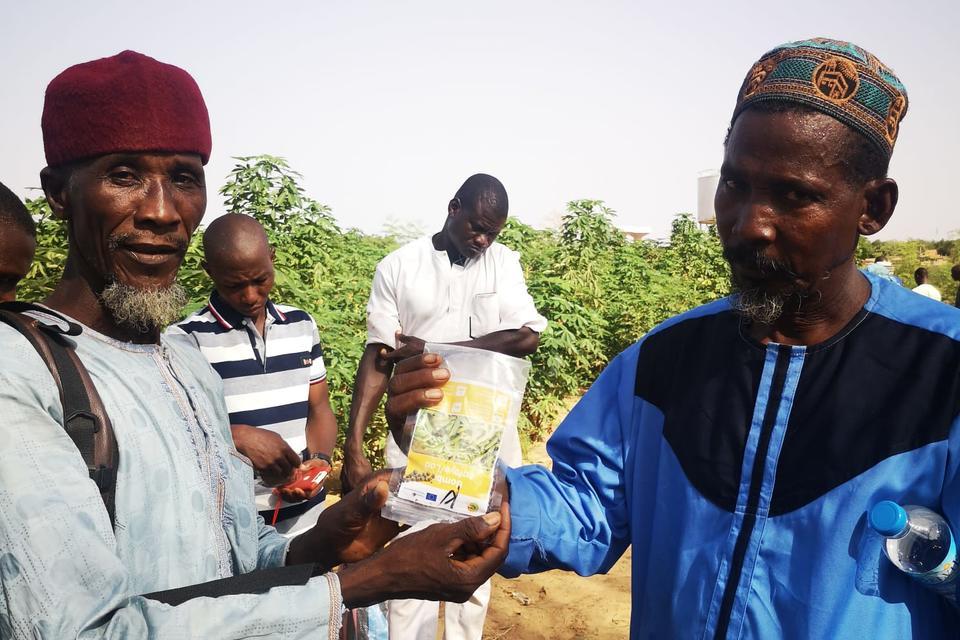
Blog SUSTLIVES: Growing tomorrow with the plants of the past
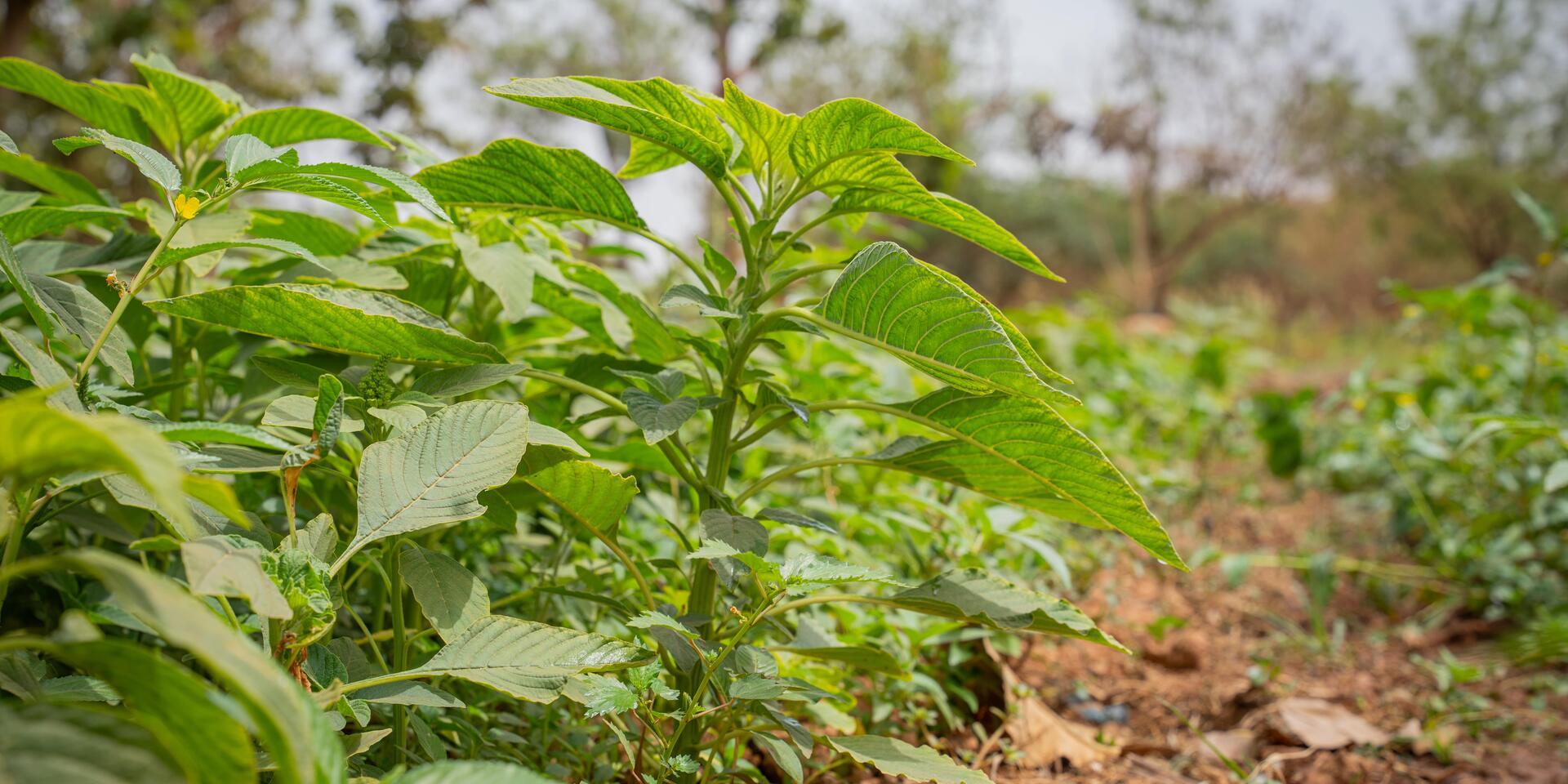

What if the future of food in Niger and Burkina Faso lay in the same plants that West Africa's grandmothers once grew? Fabirama, moringa, roselle, amaranth, bambara groundnut, and plenty more. Long dismissed as 'poor people's crops', these forgotten species are making a comeback thanks to the SUSTLIVES project.
Launched in 2021 and funded by the European Union through the DeSIRA initiative, the project is led by the Italian Agency for Development Cooperation (AICS) and the Centre International de Hautes Etudes Agronomiques Méditerranéennes (CIHEAM- Bari) in partnership with the Alliance of Bioversity International and CIAT. It brings together farmers, researchers, schools, chefs, community leaders, artists and public institutions to revive these culturally significant, nutritious and climate-resilient treasures. At the heart of the project is 21 villages, a wealth of enthusiasm, and a firm belief that sustainable futures are rooted in local biodiversity.
Cultivating opportunity
In the Sahel, each farming season is a gamble against drought and land degradation. SUSTLIVES offers an alternative by focusing on locally adapted varieties that have been passed down through generations. In 21 pilot villages—eleven in Burkina Faso and ten in Niger—“living labs” are established directly in farmers’ fields.
Agronomists, seed custodian farmers and community organizations work together to assess the performance of specific neglected and underutilized species (NUS) including amaranth, bambara groundnut, cassava, fabirama, roselle, moringa, okra, and sweet potato. These species—ranging from legumes to tubers and leafy vegetables—are selected based on criteria such as drought tolerance, nutritional value, economic potential and cultural significance.
When promising varieties are identified, communities establish local seed banks to ensure access to them. This participatory model strengthens food sovereignty: instead of relying on costly hybrid seeds, communities harness their own biodiversity and low-input farming practices. After three years, SUSTLIVES has shown that sustainable food security can grow from existing local resources—when these are both scientifically and socially recognized.
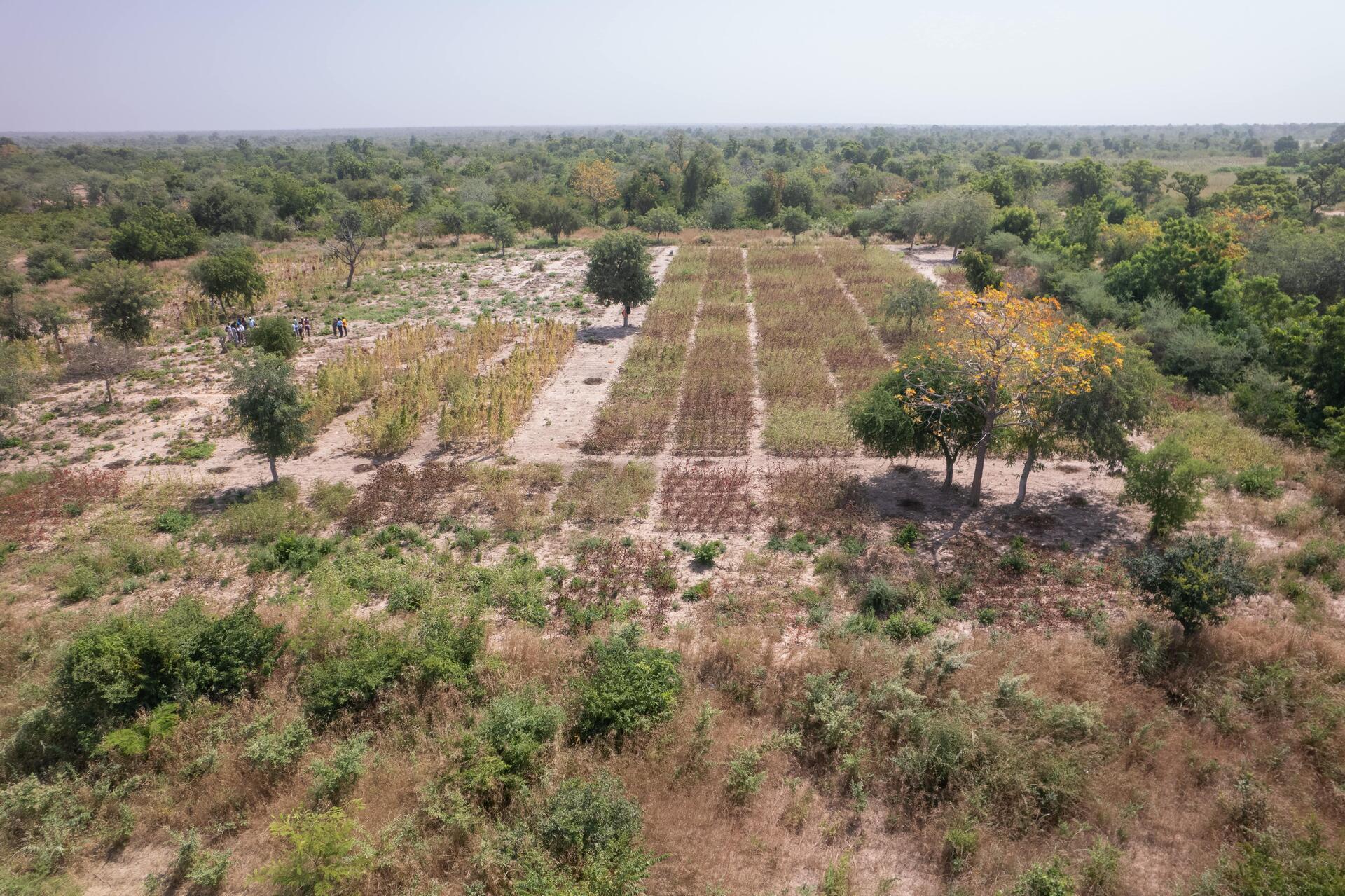
Aerial perspective of a living lab in Burkina Faso. Photo credit: Bioversity/Hyacinthe Combary
From playground to garden: Sowing curiosity, harvesting knowledge
Between February and May 2025, the Elim Evangelical School Complex in Niamey transformed into a true agroecological learning lab. 68 primary school students (33 girls and 35 boys) in CE2–CM1 classes took part in 12 workshops focused on these 'opportunity crops'. Held every Wednesday by the cultural NGO Forge Arts, in partnership with Association Watinoma, these sessions are part of the SUSTLIVES project’s ongoing efforts to raise awareness among young generations in the Sahel about the value of local food heritage.
The schoolyard was converted into a micro-farm and became a hands-on learning space: sweet potato cuttings, moringa observations, compost production, food pyramid roleplays and botanical drawings. Each lesson combined nutrition and cultural knowledge, highlighting five key species from the project. At the same time, students conducted interviews in their communities to collect traditional recipes and ancestral knowledge about these foods, in preparation for a school contest combining live storytelling with artistic creation.
The highlight was 'NUS Day' on May 10, 2025. In front of families, teachers and education officials, the students presented posters, statistics, and even original songs dedicated to NUS, followed by a tasting of dishes made from amaranth, roselle and sweet potato.
This achievement is rooted in active pedagogy: students kept journals tracking plant growth, built real-life connections between science and everyday life, and a student-elected NUS council maintained the garden during the school holidays. All teaching materials (including guides, schedules, and evaluation forms) were shared with regional education authorities for wider use.
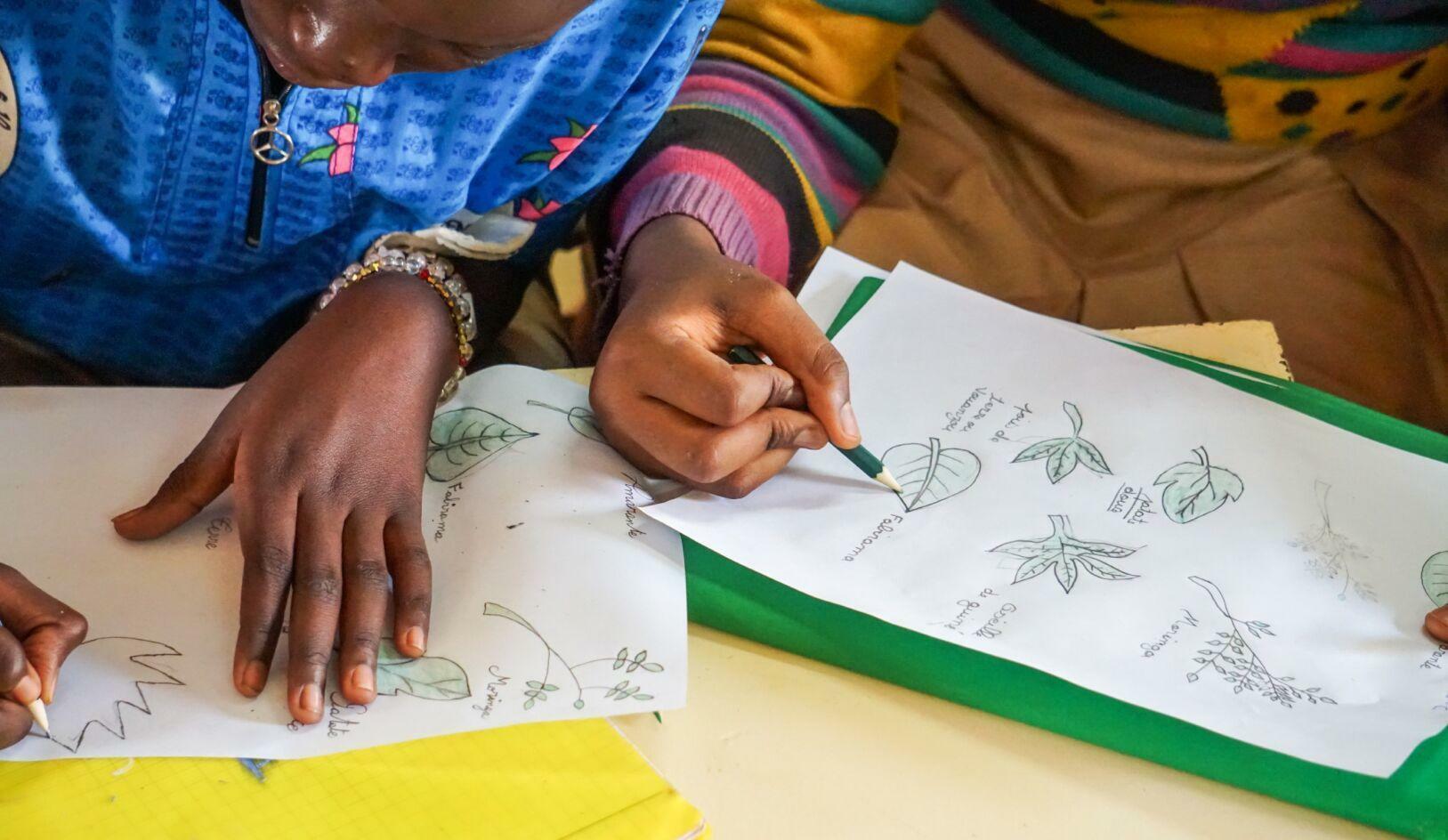
The SUSTLIVES project piloted the first school-based training module on local neglected and underutilized species (NUS) at the Association Watinoma school in Koubri. Photo credit: Bioversity/Hyacinthe Combary
The initiative reflects a core belief of SUSTLIVES: food sovereignty begins in childhood, where farming practice, scientific exploration and creative expression intersect. By highlighting local biodiversity within a school setting, the project shows that learning and the preservation of food heritage can go hand in hand—preparing a new generation to protect biodiversity and meet climate challenges.
Turning 'opportunity crops' into economic opportunity for all
The outreach strategy extends beyond the farms. Over forty community radio broadcasts—in Mooré, Zarma and French languages—share best practices in agroecology, share recipes based on opportunity crops, and inform listeners about access to microcredit.
Creating strong markets for opportunity crops is just as important as growing them. In this regard, the SUSTLIVES project carries out a detailed mapping and assessment of every link in the value chain—production, storage, processing, and distribution—in close collaboration with local stakeholders. Participatory diagnostics highlight three main bottlenecks: inadequate post-harvest equipment, absence of formal quality standards, and limited access to credit. Explore detailed findings from participatory diagnostics conducted in Burkina Faso and Niger, as well as a manual developed for Rapid Market Assessments.
To help bridge these gaps, SUSTLIVES launched a startup support program specifically for businesses working with opportunity crops. The program operates through two local incubators, one at Joseph Ki-Zerbo University in Burkina Faso and the other at Abdou Moumouni University in Niger. It holds open calls for applications and selects the most promising agro-entrepreneurs in two rounds. In each country, eight projects per round are shortlisted for incubation, where they receive business training, pitch coaching and mentoring. At the end of each round, four winners per country receive €3,000 and further support to scale their businesses. This targeted investment enables local innovators, especially women and youth, to turn opportunity into viable, market-ready products. For example, in Niger, Moringa Cubes offer natural bouillon cubes made from moringa leaves, while in Burkina Faso, Projet Vie Saine produces chips from sweet potato and amaranth.
Combining strategic communication efforts with entrepreneurial support, the project demonstrates its capacity to transform opportunity crops into engines of local income, reduce reliance on imports, and foster youth-led rural entrepreneurship—key levers for building sustainable food sovereignty in the Sahel.
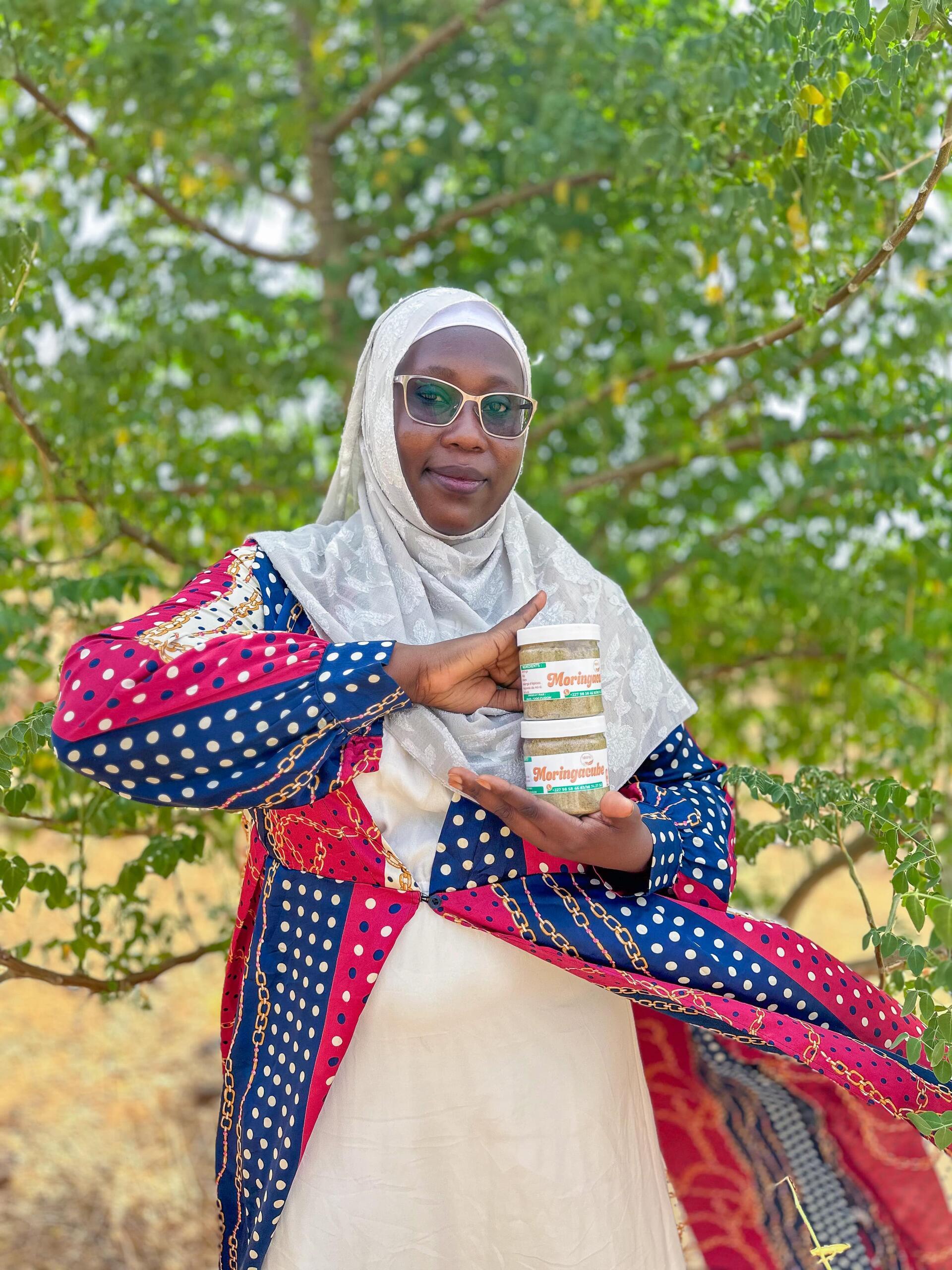
Oumoulkhei Soumana Harouna, founder of Moringa Cube. Photo credit: AICS Ouagadougou/ A. C. Bell
From Seed to Strategy: Strengthening policy support for opportunity crops
To consolidate and sustain its achievements, SUSTLIVES is reinforcing both national and regional dialogue while leveraging existing policy frameworks to support the conservation, sustainable use, and better integration of opportunity crops into agricultural systems. In this context, the Alliance is spearheading the creation of a Working Group on African Opportunity Crops under the African Seed and Biotechnology Platform (ASBP).
This multi-stakeholder platform will unite farmer organizations, research institutions, regulatory bodies and seed enterprises to foster dialogue, knowledge sharing and coordinated action on opportunity crops and seed systems across the continent. The Working Group is committed to integrating opportunity crops into national agricultural strategies, developing inclusive and sustainable seed policies, and enhancing capacity in biosafety, genetic resource management and agrobiodiversity.
In parallel, SUSTLIVES is investing in the next generation of scientific expertise. Master's and PhD scholarships focus on plant genetics, post-harvest technologies, and the socio-economic dimensions of opportunity crops. The resulting research helps bridge the gap between academic inquiry and practical application, offering evidence-based insights to guide policymakers toward more supportive frameworks for opportunity crops. It also feeds into advocacy strategies aimed at elevating the status of opportunity crops in public and institutional agendas.
By combining grassroots engagement, economic empowerment and regulatory influence, SUSTLIVES demonstrates that a more sovereign, equitable and resilient food future can grow from a single rediscovered seed—this time planted with science as its compass and solidarity as its engine.
For more information contact: Francesca Grazioli ([email protected]) and Sharon Mendonce ([email protected])
The Team

Francesca Grazioli
Scientist I
Sharon Mendonce
Research Associate
Teresa Borelli
Scientist I
Gloria Otieno
Scientist II