From the Field Mini-ministers, big impact: Empowering children to defend forgotten foods
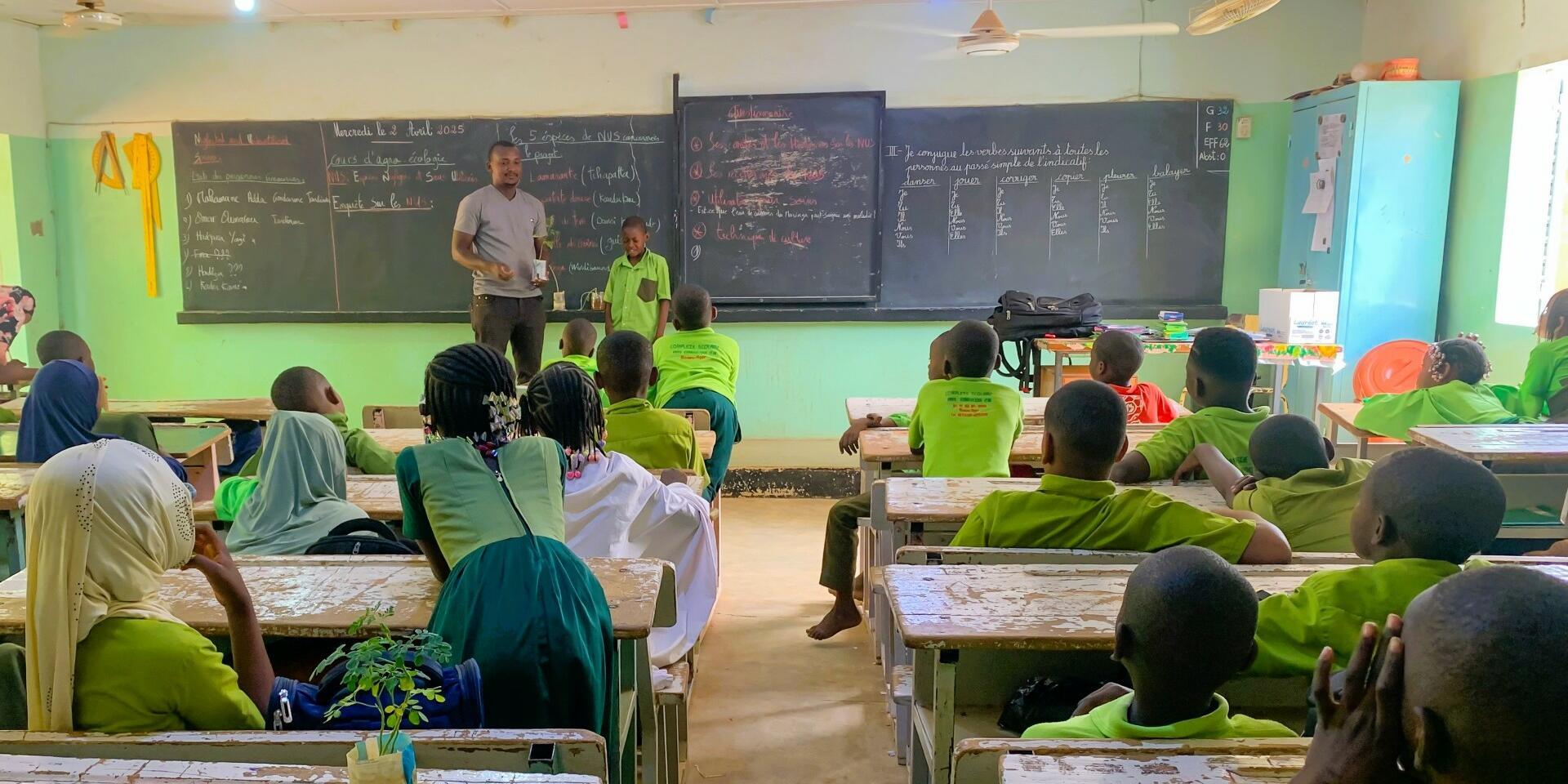

In Niger, children aged 9–12 became 'mini-ministers' in a school government promoting forgotten foods. Led by Forge Arts in 2025, this creative approach empowers youth to protect biodiversity and lead change in their communities.
The student government model for promoting NUS explained
In a sunny schoolyard in Niamey, Niger, a group of primary school children stands proudly before an audience. But, they’re not just presenting what they learned in class — they’re introducing their Student Government formed to promote and protect neglected and underutilized species (NUS) – aka forgotten foods for better nutrition – in their community.
This creative approach, developed by the Niamey-based NGO Forge Arts, complements the learning journey described in the teacher’s training manual to promote children’s appreciation of NUS, developed by the Alliance of Bioversity International and CIAT in collaboration with Association Watinoma as part of the EU-funded SUSTLIVES project, adding a playful yet powerful participatory layer to agrobiodiversity education in schools.
Why a student government for NUS?
The idea is both simple and transformative: give children meaningful roles and responsibilities within their learning environment. Through a structured role-play experience, students elect peers to symbolic positions — Prime Minister, Ministers of Health, Environment, Education, and Defense — each tied to real agroecological themes and NUS promotion.
Rather than passively receiving information, children become active leaders and knowledge brokers. They explain nutritional values of local crops, share planting techniques, and even recite poems about biodiversity — all while fostering community engagement and pride.
How it works: behind the scenes of the student government
Starting around the 5th or 6th workshop session of the NUS learning cycle described in the Teacher’s Training Manual, teachers and facilitators help students form their own NUS government. The process is democratic, inclusive and joyful. Each role comes with responsibilities that align with elements of the NUS value chain:
- Prime Minister – Oversees the group and presents the food pyramid featuring NUS during public events
- Minister of Health – Advocates for good nutrition and explains the dietary value of NUS
- Minister of Environment – Teaches plant classifications and names (in both French and local languages)
- Minister of Defense – Protects the school garden and shares techniques for growing NUS
- Minister of Education – Supports peers in understanding agroecological concepts
Supported by teachers and local facilitators, ministers coordinate garden activities, organize community food tastings, present their work through poetry or skits, and motivate classmates to join in.
What changes when children lead?
The impact is tangible and inspiring:
- Children develop confidence, speak with ease, and take pride in their knowledge.
- Forgotten local crops become a source of cultural pride and learning.
- Parents are amazed to see their children leading the conversation on food, health, and the environment.
- Teachers report greater student engagement and motivation in schoolwork.
Beyond the schoolyard, these young leaders are helping shift perspectives on what education and agroecology can look like when youth are empowered.
A flexible model for global inspiration
As outlined in Annex 5 of the updated NUS Teacher’s Manual, this methodology is not a one-size-fits-all blueprint. It is meant to inspire other educators and facilitators to create locally relevant, child-centered approaches that make learning about agrobiodiversity meaningful.
Whether applied in rural or urban settings, the student government model offers a way to put children at the center of agroecological learning — not as passive learners, but as ministers of knowledge, guardians of biodiversity and agents of change.
Toward a new generation of food citizens
At a time when climate change, food insecurity and biodiversity loss threaten communities across the globe, children are not too young to understand — or to lead. The Student Government for NUS in Niger shows that, with creativity and care, education can become a launchpad for youth leadership and local food revival.