From the Field Supporting innovations on the path to impact: How can we create the conditions for responsible scaling?
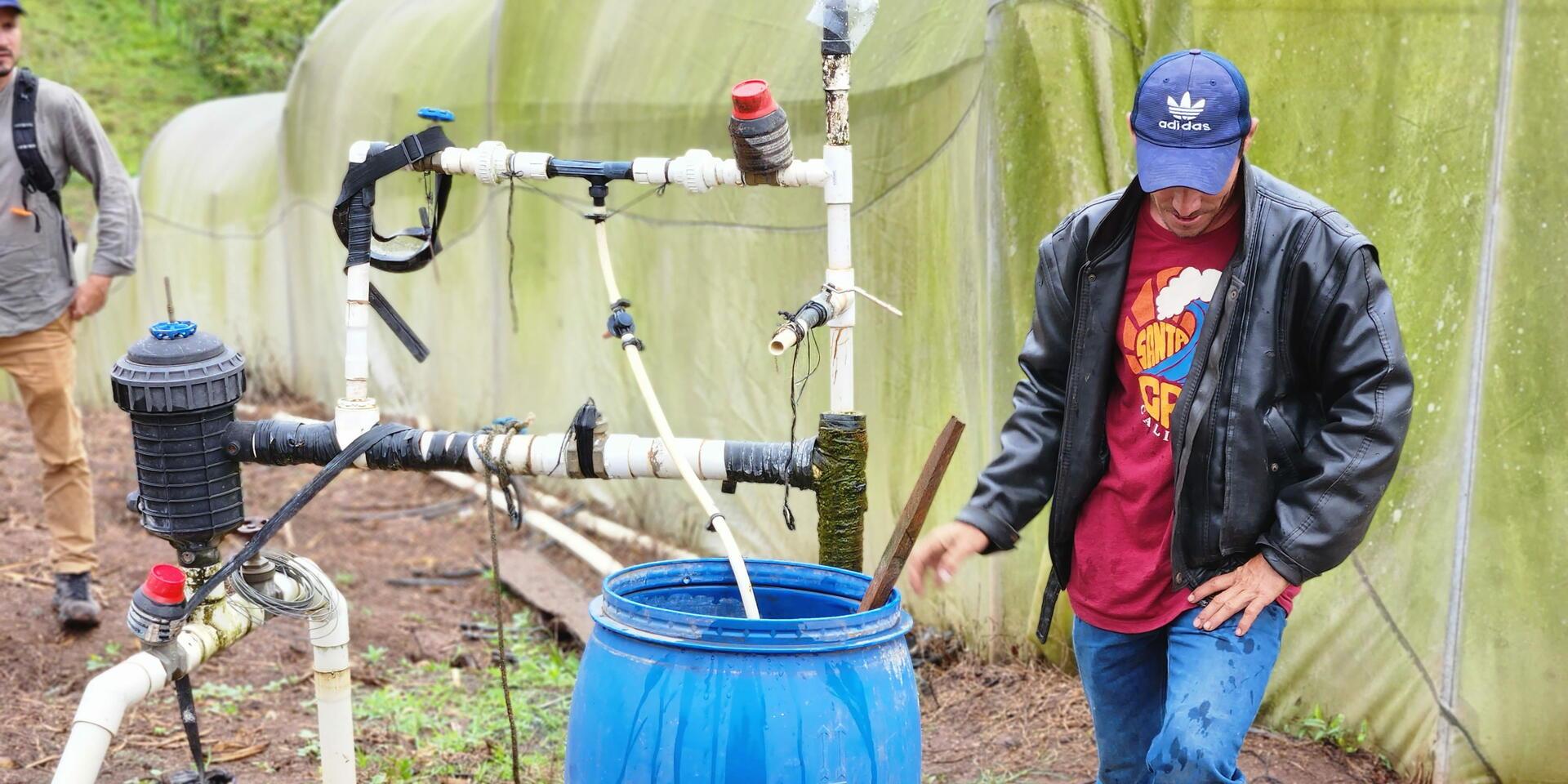

Behind a solution or innovation that successfully moves beyond research, reaches new contexts, and generates impact, there is much more than a good idea: there is evidence, capacity, partnerships, resources, and a network of actors creating the conditions for it to move forward.
At the Alliance of Bioversity International and CIAT, we work to connect these pieces, bringing scaling science closer to those who research, fund, manage, and support innovations. In Panama, this vision is being strengthened through a collaboration with the National Secretariat of Science, Technology and Innovation (SENACYT), the public institution that promotes science, technology, and innovation in the country. This collaboration is built around a shared challenge: how can we support innovations beyond their initial development and create the conditions for those with potential to continue progressing toward impact?
Having a good innovation does not necessarily mean being ready to take it to scale. Between demonstrating that a solution works and enabling it to generate impact, several important questions arise: Does it respond to a real demand? Is there evidence of its results? Who can use or champion it? Does it have the necessary capacities, partnerships, and resources? What could happen if it begins to be used in other contexts?
These questions stem from a central idea in scaling science: impact depends not only on the innovation itself, but also on the conditions that enable it to move forward.
Scaling means connecting innovation, context, and actors
Scaling involves understanding how an innovation interacts with the context in which it seeks to generate change.
A solution that works in one territory may need to be adapted to another. A technically mature technology may face regulatory or financial barriers. An effective practice may be difficult to adopt if it does not respond to the needs or capacities of those expected to use it.
That is why, before asking, “How can we make this innovation reach more people?”, we need to ask another question: What conditions need to be in place for it to generate impact in a responsible, sustainable, and inclusive way?
This perspective is part of the Alliance’s work through the CGIAR Scaling for Impact program, which seeks to strengthen the science and practice of scaling in order to understand not only which innovations work, but also how, where, for whom, and under what conditions they can contribute to transformations at scale.
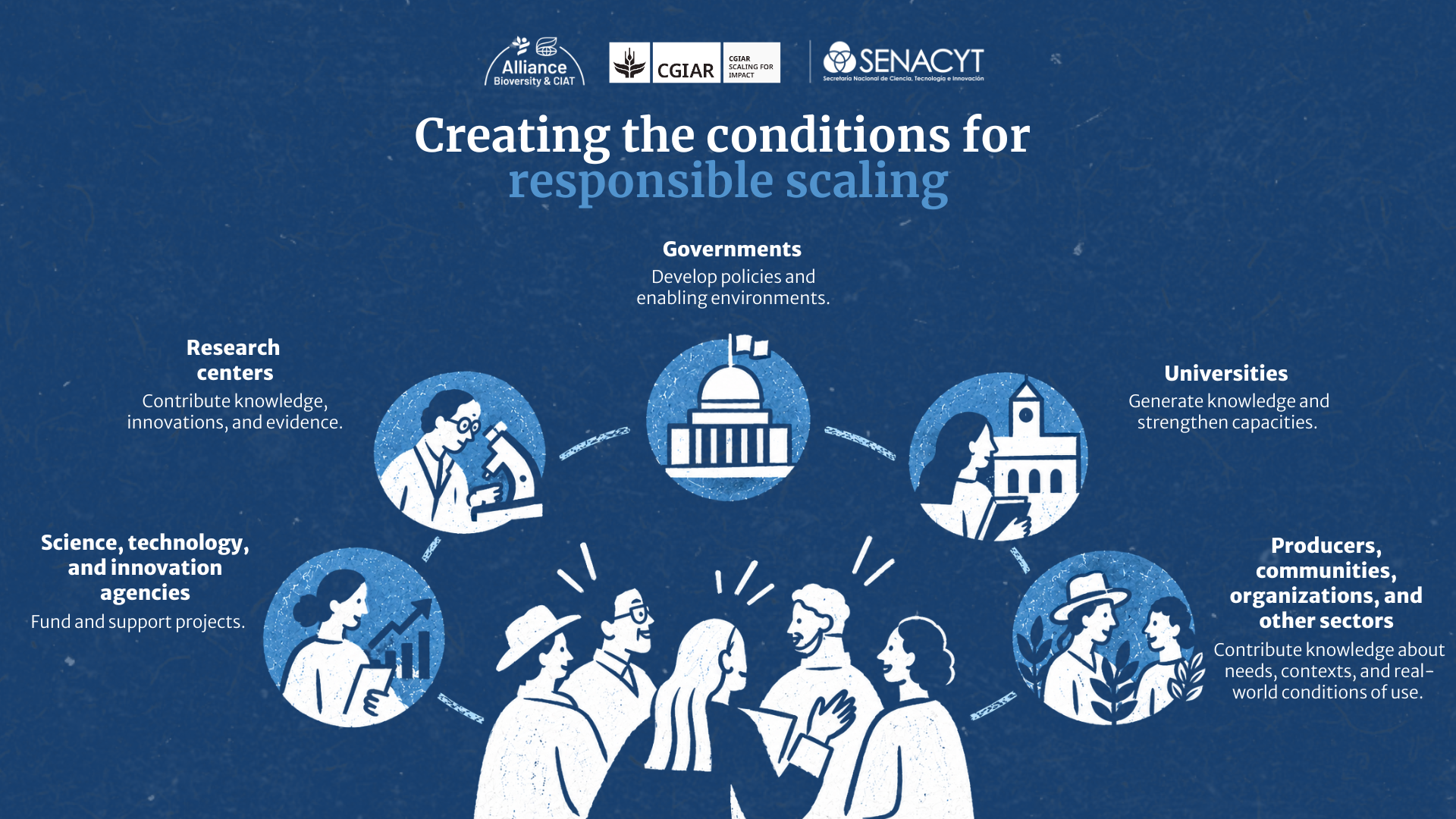
Scaling happens through the interaction among these actors. It is not simply about transferring a technology from research to an end user, but about building the relationships and capacities needed for an innovation to be used, adapted, sustained and, where appropriate, scaled.
What if we considered scaling from the moment we fund an innovation?
This question lies at the heart of the collaboration between the Alliance and SENACYT in Panama: How can we support innovations beyond an initial investment and create better conditions for those with potential to continue progressing toward impact?
A scaling perspective broadens the way we look at projects. In addition to determining whether they were implemented and achieved their expected results, it allows us to ask: What innovation did they generate? What level of maturity did it reach? Who is using it? What evidence exists about its results? What does it need to continue moving forward, and what are its main bottlenecks?
It also introduces an essential question: Is scaling desirable?
Responsible scaling does not assume that every innovation should grow or reach a larger scale. Rather, it seeks to provide better evidence and information for deciding what can scale, why, for whom, in what direction, and under what conditions.
This is especially important because not all innovations need the same things. A solution at an early stage may require further research and validation; another may already have technical evidence but need to connect with potential users; and a more advanced innovation may require new partnerships, changes in its enabling environment, or financing mechanisms to continue progressing.
Assessing scaling readiness makes it possible to understand precisely where an innovation currently stands, where it is expected to go, and what it needs to get there. The question therefore shifts from simply asking “Was this project successful?” to a more useful one: “What should be the next step for this innovation?”
Seven sessions to explore the trajectory of an innovation
Creating the conditions for scaling also requires strengthening the capacities of those who select, fund, manage, and support innovations.
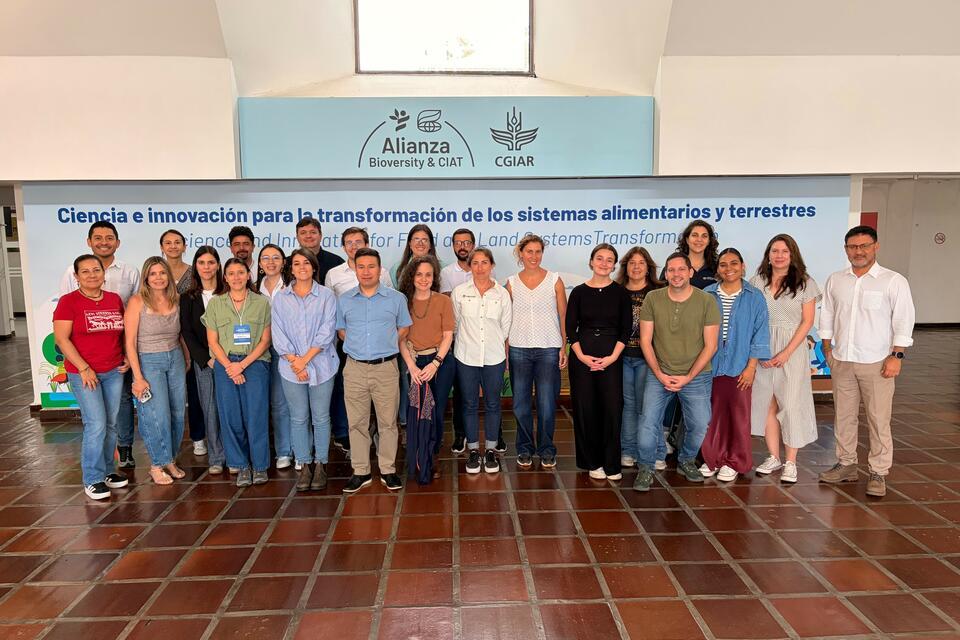
With this purpose, the Alliance of Bioversity International and CIAT, in collaboration with SENACYT, developed the series “Capacity strengthening for the management and responsible scaling of innovations.”
The process was designed as a journey. It began with the formulation and application of criteria for selecting projects and innovations and continued with Theory of Change and impact assessment, connecting project activities and results with expected changes and the evidence needed to understand them.
The analysis of selected projects and innovations then provided an opportunity to apply these concepts to concrete cases before moving on to two central components: responsible scaling and assessing an innovation’s readiness for scaling.
Together, the seven sessions cover:
- Formulating criteria for the selection of projects and innovations.
- Applying criteria for the selection of projects and innovations.
- Theory of Change.
- Impact assessment.
- Responsible scaling.
- How to assess an innovation’s readiness for responsible scaling.
Rather than seven independent topics, the sessions follow a common trajectory: what we select and fund, what change we seek to generate, how we build evidence around that change, and what an innovation needs to continue progressing responsibly toward impact.
Lessons that transcend borders
Although this experience is being developed in Panama, the questions it raises extend beyond any one country or institution. Research centers, universities, innovation agencies, governments, and funders across Latin America and the Caribbean face a common challenge: innovations are being generated, but mechanisms are not always in place to support their trajectory once a project or an initial source of funding comes to an end.
Collaboration between research centers and national science, technology, and innovation institutions can help bridge this gap by connecting research evidence and tools with the capacities and decisions of those who fund and manage innovation.
The goal is not to find a single formula for scaling, but rather to strengthen our collective capacity to understand what each innovation needs, connect the right actors, generate evidence, and make better-informed decisions about its future.
As part of this effort, the seven sessions are available on the Alliance of Bioversity International and CIAT’s YouTube channel, expanding access to these lessons for researchers, technical teams, innovation agencies, funders, and other organizations interested in strengthening their capacities to manage and support innovations.
Creating the conditions for responsible scaling is not simply about finding a good innovation and making it grow. It means building the evidence, capacities, relationships, and enabling environments needed to make better decisions about its future.
And perhaps this is one of the most important shifts proposed by scaling science: moving beyond asking only how to take an innovation to a larger scale and beginning, much earlier, to ask what we need to build together for it to generate impact responsibly.