Blog From scattered agronomic data to smarter fertilizer management decisions: A new chapter for maize productivity in Kenya

CGIAR, the Alliance of Bioversity International and CIAT, IITA and KALRO launched a Kenya-wide initiative in 2025 to rescue and harmonize agronomic data, using AI to develop site-specific maize fertilizer recommendations that boost yields, efficiency and sustainability.
In August 2025, a quiet but ambitious journey began, one poised to transform how farmers across Kenya can improve productivity through making some of the most critical decisions in fertilizer management. To bring this vision to life, CGIAR (through the Alliance of Bioversity International and CIAT and IITA) partnered with KALRO to move beyond “blanket” recommendations toward truly site-specific guidance, considering applying the right nutrients, at the right rate in the right time and place, for the right crop. At the heart of this effort was a simple but powerful idea: bring together decades of agronomic data and turn it into actionable insights.
What followed was a monumental effort that went far beyond simply compiling datasets. Agronomic trial data, often scattered across institutions, stored in different formats, archived in aging computers, tucked in forgotten folders, or at a risk of being lost when projects end or researchers retire.
Recovering this valuable scientific legacy required a true data rescue mission; contacting the retired scientists to retrieve datasets and clarify historical data entries, engaging project leaders to fill critical knowledge gaps, and reconstructing or georeferencing trial locations to restore their spatial context, For decades, this fragmented data landscape limited the ability to generate meaningful, largescale insights that could inform agricultural decision making. Through the combined efforts of agronomists, data scientists, statisticians, geospatial analysts, and ICT experts from KALRO and CGIAR, these datasets were cleaned, standardized, and harmonized into a unified, analysis-ready structure. The result was more than a technical achievement; it was the transformation of decades of disconnected research into a powerful foundation for innovation, evidence-based recommendations, and next-generation digital advisory tools.
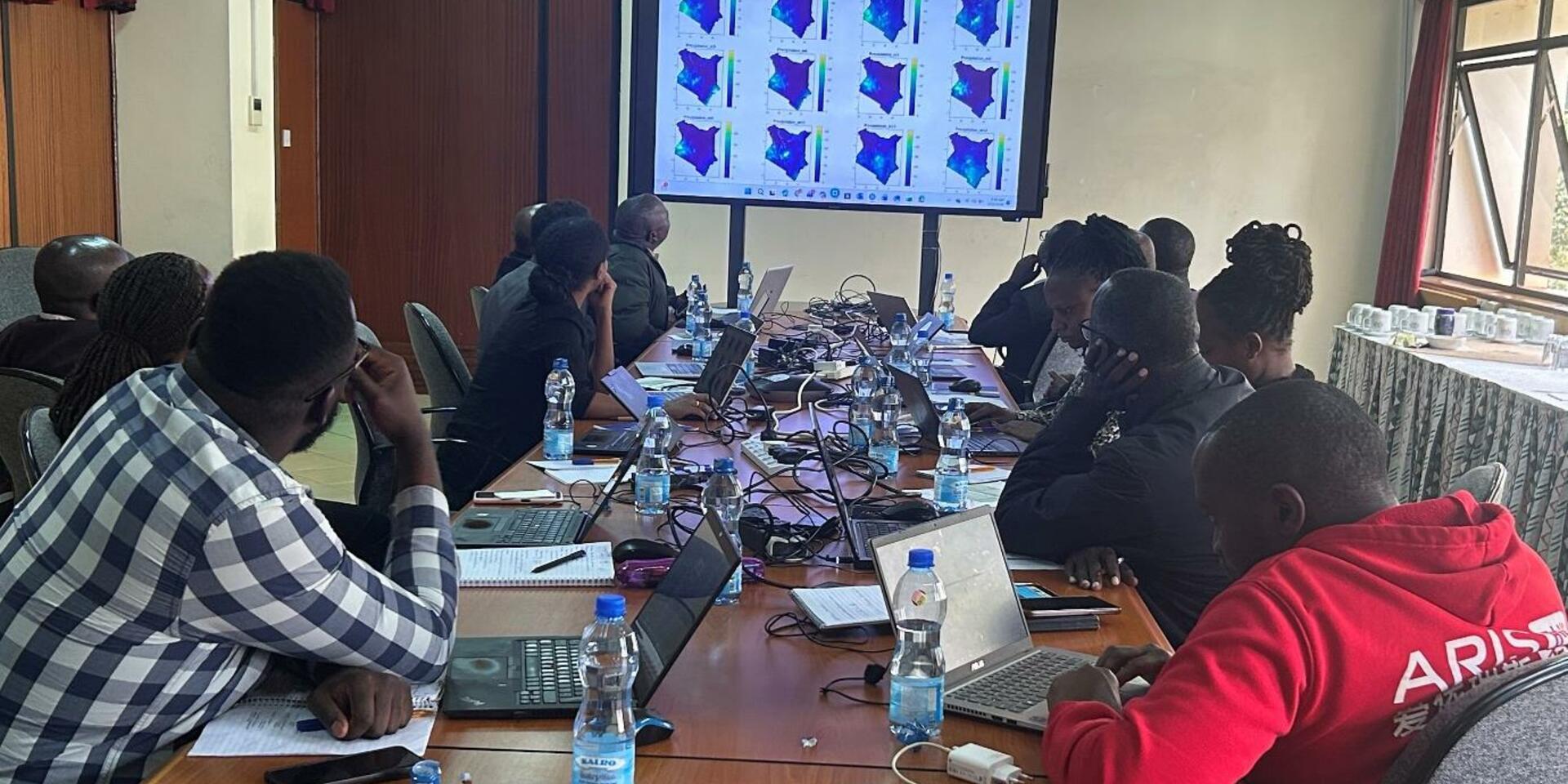
With the newly harmonized database in place, attention shifted from data recovery to data-driven innovation. The momentum carried into April of 2026, when the team convened at KALRO Headquarters in Nairobi for an intensive co-design workshop. Over two days, experts debated, challenged assumptions, and refined ideas, sometimes agreeing, sometimes disagreeing, but always advancing toward a common goal. Guided by the AgWise workflow, they developed scripts to power machine learning models capable of generating site-specific nutrient recommendations.
The process was complex and iterative, but through collaboration and persistence, the team produced preliminary maize yield-optimization recommendations with promising predictive accuracy. While these early results demonstrate the potential of data-driven advisory systems, further improvements will depend on expanding the volume and diversity of agronomic datasets available for model training and validation. With KALRO's ongoing commitment to digitizing and unlocking additional research data, the foundation is now in place to continuously improve model performance and deliver increasingly reliable recommendations to farmers.
The implication of this work extends far beyond databases, algorithms, and statistical models. For farmers, it means more efficient use of nutrients, better yields, and potentially higher profits. For extension services, it offers a stronger, evidence-based foundation to guide advice. And for policymakers, it offers a clearer understanding of crop nutrient needs across diverse agro-ecological zones, critical for smarter investments and resource allocation. As emphasized by KALRO’s Director of Natural Resource Management, Dr. David Kamau, the goal is to ensure that such tools align with farmers’ priorities, whether that means maximizing yield, improving profitability, enhancing nutrient use efficiency, or safeguarding long-term sustainability.
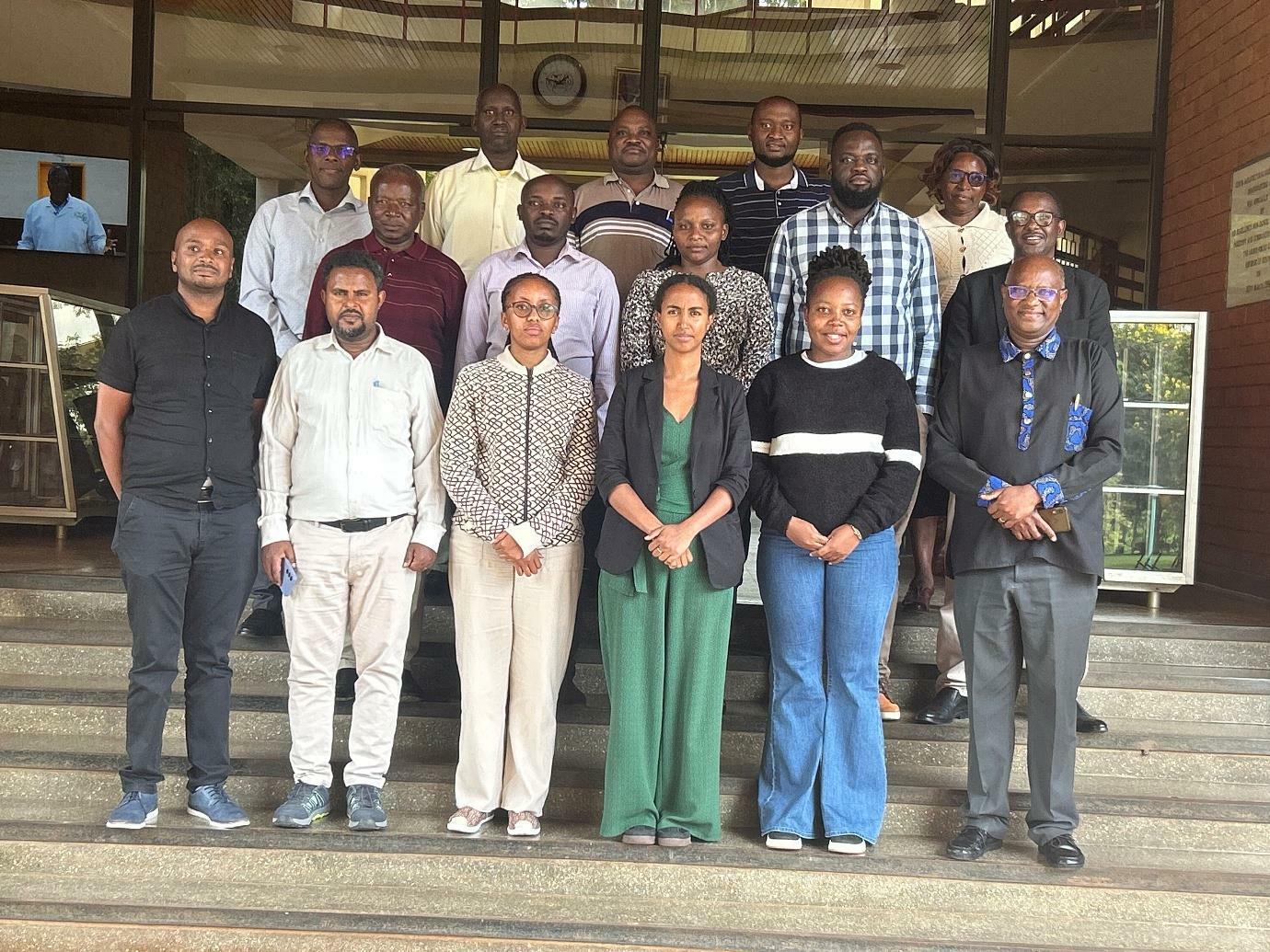
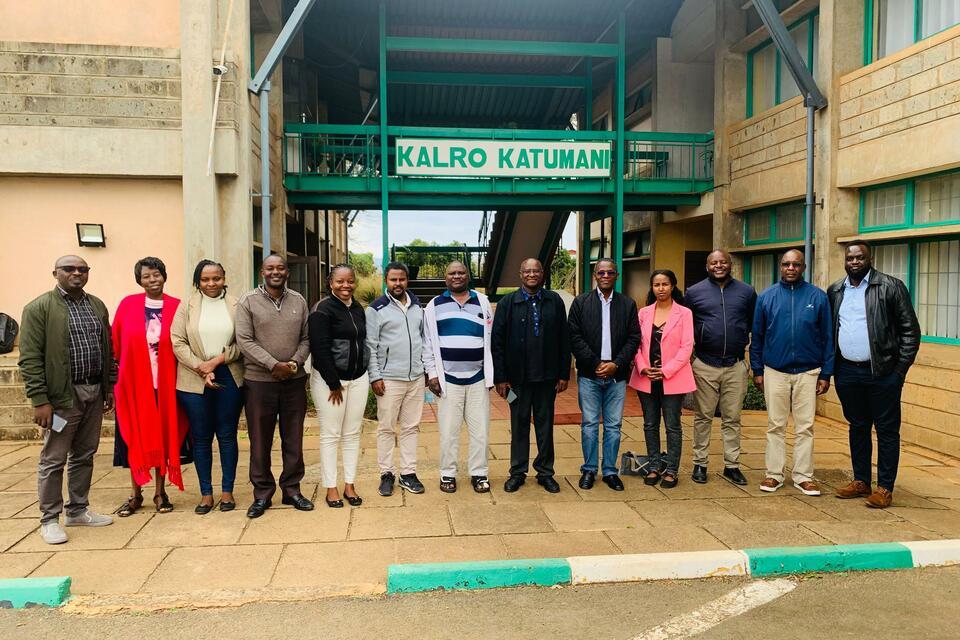
The nutrient recommendation modelling team from KALRO and the CGIAR. Photo credit: Florida Maritim
Yet perhaps one of the most important outcomes of the initiative has been the lessons learned along the way. This is only the beginning. While the early results are encouraging, the journey also reveal opportunities to make the model even stronger. Future iterations could integrate digital soil maps and additional management variables such as lime and manure applications, creating recommendations that more closely reflect the realities of farmer’s fields.
The process also revealed a longstanding challenge in agricultural research: the lack of standardized data collection and reporting protocols across studies. Valuable datasets had to be excluded because critical information such as geolocation, input rates, seasons and planting dates. These gaps underscore the importance of investing not only in new technologies but also in better data stewardship. Despite these challenges, the achievement is remarkable. As the Alliance of Bioversity International and CIAT’s Principal Scientist Job Kihara noted,
“What started as a high-risk endeavor has delivered in months what often takes years, offering a glimpse into a future where data-driven tools empower smarter, more sustainable agricultural decisions”.