Impact story Scaling green manure in Hainan with forages that reduce costs and support national soil policies

Meeting the agricultural challenges of today while preparing for the needs of tomorrow requires a constant expansion of the tools available to farmers. At the heart of this effort is the Future Seeds genebank, managed by the Alliance of Bioversity International and CIAT, which serves as a global resource for identifying plant materials that can adapt to changing environments and production demands. By diversifying the options available to producers, it becomes possible to provide farmers with a wider range of options tailored to their land.
In 2019, scientist Dr. Hengfu Huan from CATAS visited the Tropical Forages Program with the goal of evaluating options that could thrive within Chinese agricultural settings, particularly those of Hainan. By working closely with the program to navigate the thousands of accessions held in the genebank, Dr. Huan brought back 800 different forage (livestock feed) materials to evaluate their performance in local conditions. Following extensive testing, two high-performance options emerged in the form of Sesbania and Desmodium.
To understand why these specific plants were chosen, it is helpful to look at the role of cover crops in sustainable farming. A cover crop is a plant grown to protect and enrich the soil rather than for harvest. When these crops are incorporated back into the soil while still green or left on the surface as mulch, they are referred to as green manure. This practice returns essential nutrients and provides organic matter to the soil as the plant material decomposes. In the context of China’s national agricultural strategy, green manure has become a cornerstone of the policy to reduce the use of chemical fertilizers. By utilizing specific plants to naturally restore soil fertility and improve structure, the policy aims to move away from a dependence on synthetic inputs that can degrade land over time. Instead, the focus is on biological alternatives that support long-term productivity while protecting the environment.
The introduction of Desmodium is particularly significant because the plant was almost unknown in these local farming circles prior to Dr. Huan’s visit to the Alliance. While Stylo (Stylosanthes guianensis) was long considered the standard tropical legume in these systems, the data from Hainan shows that Desmodium offers a more productive path forward because it outperforms Stylo in several key areas. These plants are built for speed and grow between 3 and 4 cm per day, creating a cover crop that out-competes weeds far more effectively than Stylo. Furthermore, Desmodium produces a significantly higher seed yield, which removes a major barrier to scaling green manuring.
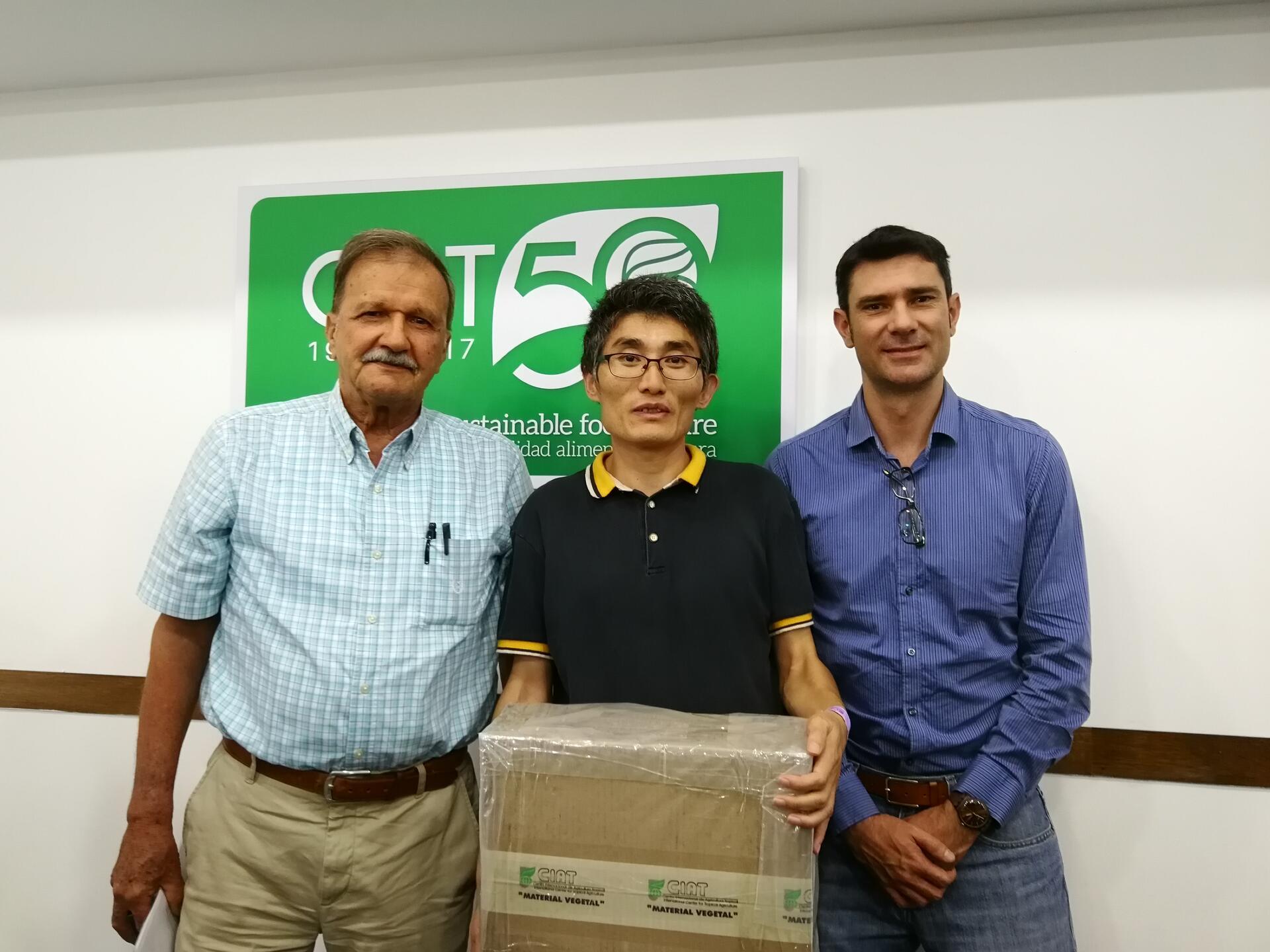
While visiting CIAT, CATAS researcher Huan Hengfu received a box with several hundred of forage germplasm samples provided by the Future Seeds genebank. Palmira, August 2019. Credits: J.L. Urrea / CIAT
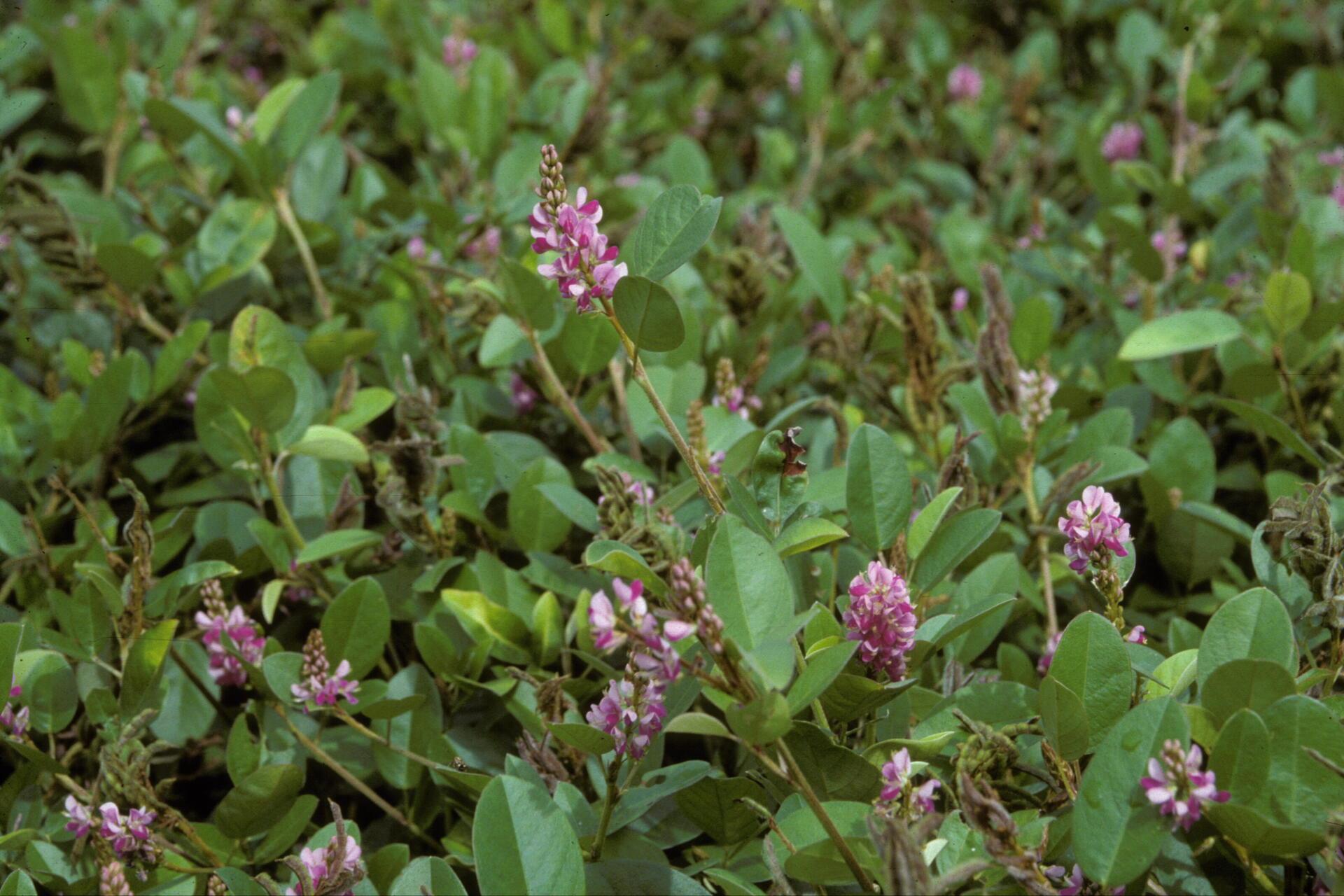
Desmodium heterocarpon. Credits: CIAT
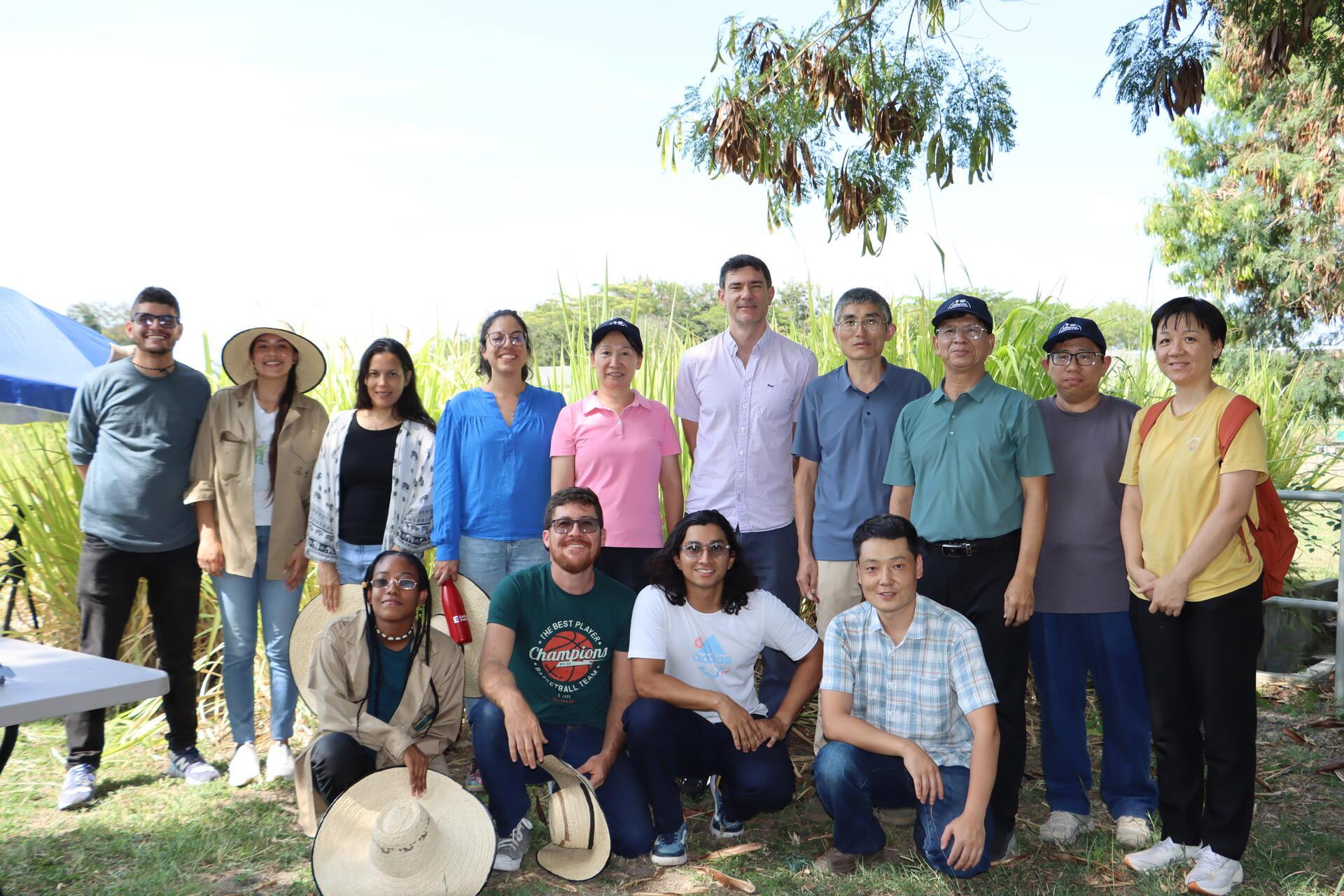
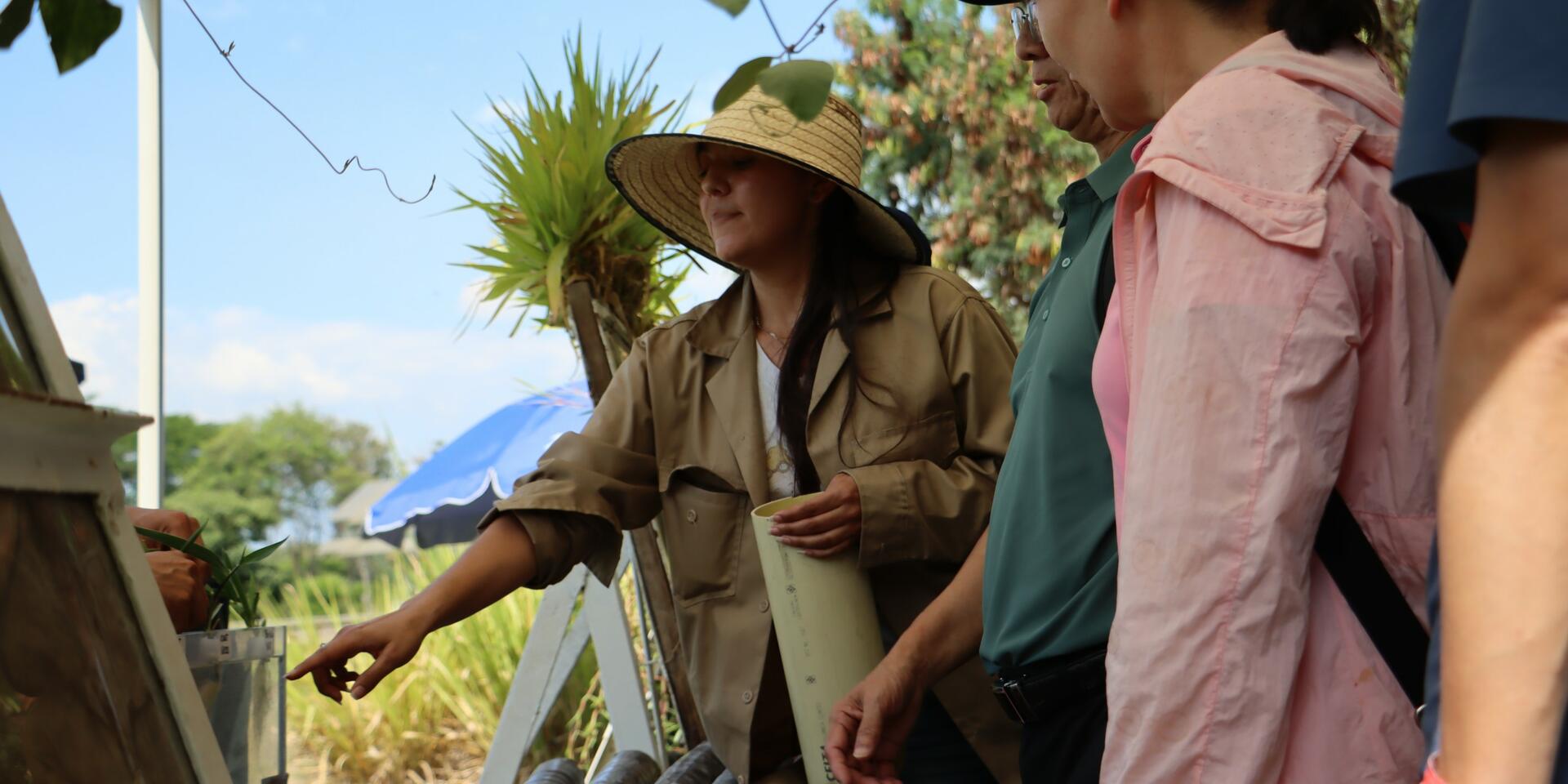
Dr. Hengfu Huan from the Chinese Academy of Tropical Agricultural Sciences (CATAS) visited the Tropical Forages Program in 2024 with his team from the Tropical Crops Genetic Resources Institute (TCGRI). Credits: A. Yedra / CIAT
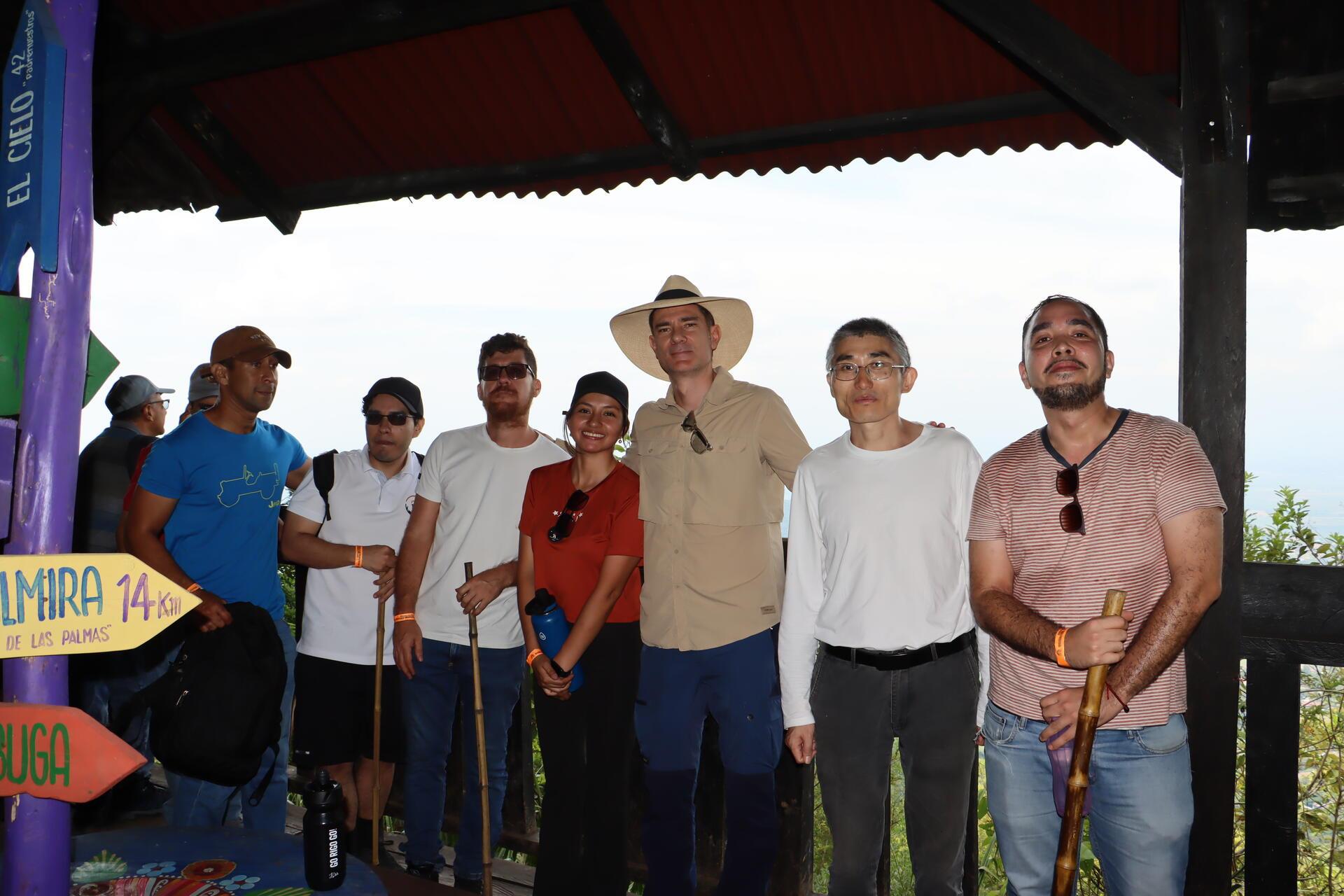
Dr. Hengfu returned to the Alliance in December 2025 for a three-week stay to gain deeper insight into ongoing trials and strengthen scientific exchange. Credits: A. Yedra / CIAT
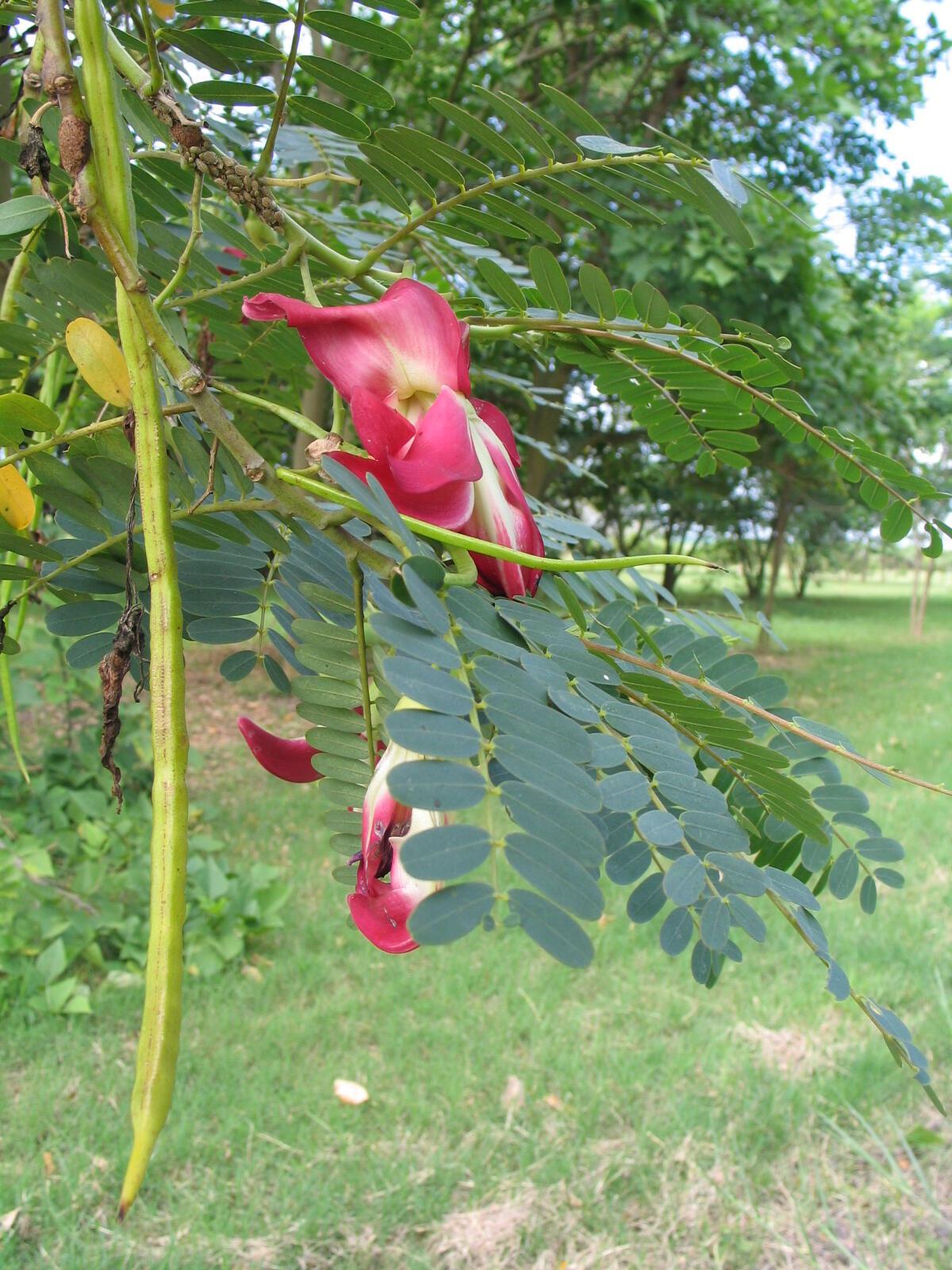
Sesbania grandiflora. Credits: CIAT
These accessions are also uniquely adapted to the soil structures of Hainan and thrive where other forages might struggle to establish themselves. Today, this approach is being utilized across 60 hectares of commercial Chirimoya production, where the economic benefits are tangible. By using Sesbania and Desmodium as a natural weed suppressant, labor and maintenance costs can be reduced by 50%. These plants also naturally fix nitrogen into the soil and reduce the need for expensive chemical inputs, directly supporting the national goal of improving soil quality.
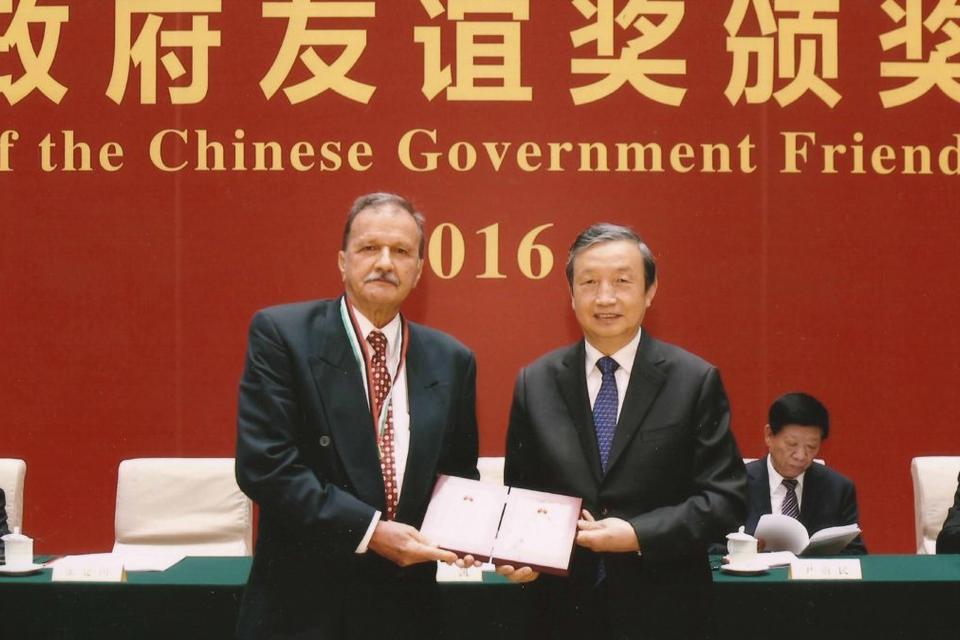
This success is built on the foundation of a 40-year scientific partnership between the Chinese Academy of Tropical Agricultural Sciences (CATAS) and the Alliance's Tropical Forages Program. Since its inception, this collaboration has served as a bridge for innovation, focusing on the exchange and evaluation of genetic resources to improve tropical agriculture.
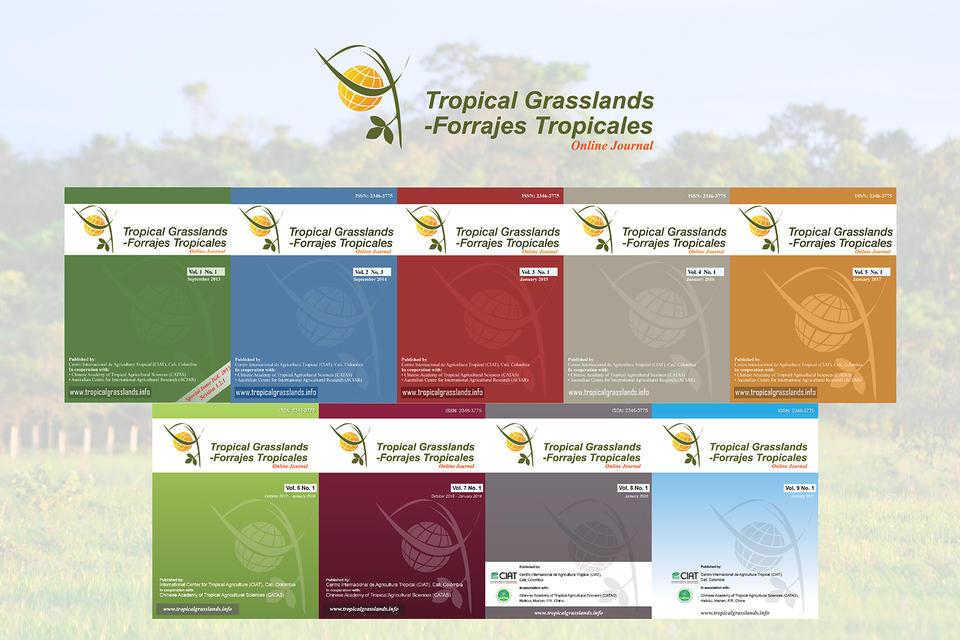
As part of this long-standing relationship, CATAS provided support to the Tropical Grasslands–Forrajes Tropicales journal for a decade, contributing to the dissemination of scientific knowledge and expanding global access to research on tropical forages. This four-decade partnership proves that when global genetic resources are matched with local expertise, the results are measured in more than just conservation. They are measured in healthier soil, more resilient landscapes, and higher productivity for the farmers who feed the world.
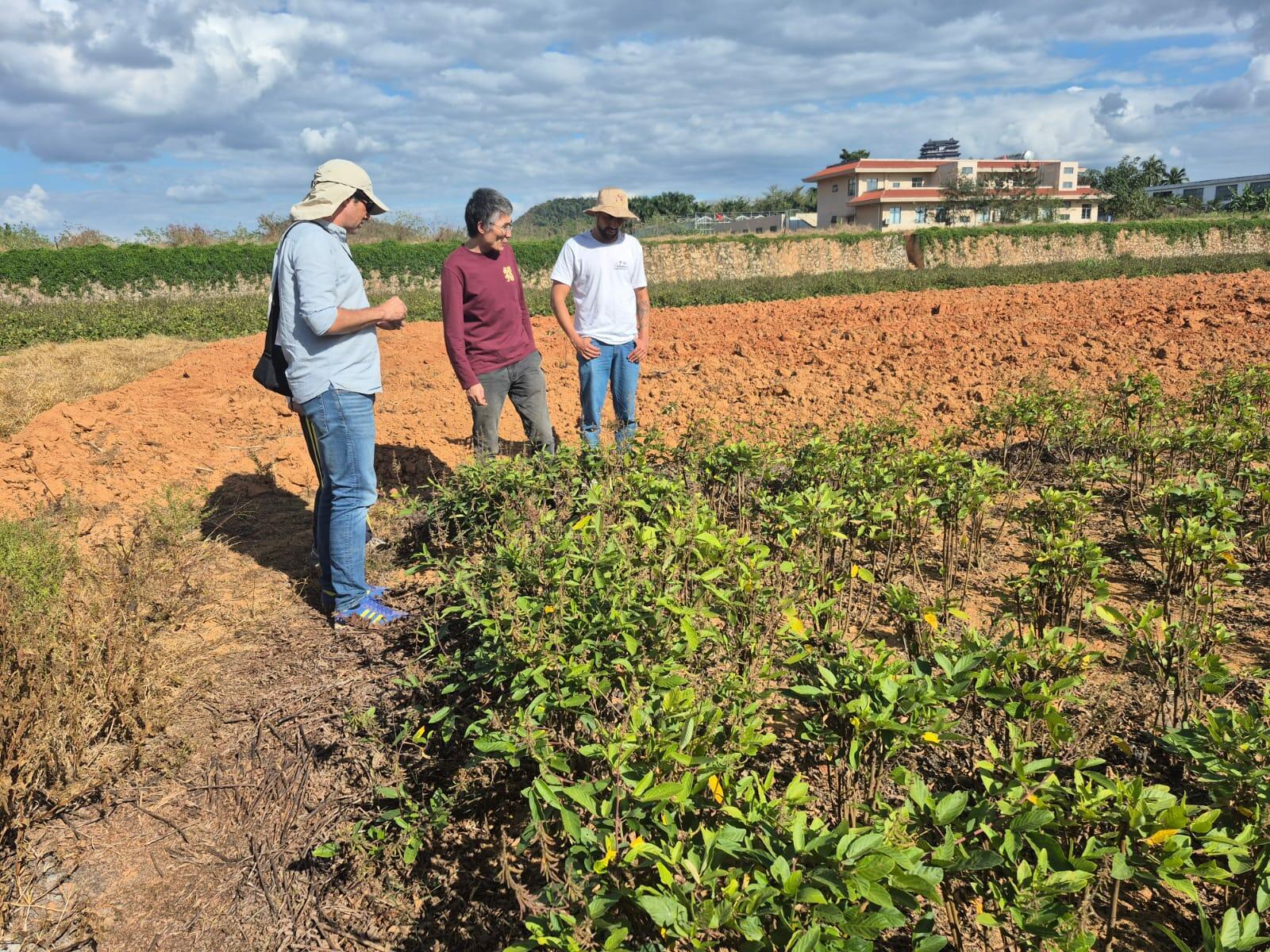
Some of our researchers (Jacobo Arango, Juan Andrés Cardoso, Joshua Philp and Juan Jose Gonzalez) are currently in China at the Chinese Academy of Tropical Agricultural Sciences (CATAS), working alongside Dr. Hengfu Huan to advance joint research on tropical forages. Credits: J. Arango / CIAT
Acknowledgements: This work was carried out as part of the CGIAR Science Program on Sustainable Animal & Aquatic Foods (SAAF). We thank all donors who globally support our work through their contributions to the CGIAR System. The views expressed in this document may not be taken as the official views of these organizations.