Press and News Rwanda’s school feeding initiative brings technology to gardens

Schools in Rwanda’s Karongi, Rusizi and Nyamasheke districts have received 135 farm machines to speed up planting and threshing, reduce labour and losses, and boost production of nutritious, high-iron beans for school meals under the 3SFI Project.
The old way takes time. Planting by hand. Threshing by hand. Shelling maize by hand. Season after season, the work becomes heavier especially for schools with larger school gardens
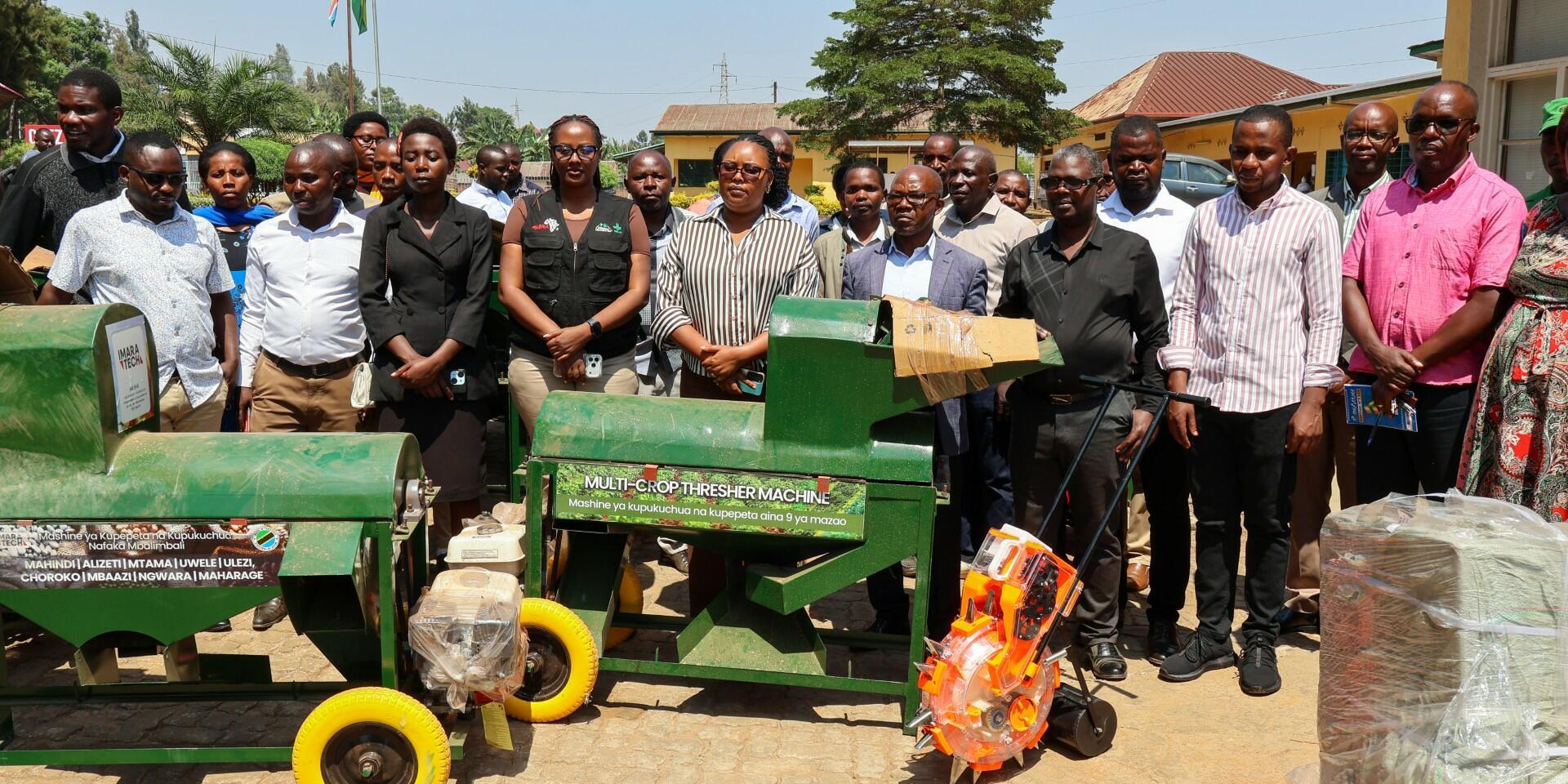
Today, the same work is getting a technological boost. Across Karongi, Rusizi and Nyamasheke districts, schools have received 90 seed planters and 45 multi-crop threshers to make everything from planting to threshing quicker and more efficient.
This gesture is part of the Scaling Sustainable School Feeding Innovations (3SFI) Project, implemented by the Alliance of Bioversity International and CIAT through the Pan-Africa Bean Research Alliance (PABRA), in partnership with local government institutions mainly the Ministry of Education (MINEDUC), Ministry of Agriculture and Animal resources (MINAGRI), the Rwanda Agriculture Board (RAB), districts and schools and with financial support from the Swiss Agency for Development and Cooperation (SDC). The real opportunity lies in using technology to make school gardens more productive, less labor-intensive and more relevant to students' lives.
At GS Gihundwe and JillBarham School in Rusizi District, headteachers Naason Munyemana and Pastor Joel Niyigena see the machines as a way to make school gardening less demanding while improving what ends up on students’ plates.
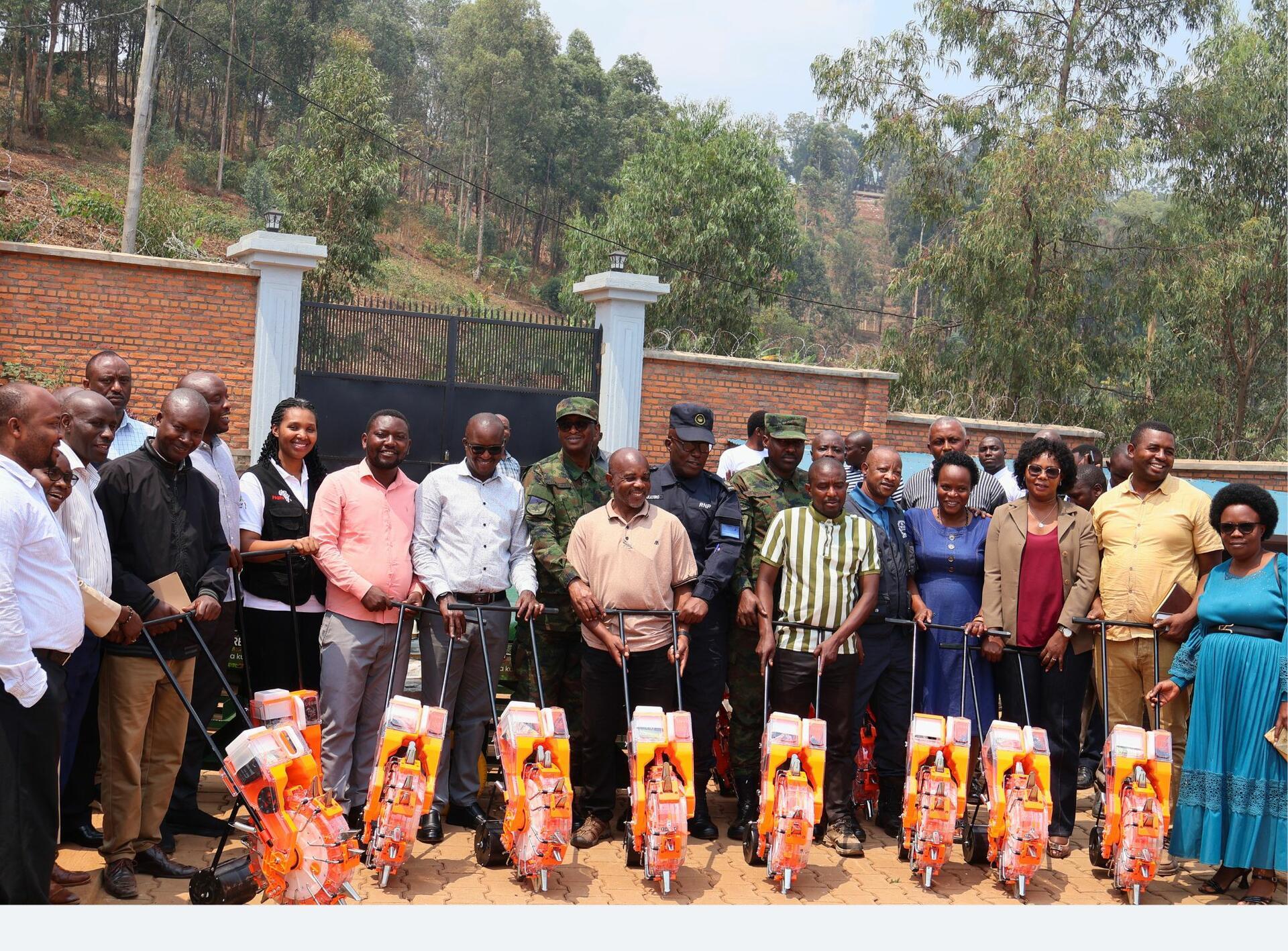
School headteachers join local government officials and project partners for a group photo following the handover of 30 seed planters and 15multi-crop threshers to beneficiary schools in Rusizi District, under the 3SFI project.
Their focus is particularly on high-iron beans. The logic is that, if schools can plant more efficiently, manage their crops better and process their harvest faster, they have a better chance of producing nutritious food consistently.
“These machines will make it easier for us to grow high-iron beans and will improve the quality of the meals we provide for our students,” said Munyemana. “We promise to manage these machines well and train our school gardeners to use them properly.”
For Pastor Kamana Louis, headteacher of Ecole Secondaire Tyazo in Nyamasheke District, the value is easy to understand. Planting and threshing by hand take time, money and a lot of effort. With the new machines, he expects those jobs to become quicker and less demanding, giving schools a better chance of getting their harvest safely from the field to the store and eventually to the kitchen.