Blog Who shapes the landscape? Gender and youth take the spotlight at Tropentag


Who conserves biodiversity, whose knowledge is passed on, and who gets to lead? In Colombia’s Indigenous territory of Cumbal, research on women’s leadership in agrotourism and young people’s participation in community seed banks is exploring these questions. At Tropentag 2026, researchers from CGIAR’s Multifunctional Landscapes Science Program shared emerging findings and methods for understanding how gender, age, and social inequalities shape conservation and rural livelihoods.
Within the framework of 26th edition of Tropentag —an international, transdisciplinary, and interdisciplinary conference focused on research in tropical and subtropical agriculture, natural resource management, and rural development— the Gender, Youth and Social Inclusion team from the CGIAR Multifunctional Lansdcapes science program working in Colombia participated in three events. First, a theoretical and practical workshop titled “Co-creating Gender-Transformative Research on (Agro)Biodiversity: Methods, Intersectionality, and Field Insights” was organized. In addition, a poster was presented on “Co-design of a tourist route in Colombian indigenous territory: GTA for landscape conservation and women’s empowerment,” and an oral presentation was given on “Seeds of the Future: Youth Participation, Community Seed Banks, and Agrobiodiversity in Cumbal (Colombia).”
The CGIAR Science Program on Multifunctional Landscapes (MFL) is being implemented in Colombia, in the indigenous territory of Cumbal (Colombia). The goal of the Multifunctional Landscapes Science Program is to foster productive, biodiversity-rich, climate-resilient, and socially inclusive landscapes, where progress on food security, climate action, biodiversity, and livelihoods reinforces rather than undermines one another. The program integrates social science research to develop strategies for addressing gender inequality and social exclusion.
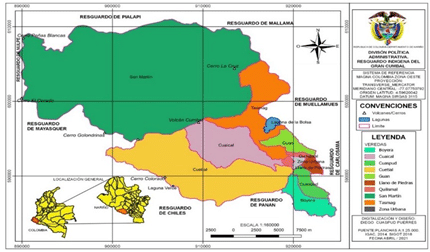
Cumbal Municipality (Nariño, Colombia) (source: Impulso Verde, 2026)
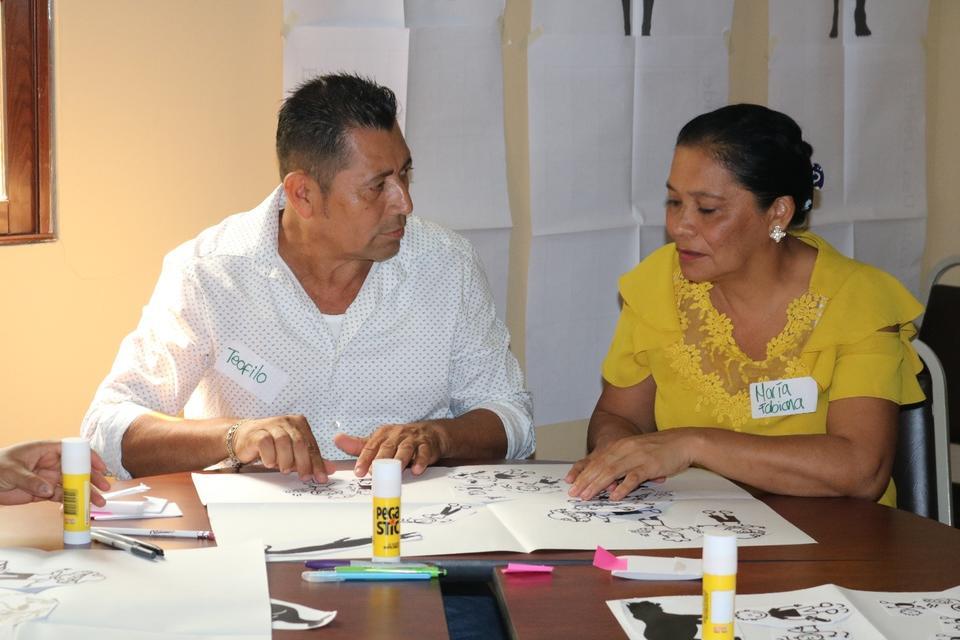
Workshop on the Gender-Transformative Approach (GTA) in (Agro)Biodiversity Research: Co-creating Gender-Transformative Research on (Agro)Biodiversity: Methods, Intersectionality, and Field Insights
The objective of the workshop was to share and discuss conceptual and methodological tools for designing research on (agro)biodiversity with a focus on gender, intersectionality, and a transformative perspective, based on an analysis of real-world experiences in Latin America and Southeast Asia.
During the workshop, a common conceptual foundation was established regarding topics and concepts such as GTA, intersectionality, gender assumptions in research, and the relevance of gender and intersectionality in research on (agro)biodiversity. Building on this foundation, case studies involving these topics were presented to reflect on cultural gender assumptions, methodologies for addressing gender norms in rural communities and agricultural contexts, as well as the methodological and epistemological challenges associated with this type of research.
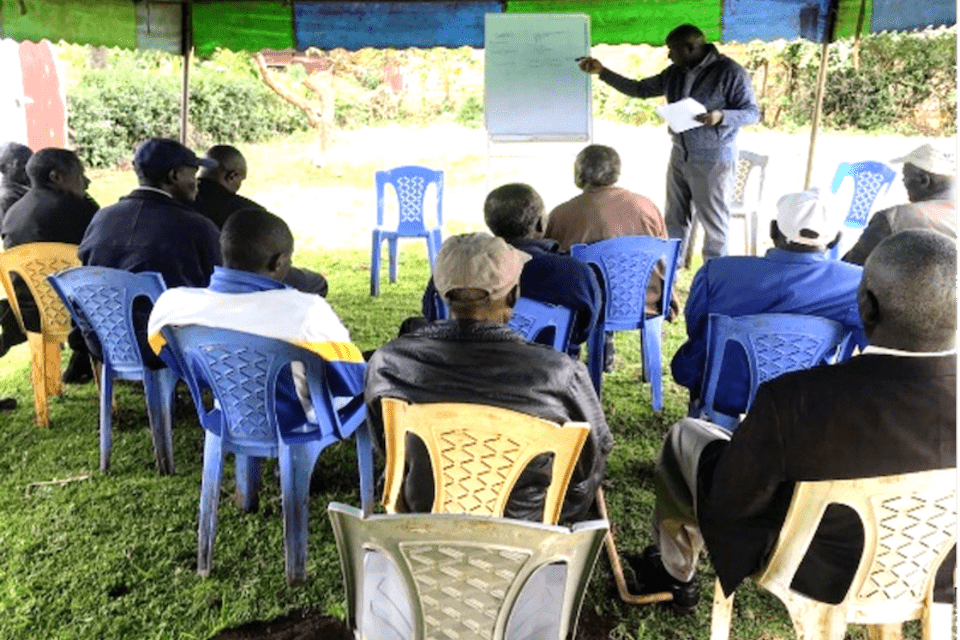
The workshop provided an opportunity to share information on these concepts from both theoretical and practical perspectives, as well as to reflect on their relevance and operationalization in research-for-development projects. The workshop was attended by other individuals affiliated with CGIAR centers, as well as professors and students from European universities, with whom the participants discussed their diverse experiences related to social research in agricultural contexts.
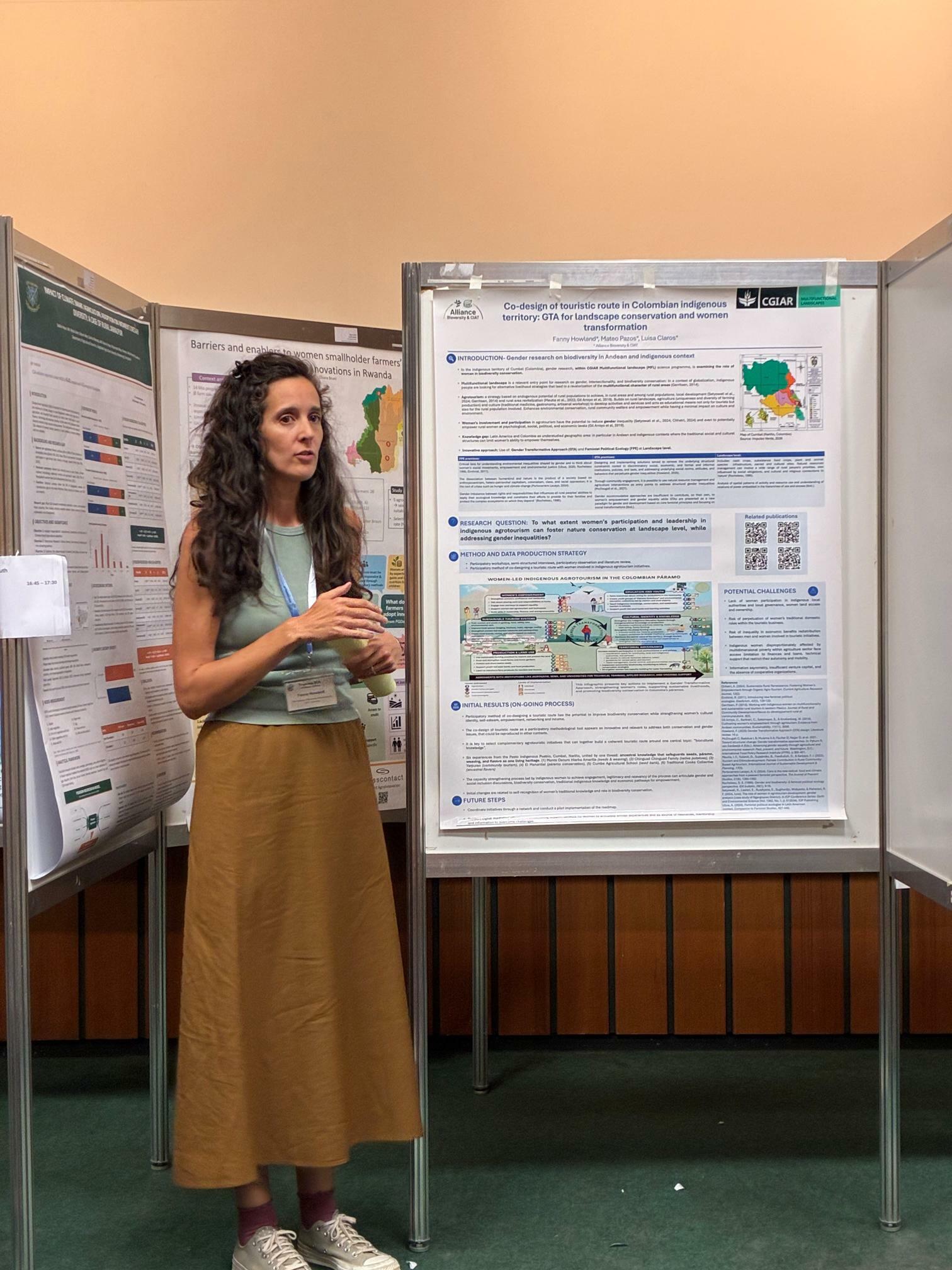
Poster on the co-design of a tourist route as part of the GTA: Co-design of a tourist route in Colombian indigenous territory: GTA for landscape conservation and women’s transformation
As part of the MFL program, a study analyzes the role of women in biodiversity conservation. Specifically, using the gender-transformative approach (GTA) and feminist political ecology, we explore the extent to which women’s participation and leadership in indigenous agrotourism can promote nature conservation at the landscape level while addressing gender inequalities.
Focusing on the research question “To what extent can women’s participation and leadership in indigenous agrotourism foster nature conservation at the landscape level, while addressing gender inequalities?”, the poster presents its premise: the possibility of addressing gender norms and gaps through the participation and leadership of indigenous women in agrotourism. The poster presented initial findings, such as the key role of Indigenous women leaders in the capacity-building process, as well as potential challenges identified, such as the risks of reinforcing restrictive gender roles within tourism activities. The poster was presented as part of the conference’s “Gender & Youth” session.
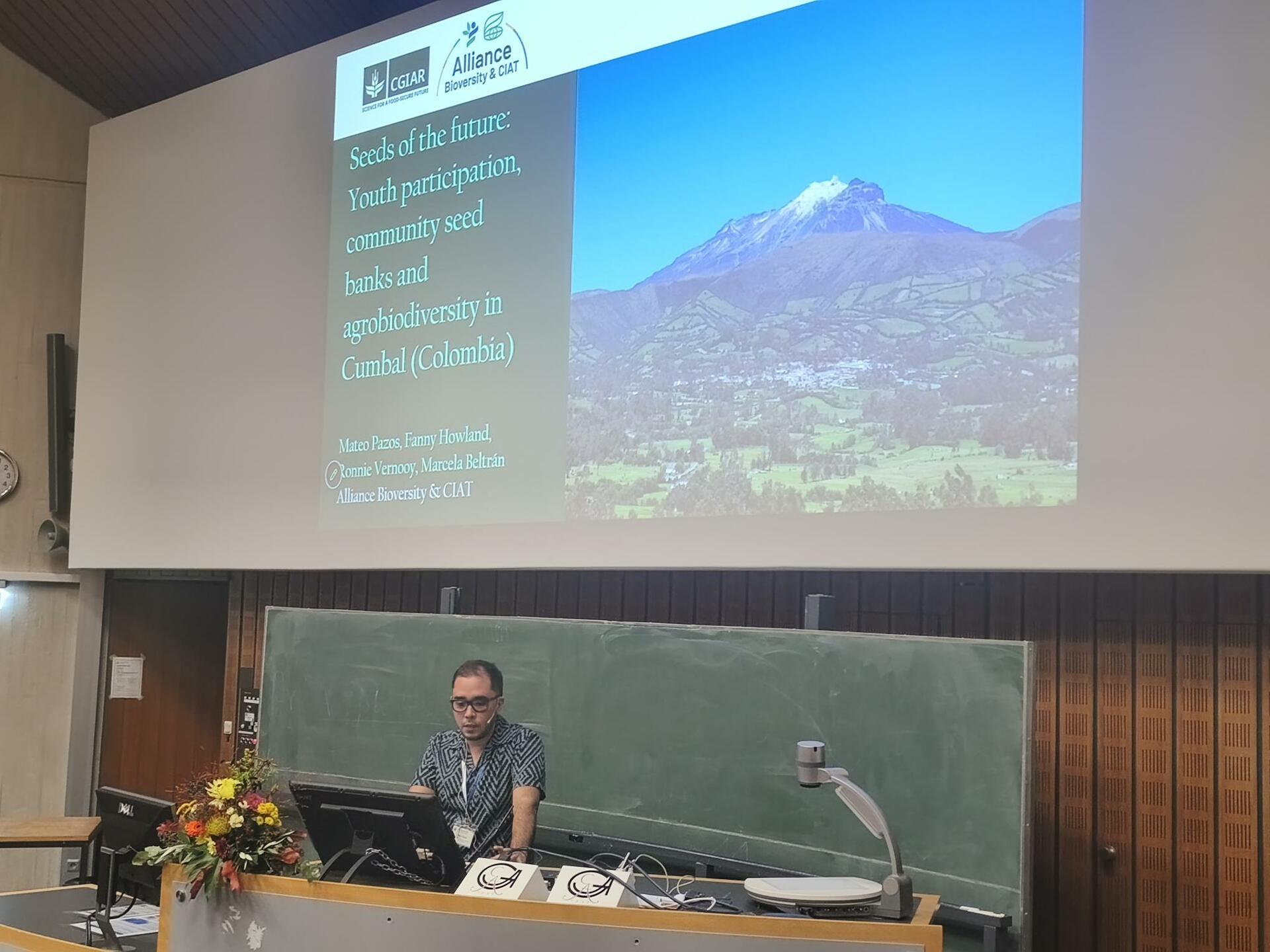
Oral presentation on youth participation in community seed banks: Seeds of the Future: Youth Participation, Community Seed Banks, and Agrobiodiversity in Cumbal (Colombia)
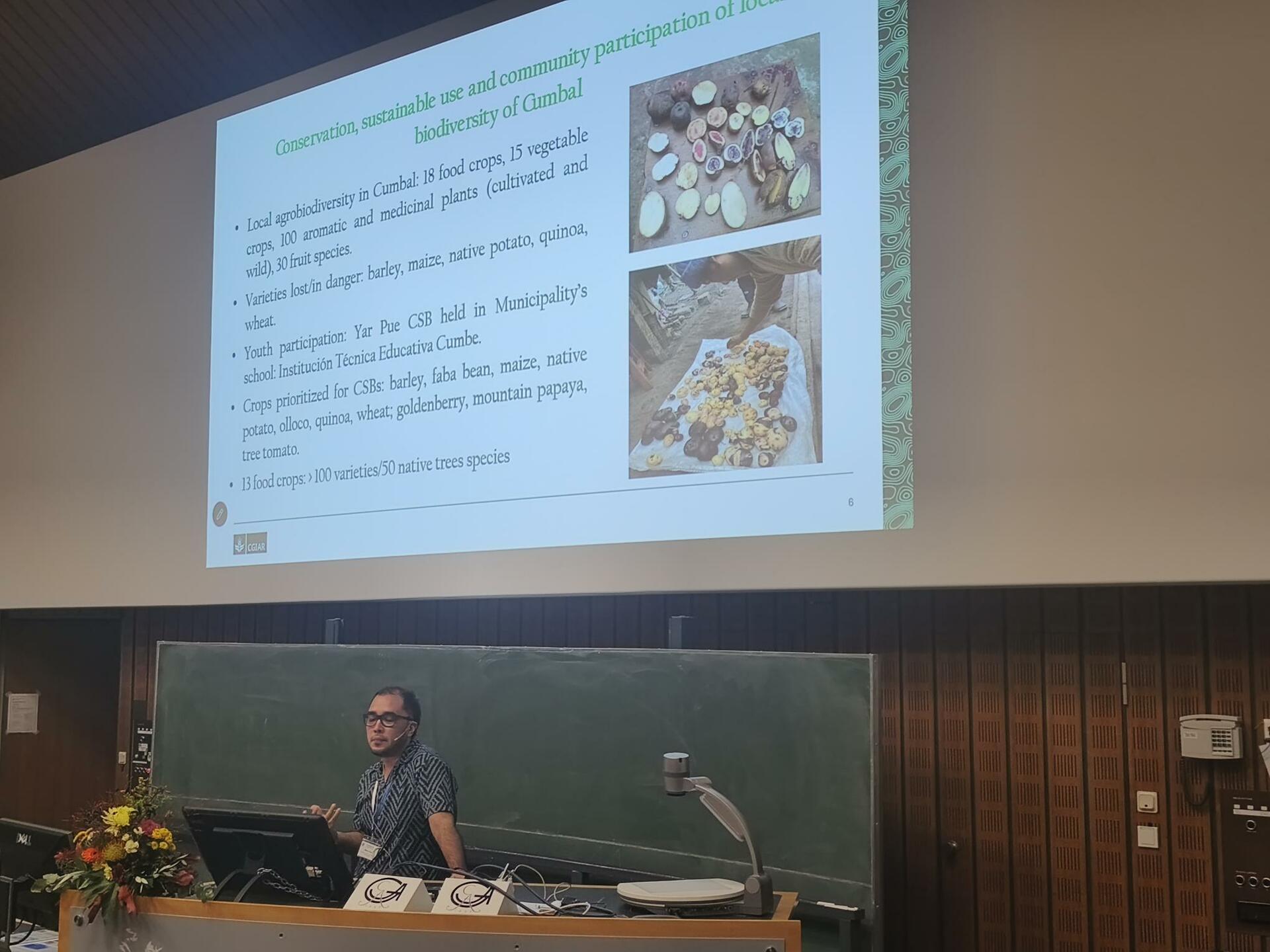
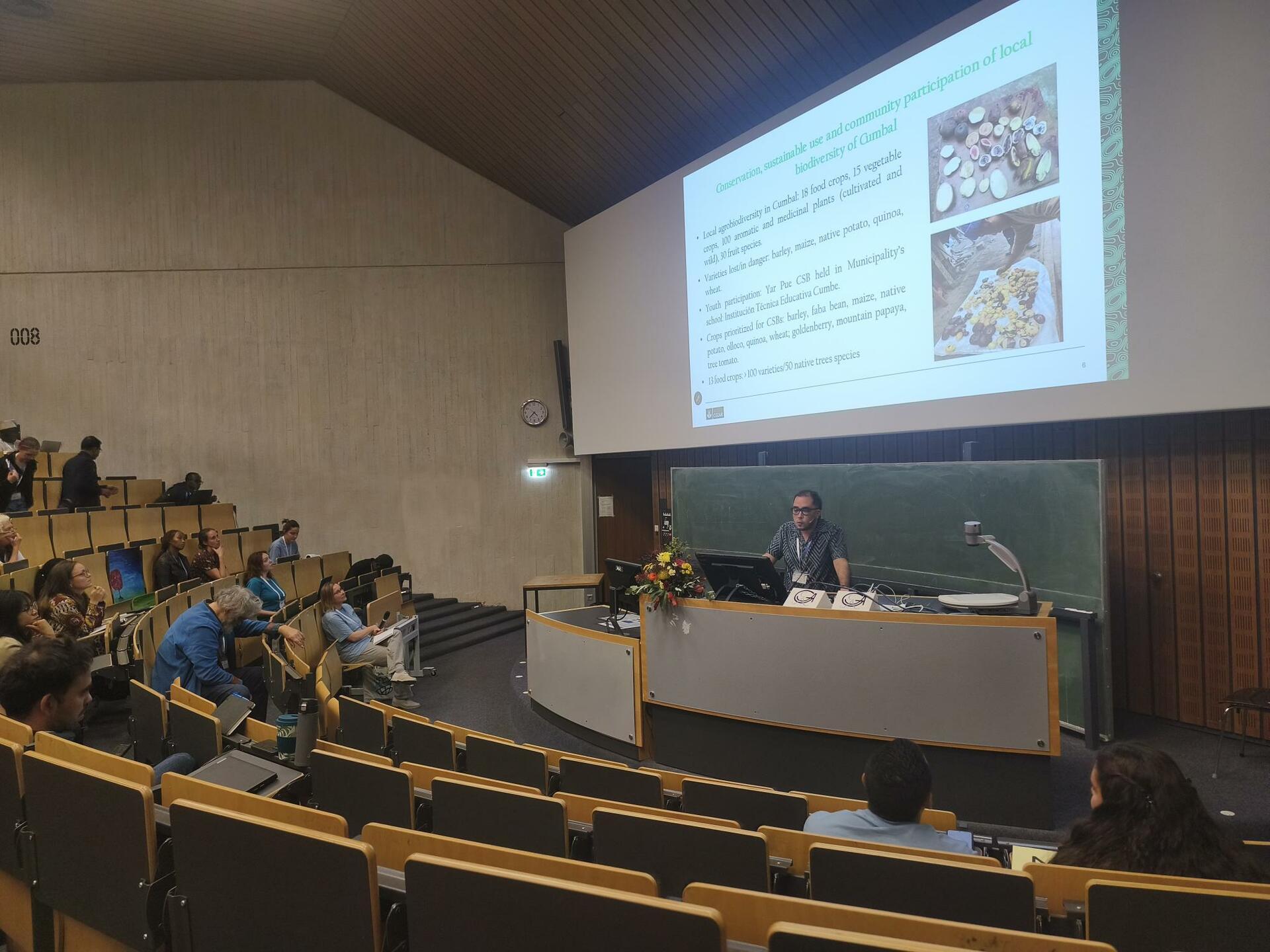
This study addresses the research question: “The role of community seed banks and youth participation in sustaining agrobiodiversity and facilitating intergenerational knowledge transmission.” First, the study described the strategy of strengthening seed banks to preserve agrobiodiversity and Neglected and Underutilized Species (NUS), as well as the potential of this strategy to engage youth and thereby address challenges such as unemployment, migration to urban areas, and disengagement. Thanks to this strategy, one central bank and ten nodal banks were established in schools within the indigenous territory, and a total of 100 varieties (including barley, fava beans, corn, native potatoes, olloco, quinoa, wheat, uchuva, mountain papaya, and tree tomatoes) and 50 native tree species were registered. In this context, the GEYSI team is specifically investigating the role of young men and women’s participation in managing the seed banks from a gender and intersectionality perspective. This presentation was delivered as part of the session “Biodiversity Conservation, Restoration, and Value Chain Development for Underutilized Crops.”
Conclusion—High Interest but Low Participation in the Social Sciences and Qualitative Approaches at Tropentag
Participation in the conference highlighted the limited visibility of research using qualitative approaches. We reiterate the importance of social and qualitative approaches for comprehensively addressing the complexity of challenges related to agricultural and rural development. These approaches enable an in-depth understanding of the sociocultural dynamics, as well as the knowledge and values that influence the practices and discourses of rural men and women involved in the projects. This understanding is key to the design and implementation of inclusive interventions that respond to the specific demands, interests, and contexts of the people for whom the research is intended and with whom the research is conducted. Finally, it allows us to identify gender gaps and norms, as well as power dynamics that are important to recognize and address so as not to reproduce or exacerbate these situations during the implementation of interventions.