Blog Relating planetary diets to everyday governance: Lessons from youth-vendor interactions in Ethiopia


In the streets of Addis Ababa or Butajira, food environments are filled with youth purchasing affordable snacks from small, informal vendors on the sidewalk. These vendors, just a few steps away from school gates or public transport hubs sell fried biscuits, chips, and other snacks that are easy to share with friends. You see young people often standing in groups after class; some pooling their pocket money to buy enough for everyone, ensuring no one is left out. Socializing and reinforcing friendships through sharing is a daily affair where big, individual meals are not always feasible, and where material scarcity is quite evident.
These dynamic food environments, alive with informal exchanges and social negotiations, are the reality for many youth in Ethiopia, where roughly 60% of the population is under the age of 25. This youthful majority is growing up in fast-changing, resource-constrained environments where food is not only something to be consumed but also to be negotiated and shared. Youth are the future of food systems; they will comprise the majority of adult workers and consumers in the years to come. Gearing up before this future arrives, they are already practicing forms of agency and adaptation together with vendors that keep food systems functioning in their environments.
Global frameworks such as the EAT-Lancet 2025 Commission on Healthy Diets from Sustainable Food System set out high-level aspirations for healthy and sustainable diets, but their translation to the ground depend on how food practices are carried out in everyday life. This science-led collaboration envisions how humanity can eat sustainably within planetary boundaries; something that can only be realized if the lived experiences of those who sustain food are accounted for. Justice, in this sense, is about acknowledging the everyday governance of food-scarce environments, and especially ensuring that the planetary conversation includes youth as future beneficiaries but also present stakeholders. This raises the question of how food environments are being assessed and whose practices and interactions are made visible in these assessments.
Food environments can therefore be an important way to understand and shape how food systems work for people in their everyday life. However, traditional frameworks for studying food environments are based on availability, accessibility, and affordability, among other fixed and external indicators, often failing to capture the nuanced, relational dynamics that govern food access in places like Ethiopia. In places where resources are scarce, these indicators often make food environments seem absent or limited, exemplified by the lack of food environment research in low-income countries (Turner et al., 2020), when in truth they are very much present and performed through relational routines that make everyday access and social participation possible. Despite material scarcity, food environments are alive, constantly being constructed and held together by social relations that make everyday eating and sharing possible. What might look from the outside like a lack of structure is, in practice, an organized web of small negotiations and mutual care. Recognizing these practices also clarifies whose experiences and priorities are often missing from established assessments, particularly those of young consumers and the street vendors who shape their everyday eating.
Our recent study, Reconceptualizing Food Environments: Youth-Vendor Relations and Everyday Food Practices in Ethiopia, proposes to look at food environments beyond fixed physical spaces and instead conceptualizes them as dynamic and relational environments, where governance emerges informally through everyday negotiations, mutual trust, and the practices of adaptation that youth and vendors employ to ensure food access and social participation. Their interaction reveals the complexities of food systems in low-resource settings by showing how everyday performances already (informally) govern the food system from below, challenging the assumption that governance exists only if it is part of a formal process or institution. Bringing these perspectives into view helps counter the tendency of dominant frameworks to overlook the actors whose everyday practices keep food systems functioning, and whose voices are rarely taken as evidence in discussions about transformation.
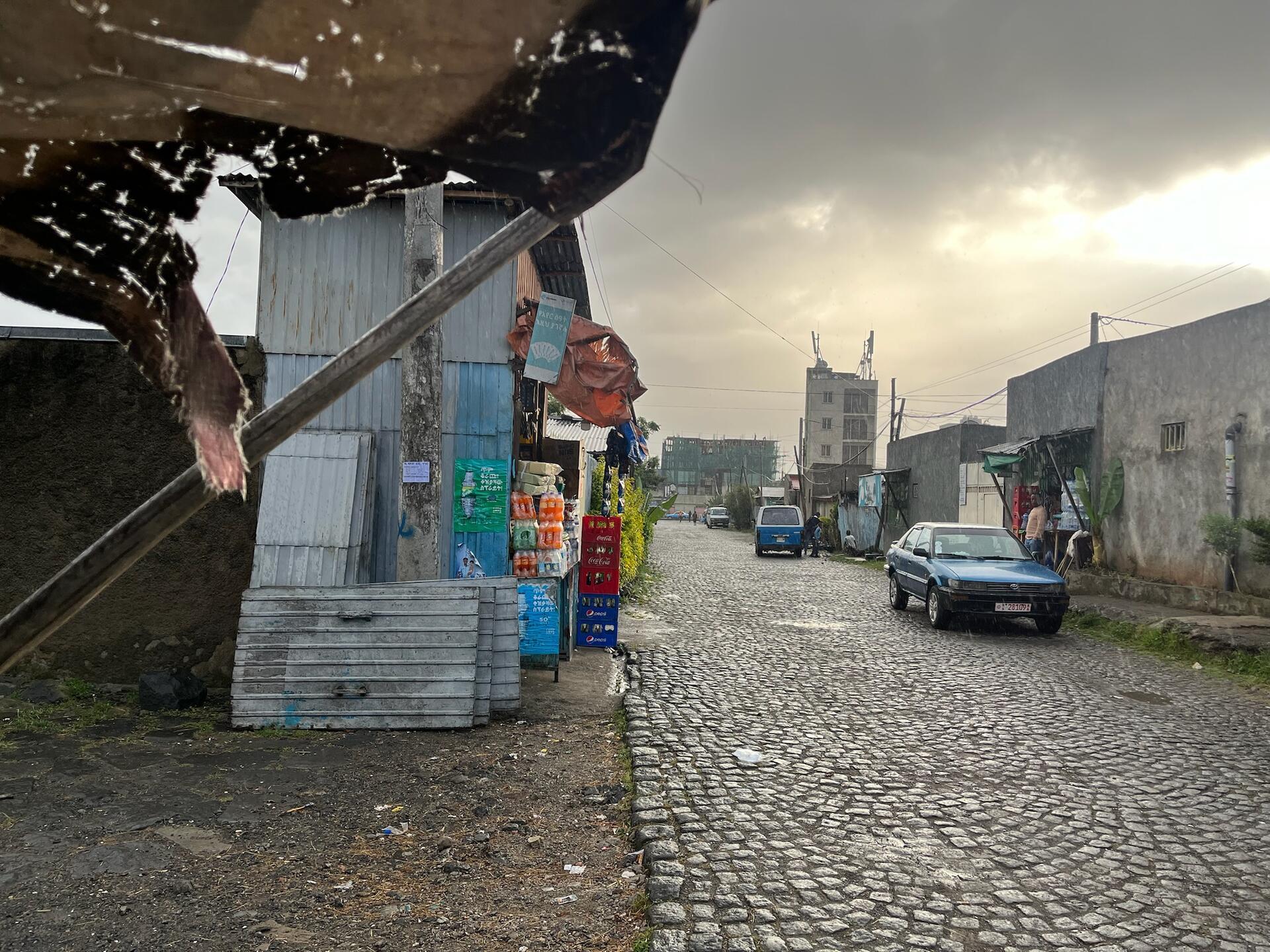
Kiosk on the side of a street in Addis Ababa. Credit: BDN research team.
From metrics to meanings: What sustains food environments under constraint?
Drawing on Social Practice Theories, we conducted photo-journals, observations, and interviews with youth and vendors in Addis Ababa and Butajira to explore how everyday routines co-produce food environments amid uncertainty and material constraint. These encounters revealed food environments as living assemblages of practice, constantly reconfigured through everyday improvisation and adaptation.
Youth, moving between school, work, and home, rely on vendors who adapt to their schedules, limited financial means, and, perhaps most importantly, socialization needs. As one student in Addis Ababa explained, “When my friends buy fried biscuits at school, we eat them together. Otherwise, I don’t remember the time I bought and ate on my own.” Another added, “When my friends eat out, I eat with them just to be similar to them.” A student from Butajira described the same pattern: “If we have five birr, we buy five small snacks so that everyone can eat together.” These moments show us that food is not only about nourishment but also about meanings of social belonging and participation.
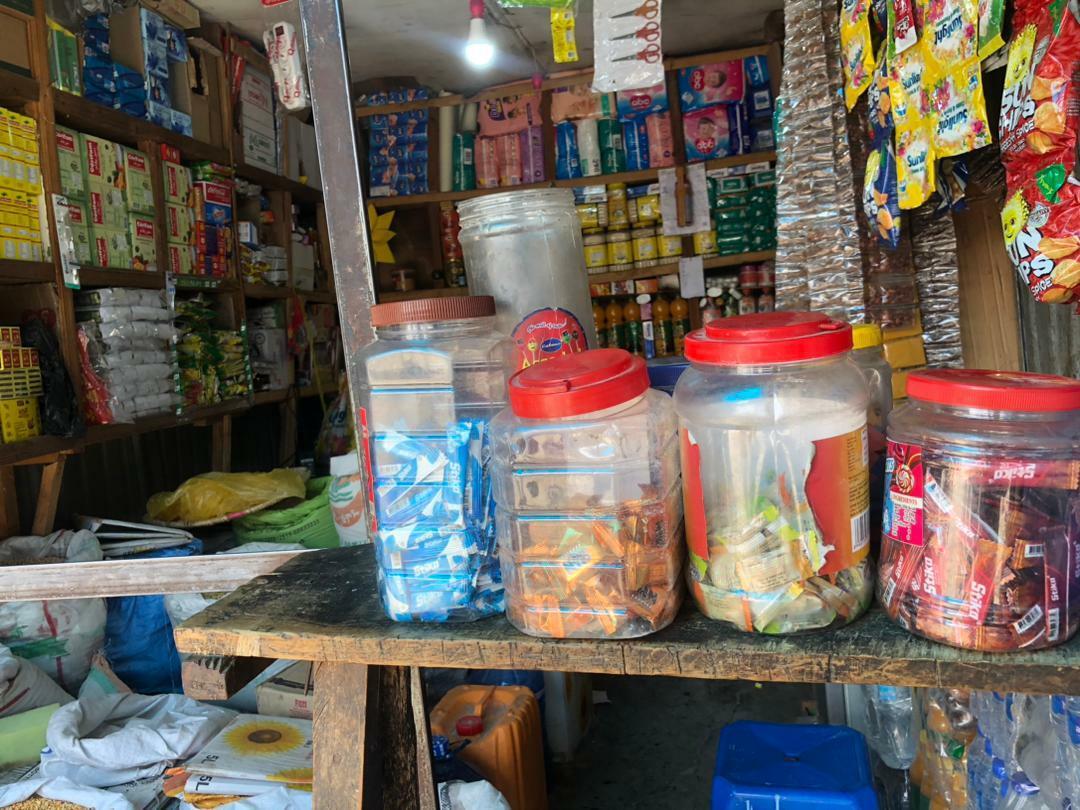
Kiosk next to a high school in Addis Ababa, selling candy and chips to students. Credit: BDN research team.
Vendors see this too, and in turn, sustain and incentivize these social relations through small acts of care and trust, such as providing food on credit or for free, or offering smaller affordable and shareable portions: “They call me ‘Mommy.’ I give them food when they are hungry,” one said. “When they say, ‘Mommy, I don’t have money,’ I give them tea and biscuits". How difficult it was for vendors to balance care and financial loss was a recurrent mention, highlighting a moral economy where community support and commerce are constantly negotiated.
Relational governance in everyday food system negotiations
Another way youth and vendors negotiate is through food safety. Vendors implement and display hygiene by cooking on the spot (e.g., frying), avoiding spoiled items, and answering youth concerns on products and hygiene practices, while youth continuously assess vendor trustworthiness through visual cues on appearance, smell, and word of mouth. One vendor explained: “If I find expired food while selling, I make sure not to sell it. They are happy when I check and only sell valid items.” Youth echoed this attention to hygiene: “I examine how the chips are fried. If I see they are fried in oil that has been used more than once, I avoid buying.”
But these interactions are not without tension. Vendors navigate trade-offs between hygiene and profit, while youth oscillate between expectations of “safe” food and social demands: “Even though I’m not sure it’s clean, I eat because I see others eating,” one student said. Vendors and youth thus informally co-produce norms around hygiene and reciprocity that define what counts as safe or trustworthy. Moreover, students have widely shared how fresh, traditional Ethiopian foods are something they aspire to but can’t currently afford, which might contrast with the imaginary of youth aspiring to consume trendy, packaged foods.
Through these negotiations and mutual monitoring, taking the shape of regulatory performances, an informal but patterned form of governance emerges: what we call ‘everyday relational governance’. This governance is informal but organized, bottom-up, adaptive, and responsive. It is enacted through everyday practices where formal arrangements fall short, and is sustained through moral obligation, social proximity, and constant adjustment and improvisation of practices to dynamic contexts. It challenges the assumption that informality equals absence of regulation, showing instead how everyday relations actively sustain and complement formal food system governance, especially where formal institutions don't reach.

Street vendor next to a high school in Addis Ababa, selling chips, samosas and biscuits to students. Credit: BDN research team.
The policy paradox and why we need to start from practices
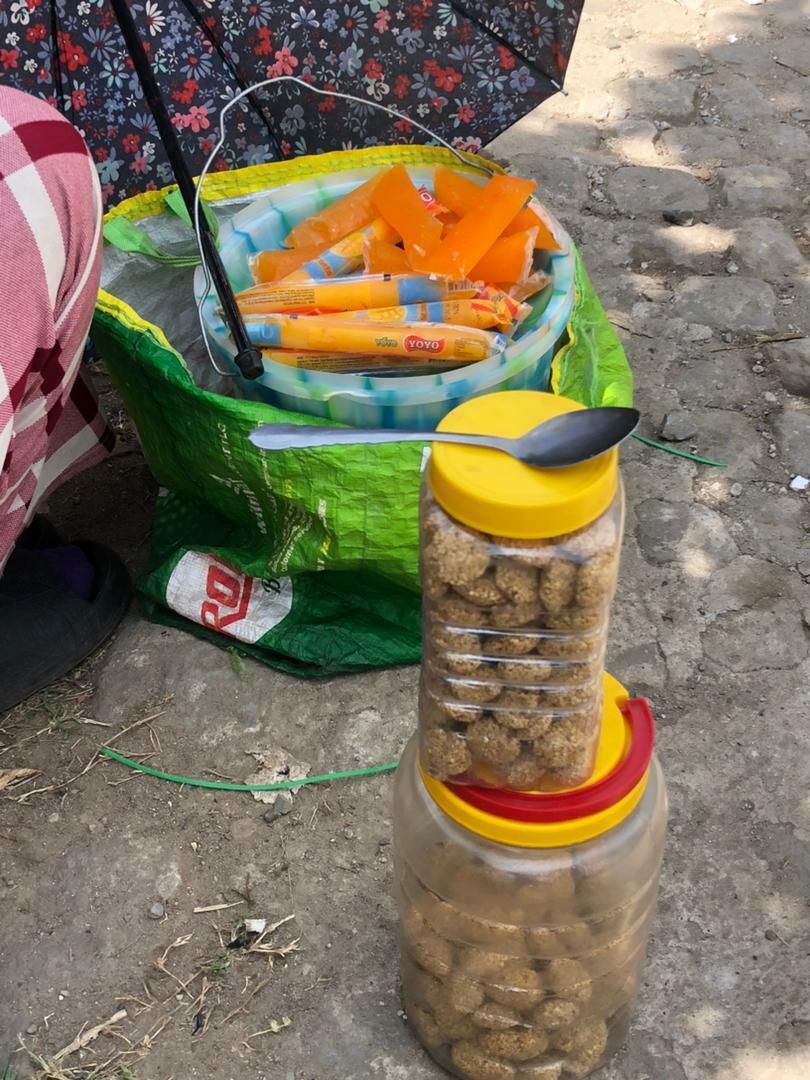
Mobile street vendor next to a high school in Addis Ababa, selling sesame cookies to students. Credit: BDN research team.
Despite their importance, these informal and everyday systems of relations remain largely invisible to policy. Interventions such as school meal programs or street vending bans often follow linear models of ''improvement'' that seek to replace what’s already present and filling certain gaps, like informal vendors, with institutional standardized provision such as government-supplied schools meals, risking dismantling the social infrastructure that currently secures daily nourishment, socialization, and livelihoods around schools. A vendor proposes: “If the school offered me electricity, I would make chips and some biscuits. I would like to talk to the director to get access to electricity on payment.” Her words, echoing those of other vendors, point to infrastructural gaps that constrain their ability to safely and affordably serve youth and, at the same time, propose collaboration and modest institutional support that would not threaten their livelihoods.
Recognizing that these everyday arrangements already perform vital governance functions calls for a different logic of thinking about interventions that build from existing practices rather than over them. When policy treats youth and vendors as co-governors and supports the latter through small infrastructural investments and recognition of their social and care roles, it helps strengthen system resilience without erasing local agency. Ultimately, such an approach can help reframe transformation from a top-down redesign to a practice of enablement and co-governance, resonating with wider Africa-based evidence (Giroux et al. 2021; Battersby et al. 2023) showing vendors as enablers of equitable food access rather than as obstacles to formal systems’ functioning.
Lived experiences and the 'how’' of transformation: Rethinking from the ground up
This Ethiopian case study brings into focus what large-scale transformation agendas often miss: how change happens in practice. While global frameworks delineate desirable futures, transformations unfold in the present day, through sequences of practices that reconcile competing demands like earning, feeding, belonging, and caring. Our findings demonstrate that micro-interactions and negotiations between youth and vendors generate stability and adaptation in their practices, revealing leverage points where modest and context-sensitive interventions can potentially yield wider systemic effects. Seeing youth and vendors as co-producers and co-governors of their food environments redefines transformation as a practice of inclusion and recognition. It highlights that agency is not individual but also social, distributed across relations of exchange, trust, and care that collectively sustain food systems under scarcity. These forms of social agency make transformation possible precisely where material and institutional resources are limited.
In such contexts, scarcity is a situation to overcome as much as a structuring force that shapes creativity and social cooperation. If we continue to assess food environments primarily through metrics like availability and affordability, we risk overlooking the social infrastructures that sustain them when resources are constrained, as well as the resilience and creativity demonstrated in how people adapt and navigate these constraints within informal arrangements. Understanding food environments in this way requires studying how people organize reciprocity and trust under scarcity. In other words, how they make food systems work despite systemic limitations. Making these dynamics visible supports a more grounded debate about transformation by acknowledging forms of knowledge and practice that usually remain invisible when attention stays on formal institutions or standardized indicators.
For researchers, this means moving beyond static, indicator-based methodologies towards examining everyday practices and how they constitute governance itself. For policymakers, it means designing interventions with lived experiences as a starting point. Building from these relations arguably offers a more pragmatic path toward just and sustainable transformations in food systems. Transformation, in this sense, does not begin with new dietary prescriptions or overly-complex, multi-indicator frameworks. It begins with recognizing how everyday relations sustain and govern food systems from below. Ensuring that these lived experiences are not sidelined but treated as central to how change unfolds helps anchor future interventions in the realities shaped by youth and vendors themselves.
To translate understanding into action, these insights can inform concrete co-design steps. Methods such as Personas for Social Good (PFSG), practice archetypes grounded in real routines, or small-scale infrastructure pilots can help test which interventions strengthen existing practices rather than replace them. By focusing on everyday practices, these tools help anchor interventions in how youth and vendors already shape food environments, increasing the feasibility and long-term sustainability of improvements.
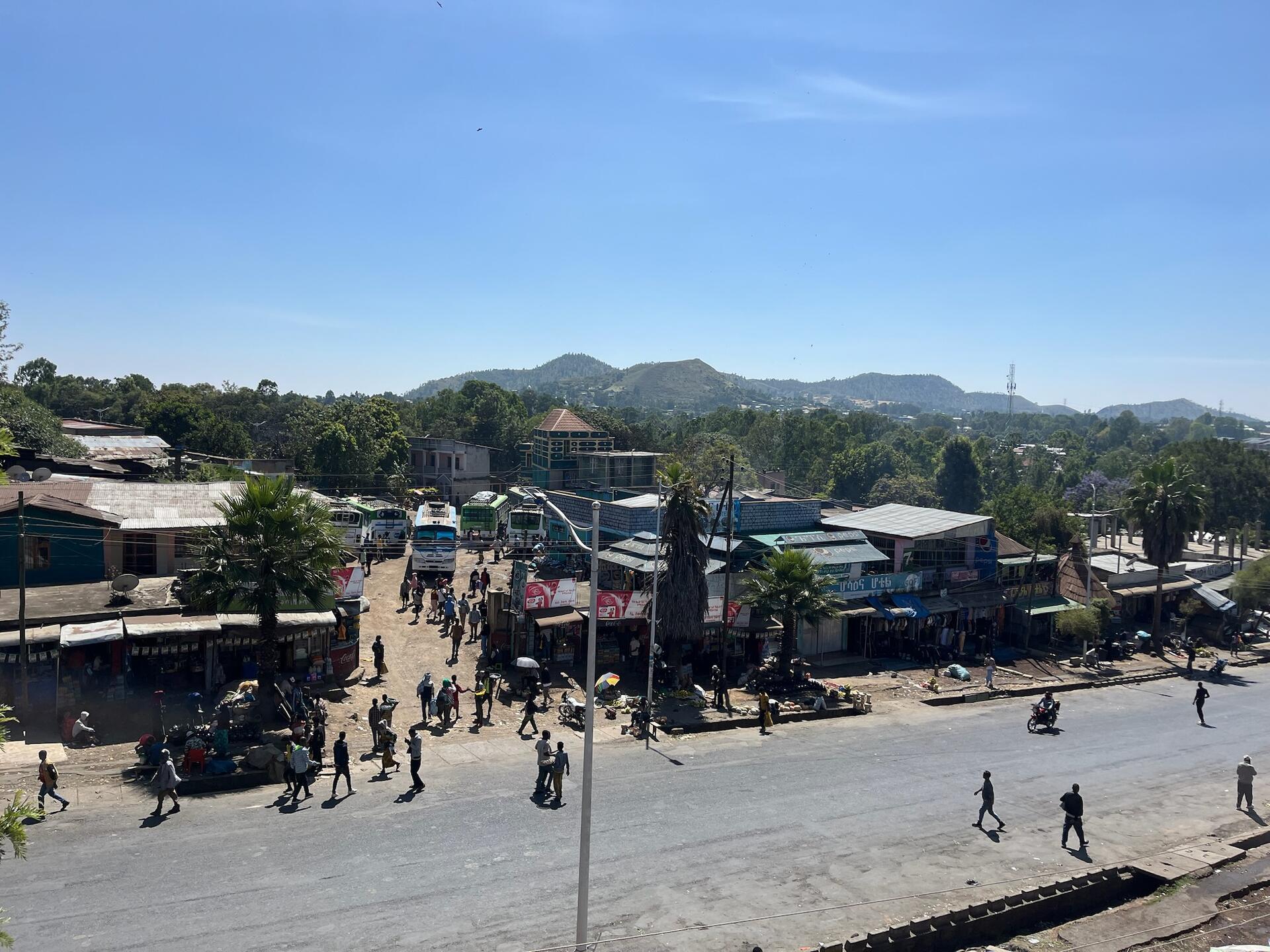
Street life in Butajira. Credit: BDN research team.

Walk-time snack-chips. Credit: photo journal youth participant ID_Y_28.
About the research
This study is part of the CGIAR Research Portfolio on Better Diets and Nutrition (BDN), led by the International Food Policy Research Institute (IFPRI) and the Alliance of Biodiversity International and CIAT, in partnership with Wageningen University & Research and the International Potato Center (CIP). Ethical approval for this study was obtained from the Ethiopian Public Health Institute (EPHI-IRB-517-2023).
The study was conducted under the supervision of Dr Sigrid Wertheim-Heck, Senior Expert on Sustainable Healthy Diets: sociological consumption perspectives for advancing inclusive governance arrangements. | NWO assigned to BDN under the Alliance of Bioversity & CIAT. We gratefully acknowledge the support of the Dutch government through NWO.

We would like to thank all funders who supported this research through their contributions to the CGIAR Trust Fund.