Blog PABRA empowers Rwanda’s school nutrition with three tons of high-iron bean seeds
PABRA empowered 92 Rwandan schools with 3.15 tons of high-iron bean seeds, combining agriculture, nutrition, and climate-smart training to improve student health, school meals, and community resilience through the Sustainable School Feeding Initiative.
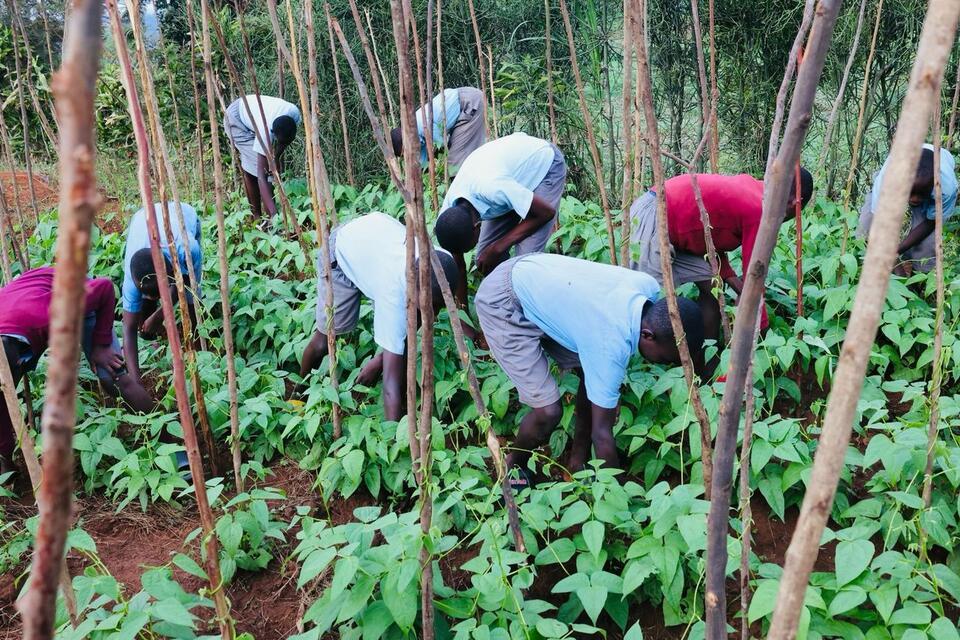
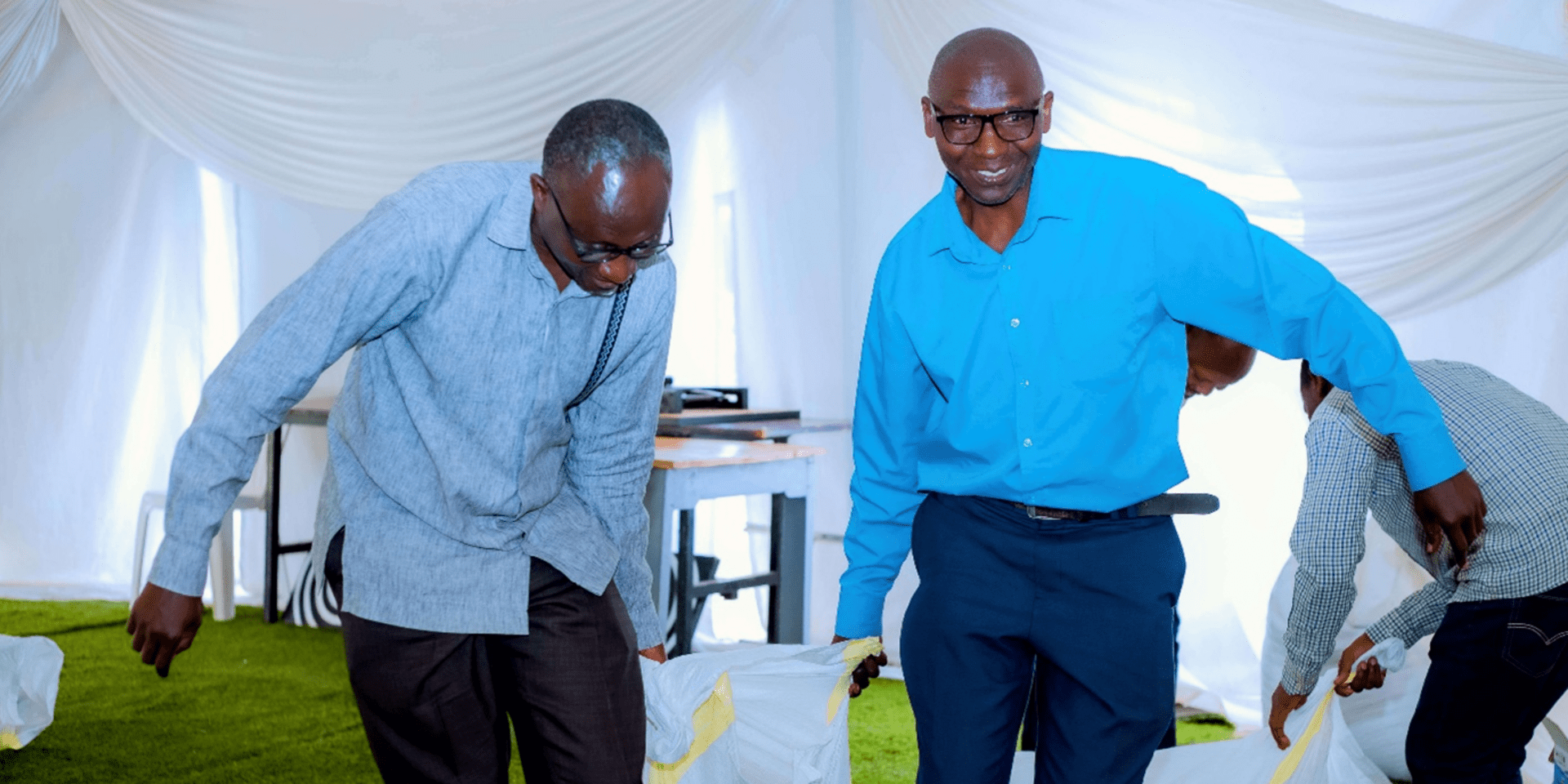
What if the key to better school performance, stronger communities, and healthier futures could start with a single bean seed? In Rwanda, that idea is becoming reality. As the government intensifies its efforts to improve nutrition through agriculture under its Fifth Strategic Plan for Agriculture Transformation (PSTA5), schools are emerging as the unexpected ground zero for change. Under the Sustainable School Feeding Innovations (SSFI) Initiative, the Alliance of Bioversity International and CIAT through Pan-Africa Bean Research Alliance (PABRA), in collaboration with national partners, has distributed over three tones of high-iron bean (HIB) seeds to 92 schools across five districts, marking a significant leap toward linking school meals with local, nutrition-rich crops.
SSFI, which is funded by Clifford Chance, seeks to promote nutrition-sensitive school feeding by strengthening schools’ capacity in bean production, nutrition awareness, and climate resilience. It is implemented in partnership with Ministry of Education (MINEDUC), the Ministry of Agriculture (MINAGRI), the City of Kigali, and the Heads of Schools Organization (HOSO).
These trainings extended beyond agriculture. They were designed to transform school communities through nutrition education, sustainable farming practices, and climate adaptation strategies. Based on findings from a 2023 study on school gardens and feeding programs in Kigali, the training addressed gaps in knowledge related to bean nutrition, garden management, agricultural practices, and climate-smart approaches. Across two training sessions, one held at the Rwanda Education Board (REB) in Kigali and the other at Silent Hotel in Kayonza, 222 participants, including 53% women in Kigali and 22% in the Eastern Province, were equipped with practical tools and knowledge to bring meaningful change to their schools and surrounding communities.
The team
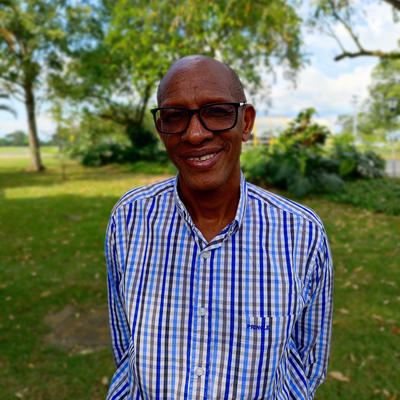
Jean Claude Rubyogo
Leader, Global Bean Program, and Director, Pan Africa Bean Research Alliance (PABRA)
Eliud Abucheli Birachi
Project Leader, Country Representative for Rwanda