Blog Why obesity drugs alone will not fix unhealthy food environments
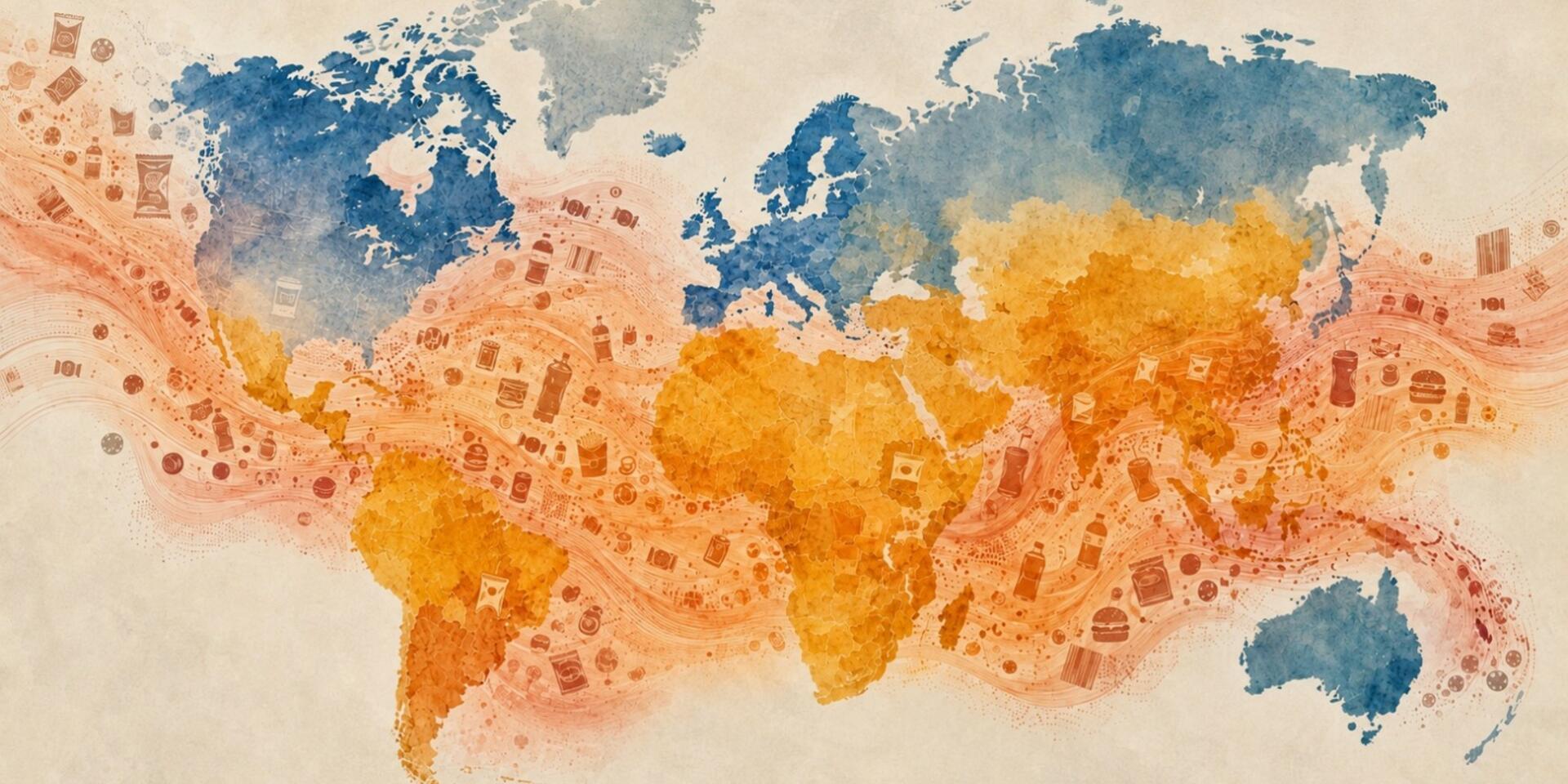

New obesity medicines may reshape food demand in high-income countries. But without stronger food environment policies, they could intensify commercial pressure elsewhere.
When Walmart noticed that some customers using the new weight-loss drugs (known as GLP-1 medicines) were buying less food, it sounded like a small retail story. But it pointed to something much bigger. These GLP-1 products, such as Ozempic, Wegovy or Zepbound, are changing appetite and food baskets. And they may soon change the strategies of the global food industry.
GLP-1 drugs may help some people eat less, change their food preferences, and lose weight. But can they change the food systems that made unhealthy diets so easy to adopt in the first place? Can they stop ultra-processed foods from being cheap, visible, convenient and heavily marketed? Can they fix unhealthy food environments: the everyday surroundings that shape what we eat, the shops and stalls around us, the food products we access, the prices we face, the adverts we see?
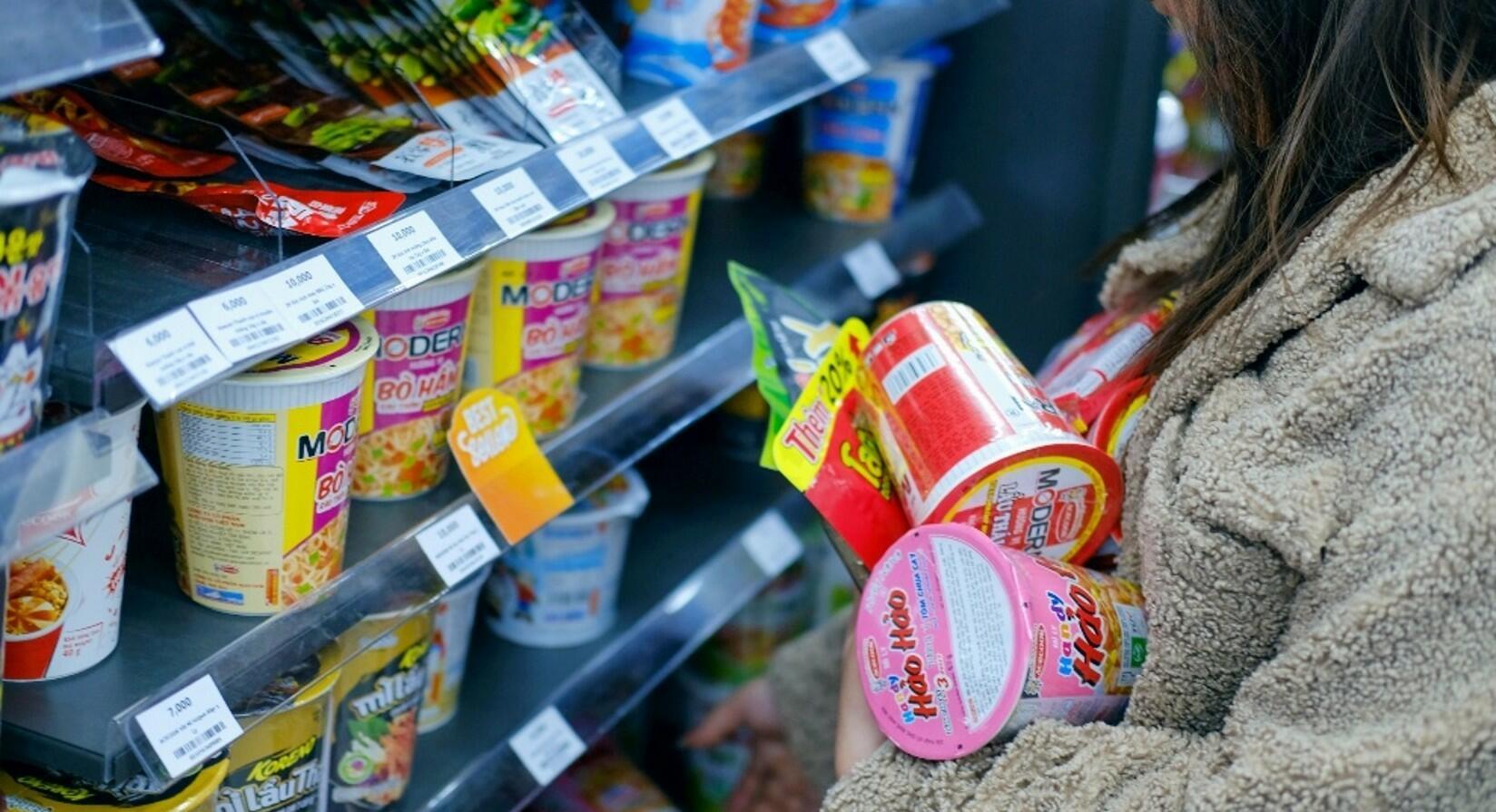
Urban food environment in Vietnam. Photo: Ha Dao/CIAT
Probably not on their own. If people in richer countries start buying fewer snacks, sugary drinks, fast foods and other calorie-dense products, large food and beverage corporations are unlikely to simply accept a loss of profits. They will adapt. Some already are, with “GLP-1-friendly” product lines, smaller portions, high-protein snacks, zero-sugar drinks and new health-oriented branding. But another response is also possible: stronger commercial pressure in markets where demand is still growing, regulation is weaker, and healthy food environment policies remain underdeveloped. This is the central question of our new article in Globalization and Health: as GLP-1 drugs reshape food demand in richer countries, could they have unintended consequences in low- and middle-income countries (LMICs)?
We argue that they could. Many LMICs could face a double burden: limited and unequal access to new obesity treatments on one side, and intensified commercial pressure on food environments on the other. This would not be new; it would be an acceleration of trends already underway.
Across many LMICs, food environments are already shifting rapidly. Convenience stores, fast-food chains and digital food delivery platforms are expanding.
Ultra-processed foods and sugary drinks are becoming more available and more heavily promoted, and children and adolescents are exposed to aggressive marketing. A GLP-1-driven shift in demand in high income countries (HICs) could accelerate these trends rather than ease them.
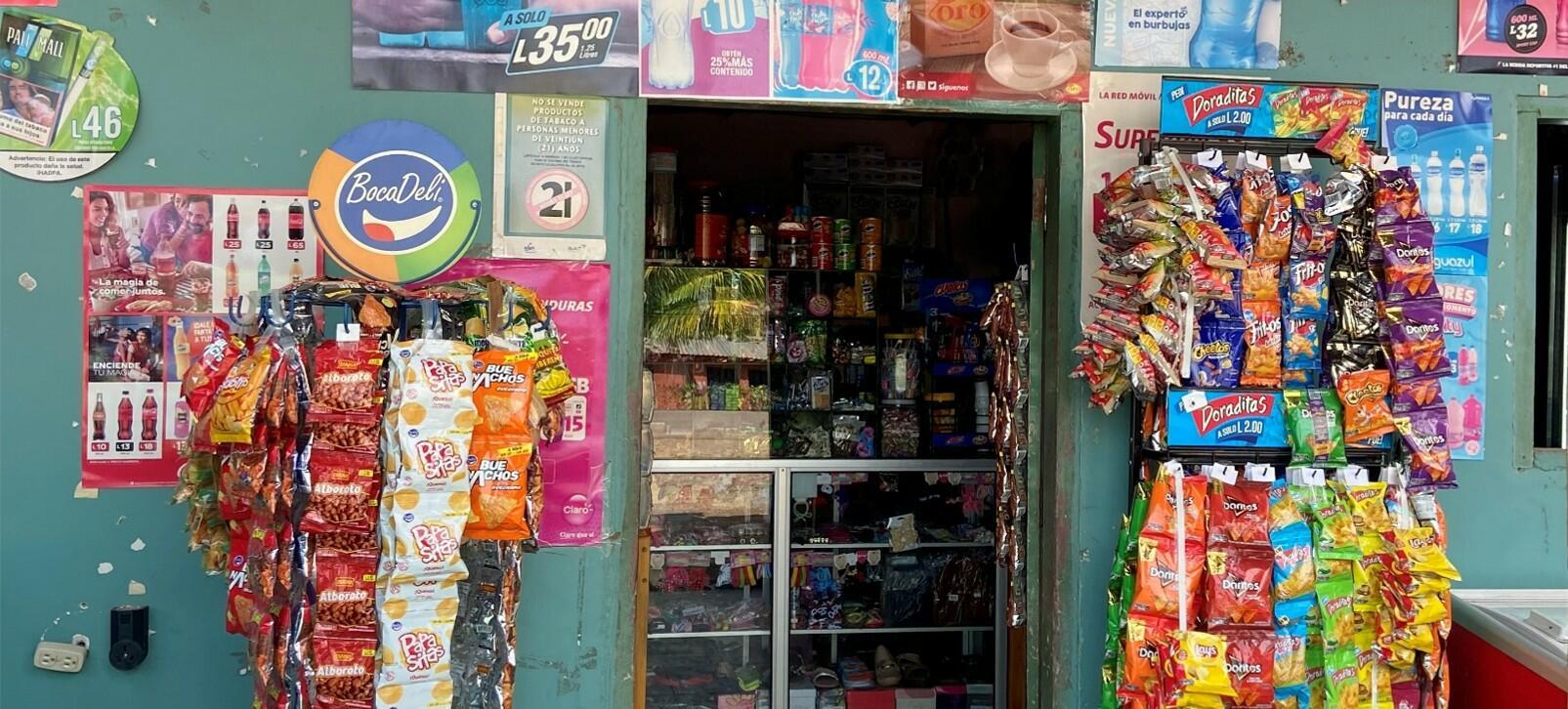
Rural food environment in Gualaco, Honduras. Photo: Sarah Rankin/CIAT
Healthy diets are not just the result of individual “choices”. They are structured by food environments, markets, policies and commercial interests. In other words, healthy diets require healthy food environments. And healthy food environments require policies that can counteract commercial pressure.
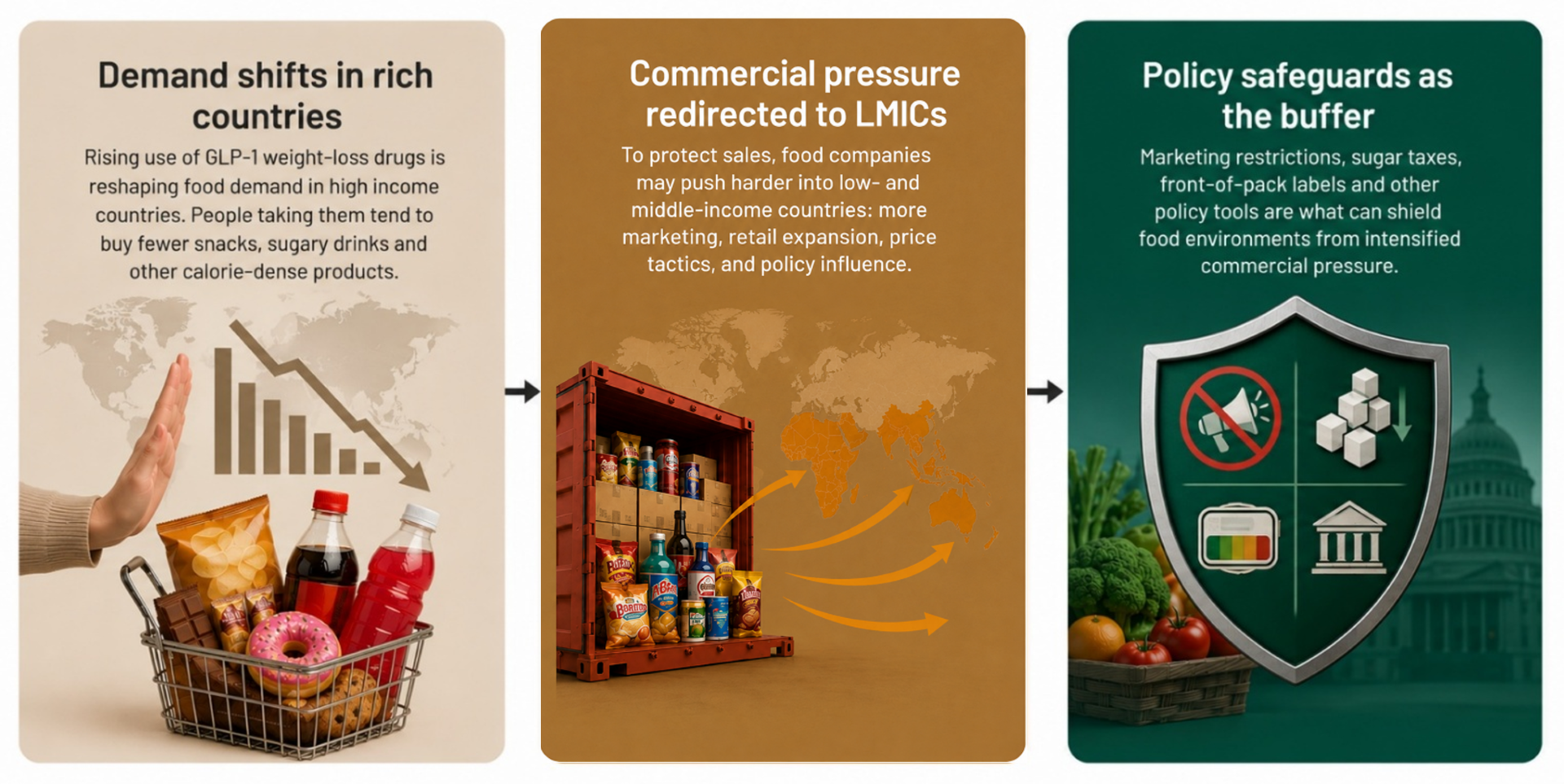
As GLP-1 use reshapes food demand in HICs, food companies may redirect commercial pressure onto food environments in LMICs, where stronger policy safeguards would be the main buffer.
Many of the policy tools needed are already known and tested: restrictions on unhealthy food marketing, especially to children; fiscal measures such as taxes on sugar-sweetened beverages; front-of-pack warning labels; healthier school food standards; safeguards against conflicts of interest; and better monitoring of corporate practices in retail, advertising and policymaking. No single tool is enough, but together they can begin to rebalance food environments toward public health rather than corporate sales.
GLP-1 drugs can genuinely help individuals manage their weight. But they do nothing to address the commercial forces that make unhealthy food cheap, convenient and heavily marketed. Reducing obesity across whole populations means changing those forces, and that is a job for policy, not drugs alone.

We would like to thank all funders who supported this research through their contributions to the CGIAR Trust Fund.