Research Articles More than a thousand vegetables, many of them forgotten
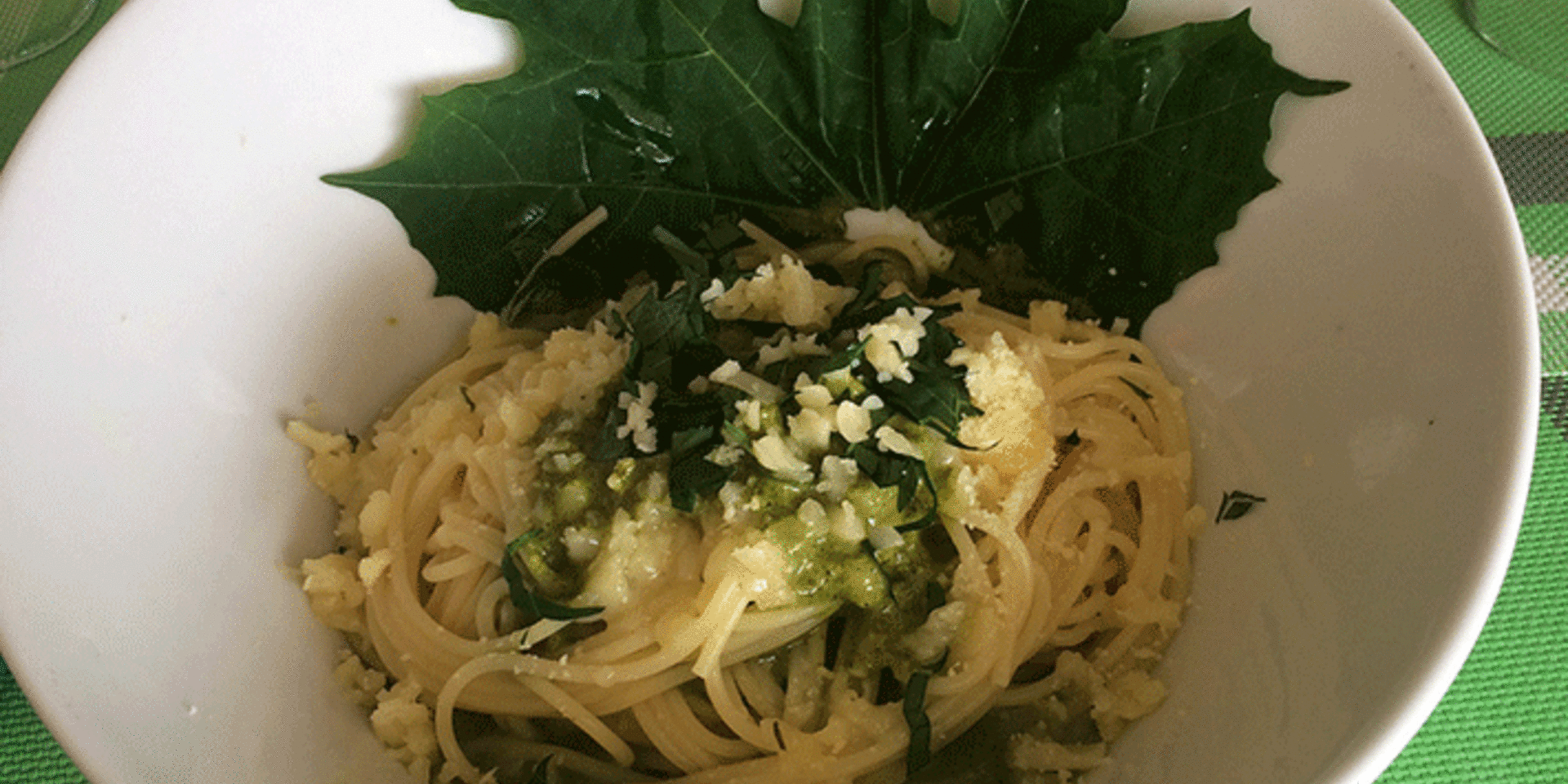

Bioversity International and partners reveal that most of the world's vegetable species are poorly documented, and present a study and database with the aim to help promote and recognize the value of these 'forgotten foods'.
Vegetable displays in small urban grocery shops, supermarkets, and open-air markets are typically abounding in colour. While this diversity can seem quite rich for one location, it has become surprisingly similar in markets around the world, which offer primarily ubiquitous commercial vegetables such as tomato, eggplant, onion, carrot, beet, lettuce and broccoli. In other words, world diets are actually becoming more similar and based on fewer crops.
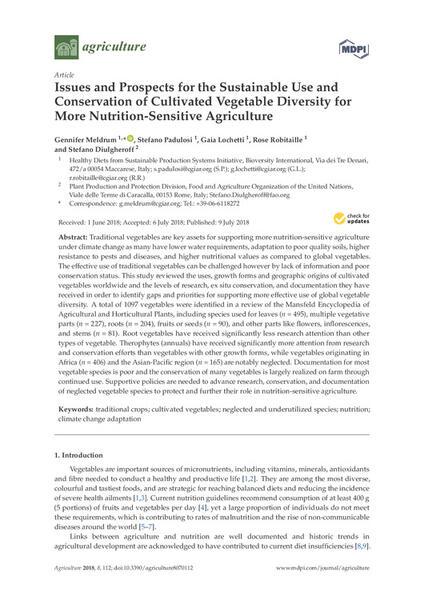
A much greater diversity of vegetables exists in traditional food systems, but many of these crops are poorly integrated in current markets and diets. A recent study by Bioversity International scientists in collaboration with the Food and Agriculture Organization of United Nations revealed that a total 1,097 vegetable species, with a great variety of uses and growth forms, are cultivated worldwide. Still, we only seem to be familiar with less than 7% of these species.
This diversity of vegetables is more than a local peculiarity – it could play an important role in ensuring adequate levels of nutrition and in meeting the challenges of agricultural production posed by climate change and soil degradation. Many traditional vegetables are known to have higher nutritional value than their commercial counterparts, and are well-adapted to local conditions, exhibiting resistance to drought, pests, diseases and marginal soil conditions. For example, the Mesoamerican shrub, the Mayan spinach (Cnidoscolus aconitifolius) contains exceptional levels of protein, vitamin C and iron, and provides leaves year-round with little water and in poor soil conditions. Traditional crops such as these could be strategic in helping more people meet the recommended levels of fruit and vegetable consumption, which is currently a global health concern.
Lack of information on traditional vegetables is, however, a major barrier to their use and promotion because it hampers a wider recognition of their values and understanding of how best to grow, process and market them. The study – recently published as part of the Agriculture Special Issue on Biodiversity of Vegetable Crops, A Living Heritage – showed that most of the world’s 1,097 cultivated vegetable species have received very little attention from research and conservation initiatives and are poorly documented by production statistics.
In particular, research and conservation of vegetables have largely focused on annual crops – plants that complete their life cycle within one year – while many vegetable-providing trees and shrubs remain effectively neglected. Furthermore, research and conservation initiatives have paid less attention to vegetables originating in Africa and the Asia-Pacific region than to species from other areas. Yet, native vegetables can be crucial for improving diet quality in these highly biodiverse regions, while vegetable-providing trees can support a holistic transformation of agricultural production for adaptation to climate change and provision of more nutrient-dense foods.
Organizations around the world are placing increasing efforts on promoting these so-called 'forgotten foods', such as the African leafy vegetables, because of their value and potential in bringing nutrition and income benefits to consumers and producers, as well as in strengthening local culinary traditions. This could be the beginning of a great transformation towards more diverse, vegetable-rich food systems around the world. The database of vegetables and this study that it accompanies can help in recognizing these valuably useful species and in ensuring that they indeed are not forgotten.
This research was carried out in the framework of the project “Linking Agro-biodiversity Value Chains Climate Adaptation and Nutrition: Empowering the Poor to Manage Risk” funded by the European Commission and the International Fund for Agricultural Development (IFAD) and linked to the CGIAR Research Programmes on Agriculture for Nutrition and Health (A4NH) and Climate Change, Agriculture and Food Security (CCAFS), which are supported by CGIAR Trust Fund Donors.
FAQs: More than a thousand vegetables, many of them forgotten
1. Where to access the full database of 1,097 vegetable species?
The definitive compilation of 1,097 cultivated vegetable species was published as part of the MDPI Agriculture Special Issue Biodiversity of Vegetable Crops, A Living Heritage, and can be downloaded in full—including the comprehensive species list—as supplementary files on the MDPI platform under a CC BY license. For researchers seeking the manuscript itself, CGIAR’s digital repository provides an accepted version of ‘Issues and Prospects for the Sustainable Use and Conservation of Cultivated Vegetable Diversity for More Nutrition-Sensitive Agriculture’, which includes detailed tables enumerating every species identified from the Mansfeld Encyclopedia review. In parallel, the Biodiversity for Food and Nutrition Initiative (BFN), coordinated by the Alliance of Bioversity International and CIAT with FAO and UNEP, hosts an open-access database of 185 prioritized local food species - complete with nutritional profiles, local names and recipes - on its dedicated website, offering a user-friendly interface to explore a curated subset of underutilized vegetables.
2. What are the most promising nutritionally valuable traditional vegetables for mainstream diets?
Among the extraordinary diversity catalogued, Cnidoscolus aconitifolius - commonly known as Mayan spinach - has demonstrated unparalleled adaptation to drought-prone soils while delivering year-round harvests rich in protein, vitamin C and iron - nutrients often lacking in many diets - making it a good candidate for wider cultivation and consumer acceptance. Likewise, the ‘spider plant’ (Cleome gynandra) is another climate-smart crop with high resilience to heat and aridity and containing up to 23.4% protein, significant fiber content and abundant micronutrients such as calcium, iron and vitamin C. Equally compelling are various Amaranthus species, which combine C4 photosynthesis for water‐use efficiency with high nutrient density whilst providing protein, fiber, essential amino acids and antioxidants, and are already being repositioned as versatile pseudocereals and leafy greens in experimental markets. Lastly, ‘African nightshade’ (Solanum scabrum) offers a rich source of vitamins A and C, iron and phytochemicals, and is gaining popularity as a nutritious alternative where it has traditionally been overlooked.
3. What actions and programs are integrating traditional vegetables into markets, farming systems or national policies?
To translate scientific recognition into tangible impact, the Alliance of Bioversity International and CIAT - with funding from the European Commission and IFAD - has spearheaded projects to develop value chains for African leafy vegetables in East Africa, engaging farmers directly in seed systems, agronomic training and market linkages. The CGIAR Biodiversity for Food and Nutrition Initiative has complemented these efforts by assembling a nationwide database of indigenous foods, deploying mobile teaching kitchens in partnership with local governments in Brazil, Kenya, Sri Lanka and Turkey to foster consumer demand, and facilitating downloads of nutrition and agronomic data through open-access portals.
In Kenya, coordinated campaigns by the Alliance and the National Museums of Kenya revived interest in up to 17 traditional leafy vegetables - ranging from osuga and managu to mrenda and terere - leading to their formal listing among UNESCO’s 210 protected food heritage species, which in turn influenced national agricultural policies to include these crops in extension services and school feeding programs. Additionally, innovative partnerships such as the NNEdPro Global Institute’s Mobile Teaching Kitchen Initiative and Busara’s behavioral-insights studies in India and Kenya have demonstrated scalable models for embedding traditional vegetables into everyday diets, school curricula and smallholder farming supply chains by aligning cultural heritage with modern nutrition science. These combined efforts illustrate a holistic strategy - from open data and research to policy recognition and market activation - aimed at ensuring that none of these neglected foods’ remain forgotten.