From the Field Meet the women harnessing bean power to fight climate extremes
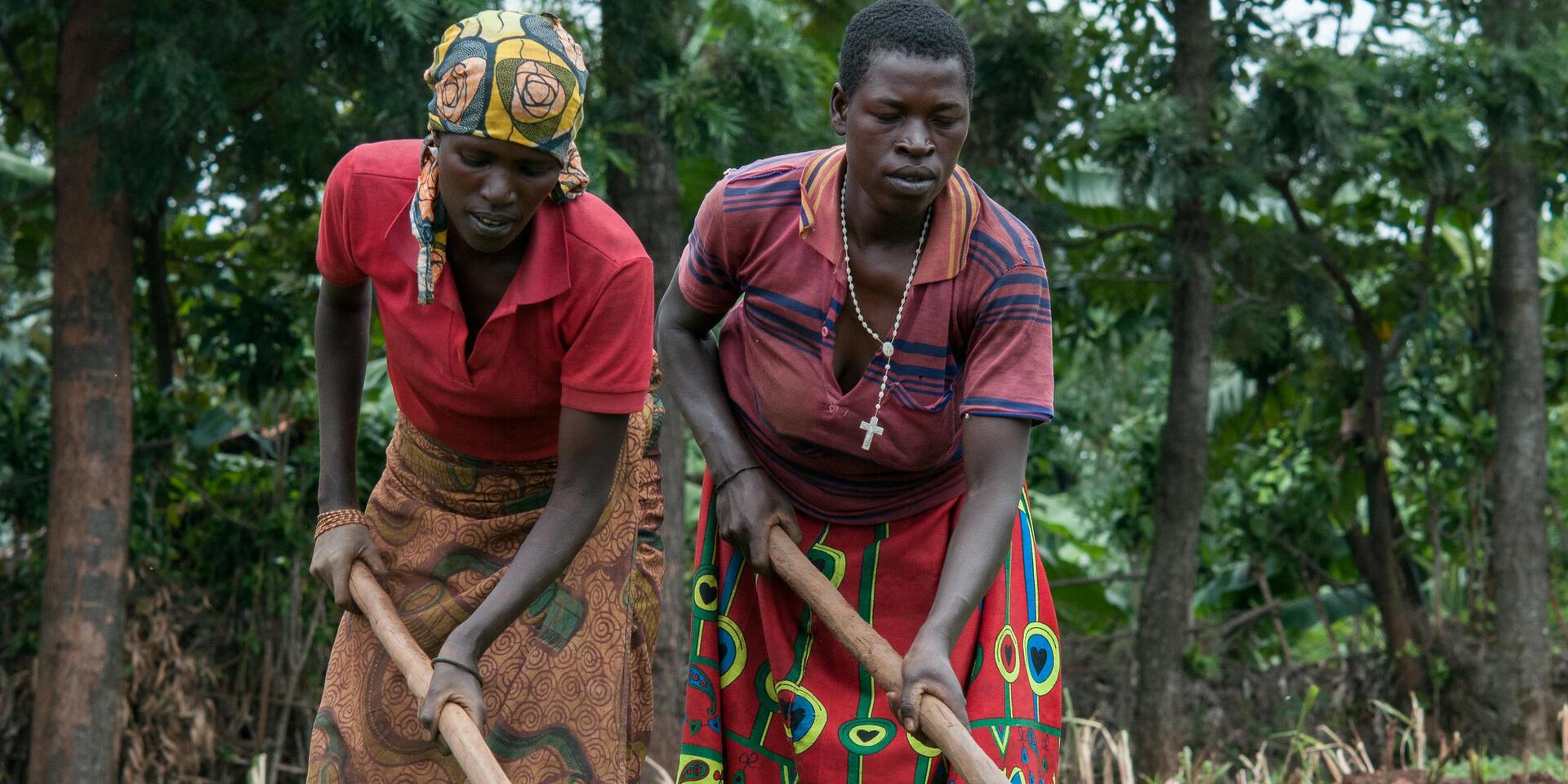

Women entrepreneurs, scientists, and farmers are leading change across the bean value chain in Africa.
When Christella Ndayishimiye started weaning her baby, she could not find a flour that met her newborn’s nutritional needs. So, using an open fireplace in her backyard, she started mixing her own composite flour, made from roasted beans. As her baby grew healthy and strong, she wondered how she could hone her skills as an office secretary to help others in the same way.
Today, she is Chief Executive Officer of Totahara Limited, a woman-owned business in Bujumbura. Her enterprise produces bean-based porridge flour rich in iron and zinc, contributing to both the fight against malnutrition and the economic empowerment of women. Her customers range from schools to supermarkets and she buys beans from more than 1,250 farmers –most of them women– creating more income opportunities.
Through partnerships with organizations like World Vision, Christella’s products have reached rural areas where malnutrition is prevalent. From her backyard, her firm has grown to supply more than 15 wholesale outlet shops and non-governmental organizations in Burundi; ten outlet traders in DR Congo and two traders in Rwanda. Her target is to reach 110 tons per month, having started producing just one ton.
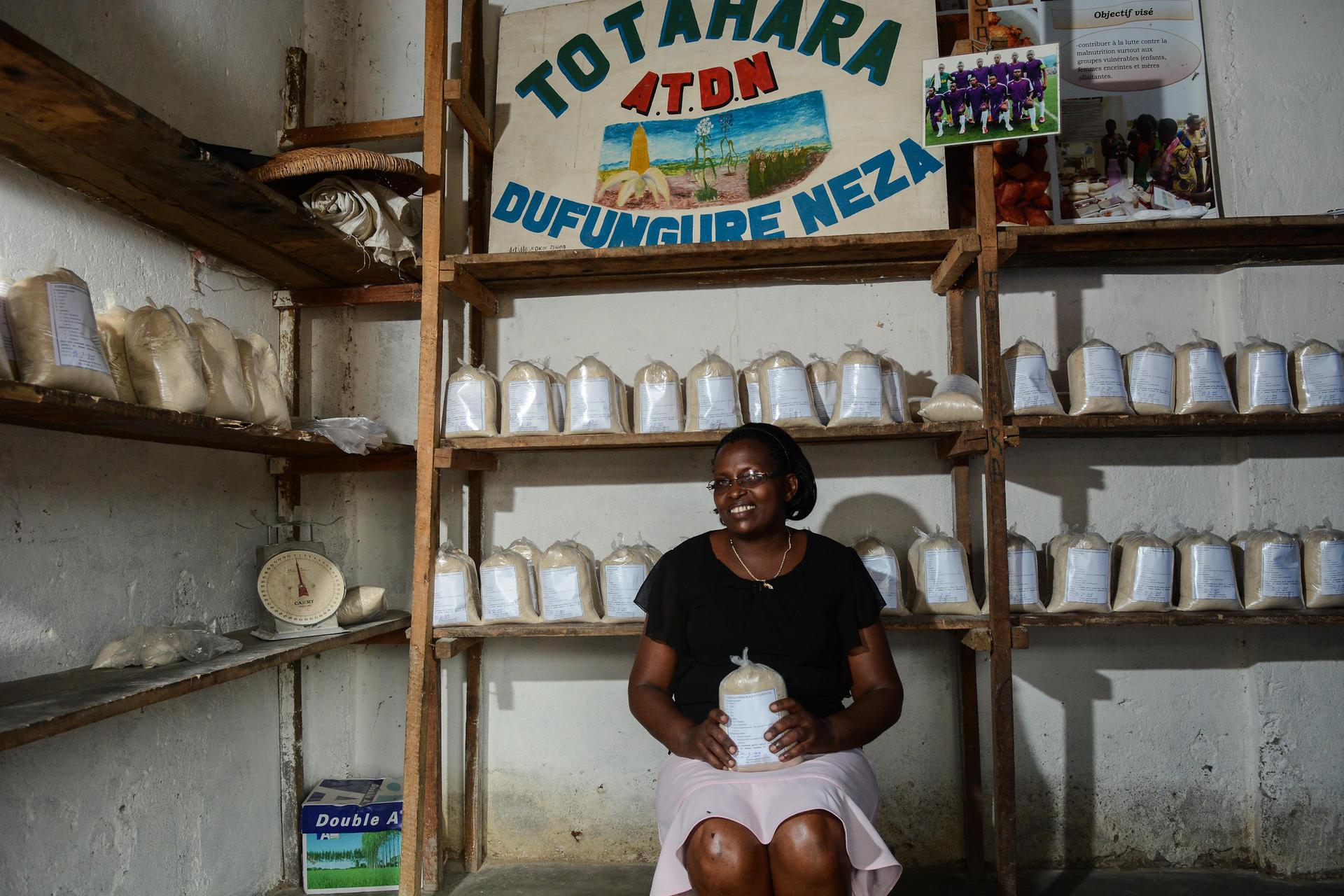
Christelle Di Ndayishimye, owner of TOTAHARA which produces bean flour.
The success of entrepreneurs like Christella Ndayishimiye in Burundi is a testament to what can be achieved when women are empowered in agriculture. Closing the gender gap in agriculture is critical to achieve meaningful change, and to meet global goals like the Sustainable Development Goal to beat hunger.
Over recent years, Ndayishimiye is one of many driving remarkable transformation in Burundi, through the introduction of improved bean varieties. These new varieties have not only doubled yields—from less than 750 kilograms per hectare in 2014 to 1,450 kilograms per hectare by 2017—but high-iron and zinc varieties have enhanced nutritional content and created new employment opportunities across the bean value chain.
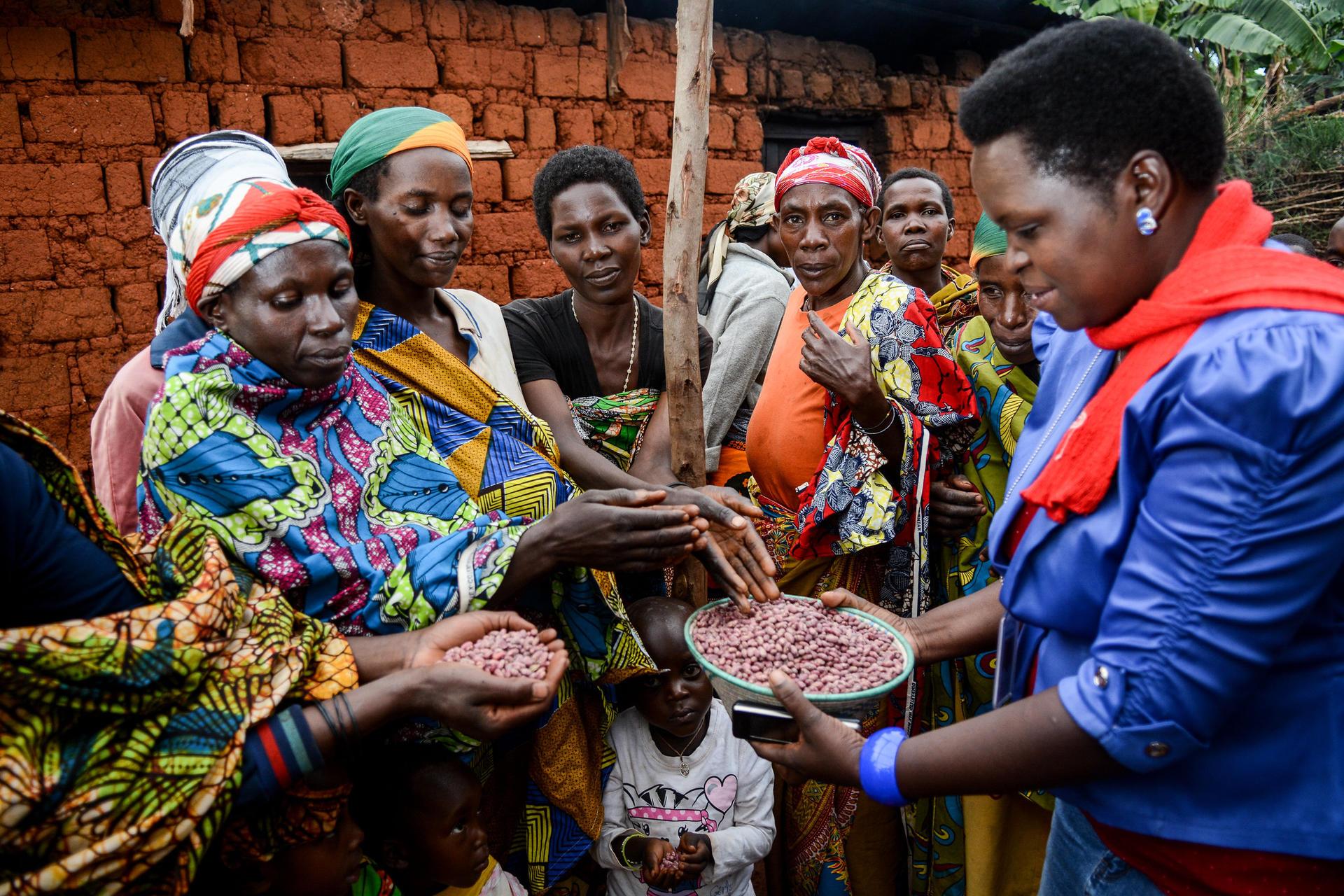
A creche in Burundi run with World Vision called: Terimberbi Bondo. The Pan-Africa Bean Research Alliance works with the Institut des Siences Agronomique du Burundi (ISABU), to give farmers access to improved beans
The Role of AI in Improving Food Security
The story of Totahara is one of coming together: of combining new technology, with great ideas, good tools and new skills, converging within the environment for a business to thrive. Women scientists at the forefront of this agricultural transformation across Africa, this time harnessing the latest scientific tool: Artificial Intelligence (AI), through initiatives like Artemis.
Combining cutting-edge technology with tried and tested regenerative practices, researchers are enhancing crop breeding, significantly shortening the breeding cycle, and enabling farmers to access improved varieties of all kinds of crops but initially beans – faster. This supports communities to get ahead of the curve on climate change.
Edith Kadege is a plant pathologist at the Tanzania Agricultural Research Institute (TARI). Making her way down a steep slope to visit a farmer struggling with recent floods, she arrives at the farm and stoops down to pick up a water-logged, rotten bean. If it is not flooding, then it is drought that farmers are dealing with. The need to help farmers continuously stay ahead of climate threats is critical for food security and livelihoods, she says.
“With climate change, varieties developed now could be unhelpful in two to three years when new pathotypes emerge,” she says, underlining the necessity for ongoing breeding efforts. “We need to develop resistant varieties,” she says. “The varieties cannot stay on our shelves; we are developing the variety for the farmer.” New varieties are multiplied together with a range of partners, and distributed back to farmers so that they can benefit from improved varieties that can better withstand drought or flooding.
Tapping new tools
On a lush green field trial next to the TARI office, Ellena Girma, an Artemis project Data Analyst, watches on as Bruno –an ingeniously crafted buggy made by her team from everyday materials like bicycle parts and selfie sticks– trundles through a bunch of improved beans. With two android phones attached, it swiftly captures data such as the number of pods in a field, a task that would be slow and error-prone if done manually.
While humans need to stop for lunch, or get tired, machines can crunch vast data sets without the same kind of error, she explains. And with more accurate data, breeders can make faster decisions, to select varieties with higher crop yields, or more resilience to climate threats like drought. If the work was done manually, it would take so much longer to get those improved varieties into the hands of farmers.
Staying ahead of the threat
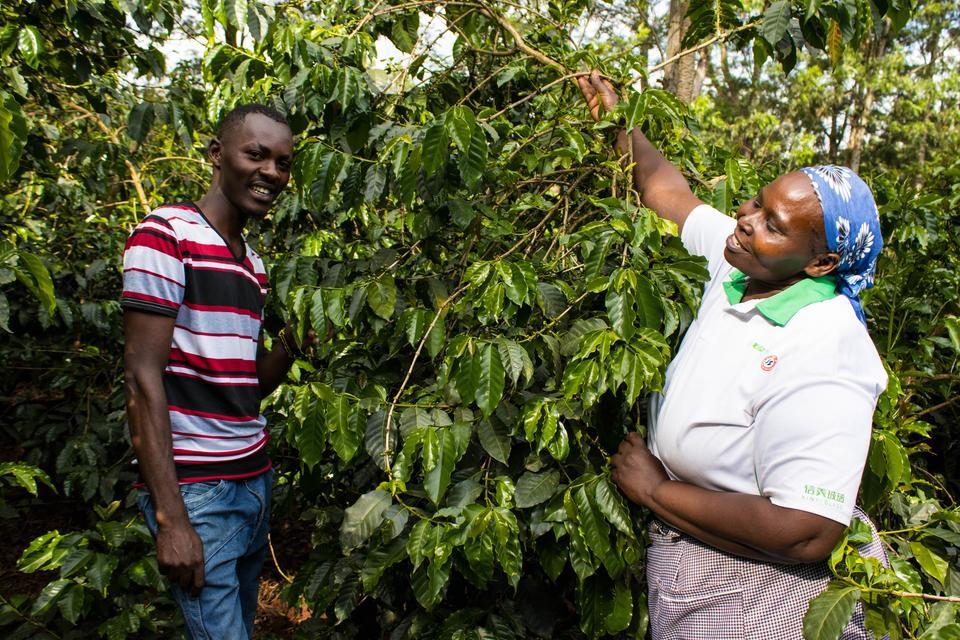
But while deploying cutting-edge tools to stay ahead of climate threats is critical, getting the basics right is just as important. As Anne Wangari takes an afternoon walk through her spinach plot, surrounded by coffee fields in Embu County, she laments the time she almost gave up farming. As the sun fades over her farm, she explains that she didn’t know what to do. “I was planting crops in vain,” she explained. “They started withering and I didn’t understand what the problem was.”
Then, she had her soil tested, and realized that it lacked basic nutrients. She received some training in applied regenerative agricultural strategies backed by science, and realized that she had just been getting the basics wrong. By combining latest technology, improved crop varieties, conservation and regenerative agricultural practices, she has boosted her harvest and more than doubled her income.
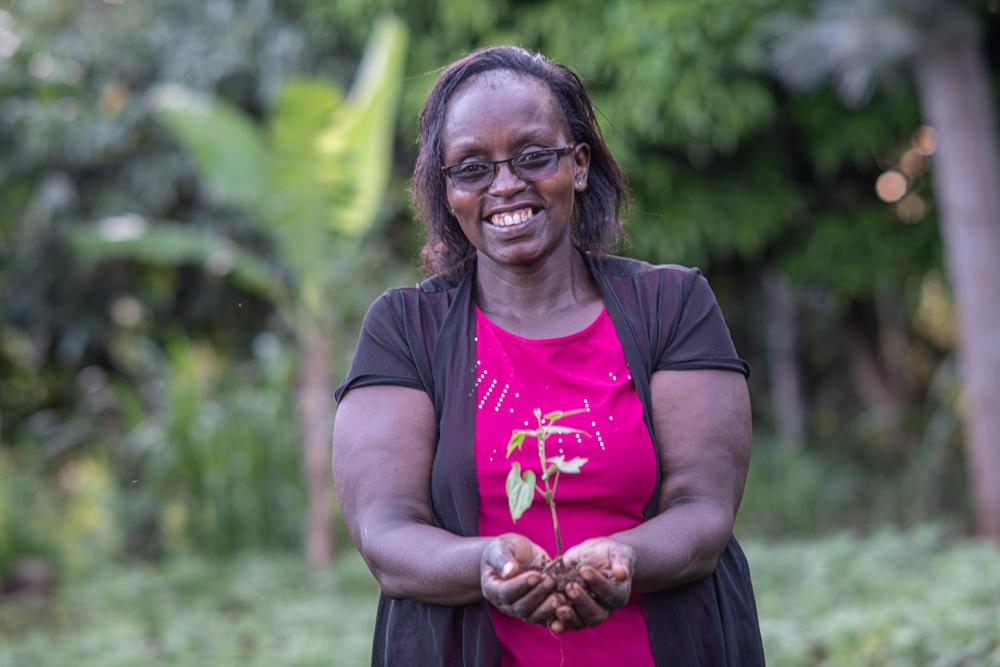
Farmer Anne Wangari practices soil conservation techniques to improve her harvest and income, near Embu, Kenya.
“Soil is gold,” she notes, surveying her now-thriving spinach plot. “If you ruin the soil, it will ruin you. If you take care of it, it will take care of you,” she said. Across the continent, there is still a big yield gap –the difference between actual yields on the farm, and the actual harvests that farmers could realize if they followed improved practices. Farmers reach only about 25 to 30 per cent of their potential.
By merging the power of AI with improved farming practices, farmers can leap ahead of the curve to fight climate challenges and close the significant yield gap that persists across the continent. As Christella Ndayishimiye and countless others have shown, when cutting-edge technology meets regenerative agriculture, the result is not just higher yields but also more resilient crops and empowered communities.
*The Alliance of Bioversity and CIAT in Tanzania is hosted by the Tanzania Agricultural Research Institute (TARI).