Blog Mali: reconnecting science and policy for climate-resilient agriculture
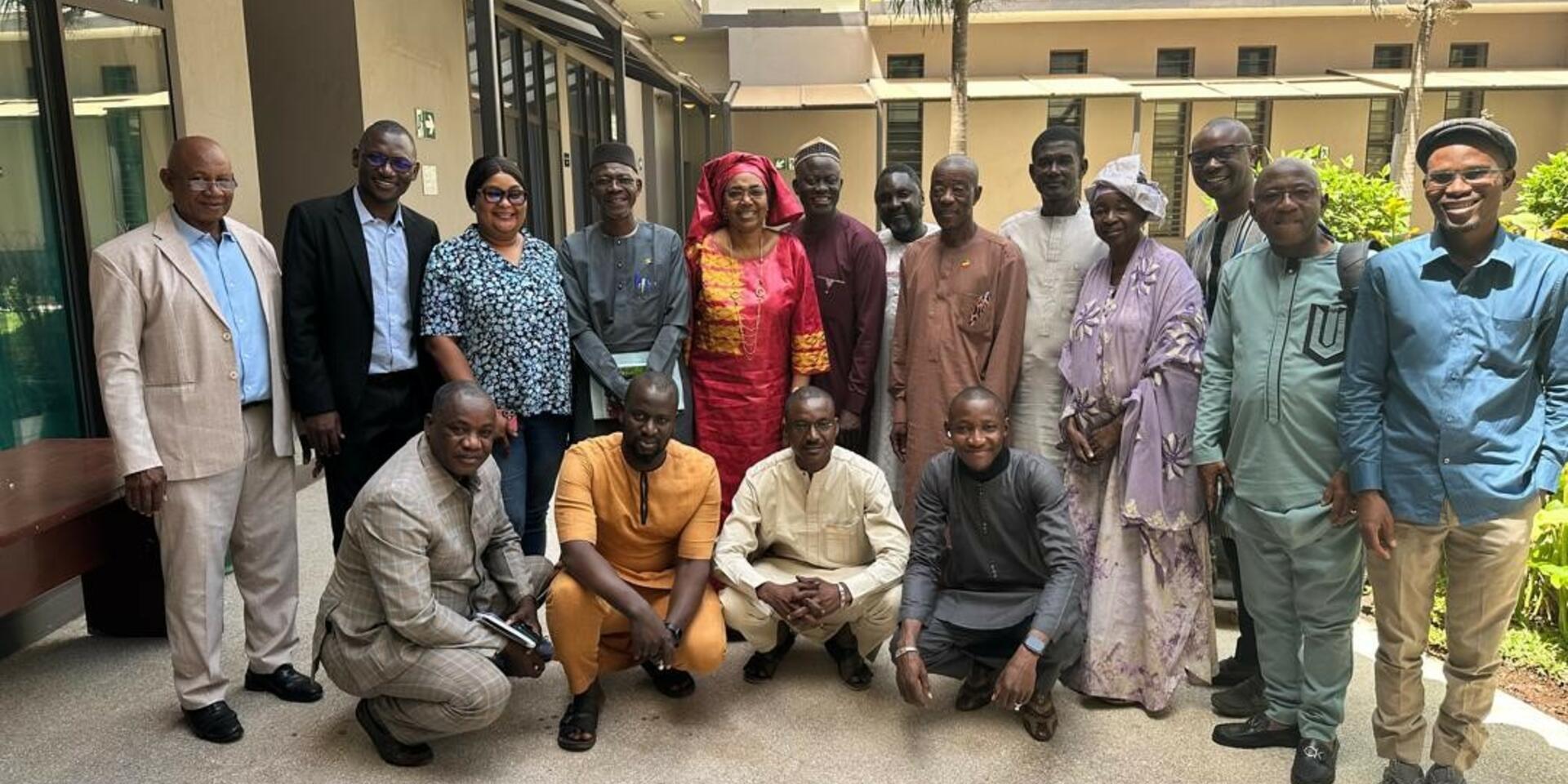

In Mali, the climate crisis is visible in the fields, markets, and public budgets. Decreasing yields, rising prices, and unpredictable seasons place family farms under constant strain. To respond to this triple environmental, economic, and social emergency, the Alliance Bioversity International & CIAT reactivated the Climate-Smart Agriculture Coordination Framework (CCASA) on February 26, 2025. Public institutions, universities, farmers' organizations, the private sector, and local authorities agreed to pool their data, resources, and expertise to transform agroclimatic information into operational, funded decisions, thereby enhancing food security and resilience.
Between 2019 and 2024, four major signals simultaneously challenged the fragile balance between climate, agriculture, and governance in Mali. First, weather patterns intensified: sudden floods in Mopti, heatwaves in Kayes, flash droughts in Kidal. Events that used to be years apart now occur within a single season. Second, production indicators declined. The Institute of Rural Economy recorded average losses of 17% for millet, 14% for sorghum, and 11% for cowpea; at the same time, the rainy season shortened by fifteen days. Third, cereal inflation surged: from 2021 to 2024, the price of a sack of millet rose by 28%, pressuring families’ dietary diversity. Lastly, the information system is fragmented. While the National Directorate of Agriculture collects crop data, the Environment and Sustainable Development Agency publishes erosion maps, and the Food Security Commission issues bulletins, no interface connects these pieces—leaving municipalities to plan in the dark.
The post-pandemic funding downturn worsened this fragmentation: several agroclimatic monitoring projects were suspended, leaving communities without a common reference. Meanwhile, the Paris Agreement unlocked new funding opportunities—Green Climate Fund, Adaptation Fund, GEF—requiring precise indicators for grant requests. Without a platform to consolidate, validate, and share data, Mali risked exclusion from these financial flows. This convergence of emergencies prompted the Alliance of Bioversity International & CIAT and its partners to convene the Bamako session on February 26, 2025, to revitalize CCASA and reconnect science with local decision-making.
CCASA: rebuilding the bridge between science and policy
Established in 2012 under the CCAFS program and formalized by Ministerial Decree N° 12/MEA-AEDD, the Climate-Smart Agriculture Coordination Framework (CCASA) was designed as a public forum for agroclimatic data. It initially brought together three ministries, two research institutes, specialized agencies, farmers' organizations, universities, NGOs, and private sector representatives. From 2013 to 2019, the platform hosted two national forums on climate-smart agriculture, published technical briefs, trained over 500 regional technicians, and launched c-casamali.org. It also helped integrate two innovations—maize-Mucuna intercropping and early-maturing Nerica rice varieties—into Mali’s Nationally Determined Contribution (NDC), leading to their adoption on over a thousand pilot plots.
Despite its promising beginnings, the platform experienced a gradual loss of momentum due to limited funding and frequent turnover among technical teams. By 2024, only one-third of the members were regularly attending meetings, significantly reducing its effective influence on national agricultural policies.
The main challenge of the CCASA revival, led by the TARSPro project, is therefore to reinvigorate this interface so that scientific findings directly inform concrete climate policies. Today, the TARSPro project is relaunching CCASA with a structured three-pillar approach. First: issuing two-page “Express Briefs” quantifying impacts, costs, and benefits for local decision-makers. Second: deploying an open-source observatory combining weather series, NDVI indexes, drone images, community records, and yield forecasts—available on mobile. Third: providing producers and municipalities with multilingual bulletins, QR-coded technical sheets, and a public dashboard. These services will be updated monthly to match seasonal and market rhythms.
To ensure relevance, a multi-stakeholder scientific committee will validate the methods, while a community monitoring group will test message clarity. Three indicators will guide evaluation: average alert dissemination time, share of land under climate-smart practices, and volume of green credit linked to CCASA data. This system aims to turn every recorded raindrop and satellite pixel into actionable agronomic and financial decisions.
Alliance Bioversity International & CIAT: central coordinator of CCASA
The success of CCASA’s renewed momentum depends on governance capable of orchestrating a broad ecosystem. The Alliance of Bioversity International & CIAT, implementing the TARSPro project, plays a central role by facilitating dialogue and efficient data flow. Its responsibilities begin with coordination: organizing quarterly meetings, drafting joint agendas, and distributing accessible reports to all stakeholders. Next comes knowledge management: the Alliance team develops the observatory’s open-source architecture, standardizes formats (CSV, GeoTIFF, JSON APIs), and ensures long-term archiving on servers in Bamako and Montpellier.
Strategically, the National Directorate of Agriculture steers policy direction and commits to covering 40% of the estimated $150,000 annual budget. AEDD ensures alignment with environmental policies and oversees risk analysis. The Institute of Rural Economy feeds the research hub with climate series, yield trials, and cropping scenarios; the CSA combines this data with grain stock levels to issue seasonal bulletins. SIRD and AMEDD transmit cooperative observations, while BNDA and Kafo Jiginew convert alerts into weather-indexed microloans. IPR/IFRA in Katibougou adapts its curricula to teach future agronomists how to use the observatory. The Climate Communicators Network and the National Federation of Rural Youth disseminate information in ten local languages via radio, social media, and forum theatre. Lastly, local governments incorporate these tools into their municipal development plans and co-fund extension equipment.
Simultaneously, the Alliance compiles an annual Policy Brief summarizing climate trends, technological outcomes, and budgetary needs. It also co-authors proposals for the Mali Climate Fund, the Adaptation Fund, and the World Bank. This synergy ensures data becomes a public good—flowing from lab to farm.
2025–2027 roadmap: from analysis to action
The Bamako session defined a six-part plan to turn knowledge into tangible outcomes for producers:
- Revamp of c-casamali.org. The portal will become mobile-responsive, offer interactive maps and dashboards, and be accessible in Bambara, Fulani, and Soninke. Each technical sheet will have an offline-enabled QR code.
-
Real-time digital observatory. CSA weather data, mobile observations, Sentinel imagery, and yield models will be merged and analyzed to produce risk maps and planting advice, accessible via light apps or SMS.
-
Annual publication of ten co-authored briefs by the Alliance and IER summarizing climate trends, climate-smart practices, and tailored adaptation strategies for each ecoregion.
- “Plant at the Right Time” radio campaign. Twenty-five stations will broadcast five-minute segments in four languages, guiding sowing, fertilization, and pest control; audience feedback will be collected free of charge.
- Development of funding proposals focused on village agroforestry, soil restoration, and drought index insurance. The goal is to mobilize USD 4 million from the Mali Climate Fund, Adaptation Fund, and GEF by 2027.
- Participatory monitoring and evaluation system. Five thousand farmers will receive SMS questionnaires, supplemented by KoboToolbox surveys. Results, analyzed by AEDD, will be shared every two months to adjust intervention timelines.
Target indicators are clear: a 20% reduction in post-harvest losses in pilot zones, doubling of areas adopting climate-smart practices, stabilization of incomes despite climate shocks, and development of a scalable model for Niger, Burkina Faso, Senegal, and Guinea by 2028.