Blog Malawi advances National Agronomy and Soil Data Hub to support smarter agricultural decisions
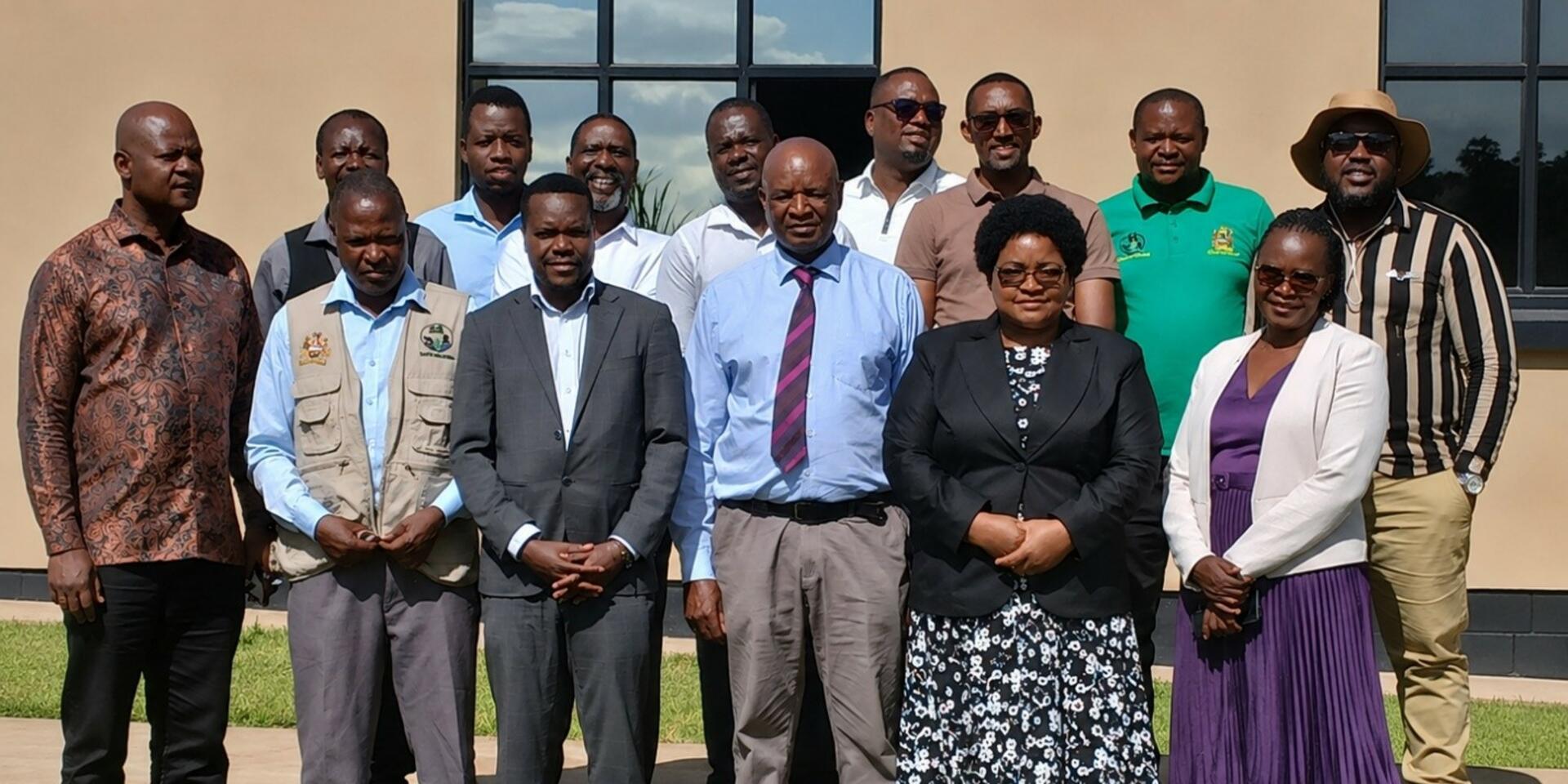

On 13 May 2026 in Mponela, Malawi, government, universities, and CGIAR partners advanced a national agronomy and soil data hub to improve data sharing and governance, supporting evidence-based decisions for productivity, resilience, and food security.
Building a stronger foundation for data-driven agriculture
Malawi is taking a major step towards strengthening data-driven agriculture through the advancement of the National Agronomy and Soil Data Hub — an initiative designed in 2023 to improve how agricultural data are managed, shared, and used to support farmers, researchers, and policymakers.
On 13 May 2026, government institutions, universities, research organizations, and CGIAR, represented by Alliance of Bioversity International and CIAT, gathered in Mponela to review progress on the national data hub and validate a Data Governance and Use Charter that will guide responsible agricultural data sharing and use across the country.
During the welcome remarks, Dr. Feyera Merga from the Alliance of Bioversity International and CIAT noted that CGIAR centers, in close collaboration with the Ministry of Agriculture and other partner institutions, have supported the development of the web data hub platform and harmonization of about 21,000 observations from agronomic trials in Malawi.
He emphasized the workshop aimed to convene key stakeholders to enhance institutional collaboration on data sharing, review progress on the web-based agronomy and soil data platform and develop a Data Governance and Use Charter to strengthen digital agriculture initiatives in Malawi.
The initiative comes at a critical time for Malawi’s agricultural sector. Agriculture remains a significant contributor to the country’s economy and remains central to rural livelihoods, food security, and economic growth. Yet declining soil fertility, land degradation, climate variability, and rising fertilizer costs continue to challenge agricultural productivity.
In her remarks, the guest of honor, Dr. Grace Kaudzu, Director of the Department of Agricultural Research Services (DARS), emphasized that Malawi’s future agricultural transformation depends on stronger evidence systems and better access to integrated agronomy and soil information. She indicated that coordinated digital data systems are essential for improving productivity, soil health, strengthening climate resilience, and supporting informed agricultural decision-making.
From fragmented data to national action
Over many years, Malawi has generated valuable agronomic and soil data through fertilizer trials, conservation agriculture experiments, crop variety evaluations, and soil surveys. For decades, much of this information has remained fragmented across institutions, difficult to access, or at risk of being lost. This limits its use in guiding agricultural investments, soil health management, climate adaptation, and farmer advisory services.
The National Agronomy and Soil Data Hub seeks to address this challenge by creating a shared digital platform where agronomic trials data and related agricultural datasets can be securely stored, standardized, and accessed. The platform is expected to strengthen evidence-based agricultural planning, support site and season-specific fertilizer and soil health recommendations, improve climate-smart agriculture interventions, and strengthen modern digital advisory services for farmers.
The workshop brought together datasets and technical expertise from several institutions, including DARS, the Department of Land Resources Conservation (DLRC), Lilongwe University of Agriculture and Natural Resources (LUANAR), Malawi Adventist University, and the Alliance of Bioversity International and CIAT. Discussions focused on how to build a trusted and sustainable system that balances data accessibility with the protection of institutional and researcher contributions.
Advancing collaboration, data quality, and innovation
Participants discussed data quality control, metadata standards, validation systems, and approval procedures before new data are accepted into the platform.
One of the key outcomes of the workshop was agreement to expand the hub beyond maize to include other cereals and legumes, and to develop standard guidelines for data collection.
The workshop established Technical Teams to finalize the Data Governance and Use Charter, define data quality thresholds, support modeling exercises, and organize validation workshops for future analytical outputs. DARS was formally recognized as the lead institution responsible for coordinating and expanding the national data hub.
Supporting smarter agricultural investments
The initiative highlights Malawi’s growing commitment to digital agriculture and evidence-based decision-making.
Sustained government leadership, institutional collaboration, technical capacity, and long-term financing were identified as critical for ensuring the system delivers lasting value to farmers, researchers, policymakers, development partners, and the private sector.
In his closing remarks, Prof. Vernon Kabambe, Vice Chancellor of Malawi Adventist University, emphasized the need for open data, noting that coordinated agricultural data systems can transform agricultural planning, strengthen climate resilience, and accelerate sustainable agricultural development in Malawi.
The Alliance team

Job Kihara
Principal Scientist, Soil and Water Management
Sabine Homann-Kee Tui
Scientist I