Blog Lessons from London Climate Action Week: scaling through partnership
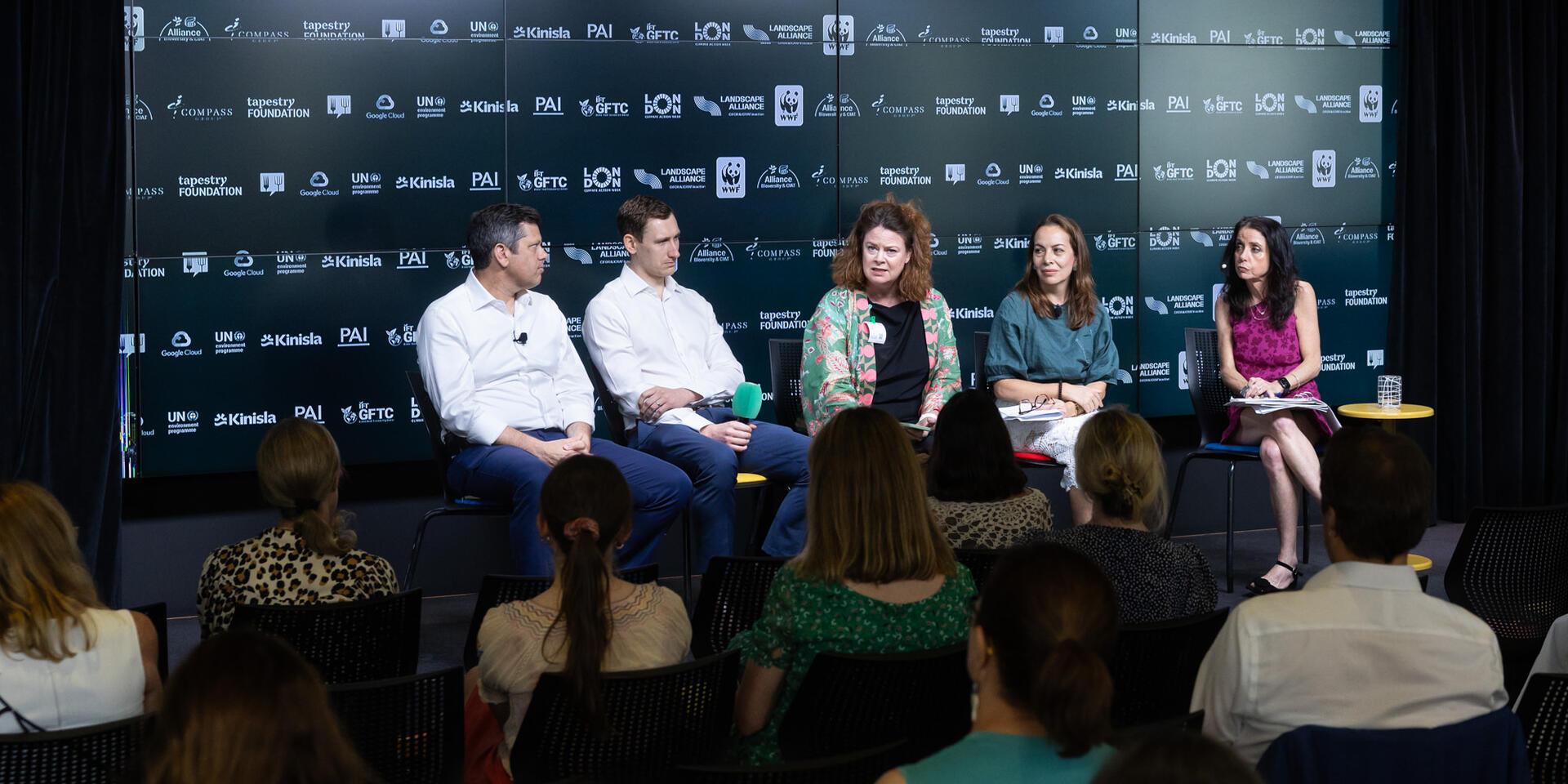

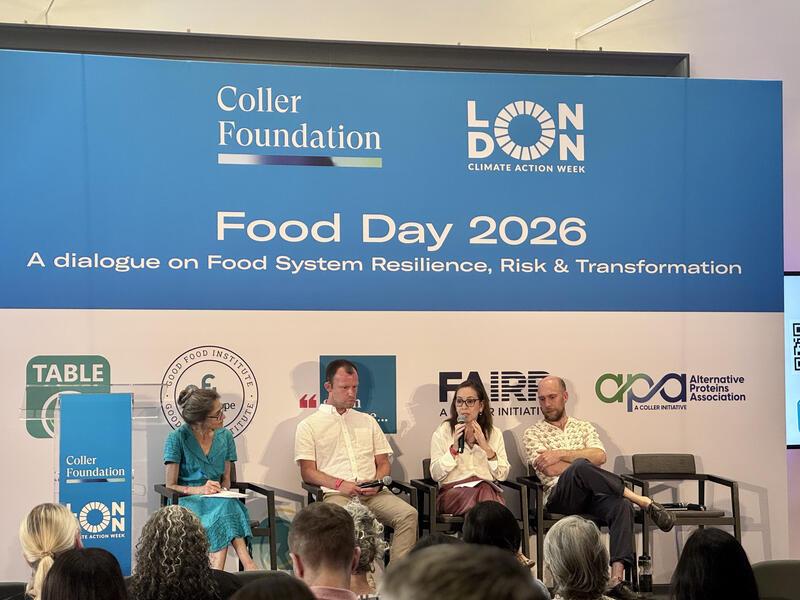
Our colleagues just wrapped up a fantastic week in London, bringing Alliance science into conversation with a diversity of partners from sectors ranging from finance to the food industry, including Danone, BNP Paribas, Project Dandelion, The Department for Environment, Food and Rural Affairs (Defra) of the government of the United Kingdom, and Food Tank.
We have evidence that works, so why isn't it everywhere yet? It's the right question, and food and land systems science finally has a good answer.
Let's focus on three examples that our colleagues brought to London Climate Action Week.
1) Shock-proofing supply chains with the Climate Resilience Platform: co-developed with PepsiCo and extending to companies like Olam Agri. Smallholder farmers produce roughly a third of the world's food but receive less than 1% of global climate finance: a gap that persists largely because climate risk to crops, soils, and landscapes is far harder for investors to see than risk to physical infrastructure. The Platform closes that visibility gap, giving companies and investors the tools to assess climate risk to their supply chains and act on it. It is, in effect, evidence engineered to be usable by a finance or procurement
2) Building back in Syria: After more than a decade of conflict, rebuilding the food system is a complex process critical to peace-building. Our research shows that recovery planning grounded in climate and conflict sensitivity together, will enable communities to rebuild social cohesion alongside livelihoods. In fragile settings, food systems are either a driver of instability or a foundation for recovery: the evidence tells decisionmakers which choices push toward the latter.
3) Restoring native biodiversity with MyFarmTrees: this platform puts landscape restoration directly in the hands of the farmers doing the planting, using digital tools to track and verify impact in real time. This model shows use what happens when the people restoring the land were also the ones with the data, the voice, and the agency to shape how restoration is financed and scaled.

In each of these three cases, the science only became impact once it met a partner positioned to scale it — a community, a company, a financing coalition. That is the lesson London reinforced for me, and it sits at the heart of the strategy we launched there: the Alliance does not work alone, and the world cannot afford for solutions like these to stay small.

The gap is capital, not evidence
We need the financing architecture to take proven models to the scale the climate crisis demands. That means treating natural assets— crops, soils, biodiversity, landscapes— with the same rigor that investors already apply to physical assets. It means translating science into formats finance teams can underwrite. Closing this gap is not a cost to absorb, but a return to capture: resilient food systems reduce the shocks that ripple into conflict, displacement, and economic instability for everyone downstream.
What we’re asking of finance, private sector, and philanthropic leaders
Back what's already proven. Syria, MyFarmTrees, and the Climate Resilience Platform are operating models ready for more partners and more capital.
Fund the translation layer. The distance between good science and investable evidence is where most potential impact is currently lost. Closing it is one of the highest-leverage investments available in this space.
Design partnerships with the communities at the center of these systems. The evidence is consistent: solutions hold up under stress when the people closest to the land have real voice in how they're built and scaled.
Our call to action for partnership-powered science
The science exists, the models exist. London Climate Action Week has made it clear that the partnerships capable of carrying them to scale are within reach.
This is why we also took the opportunity in London to share the Alliance’s new Strategy, a comprehensive framework that focuses our mandate on delivering high-impact science in collaboration with a range of stakeholders.
The focus is on:
- Prioritizing the challenges that matter most for people and the planet.
- Turning scientific knowledge into practical solutions and investable opportunities.
- Scaling impact through partnerships that connect science, finance, policy, and local action.
I look forward to sharing more about our vision for “Resilient Futures” in the weeks to come.
Cover photo credit: Shai Dolev