Blog Integrating nutrition-sensitive agri-food systems into Vietnam’s national policy framework: Insights from the Northern Midland and Mountainous Region

Over the past five years, the Department of Cooperative and Rural Development (DCRD), under Vietnam’s Ministry of Agriculture and Environment, has collaborated closely with the Alliance of Bioversity International and CIAT and the National Institute of Nutrition (NIN) to advance the integration of nutrition-sensitive agri-food systems (NSAF) into national policy frameworks.
This long-term collaboration began with the co-development of the Guidelines for Nutrition-Sensitive Agri-Food Systems Projects and training materials for provincial and commune-level officials in the Mekong Delta, under the Sustainable Poverty Reduction National Target Program (2021-2025), with support from the CGIAR Initiatives on Asian Mega-Deltas (AMD) and Sustainable Healthy Diets through Food Systems Transformation (SHiFT). These guidelines and accompanying training programs provide experts and practitioners a practical multisectoral foundation for linking different aspects of the food systems in the local planning process.
A new phase: Scaling NSAF within consolidated National Target Programs
As Vietnam prepares to merge the three national programs - Sustainable Poverty Reduction, New Rural Development, and Socio-Economic Development in Ethnic Minority and Mountainous Regions - into a comprehensive national program for the 2026 - 2035 period, DCRD has recognized the opportunity and urgency to embed NSAF approaches more systematically across key socio-economic regions. The department has therefore outlined plans to replicate training for relevant local officials, strengthen capacities for designing NSAF-oriented development projects, and evaluate how NSAF have been integrated into policy processes nationwide. These efforts will reinforce the alignment between the Zero Hunger Program, the National Target Programs (NTPs), and Vietnam’s National Action Plan for Food Systems Transformation.
DCRD has also expressed strong interest in continuing its collaboration with the Alliance to carry the work on NSAF into the consolidated NTPs.
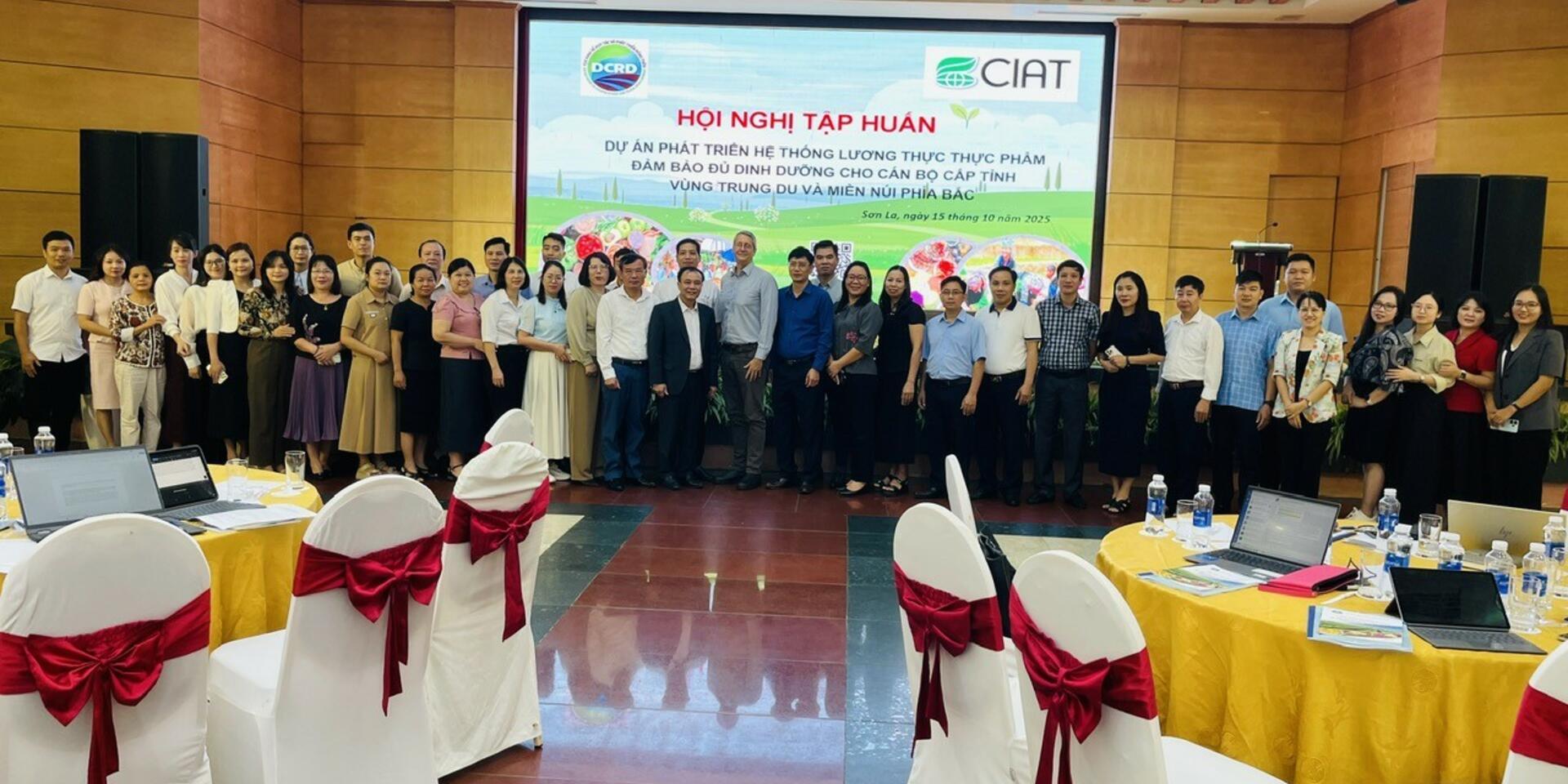
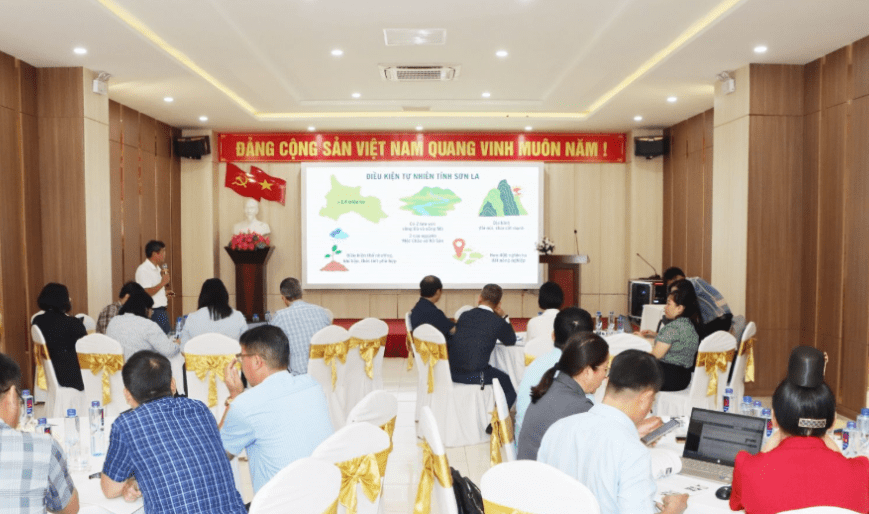
Building on the lessons learned from the pilot training held in 2024 for local staff in 12 provinces in the Mekong Delta, the training programs have been expanded to the Northern Midland and Mountainous Region in October 2025. The Alliance, in collaboration with DCRD, NIN, and the Vietnam Academy of Agriculture Sciences (VAAS), co-organized two training workshops on developing the NSAF projects for more than 75 representatives from seven provinces in the Northern Midland and Mountainous Region and 15 communes in Son La province) covering griculture, health, and rural development sectors. The training takes place at a pivotal moment, as provinces in midland and mountainous areas continue to face persistent nutrition vulnerabilities linked to limited market access, low dietary diversity, and structural constraints in service delivery. Integrating NSAF principles into local planning is therefore both timely and essential for improving long-term food and nutrition security.
Capacitating provincial staff on NSAF and new policy directions of the government
The first training workshop on 15 Oct 2025 for provincial staff (Male: 17; Female: 17) coming from seven provinces: Thai Nguyen, Cao Bang, Dien Bien, Tuyen Quang, Phu Tho, Lai Chau, and Lang Son.
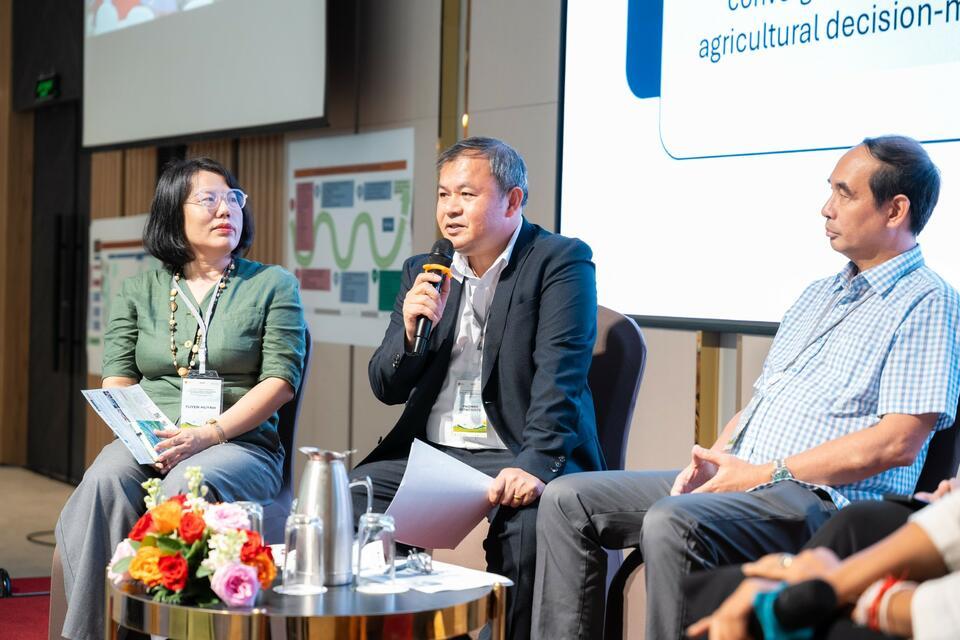
At the program’s opening, DCRD Director Le Duc Thinh highlighted the active five-year process from the Zero Hunger Program to the NTP on Sustainable Poverty Reduction and the transition towards a transparent, responsible, and sustainable food systems in Vietnam. He shared governmental directions regarding the consolidated NTPs and underscored how the NSAF approach can contribute to achieving health and nutrition, economic, environmental outcomes in the new period while underscoring the need for effective implementation of NSAF projects within the emerging two-tier local administration model. He stated that: “DCRD will collaborate with CIAT to accompany and support the implementation of the integrated NTP program in the new phase”.
Then the Alliance and NIN provided insights and experience from global food system transformation and efforts to integrate NSAF into the National Target Programs.

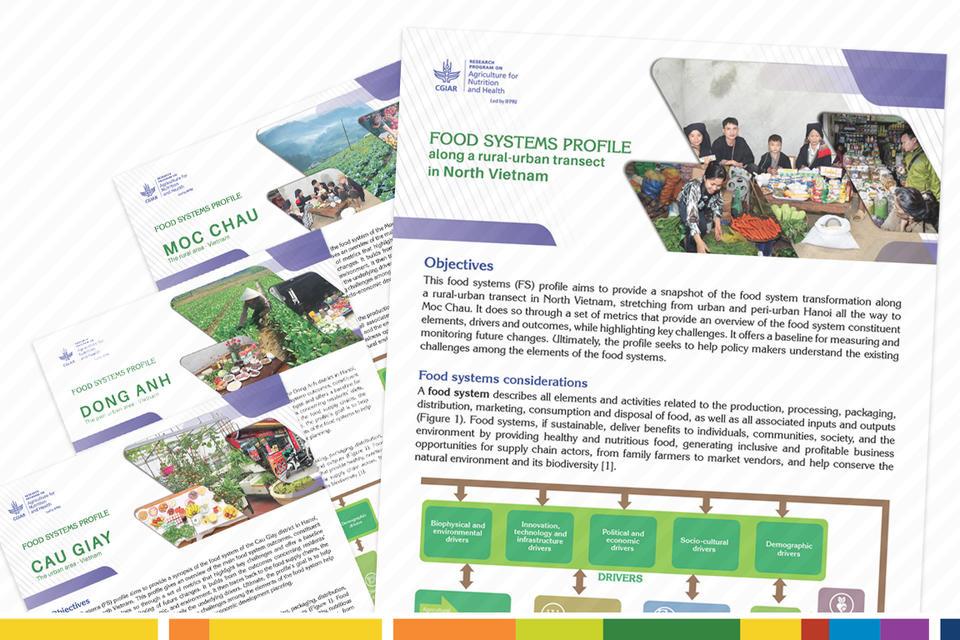
Equipping participants with core NSAF concepts, the trainers informed regional representatives on the rationale for transforming the agri-food systems and current status of food and nutrition security in the Northern Midland and Mountainous Region across the country. Using recent evidence and data from the ongoing Food Systems Profile of the region, the session highlighted key nutrition vulnerabilities, such as low dietary diversity, micronutrient deficiencies, and limited access to nutritious foods in mountainous and remoted communes, underscoring the importance of integrating agriculture, health, and nutrition interventions more systematically within the National Target Programs.
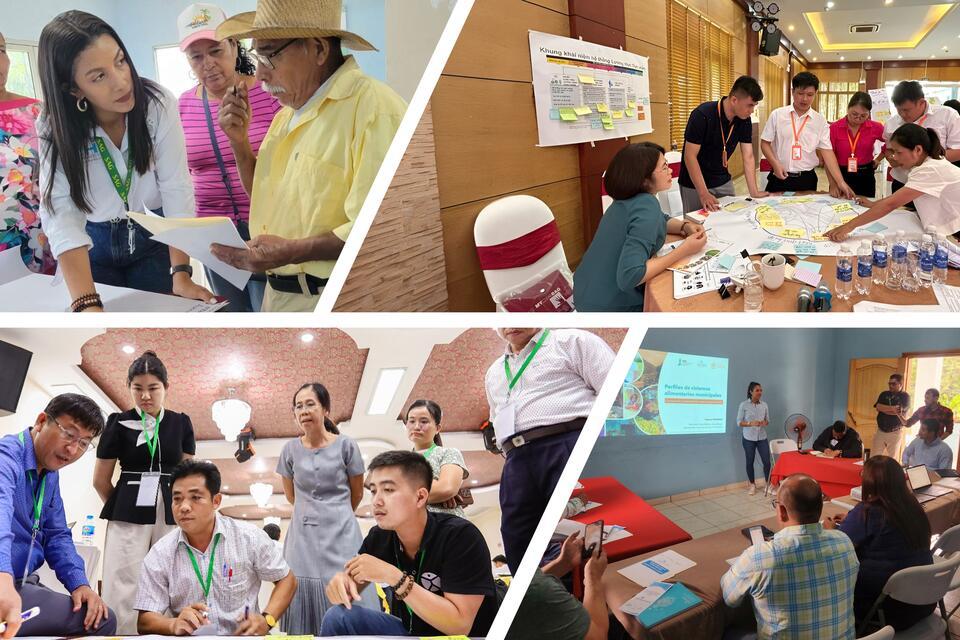
In group discussions, participants examined the opportunities and challenges in developing and implementing NSAF projects within the consolidated framework of the NTPs in the coming period. They jointly identified solutions, proposed project ideas, and highlighted areas requiring adjustments or new considerations given the evolving policy context.
Enhancing capacity for commune-level staff in the design and implementation of NSAF project under the two-tier local administration model
The second training workshop, held on 16 October, focused on commune-level staff capacities (Male 25; Female 15), particularly agricultural officers, community health workers, and representatives from 15 especially disadvantaged communes of Son La province.
Participants were guided through the key steps of developing a NSAF project, including forming a project development team, selecting target locations and participating households, conducting local diagnostics using problem-tree analysis, identifying solutions, estimating budgets, and preparing implementation plans. Groups then worked intensively on drafting community-based NSAF proposals, which covered diversified household food production, improved local food environments, nutrition education for mothers and children, and small-scale value-chain improvements to increase access to nutrient-rich foods.
The session also introduced approaches for monitoring and evaluating NSAF interventions at the commune level, followed by plenary discussions on challenges and opportunities as well as recommendations for the implementation of NSAF projects in the upcoming period under the consolidated National Target Programs and the two-tier local administration model.
Advancing NSAF in Vietnam’s new contexts
Experiences and lessons learned from the consultation process to develop the Guidelines for Nutrition-Sensitive Agri-Food Systems Projects and the training materials for the two pilot sites in the Mekong Delta and the Northern Midland and Mountainous Region have generated valuable insights to inform upcoming efforts to integrate the NSAF approach into Vietnam’s policy framework. These insights are especially relevant in the context of the new phase of NTP consolidation, the early implementation of NAP-FST, and the emerging two-tier administration structure. As the country moves forward with a strong emphasis on sectoral collaboration, the NSAF approach offers a strategic pathway to ensure that agricultural development and nutrition objectives are addressed together, particularly in regions with the highest vulnerability.
Looking ahead, the Alliance will continue to work closely with DCRD, NIN, VAAS, and provincial authorities to further refine and advance the training materials so they can be effectively adapted to different regions under the new context. We also develop plans to more strongly support the design and implementation of NSAF projects. With nutrition and health placed at the center of agricultural and rural development planning, these collaborations aim to ensure that Vietnam’s food systems are transformed in a sustainable, responsible, and transparent direction, delivering long-term benefits for communities across diverse ecological regions.