Research Articles Improved forages for productive, and lower-emission dairy systems in Nigeria


Nigeria’s dairy sector is characterized by low productivity and a persistent supply gap. In 2025, domestic milk production was estimated at about 700,000 tonnes per year, against national consumption of approximately 1.6 million tonnes, leaving close to 60% of demand to be met through imports. Demand is also expected to grow substantially: FAO’s Nigeria livestock outlook projects milk consumption to reach about 4.23 million tonnes by 2050. How Nigeria meets this demand will therefore have important implications for food security, import dependence, employment and greenhouse-gas (GHG) emissions.
Under the Sustainable Animal and Aquatic Foods (SAAF) Science Program, CGIAR is working with MilkinBarn to test how improving the quantity, quality and year-round availability of feed can support more productive and lower-emission dairy production. MilkinBarn currently produces around 3 litres of milk per cow per day, slightly below the IPCC Africa regional average of approximately 3.6 kg per day. This makes the farm a relevant case for testing a transition toward the IPCC Africa high-productivity dairy benchmark of approximately 2,200 kg of milk per cow per year, or around 6 liters per day - 70% more milk per animal.
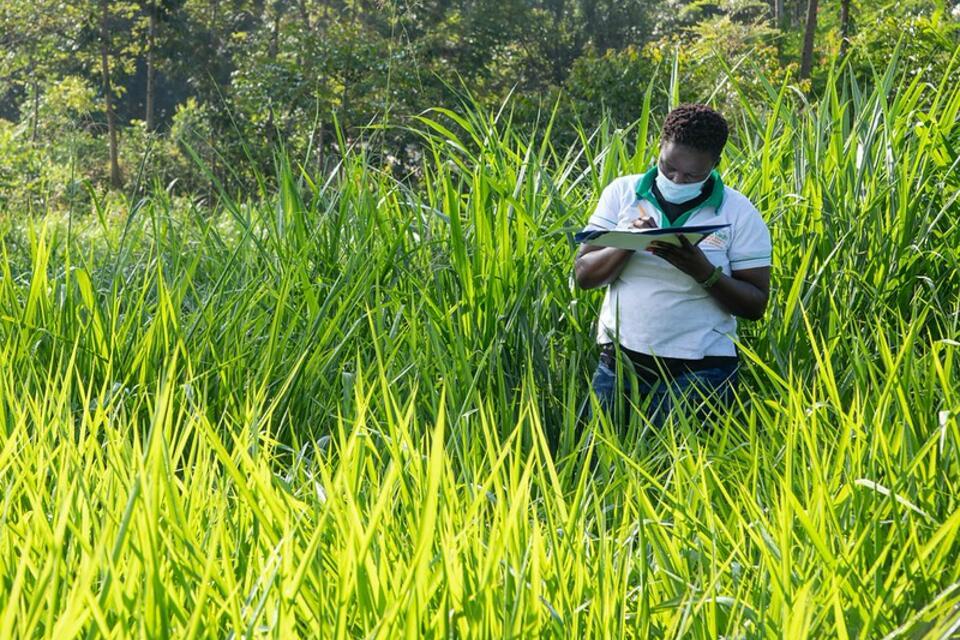
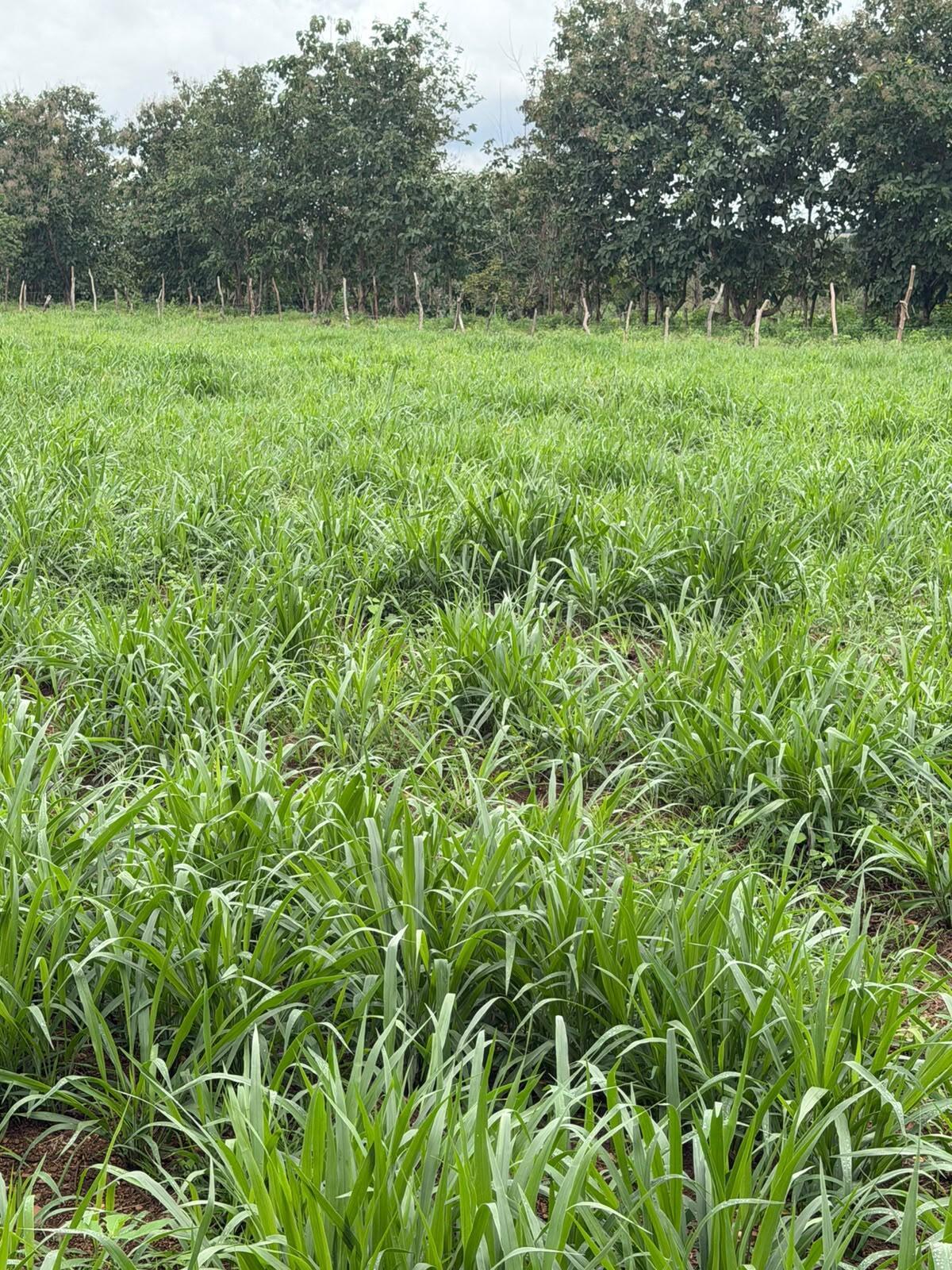
SAAF brings together the Alliance of Bioversity International and CIAT, ILRI and ICARDA, while complementing investments already underway at MilkinBarn, including support from the African Development Bank (AfDB). In 2026, CGIAR conducted soil testing to guide forage establishment and nutrient management, supporting approximately 20 hectares of improved Urochloa (syn. Brachiaria) grasses, including Camello and Mulato II. AfDB has also supported local forage establishment, silage development and associated technical guidance. Together, these interventions are building the more reliable, higher-quality feed base needed to support higher milk yields, particularly through the dry season, and therefore provide a practical foundation for MilkinBarn to move toward the IPCC high-productivity benchmark. Achieving that transition will also depend on complementary improvements in genetics, animal health, reproduction and herd management.
As an initial emissions screening, the IPCC benchmarks illustrate the potential climate benefit of this productivity transition. Moving from the Africa-average to the high-productivity benchmark increases modeled milk production from 1,300 to 2,200 kg per cow per year, while reducing livestock GHG intensity from approximately 1.86 to 1.26 kg CO₂e per kg of milk—about 32% lower emissions per unit of milk produced. Enteric methane intensity similarly falls from approximately 0.058 to 0.039 kg CH₄ per kg of milk, a reduction of about 33%. The result reflects a core efficiency effect: emissions per animal may increase modestly as animals consume more and produce more, but milk output increases faster.
These IPCC estimates provide useful first screening, but they are not a substitute for project-level measurement, reporting and verification (MRV). A fit-for-purpose MRV system would allow MilkinBarn to demonstrate its actual changes in productivity and emissions using farm-level data on milk production, herd performance, feed and manure management. It could also capture climate benefits not included in the current screening, particularly soil-carbon sequestration under improved pastures and mitigation from low-methane forages and other feeding innovations. This would provide the evidence needed to verify performance, support replication and assess potential climate-finance opportunities.
The wider implications could be significant. If Nigeria’s projected 2050 milk demand of 4.23 million tonnes were supplied at the IPCC Africa average-productivity benchmark, the livestock emissions covered by this screening would be approximately 7.9 MtCO₂e per year. Supplying the same amount of milk at the high-productivity benchmark would generate approximately 5.3 MtCO₂e per year—avoiding about 2.5 MtCO₂e annually relative to the Africa-average pathway. For enteric methane alone, this corresponds to a reduction from approximately 0.25 to 0.17 Mt CH₄ per year, avoiding around 0.08 Mt CH₄ annually. These figures are illustrative rather than forecasts, but they show how higher productivity could help Nigeria expand domestic milk production while limiting the associated growth in emissions.
Beyond mitigation, higher domestic productivity could reduce dependence on imports, retain more value within Nigeria and support jobs across forage and seed production, livestock services, milk collection, processing and distribution. The demonstration is already beginning to reach beyond the farm: in September, a field day brought together around 50 neighboring farmers and stakeholders to observe the forage and silage systems and discuss their potential application on other farms. This provides an initial pathway for translating the evidence generated at MilkinBarn into broader learning and uptake.
Next steps: evidence, MRV, climate finance and scale
The next phase will move from ex-ante estimates to measured performance. A fit-for-purpose MRV system has already been implemented, and monitoring will increasingly link forage and milk performance with animal data, enteric methane and GHG intensity, while repeated georeferenced soil measurements will track changes in soil organic carbon. Where data allow, the analysis can progressively move from screening-level assumptions toward more farm-specific estimates.
The resulting evidence will support replication beyond MilkinBarn and engagement with climate-finance partners. Concessional or blended finance, results-based mechanisms and, where credible carbon benefits are demonstrated, carbon-market approaches could help accelerate investment in improved feeding, animal management and MRV. The objective is to build a scalable pathway that helps Nigeria produce more milk domestically, reduce imports, create jobs and meet growing demand without a proportional increase in emissions.
References
- Federal Ministry of Livestock Development (FMLD). 2025. FG Plans to Double Nigeria’s Milk Production. Federal Government of Nigeria.
Supports the estimate of 700,000 tonnes/year of domestic milk production, the target to reach 1.4 Mt, and the policy objective of reducing dairy-import dependence. (Livestock Development Ministry) - Reuters. 2025. Nigeria imports Danish cows in bid to slash $1.5 billion milk import bill. 2 June 2025. Reports approximately 700,000 tonnes of domestic production versus 1.6 million tonnes of consumption, with roughly 60% of milk demand met through imports. (Reuters)
- FAO. 2019. The Future of Livestock in Nigeria: Opportunities and Challenges in the Face of Uncertainty. Rome: Food and Agriculture Organization of the United Nations.
This is the strongest reference for the long-term demand narrative and reports the projected 577% increase in milk consumption between 2010 and 2050, based on FAO Global Perspectives work. - FAO. 2025. FAOSTAT Emissions Intensities: Methodological Note, Release October 2025. Rome: Food and Agriculture Organization of the United Nations. Use for the FAOSTAT milk-emissions-intensity methodology and the Nigeria country benchmark. FAOSTAT defines milk emissions intensity as farm-gate GHG emissions associated with production divided by milk production. (FAOSTAT Files)
- IPCC. 2019. 2019 Refinement to the 2006 IPCC Guidelines for National Greenhouse Gas Inventories. Volume 4: Agriculture, Forestry and Other Land Use, Chapter 10: Emissions from Livestock and Manure Management. Intergovernmental Panel on Climate Change.
Primary methodological source for the Africa low- and high-productivity dairy benchmarks, enteric methane factors, animal characteristics, manure-N parameters, and the Latin America high-productivity equivalent used for the longer-term scenario. (IPCC NGGIP) - FAO. 2013. Gerber, P.J., Steinfeld, H., Henderson, B., et al. Tackling Climate Change through Livestock: A Global Assessment of Emissions and Mitigation Opportunities. Rome: FAO. Useful background supporting the broader relationship between higher dairy productivity and lower GHG emissions intensity, particularly in low-productivity systems. (FAOHome)
- Federal Ministry of Livestock Development (FMLD). 2026. FG Explores PPP to Transform Nigeria’s Dairy Sector. Federal Government of Nigeria.
Supports the development narrative around reducing the dairy-import bill, expanding domestic production and creating opportunities across the livestock value chain. (Livestock Development Ministry)