Blog Strengthening Global Food Security: Strategic Banana Diversity Shared from Belgium to Colombia

A strategic set of banana genetic resources has recently been shared from the International Musa Germplasm Transit Centre (ITC) in Leuven, Belgium, to the Future Seeds genebank, both part of the Alliance of Bioversity International and CIAT. This initiative strengthens the Banana collection while advancing global efforts to safeguard banana diversity, one of the world’s most important food crops.
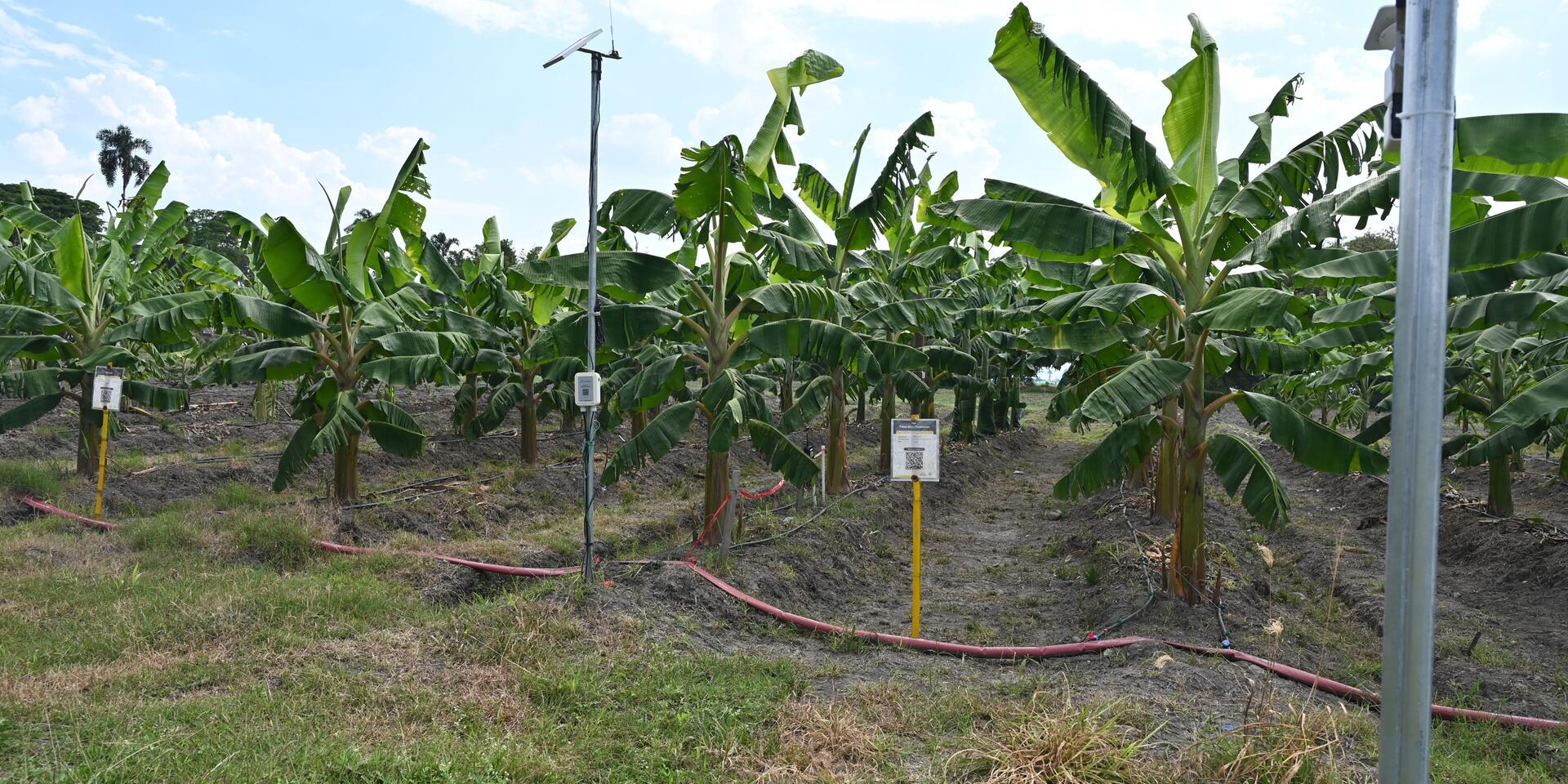
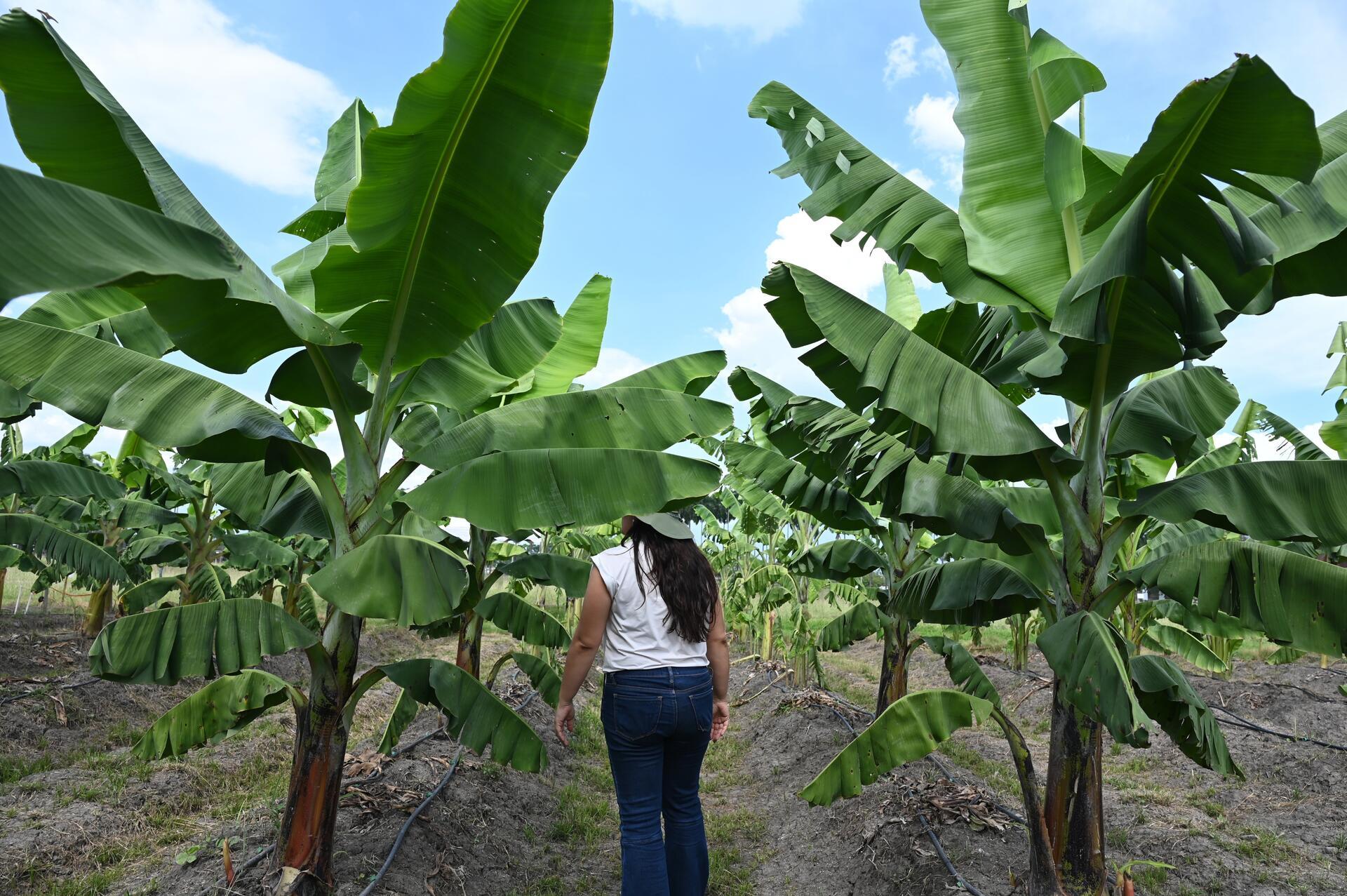
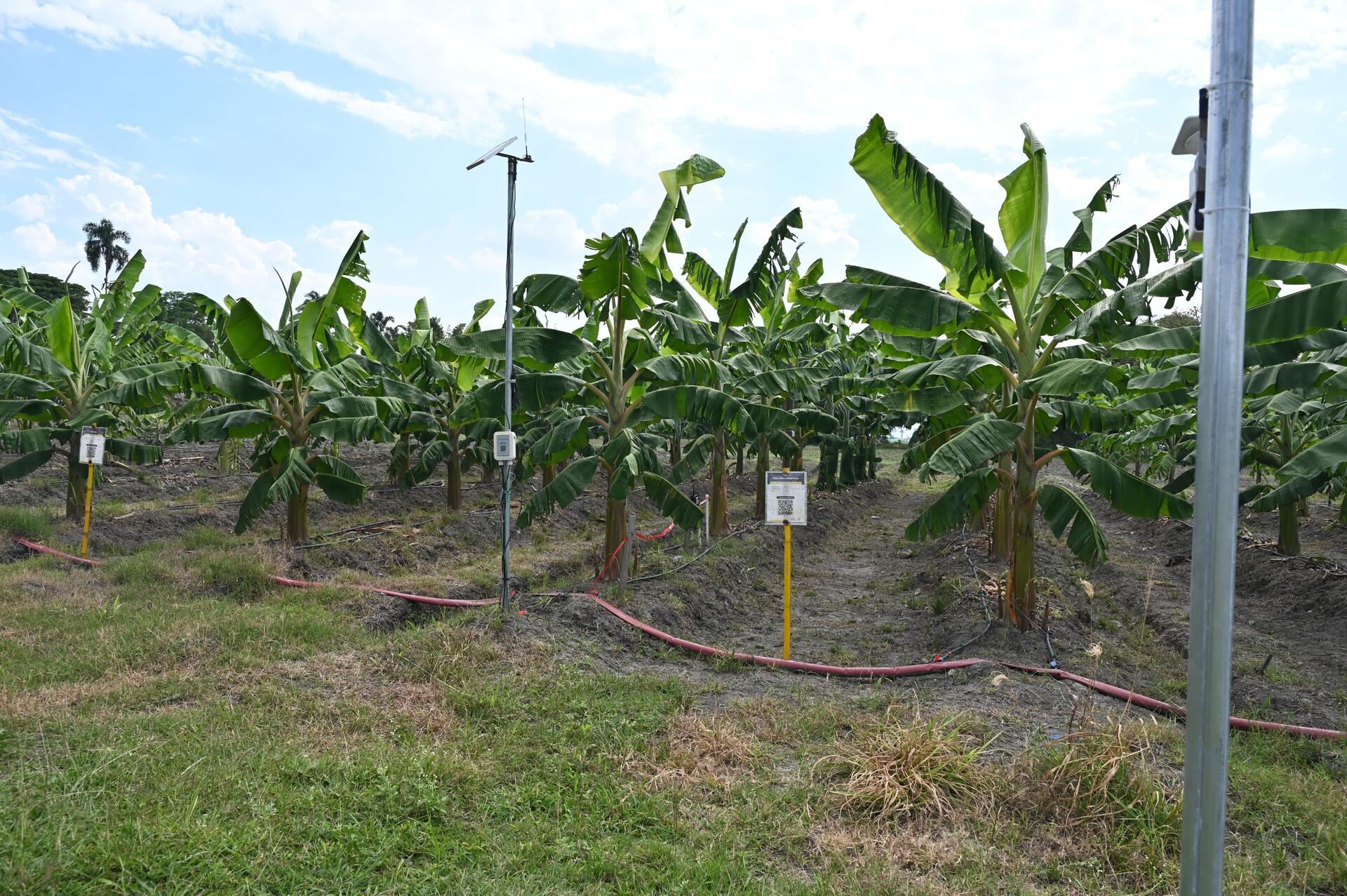
The materials, planted in the banana field collection at Palmira's campus and preserved within the Future Seeds genebank at our campus in Palmira, Colombia, include accessions selected for their resilience to drought, resistance to major diseases, high nutritional value, and valuable diploid genetic traits essential for breeding programs. Additionally, to the ITC accessions, local materials of banana and plantain can be found in the field collection, bringing a living platform of diversity, in which researchers can accelerate efforts to characterize genetic resources and develop improved banana varieties while safeguarding local genetic diversity both in vivo and in vitro.
Banana Diversity: A Strategic Asset for Global Food Systems
More than 400 million people worldwide rely on bananas as a staple of food or as a primary source of income. Yet this crop faces increasing threats from climate change, emerging pests and diseases, and the vulnerability of global food systems.
Protecting the genetic diversity of Musa crops is therefore not only a scientific priority, but it is a strategic investment in global food security, economic stability, and risk reduction for agricultural systems.
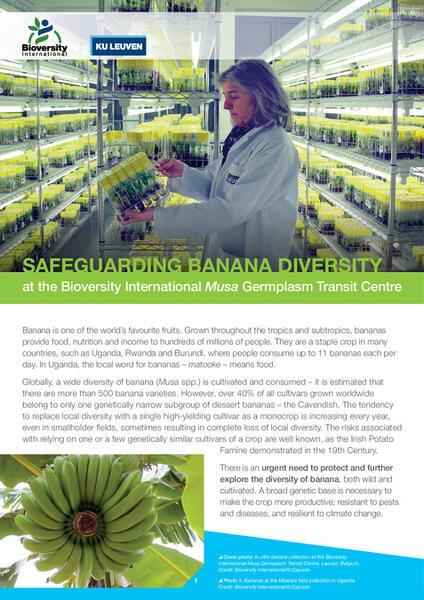
Since 1985, the International Musa Germplasm Transit Centre (ITC) has conserved and distributed one of the most important collections of banana diversity in the world. Established in Belgium by Professor Edmond De Langhe at a time when no international banana collection existed, the genebank hosted by the University of Leuven began with just 50 accessions.
Today, as part of the Alliance of Bioversity International and CIAT, the collection has evolved into a global public good, integrating materials from research institutions, collecting missions, and international partners. It is conserved as an FAO “in trust” collection, ensuring that these resources remain accessible to the global scientific community.
Although bananas originated in Southeast Asia and Oceania, their expansion into Africa and Latin America has made them a cornerstone of food security and rural livelihoods in regions particularly vulnerable to climate shocks and economic instability.
A Critical Global Research Infrastructure
Today, the ITC safeguards:
- More than 1,700 banana accessions are conserved in vitro
- Nearly 1,400 accessions are stored through cryopreservation in liquid nitrogen
- The in vitro collection functions as the active distribution system, supplying germplasm to breeding programs, research institutions, and agricultural partners worldwide.
- Cryopreservation provides long-term biological security, protecting genetic resources against disease outbreaks, natural disasters, and systemic risks.
At a time when Fusarium Tropical Race 4 (TR4) threatens global banana production and climate variability increasingly affects crop performance, this genetic resource base is essential to:
- Develop disease-resistant banana varieties through conventional breeding and new genomic technologies
- Strengthening climate adaptation strategies
- Preserve critical nutritional and agronomic traits
- Prevent irreversible genetic erosion
In this context, ex situ conservation and cryopreservation form the foundation for future agricultural innovation and sustainable crop development.
Innovation for Global Public Goods
The Alliance’s leadership in conservation science extends beyond bananas. Recent innovations include the development of a novel patented protocol for coconut conservation, co-owned by the Alliance.
Such advances demonstrate how investments in crop diversity research generate practical solutions that strengthen agricultural resilience and benefit global food systems.
Investing in Agricultural Resilience
Over the past four decades, the ITC has distributed more than 17,000 banana samples to researchers and farmers in 109 countries, supporting breeding programs, disease management, and crop improvement worldwide.
This genebank represents a critical piece of global scientific infrastructure, yet maintaining and expanding its impact requires sustained investment.
Key priorities include:
- Maintaining world-class conservation standards
- Modernizing infrastructure and laboratory facilities
- Expanding cryopreservation capacity to secure additional genetic diversity
- Investing in banana genetic diversity means investing in:
o The resilience of millions of smallholder farmers
o The stability of global agricultural value chains
o The food security of vulnerable populations worldwide
Strategic support for genebanks and crop diversity research is therefore not only a scientific contribution, but it is a long-term investment in the stability of global food systems.
Perspectives for the Banana Field collection in Palmira's campus
Bringing the diversity of bananas from around the world into the campus collection is critical for advancing the Banana Program’s work across Latin America and the Caribbean. Research enabled by the current accessions and future introductions supports disease surveillance, climate resilience, agroclimatic adaptation, and ecological production practice. Emerging technologies such as gene editing will support the development of the next generation of sustainable banana varieties.
Team

Sebastien Carpentier
Principal Scientist, Banana Program Leader
Lorena López-Galvis
Postdoctoral Fellow
Ricardo Oliva
Senior Scientist, Banana Program leader for Latin America & the Caribbean
Mathieu Rouard
Senior Scientist - Plant genomics and bioinformaticsFurther reading