Blog The flavour of the ancestral land, blending tradition with the creativity of the younger generations: Kolla Raymi in Cumbal

In the southwest of the department of Nariño, in Colombia, close to the border with Ecuador, lies the municipality of Cumbal, named after its guardian volcano. Colorful murals depict this high-mountain region's landscapes in delicate brushstrokes, preserving the memory of the Pastos people. Drawing on their ancestral worldview, its Indigenous inhabitants celebrate Kolla Raymi every 21 September. This festival, associated with the September equinox, honors women’s fertility and their role as givers of life, as well as Pachamama (Mother Earth) and Killa Mama (Mother Moon).
During this festival, traditional farmers, or shagreros, and the land that nurtures their seeds raise their voices among native potatoes, ocas, ollucos and majuas, calling out across the Andean mountains so they will not be forgotten. However, the expansion of livestock and dairy farming has begun to displace this ancestral form of agriculture as more land is converted to pasture, contributing to the gradual loss of the region’s native biodiversity.
In response, organizations such as the International Potato Center (CIP) and the Alliance of Bioversity International and CIAT are working with the network of seed banks led by Casa Yar Pue Cumbe to safeguard native varieties, conserve ecosystems and promote the implementation of sustainable agricultural strategies in the Gran Cumbal Indigenous reserve.
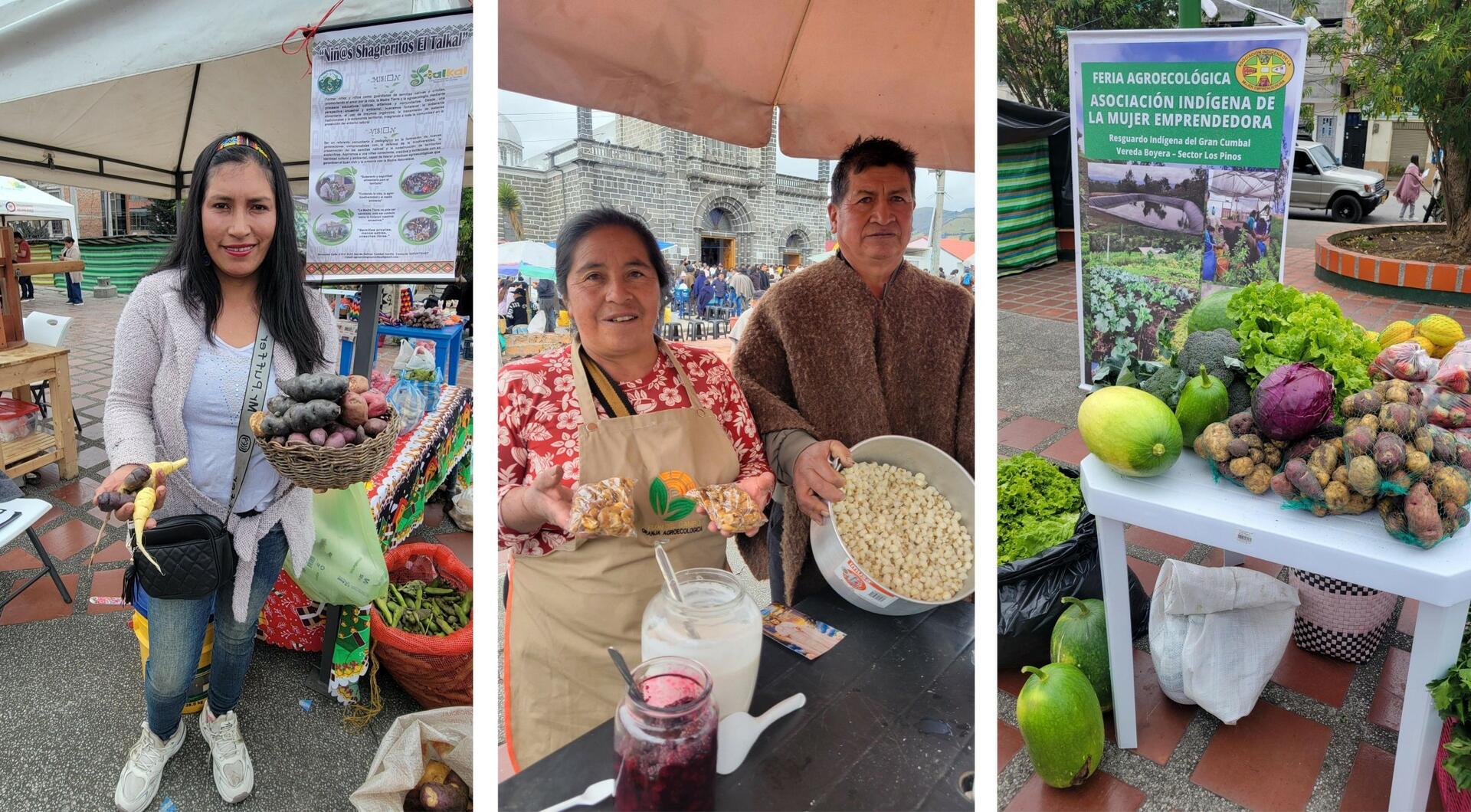
Kolla Raymi – Payacuando fair in Cumbal’s town square, 20 September 2026. Photos: Emilio Jumbo/CIP.
A selection of native potatoes and majuas for sale (left), toasted fava beans with panela and mote (center), and a variety of crops grown in Cumbal (right).
Between the oblivion and the revival of native foods
There is still a long way to go. This is evident in the markets of Ipiales and Cumbal, where native crops, including neglected and underutilized species (NUS), have lost their prominence. Given the difficulty of finding receptive or specialized markets, some of the harvest is kept for household consumption. Other produce goes to niche markets where bartering remains a tradition or to local buyers who value the work of those who grow and sell traditional crops.
Although a preference for buying food from stores has displaced traditional farming, recent institutional support is helping the community—including seed guardians, Indigenous women, children, and young people—revive family vegetable gardens. In this context, Kolla Raymi offers an opportunity to rethink food sovereignty and environmental sustainability in the region.
Kolla Raymi
In 2026, the moon festival was celebrated as “Payacuando, sabores y saberes,” a large community gathering in Cumbal’s town square. There, women farmers, or shagreras, and local entrepreneurs set up stalls displaying a variety of products. By sharing and exchanging the fruits of their labor, they helped preserve their culture through food.
Those who cultivate shagras rose early with sacks and baskets full of tubers, including native potatoes (guatas and chauchas), ocas and majuas—foods rarely found in conventional markets—as well as fava beans and white, yellow and red maize. There were also processed foods such as oca flour, native potato snacks, pumpkin jam, and roasted fava beans with honey, chocolate, and other flavorings. Together, these foods showcased the community’s culinary heritage.
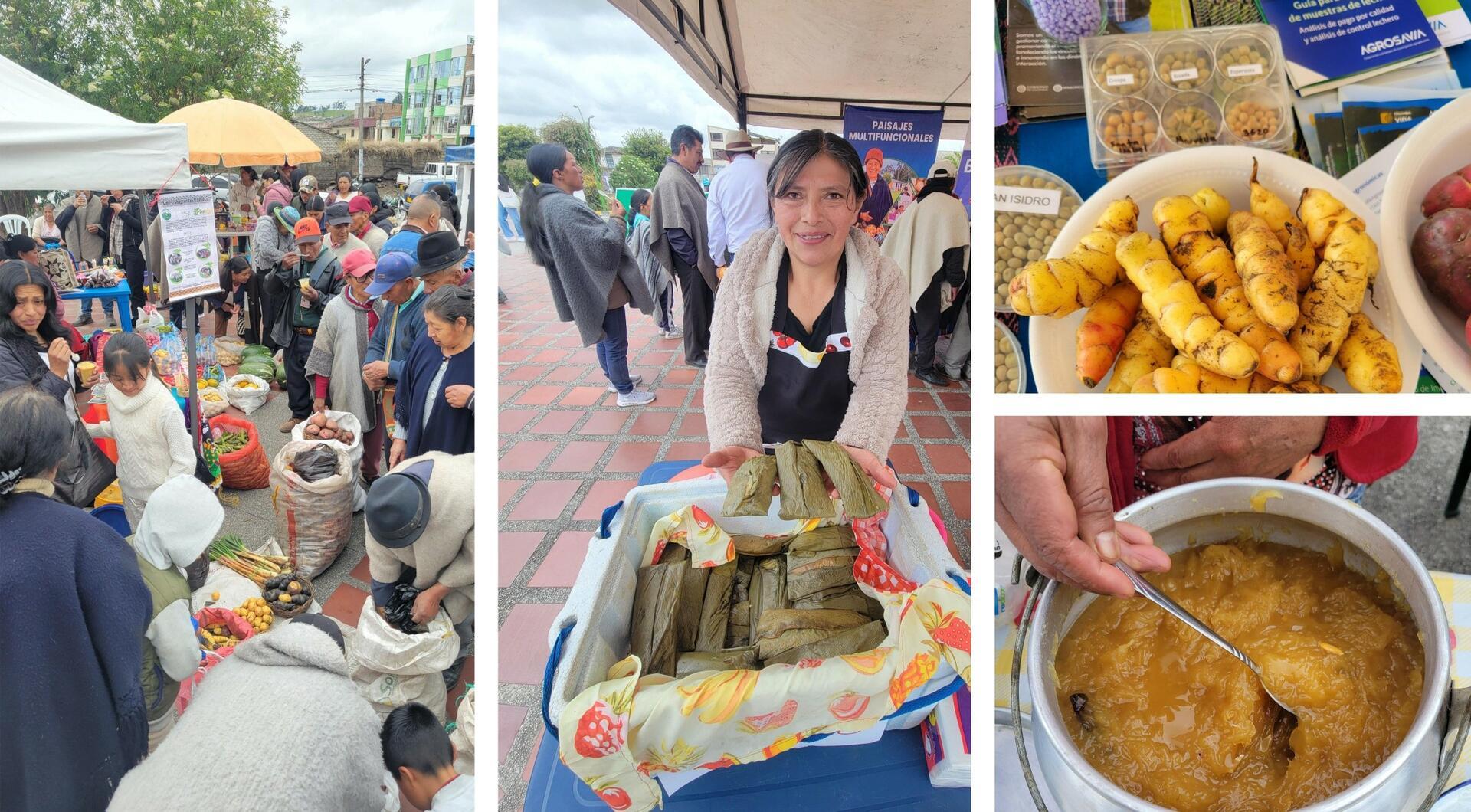
Kolla Raymi – Payacuando fair in Cumbal’s town square, 20 September 2026. Photos: Emilio Jumbo/CIP.
Native potatoes sold for consumption and planting (left), traditional local dishes such as envueltos and tamales (center), majuas on display (top right), and homemade pumpkin jam (bottom right).
Maize played a central role at the fair as a staple ingredient in everything from thick champús (known as the “food of the gods”) and traditional poleada to tamales and locro soup. Other offerings included nutritious aco—a mixture of toasted and ground Andean cereals with panela—and traditional salads made with turnip greens.
The spirit of the festivities in the classrooms
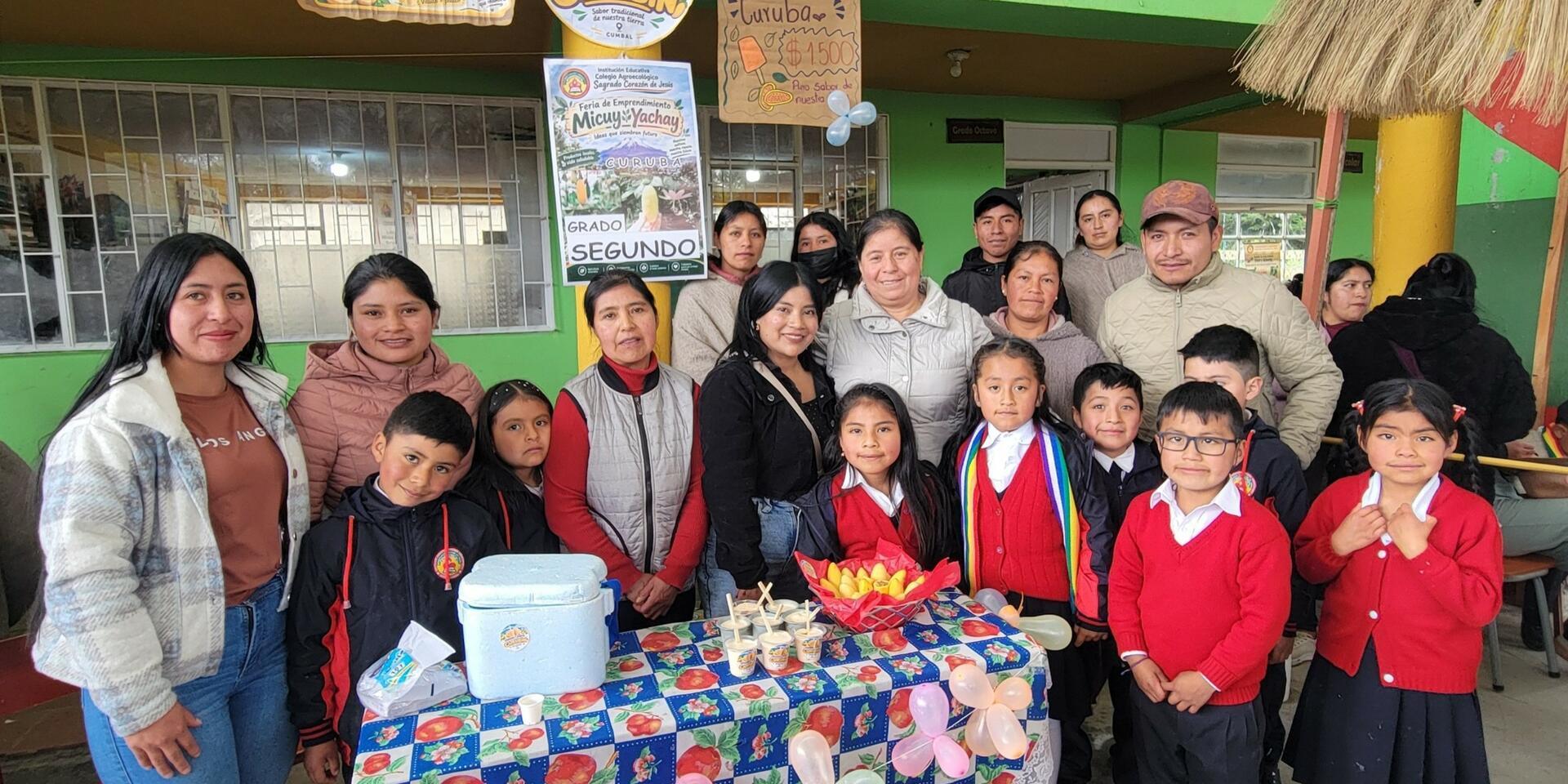
The same spirit of resilience and commitment to preserving Cumbal’s traditions is helping bring Kolla Raymi's legacy into the classroom. Just a few kilometers away, in the village of Cuetial, students, parents, and teachers at Sagrado Corazón de Jesús School—one of the institutions linked to the seed bank network—held a similar celebration with the Micuy Yachay school fair. Gathered around a payacua (mandala) made with staple grains, they took part in an educational initiative focused on food sovereignty and a competition for innovative food ideas—one in which everyone was a winner!
Through traditional dances performed by elementary school children and a harmonization ritual led by older students, the school community gave thanks to God for the land, which the rains were preparing for planting. Afterward, students from all grades and their parents prepared for the culinary competition, which featured dishes made with maize, quinoa, cold-climate berries, and potatoes. Potatoes are grown in monoculture but also in small vegetable gardens that help safeguard local biodiversity. According to Navarrete-Cruz and Vernooy (2025), at least 138 potato varieties, including chauchas and guatas, have been identified in the region.
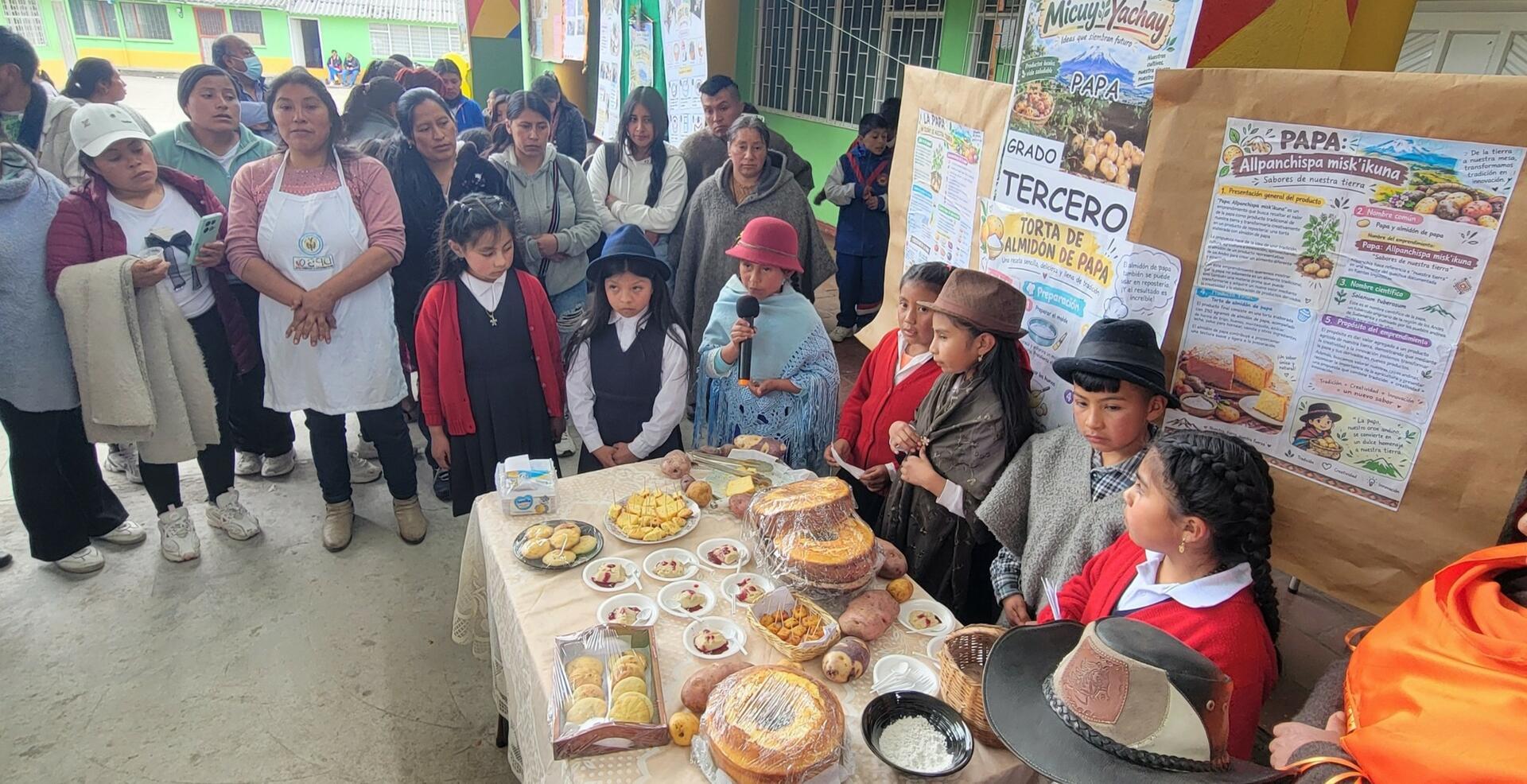
Kolla Raymi – Micuy Yachay fair at Sagrado Corazón de Jesús Agroecological School, Cumbal, 21 September 2026. Photos: Emilio Jumbo/CIP.
Students from various schools in Cumbal organized an entrepreneurship fair showcasing innovative products made with local produce and the community’s traditional crops. Pictured here: cakes made with potato starch.
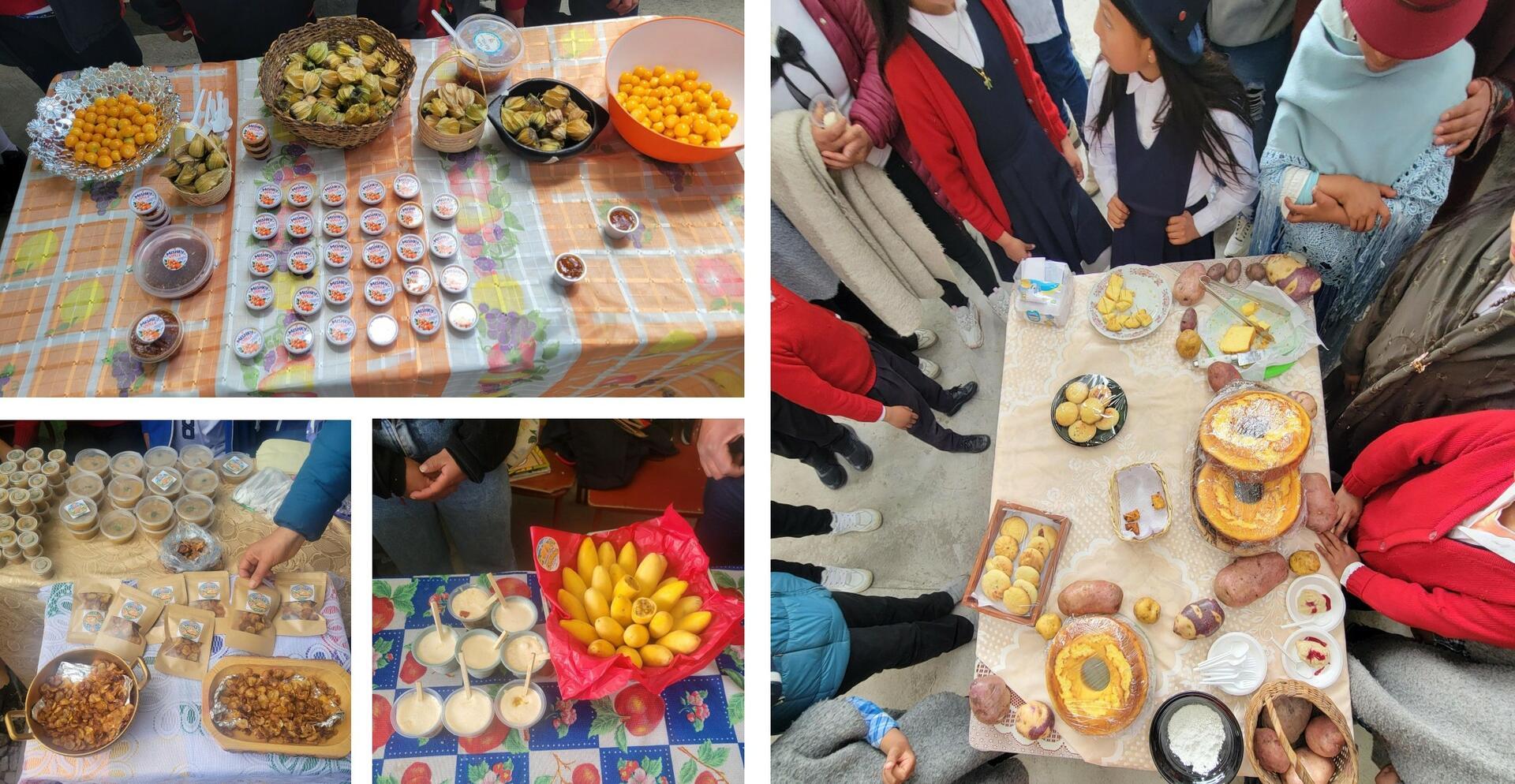
Kolla Raymi – Micuy Yachay fair at Sagrado Corazón de Jesús Agroecological School, Cumbal, 21 September 2026. Photos: Emilio Jumbo/CIP.
Innovative products on display at the entrepreneurship fair: uchuva jam and sweets (top left), majua chips (bottom left), curuba ice cream (bottom center), and cakes made with potato starch (right).
"From a seed hidden in the earth to our plates, the potato makes a long journey. It is a treasure that grows silently underground and, when it reaches our table, reminds us of the value of agriculture, nature, and the farming families of Nariño." (Student at Sagrado Corazón de Jesús School, 2026)
The result was a collective exchange of knowledge and a feast of traditions. Innovative offerings included pea cookies and pea coffee; broccoli cake; mortiño and uchuva jams; chilacuán, oca, and olluco sweets; blackberry cheese; yogurt with quinoa and strawberries; and curuba ice cream. These foods showcased younger generations’ potential to combine their knowledge and create nutritious dishes. The fair also offered an ideal opportunity to share traditional myths associated with certain foods.
In the southern Colombian story “The Enchantment of the Chilacuán*,” a young girl and her friends travel to La Chorrera in search of a golden fruit that, according to her grandmother, can relieve a skin affliction affecting the women of their community. The tale celebrates the fruit’s healing powers and emphasizes the importance of protecting it (Ortega Quistial, 2022).
* Papayuela (Vasconcellea pubescens).
Amid the colors and flavors, tradition and innovation, and ancestral knowledge and youthful creativity, Kolla Raymi is more than a fair. It offers an opportunity to celebrate the value of native seeds and the community’s culinary identity. The celebration also shows how Cumbal’s landscape, beyond its green fields and the cold that envelops it, can support a resilient community's social, economic, and environmental sustainability.
“Mortiñito* from my páramo, tiny and tasty, your sweet flavor fills my heart with joy;
Mortiñito from my land, a sweet and lovely fruit, when I eat you with delight, even my song is filled with joy;
Mortiñito, mortiñito, I found you along the way; I ate one, I ate two, and ended up eating a whole lot!” (Elementary school students at Sagrado Corazón de Jesús School, 2026)*Wild cranberry (Vaccinium meridionale).
We would like to thank all the donors who made this research possible through their contributions to the CGIAR Trust Fund.
Related content