Blog From baking to building: Esther’s transformational seed-driven agri-food venture

Esther Majija transformed her Babati-based bakery in Tanzania into a seed-driven agri-food enterprise between 2022 and 2025, using training and partnerships to process nutritious flours from improved crops, strengthening farmer markets and nutrition.
When Esther Majija launched Fortlene Bakery Ltd in Babati township in 2022, her vision was simple but purposeful: to produce nutritious bread and cookies using locally available ingredients. She worked with wheat flour, orange-fleshed sweet potatoes (OFSP) and OFSP chips, roasted cashew nuts, roasted peanuts, and peanut butter. Her commitment to wholesome, locally sourced foods quickly caught the attention of customers across Babati. Yet from the beginning, Esther believed her idea could grow far beyond baking.
As her business expanded, Esther recognized the need to diversify and deepen her knowledge of food processing. A turning point came when she received hands-on training at Babati SDA church through a program delivered by BIVAC Tanzania Company, a food processor based in Arusha. BIVAC specializes in producing nutritious flours from biofortified crops to combat malnutrition among women and children.
During the training, Esther learned how to process biofortified common beans into flour and how to formulate nutritious composite blends combining common beans, maize, and sorghum. The experience broadened her skills beyond baking bread and revealed the vast potential of agro-processing, particularly the production of nutritious flours using biofortified bean varieties such as TARI Bean 6 and JESCA.
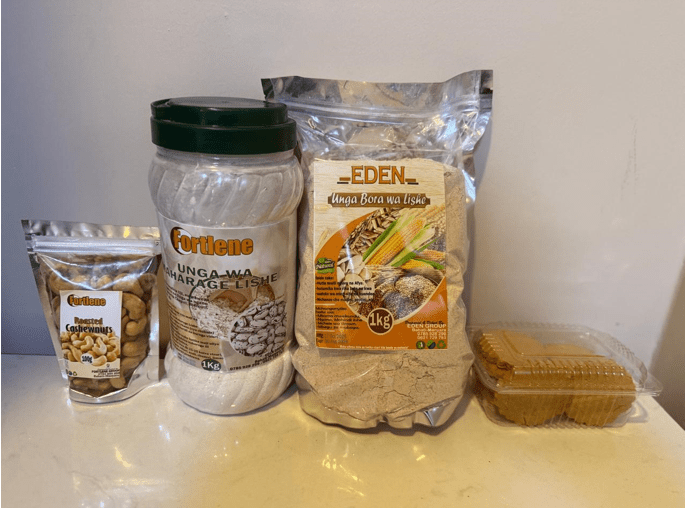
Figure 2. A selection of Fortlene Company products—roasted cashew nuts, high-iron bean flour, sorghum-based flour, and bean-based cookies—showcasing the company’s growing product range
Her encounter with the Alliance and its Pan-Africa Bean Research Alliance (PABRA)
Esther’s next milestone came in May 2024, when she joined the Alliance-led ACCELERATE Project—an opportunity that connected her to new partners, markets, and improved varieties of sorghum, groundnuts, and common beans. Through the project, she was linked to the Tanzania Agricultural Research Institute (TARI), as well as seed producers Dodoma Agricultural Seed Production Association (DASPA), and CBS. These partnerships laid the foundation for a multi-stakeholder platform (MSP), bringing together a farmer group in Babati comprising 26 members, who now supply her with high-iron bean grain, primarily the TARIBEAN 6 variety.
These partnerships proved transformative, granting Esther access to improved, high-quality, and climate-resilient crop varieties essential for producing premium flours and value-added products. Through these institutions, she obtained certified seed of TARISOR 1 sorghum, preferred for producing flour suitable for ugali - a local staple food; TARISOR 2 sorghum, valued for its good taste and widely used for porridge and school meals; TARIKA 2 and Tanzanut 2016 groundnuts, both high-yielding, high-quality varieties; and TARIBEAN 6 common beans, a biofortified variety rich in iron and zinc and strongly demanded by the market.
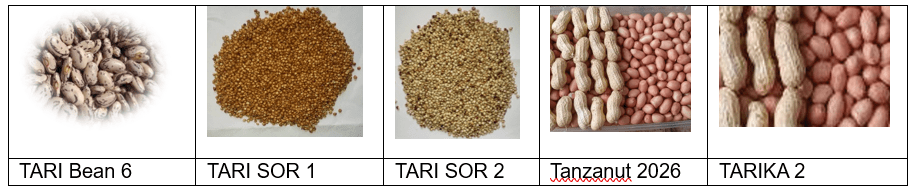
Table 1. Varieties preferred by processor
During the 2025/2026 season, these improved seeds were distributed to the farmers Esther works with – enabling them to produce high-quality grain that she later purchases for processing. This model is building a dependable and mutually beneficial value chain for both farmers and the enterprise.
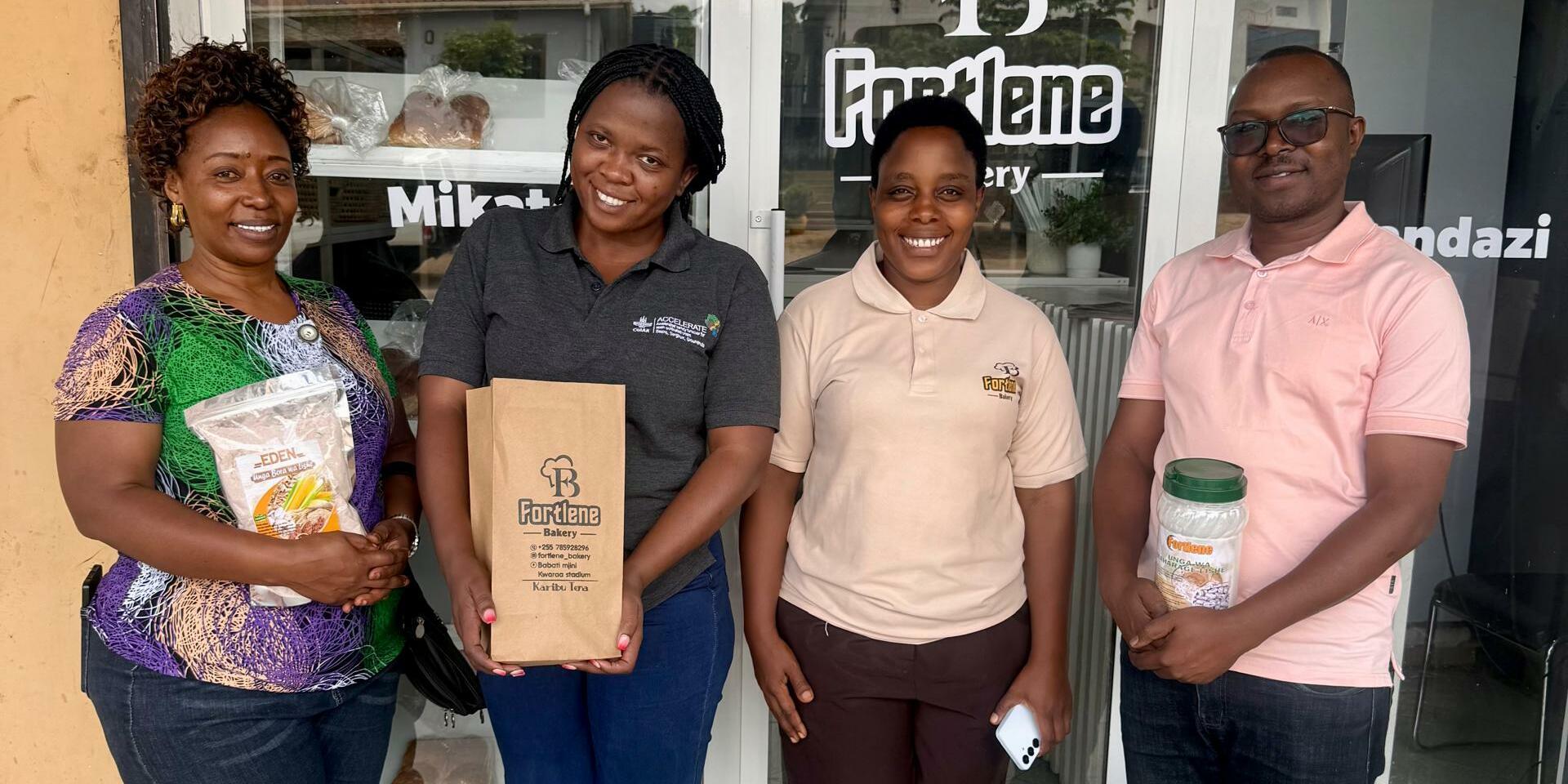
Cover Image: Figure 1 - Esther Majija, second from right with CIAT Scientists at her shop in Babati town