Blog ECREA model farms with climate information vs. farms with late planting: Lessons from Rulindo, Rwanda
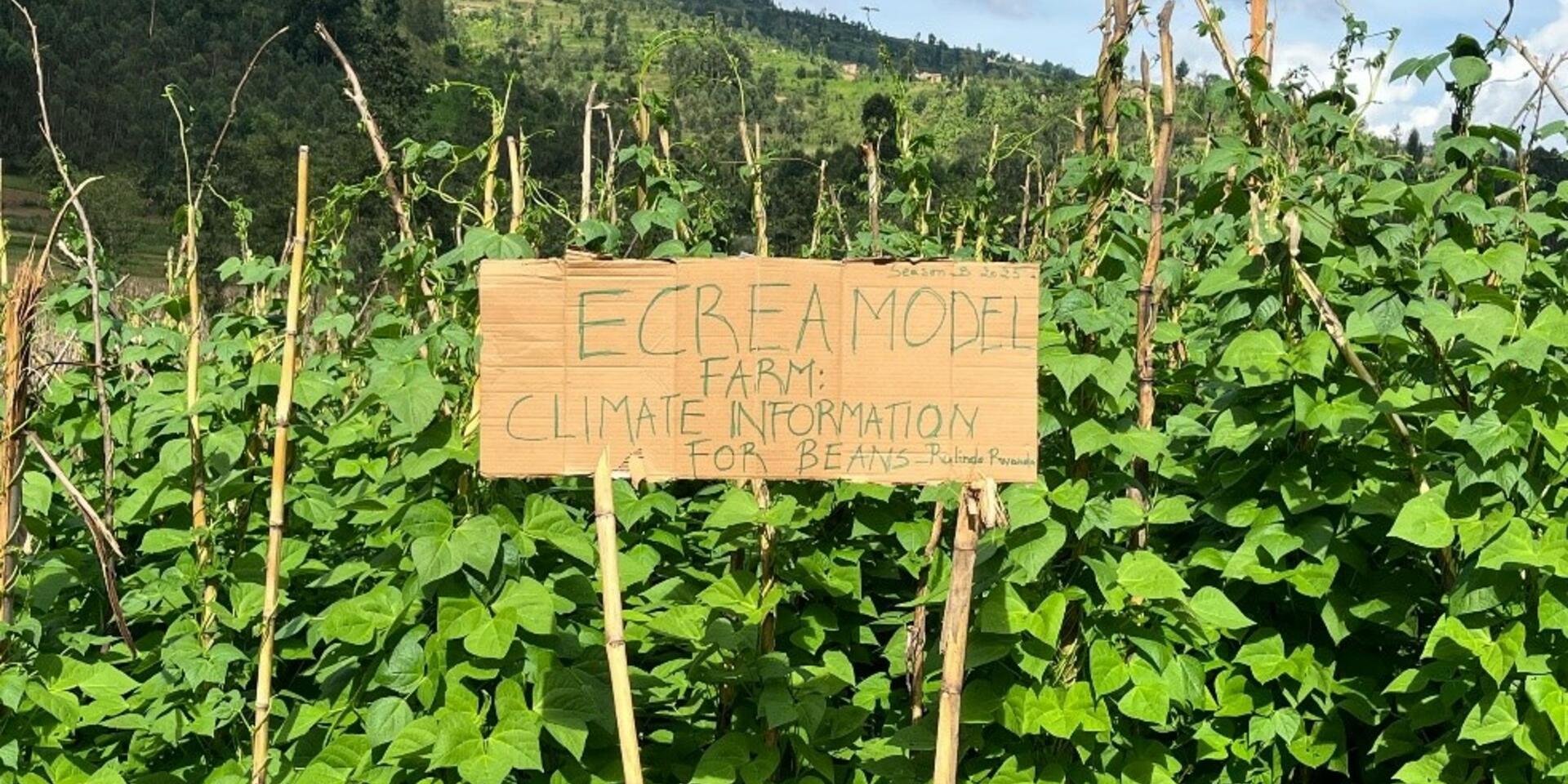

On April 28th, 2025, a field visit in Rulindo District provided a visual comparison between two farming approaches: one based on timely planting using climate and weather information, and another planted later as part of a deliberate family strategy.
The visit, organized by the Alliance of Bioversity and CIAT and the Rwanda Agriculture and Animal Resources Development Board (RAB), aimed to highlight how climate information services influence agricultural decision-making and outcomes. This activity builds on the groundwork laid by the Pan-Africa Bean Research Alliance (PABRA) and the BRAINS Project, whose ongoing efforts to strengthen climate-resilient bean value chains and support smallholder farmers have significantly contributed to shaping and informing ECREA’s interventions in the region
The two farms chosen for this learning experience are in the heart of Rusiga Sector. The first, owned by Alphonsine Mukamazera, is a model example of climate-informed farming. Alphonsine, who cultivates climbing beans of the “Forora” variety on her 4-acre plot, proudly shared how she made the decision to plant early based on seasonal forecasts provided by Meteo Rwanda. Her timely planting has paid off, as her beans are lush, healthy, and visibly ahead in development compared to neighboring fields. “Using climate and weather information made me realize that I can harvest a lot from a small piece of land,” Alphonsine said. Her experience is a testament to how climate services can improve food security, productivity, and planning for smallholder farmers.
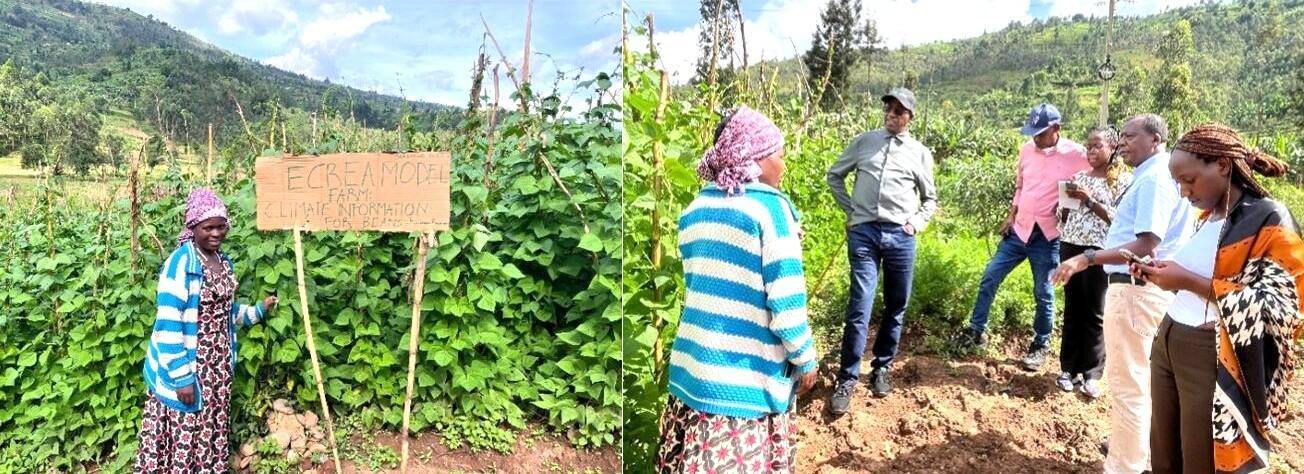
Project team members learning in the field from Mrs. Alphonsine, as her model farm showcases timely planting practices in action.
Just a few steps away, we visited the field of Telesphore Uwisanze, where the climbing beans showed delayed growth. At first glance, it seemed like a missed opportunity. However, a conversation with Telesphore revealed a strategic decision rooted in local knowledge. “This delay was intentional,” he explained. “We planted early on sloped areas and later in the lower, swampy zone near the house, where the soil retains moisture longer.” Additionally, he selected the Gihoro bean variety, which matures faster, to compensate for the late planting. His approach was not a result of limited awareness of climate forecasts, but rather a deliberate family adaptation strategy aimed at balancing risk, labor availability and sustainable land management.
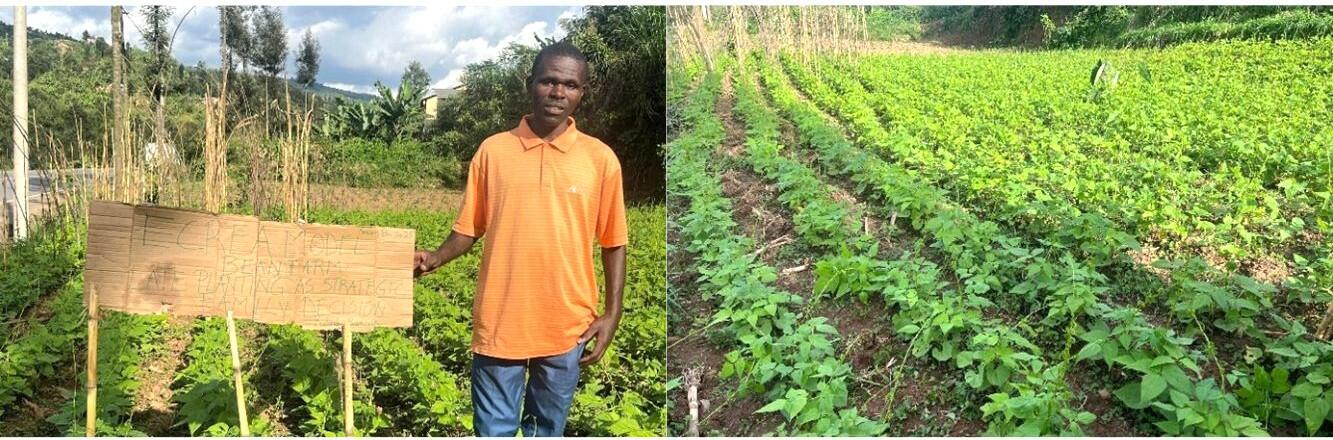
Pictures showing Telesphore’s farm experiencing late planting.
The comparison between the two farms demonstrated the richness of farmer decision-making, showing that while timely planting with climate information often leads to higher yields, late planting can also be part of a smart, calculated strategy. Both fields provided valuable lessons on how farmers navigate their environments, integrating both scientific forecasts and indigenous knowledge.
In a nutshell, this visit affirmed that the true power of climate information lies not only in its accuracy but in its adaptability to real-life decision-making. Alphonsine’s success highlights the value of acting on weather data, while Telesphore’s strategy reminds us that resilience also involves making informed choices tailored to local realities. Together, these stories demonstrate that with the right tools and knowledge, farmers can adapt their practices for productivity, risk reduction and sustainability. Seeing both approaches side by side served as a timely reminder that smart farming is not one-size-fits-all, it is informed, intentional, and continually evolving.
The Team

Desire Kagabo
Project Leader
Livingstone Byandaga
Research Specialist
Mvuyibwami Patrick
Senior Research Associate