Blog From the desert to climate justice: Henri Rueff's journey
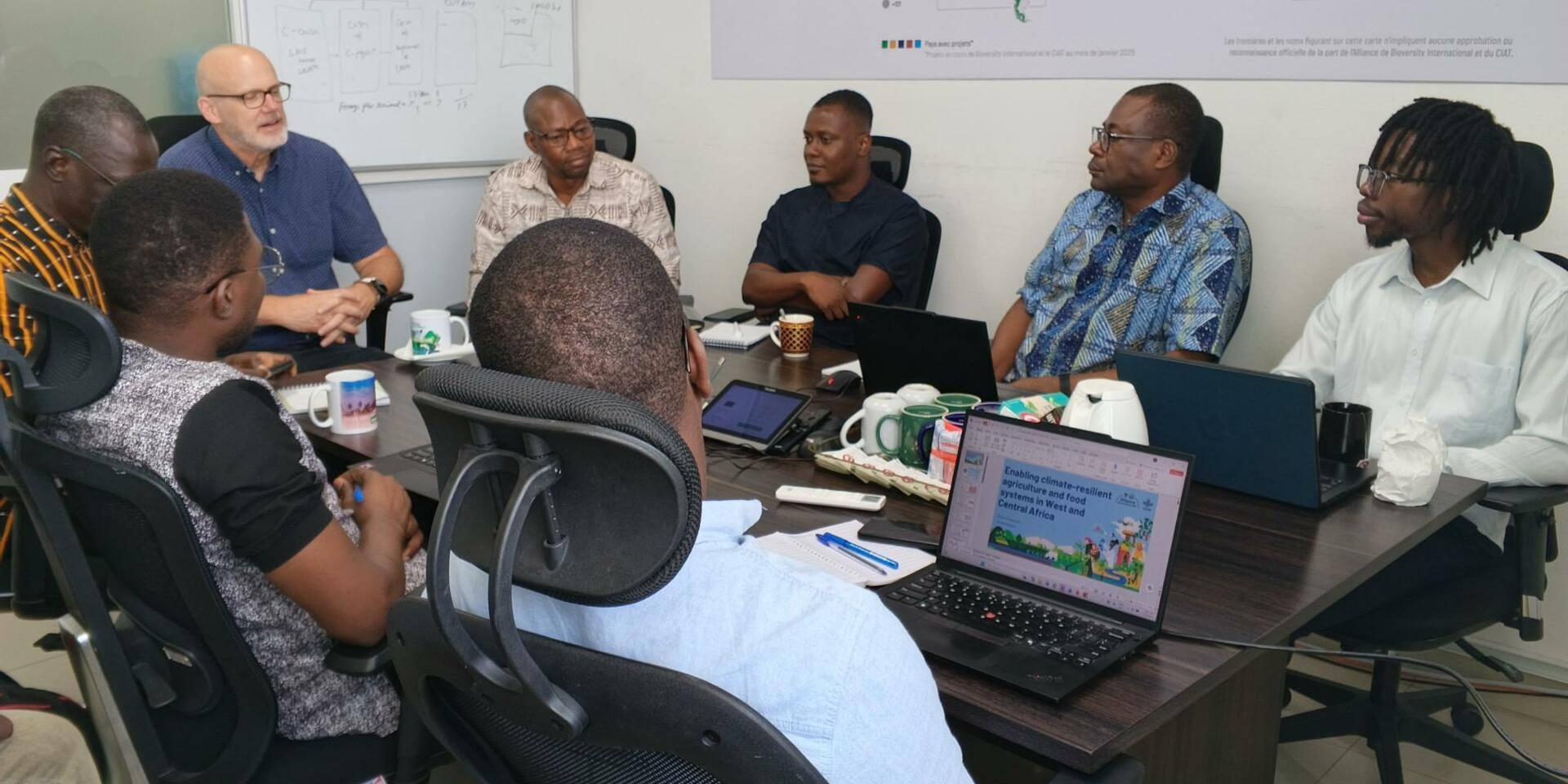

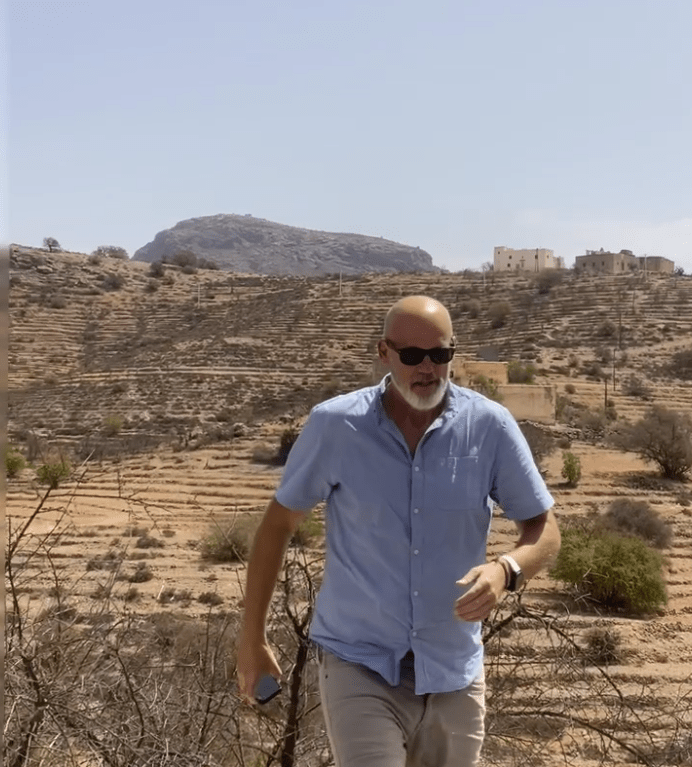
Clarity comes from working in environments where the margin for error is at its narrowest. For Henri Rueff, the new Director of the Climate Action Research Area at the Alliance of Bioversity International and CIAT, that place was the desert. Having grown up in Algeria, he was drawn to drylands from an early age.
"I first worked in arid environments and deserts, where climate vulnerability is most visible," he recalls.
It was there, observing how a prolonged drought, or one of the extreme winters of the Gobi Desert, could destabilize an already fragile agricultural system within a matter of weeks, that the mechanics of survival stood out.
"These extreme environments were a real laboratory for me," he explains. "They make the mechanisms of vulnerability and adaptation tangible, almost in exaggerated form, whereas elsewhere they are more diffuse."
That laboratory would shape a career spanning more than two decades, built around one question: how do the most exposed populations cope with environmental hazards, and how can we help them become more resilient? This fieldwork naturally led Rueff to agriculture and food systems.
"You cannot talk about climate resilience without talking about how people produce, store and access their food," he says. "Shocks, whether droughts, harsh winters or extreme events, hit these chains first."
From the field to the Ministry of Finance
Henri's career gradually shifted from the ground to the systems that govern it. Fieldwork taught him a great deal, but it also revealed its limits.
"I realized that fieldwork alone was not enough: the decisive factors lie in public policy and financing."
This realization led him to advise governments on climate finance, work he describes not as a technical exercise, but as a structural one:
"Mobilising, directing and securing resources so that adaptation does not remain an aspiration, but becomes a transformative investment for the most exposed populations and food systems."
Trained as an environmental economist, Henri later served as one of the coordinating authors of the seventh Global Environment Outlook (GEO-7) of the United Nations Environment Program, the most comprehensive scientific assessment of the state of the global environment to date. This kind of bridge, between scientific rigor and the arenas where decisions are made, is what he now wants to help the Alliance build.
The Alliance and impact for farmers
What motivated him to join the Alliance of Bioversity International and CIAT, he says, was first and foremost its reputation, and a relatively rare combination.
"The organization combines recognized scientific excellence with a genuine capacity to implement development projects on the ground. That combination is quite rare, and it was central to my decision."
At this stage of his career, he was looking for an environment where research translates into concrete action that benefits people.
The Alliance's global geographic reach, as a member of CGIAR, the world's largest agricultural research partnership, also influenced his decision. It makes it possible to address climate, agriculture and food challenges at the scale at which they arise, linking local realities with an international perspective.
"It is this combination of scientific rigor, grounding in development and global reach that enables us to influence scientific and development debates," he adds.
A few months after joining, four aspects have particularly stood out to him: the Alliance's capacity to mobilize funding, the depth of its scientific excellence, the strength of its high-level networks and, above all, its tangible impact on beneficiaries, particularly smallholder farmers.
"That is where it all comes together," he says. "Seeing research and financing translate into real improvements in the lives of the most vulnerable populations."
A question of climate justice
Asked about the challenges facing food and agricultural systems, Henri lays out a long and technical list: anticipating climate shocks, developing storage and distribution systems to reduce post-harvest losses, conserving soils, rethinking systems through the lens of circularity, and reducing emissions at source, including methane from livestock, nitrous oxide linked to fertilizers, and deforestation associated with agricultural expansion. But beneath the technical detail runs a recurring moral thread.
"Smallholder farmers are not the source of these emissions," he stresses, "yet they are being asked to contribute to mitigation by giving up certain practices or sources of income. At the very least, that effort must be rewarded in proportion to what is being asked of them."
The agricultural carbon market, he argues, remains fragile today, concentrated in a few categories that lack robustness, and the Alliance has a scientific role to play in strengthening its credibility: ensuring that the carbon credits received by small-scale producers are robust, additional, and worth at least the value of what they have had to give up.
In sub-Saharan Africa, he notes, smallholder farmers provide nearly 80% of the food supply "even though they receive only a tiny share of climate finance and are the most exposed to shocks".
The second dimension of mitigation, reducing emissions at source, is, in his view, "the most sensitive issue and the one most often sidestepped in negotiations, but it cannot be avoided."
The Alliance can contribute neutral, practical scientific solutions, such as low-methane livestock systems or optimized nitrogen management.
The role, and the road ahead
As Director of the Climate Action Research Area, Henri's role is first and foremost to lead the research strategy while staying:
"One step ahead in a field of research that is evolving very rapidly, "
So that trends can be anticipated rather than reacted to. An essential part of his responsibility, he emphasizes, is to remain close to the field: to understand concretely the work of researchers and local partners, and to meet them in person, in order to ensure coherence and ethical standards at every level. He is also responsible for engaging with major funders to mobilize resources and for maintaining close engagement with CGIAR centers and the other Research Areas.
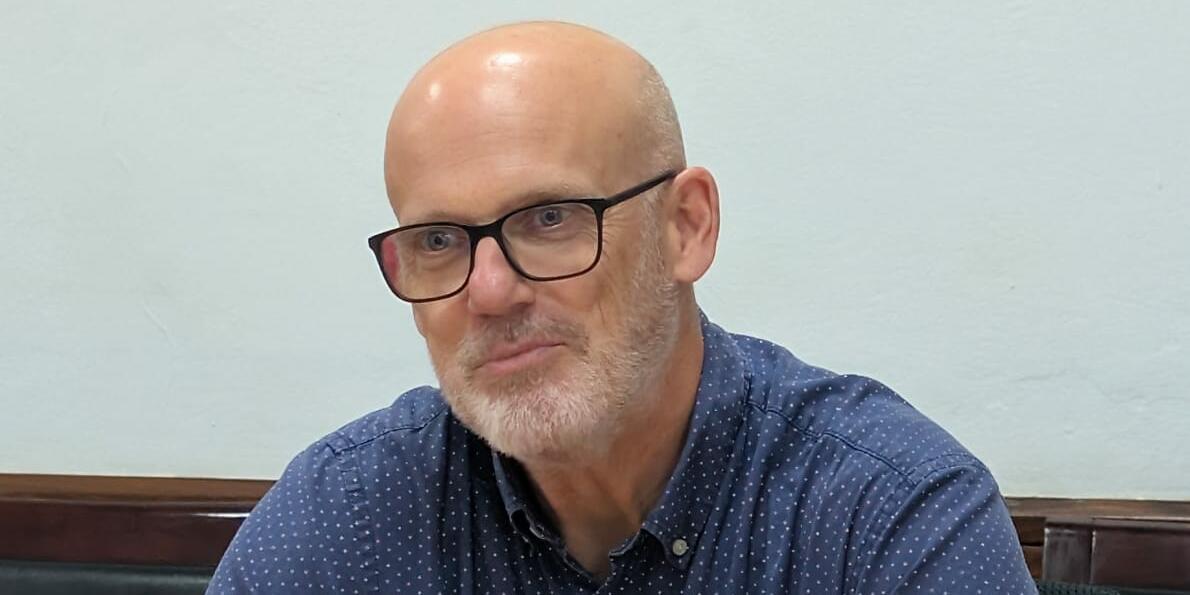
Henri acknowledges that while he is still settling into the role, several priorities are already emerging: securing accreditations, particularly with the Adaptation Fund, to expand direct access to climate finance; strengthening the Alliance's presence in Small Island Developing States (SIDS); supporting the Dakar office's reach across West Africa; further integrating agroecology; and maintaining active engagement with major global assessments such as the IPCC, IPBES and GEO, so that Alliance research continues to inform decision-making.
His leadership, he says, will be grounded in scientific excellence, uncompromising ethics and, above all, listening.
"You can only lead well by truly understanding people, their work and their constraints." His long-term vision places climate action at the heart of food systems transformation. Agriculture, he notes, is both one of the major sources of greenhouse gas emissions and one of the sectors most vulnerable to climate disruption: "a central part of both the problem and the solution."
"If, in the long term, the Alliance is recognized as the organization that successfully connected food systems transformation, climate action and justice for the people who actually feed populations," he concludes, "then I will feel that I have contributed to the change I am working toward."
This feature is based on a conversation with Henri Rueff in Dakar, Senegal. He is the Alliance’s Director for Climate Action based in Cali, Colombia.

Henri Rueff
Director, Climate Action and Principal ScientistRead more about our work in this area here: