Blog Bridging the gap: Can Croppie take root in Kenya’s coffee sector?
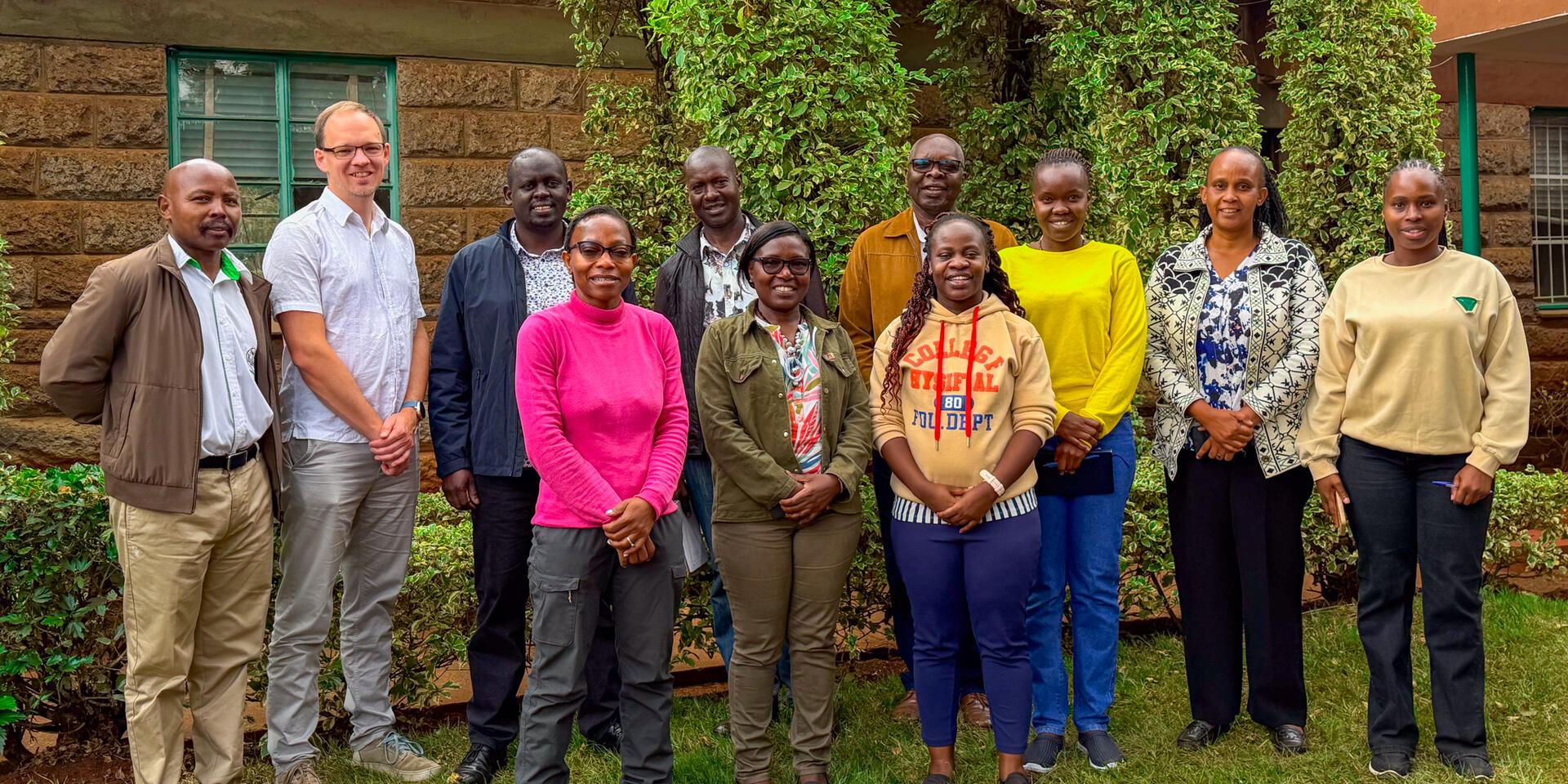

Researchers from the Alliance and KALRO-Coffee Research Institute met on 11 September 2026 to explore how the AI-enabled mobile app Croppie could support Kenya’s coffee sector through smartphone-based yield estimation and improved farm decision-making, and to assess the needs and pathways for local adaptation of the technology.
Coffee is a key pillar of Kenya’s economy, ranking as the third-largest agricultural export, with its premium Arabica coffee prized globally for its distinct flavour and aroma. The subsector supports about 13 percent of households and employs people across the supply chain. However, production has declined by 70 percent from 130,000 metric tonnes in 1988 to 50,000 metric tonnes in 2021. Kenya’s current objective is to reinvigorate the sector to 150,000 t.
Today, yield estimation still depends heavily on people moving through coffee fields, selecting trees and branches, and counting cherries by hand. It is necessary work, but it is also repetitive, time-consuming, and difficult to standardize across large farms and many technicians. For a farmer managing hundreds or thousands of trees, the cost of obtaining good information can become a problem in itself.
On 11 Sep 2026, a team from the Alliance of Bioversity International and CIAT, under the Sustainable Farming Program, met with stakeholders from the Kenya Agricultural and Livestock Research Organization (KALRO) Coffee Research Institute (CRI). The conversation revolved around Croppie, an AI-enabled mobile app that uses simple smartphone images to improve coffee yield estimates.
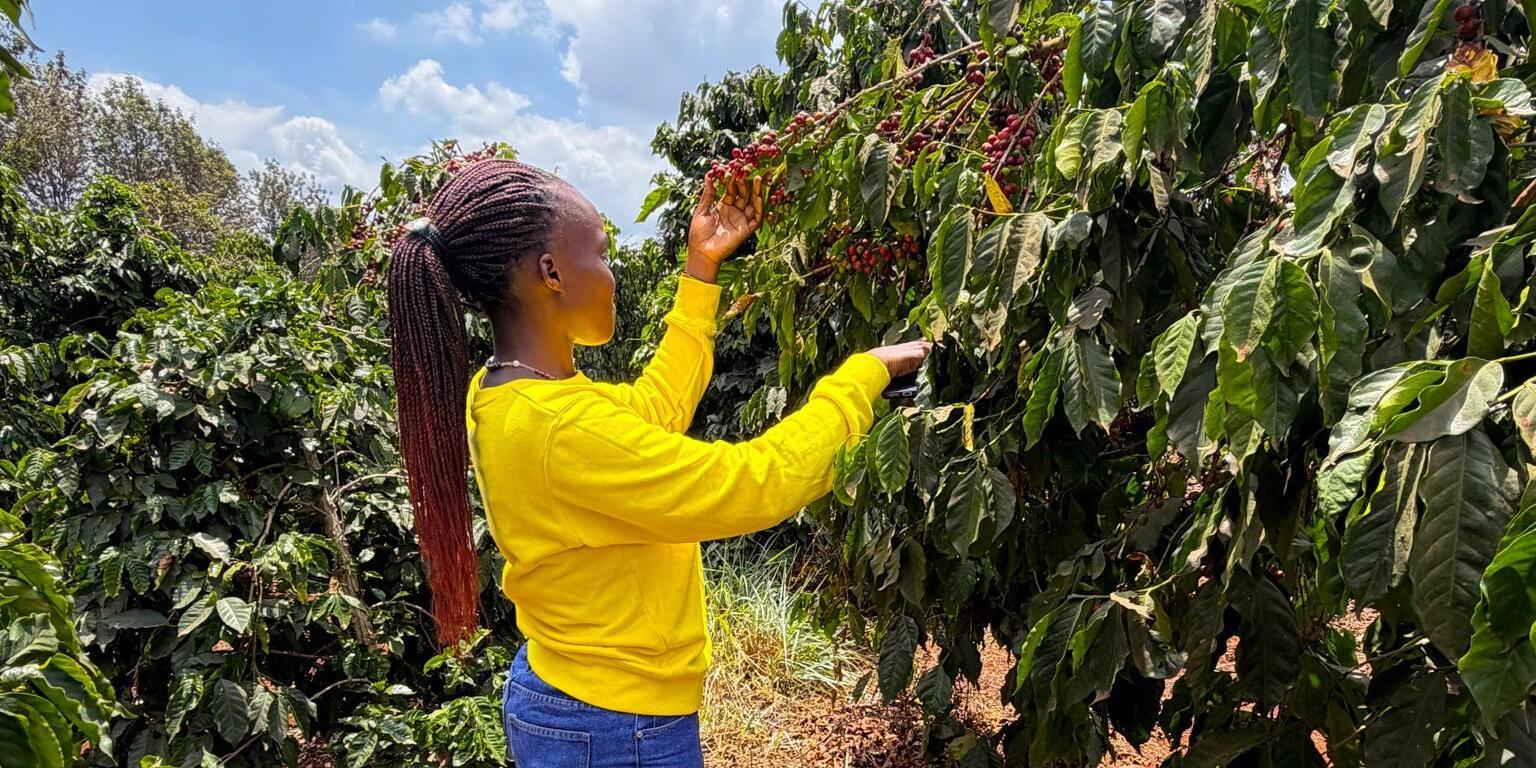
Croppie uses smartphone images to count coffee cherries on selected productive branches. The user captures an image, and machine vision assists with the counting process. It removes one of the most tedious parts of the job and makes the information generated more consistent, traceable, and useful.
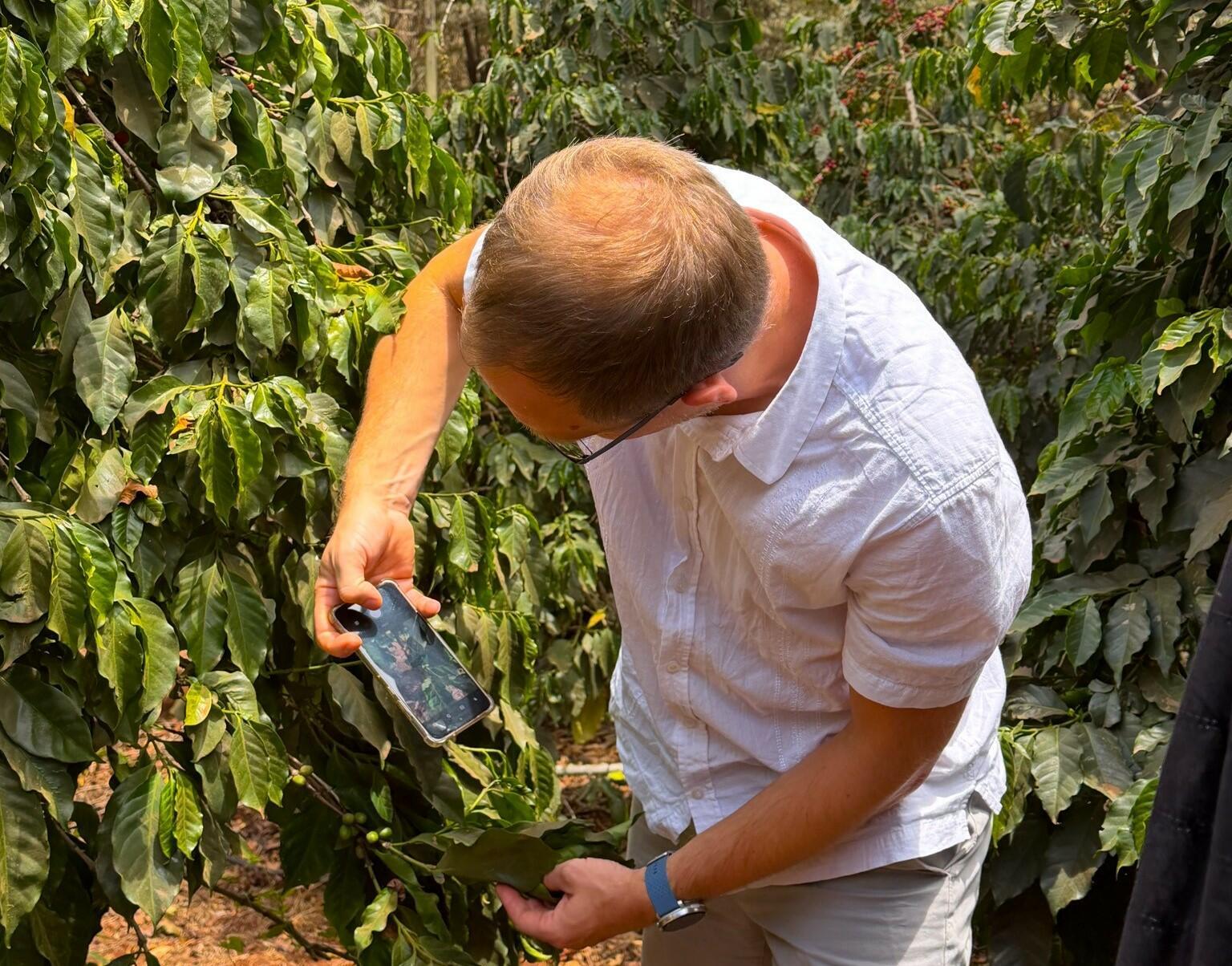
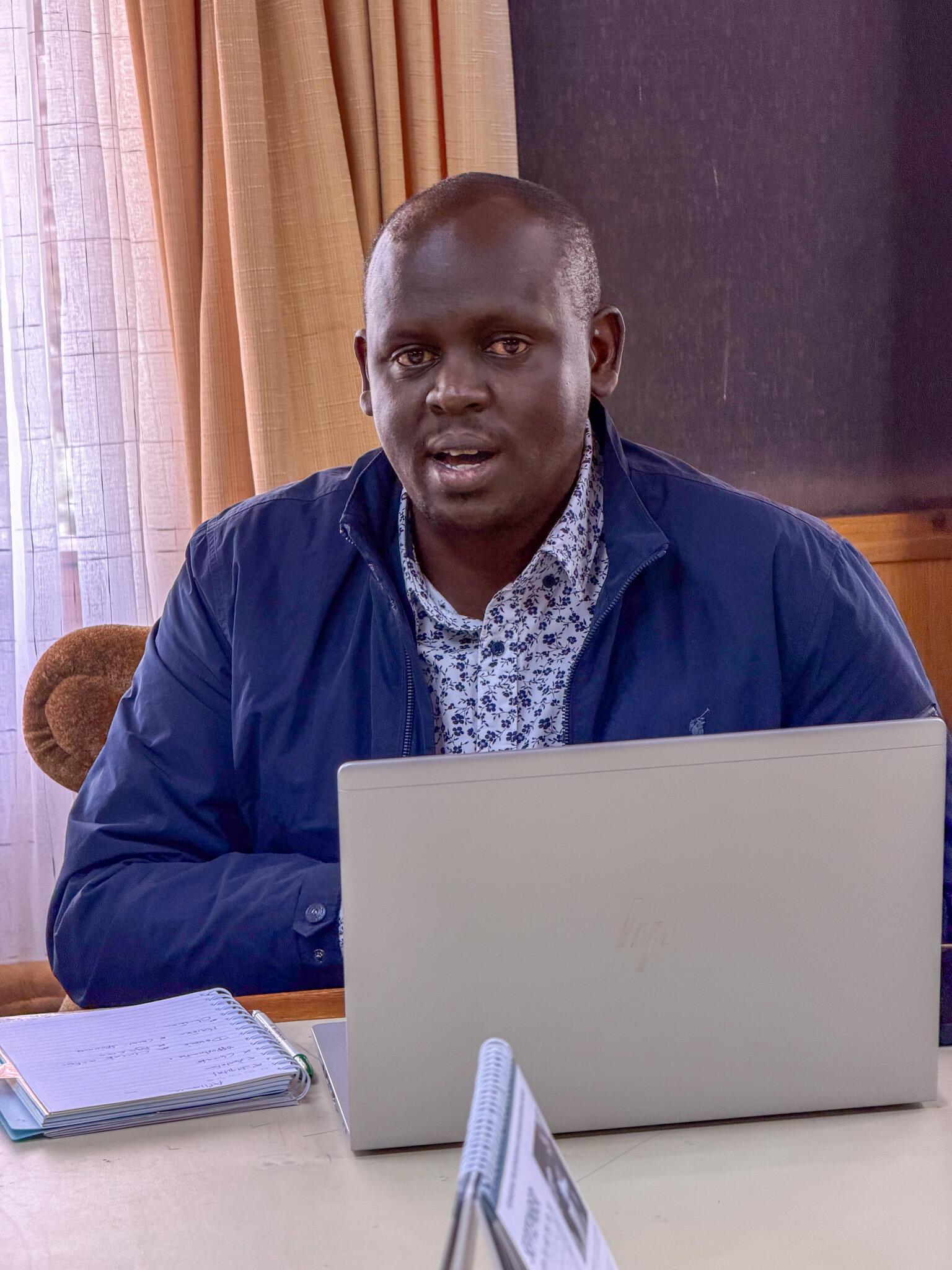
Christian Bun, Alliance Scientist and coffee and cacao expert, testing the Croppie App at the KALRO CRI farm.
From Colombia to Kenya: the real question is adaptation
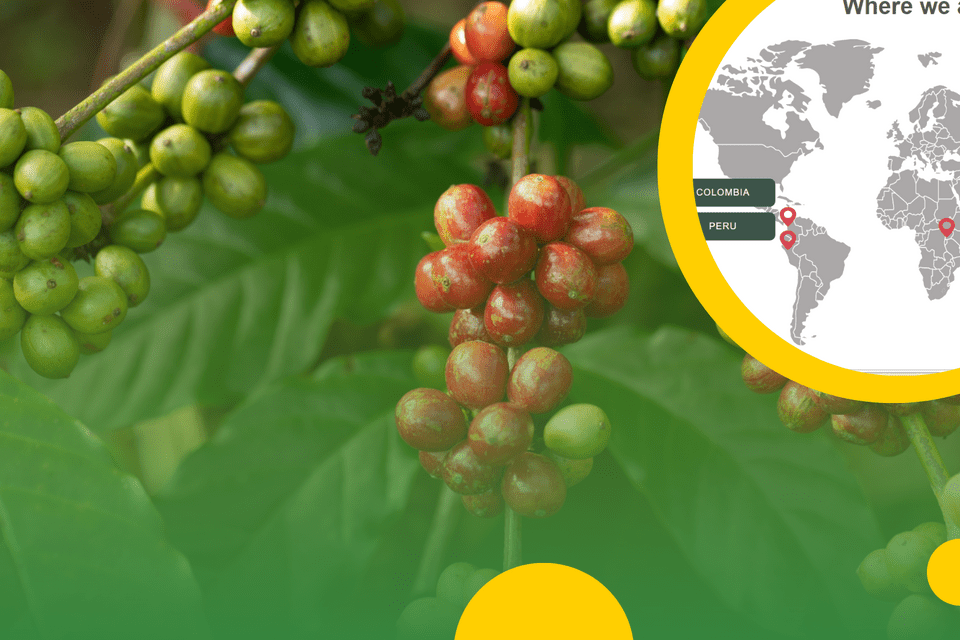
Croppie has been tested in coffee systems in Latin America, including collaboration with Colombia's coffee research institutions and cooperatives. Its development has been driven by a practical problem: how to make harvest estimation more efficient while maintaining useful information for planning.
“We are using the camera as an additional set of eyes that can go to the field. We started with yield estimation because it is a core decision point in coffee management, informing harvest planning, pest and disease management, breeding, and fertilisation." Stated Christian Bunn, Alliance Scientist and expert in coffee and cacao value chains
Kenya has its own coffee varieties, production systems, farm structures, agronomic practices, and data requirements. Even seemingly small differences can affect how a machine-learning model interprets an image.
The discussions therefore focused on the need first to understand Kenya's farming context rather than immediately promoting the application. The proposed starting point is a structured assessment of where the tool works, where it does not, and how farmers, technicians, and research teams experience it.
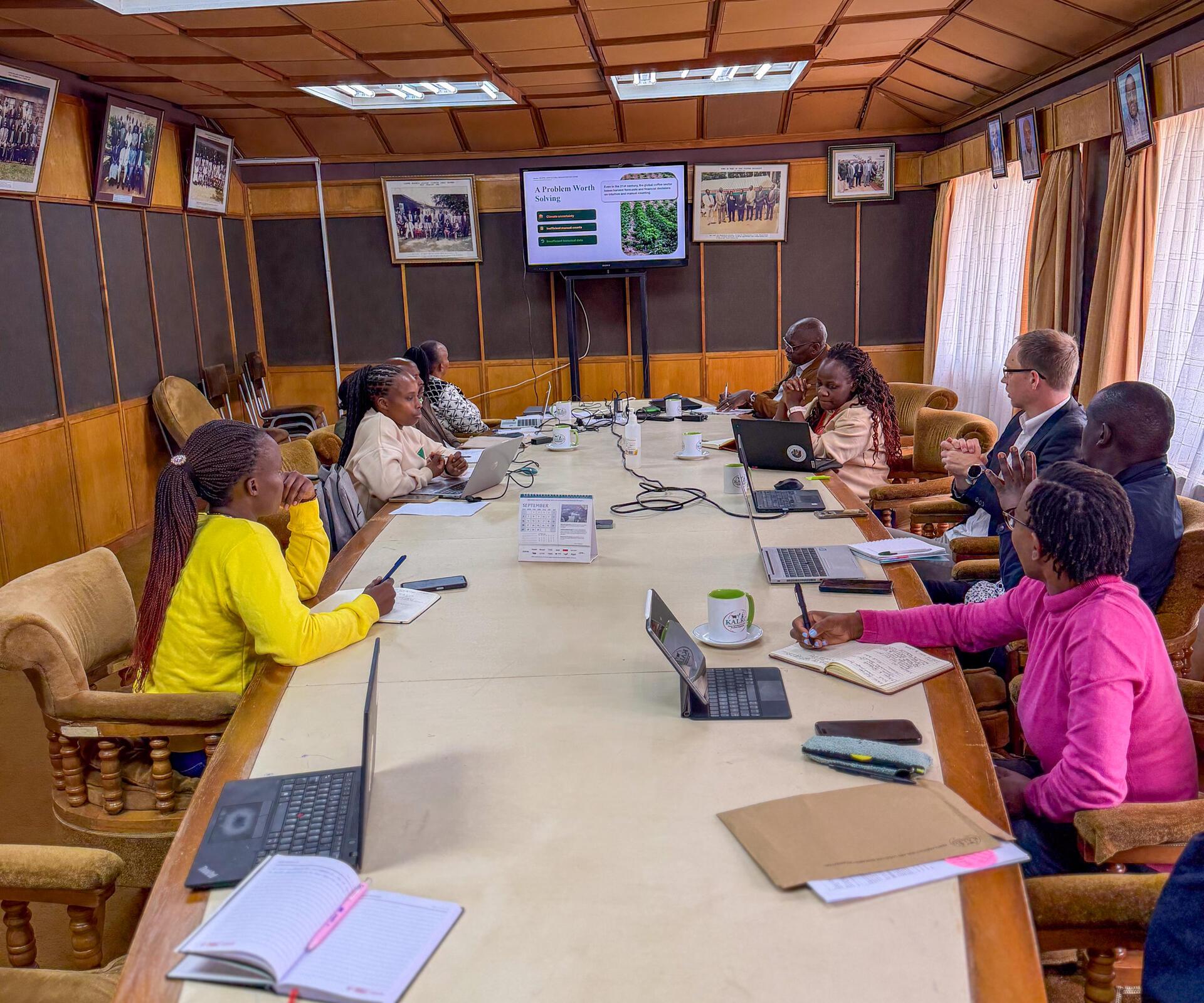
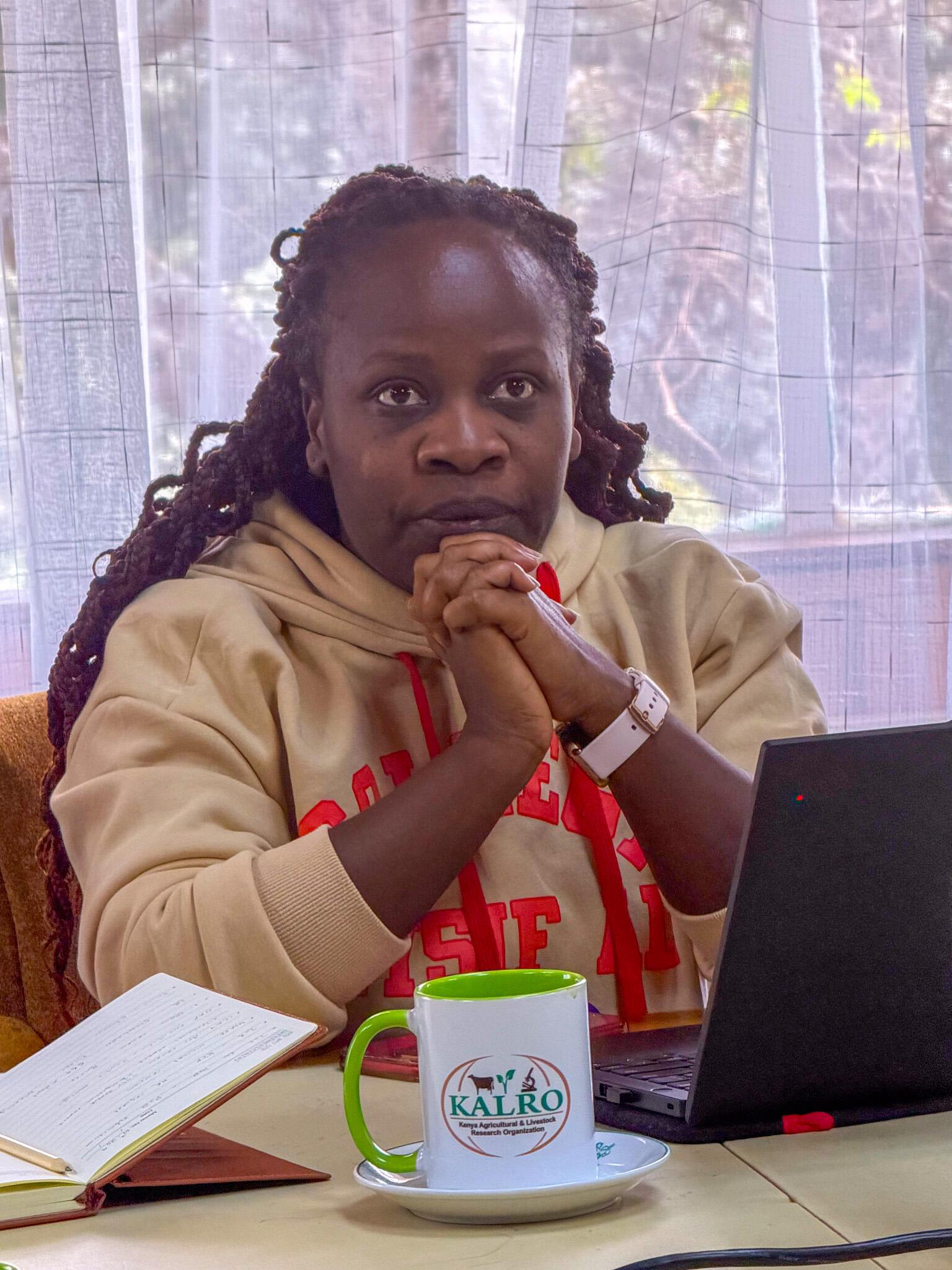
Researchers from the Alliance and CRI discuss opportunities to jointly test and adapt the Croppie digital tool to improve coffee yield estimation and support more efficient research and extension services in Kenya.
Kenya's coffee sector offers a strong testing ground
KALRO's CRI mandate covers the coffee value chain, from evaluating Arabica coffee along the Lake Victoria Basin for Robusta Coffee production rehabilitation to crop health, nutrition, post-harvest management, and value addition. The institution is also increasingly interested in digitizing agricultural knowledge so that farmers can access useful information without always requiring a physical visit from an extension officer.
“With changing climatic conditions, we expect emerging pests and diseases, and we need real-time action. Any technology that can provide farmers with timely advisory and solutions is a welcome idea for us.” - Tony Maritim, Deputy Director, CRI
For a farmer, knowing roughly how much coffee is developing on the farm several months before harvest could be practical. It can inform preparation for harvesting labor, input decisions, and financial planning. More broadly, reliable estimates can help cooperatives and other actors anticipate volumes and plan the resources needed to handle the crop.
The potential investor benefit is equally significant. Agricultural finance is often constrained by uncertainty. Better information about expected production does not remove production risk, but it can give lenders, cooperatives, buyers, and other financial actors a stronger evidence base for planning. Bunn shared the croppie app experience in Colombia and how harvest estimates can support financial and logistical planning around the coffee season.
For farmers, that information can also motivate them. Seeing a credible estimate of the crop developing on their trees can make the benefits of good agronomic management more tangible.
But counting cherries is only the beginning
The most interesting part of the conversation was not the current application itself, but what machine vision could eventually make possible.
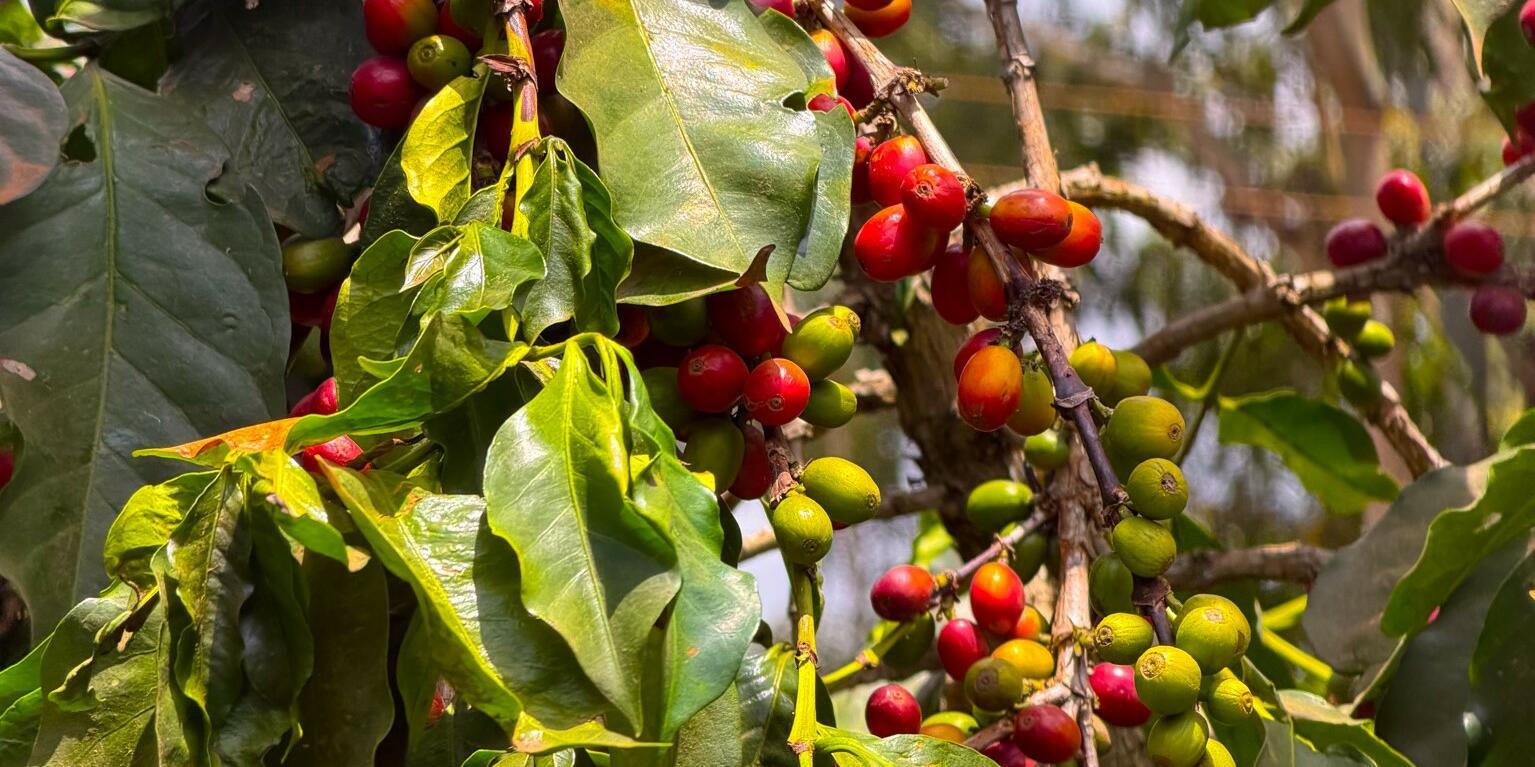
The team discussed the possibility of distinguishing cherries by development and colour, identifying aborted cherries, and eventually detecting diseases. Such capabilities could provide information about harvest timing, crop health, and potential production problems.
Coffee production happens within an international value chain. Value is generated both by the intrinsic attributes of the coffee (good taste!), but companies have to document compliance with the importing country’s regulations, such as exclusion of products from recently deforested plots, and consumers are willing to pay premiums for sustainable production practices. These extrinsic attributes require that the physical product be accompanied by verifiable data. Thus, to benefit from data-based value in the coffee chain, farmers need to be equipped with tools to participate. Croppie can be such a tool, and its potential needs to be evaluated.
Pauline Aarakit, a research fellow with CRI, is examining the cherries.
Researchers could use image-based measurements to support trials and breeding work. Instead of relying entirely on manual berry counts, repeated digital observations could create more consistent datasets across research sites. The discussion also raised the possibility of adapting the technology to locally relevant measurements, including berry weight.
This points to a broader role for AI in agricultural research: not replacing scientific expertise, but reducing the repetitive work required to generate useful evidence.
Building a Kenyan version, not simply importing an app
For the Alliance and CRI teams, the proposed pathway is therefore not simply to download Croppie and deploy it. The first step is field testing. A Kenyan coffee site can provide an opportunity to compare the digital approach with existing yield-estimation practices across different farm conditions. Researchers can examine image quality, sampling requirements, varieties, tree structures, lighting conditions, and other sources of error.
The longer-term ambition is more substantial: a Kenya-specific solution co-developed with Kenyan coffee researchers and stakeholders. That could mean adapting the sampling protocol, refining the model with Kenyan datasets, integrating the tool with existing digital systems, and ultimately creating interfaces and data structures that meet local institutional needs.
“As we think about the end goal, sustainability is critical. If a tool is co-developed and proves useful, we need to think about how it can be hosted, managed and sustained beyond the life of a project.” - Dorcas Jalango, Research team lead at the Alliance
From one application to a digital agriculture ecosystem
Kenya is one of East Africa's key agricultural and innovation hubs, and its coffee holds an enviable position in the global market because of its quality and uniqueness. Coffee farmers are benefiting from improved seed and seedling production following the successful implementation of the Coffee Revitalization Project under the Kenya Climate-Smart Agricultural Productivity Project. A total of 857,144 (290,385 Batian, 288,157 Ruiru 11, and 278,602 of the traditional varieties) seedlings were produced in the CRI centers and sub-centers.
However, despite rising demand for her coffee, the country’s production has declined for several reasons. These include high production costs, declining soil fertility, aging coffee-processing machinery, fluctuating global coffee prices, and the impact of climate change. Additionally, current farming practices continue to put pressure on the environment, requiring environmentally friendly initiatives to support sustainable coffee production and productivity.
Using the Croppie photocropping App, combined with agronomic, weather, and farm data, these observations could help CRI strengthen decision-making throughout the production cycle.
The team
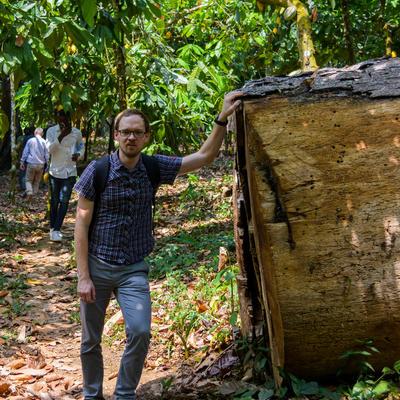
Christian Bunn
Scientist II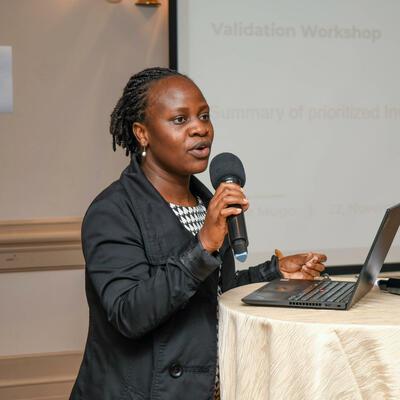
Dorcas Jalang'o Anyango
Research Team Leader