
Research Articles When crises and democracy open the door: What Peru and Kenya reveal about the politics of agroecology
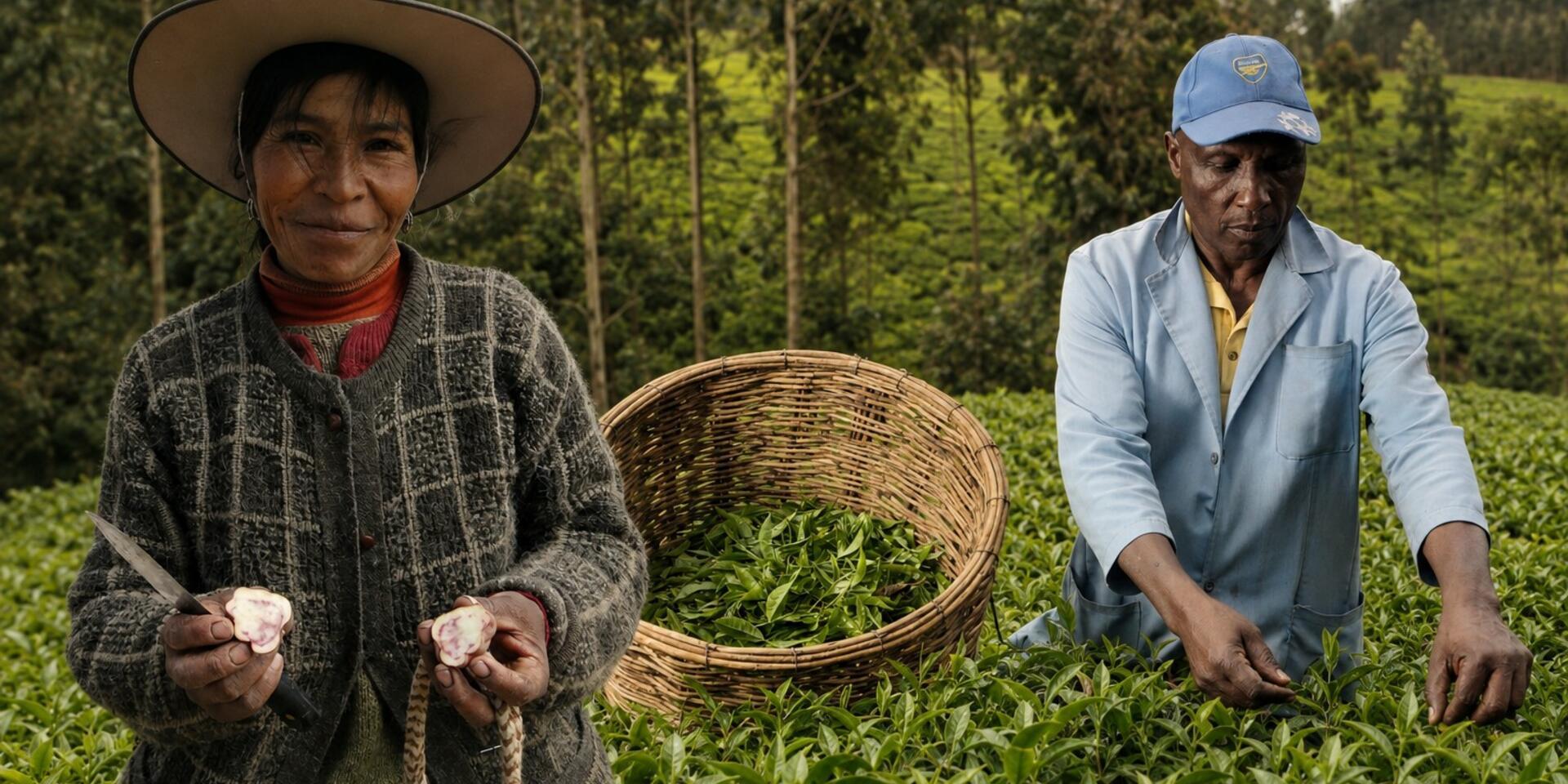

Researchers examined agroecology policies in Peru and Kenya over the past two decades, finding that crises, advocacy, and democratic reforms helped agroecology gain policy support. The study shows that lasting food system transformation depends on political change, not just farming practices.
Agroecology is often discussed as a way to produce food more sustainably: healthier soils, more resilient farms, stronger local food systems, and better opportunities for small-scale producers. A new study on agroecological policy landscapes in Peru and Kenya shows that the future of agroecology may depend as much on politics as on practices in the field.
The paper, Of crises, advocates, and framings. The formation of agroecology policy landscapes in Peru and Kenya, recently published in World Development Sustainability, asks a timely question: how do supportive policy environments for agroecology actually emerge? The answer is not simple. Policies are not born in isolation, nor do they follow a neat sequence from evidence to adoption. They are shaped over time by crises, institutions, advocacy coalitions, and the stories policymakers tell about agriculture, development, food security, and rural livelihoods.
By comparing Peru and Kenya, the study finds that both countries have moved toward more favorable policy landscapes for agroecology over the past two decades. Yet this shift remains incomplete. In both cases, agroecology has gained visibility, but it still competes with deeply rooted policy models that favor industrial agriculture, market liberalization, productivity-driven intensification, and corporate interests. This is the central finding worth communicating: agroecology is entering policy spaces, but it has not yet transformed the rules of the game.
The researchers analyze policy change through four interacting drivers: focusing events, such as crises or social unrest; changes in institutions; advocacy processes; and cognitive frames, meaning the ideas and narratives that define what the problem is and what solutions are considered legitimate. This framework helps explain why agroecology advances in some moments and stalls in others.
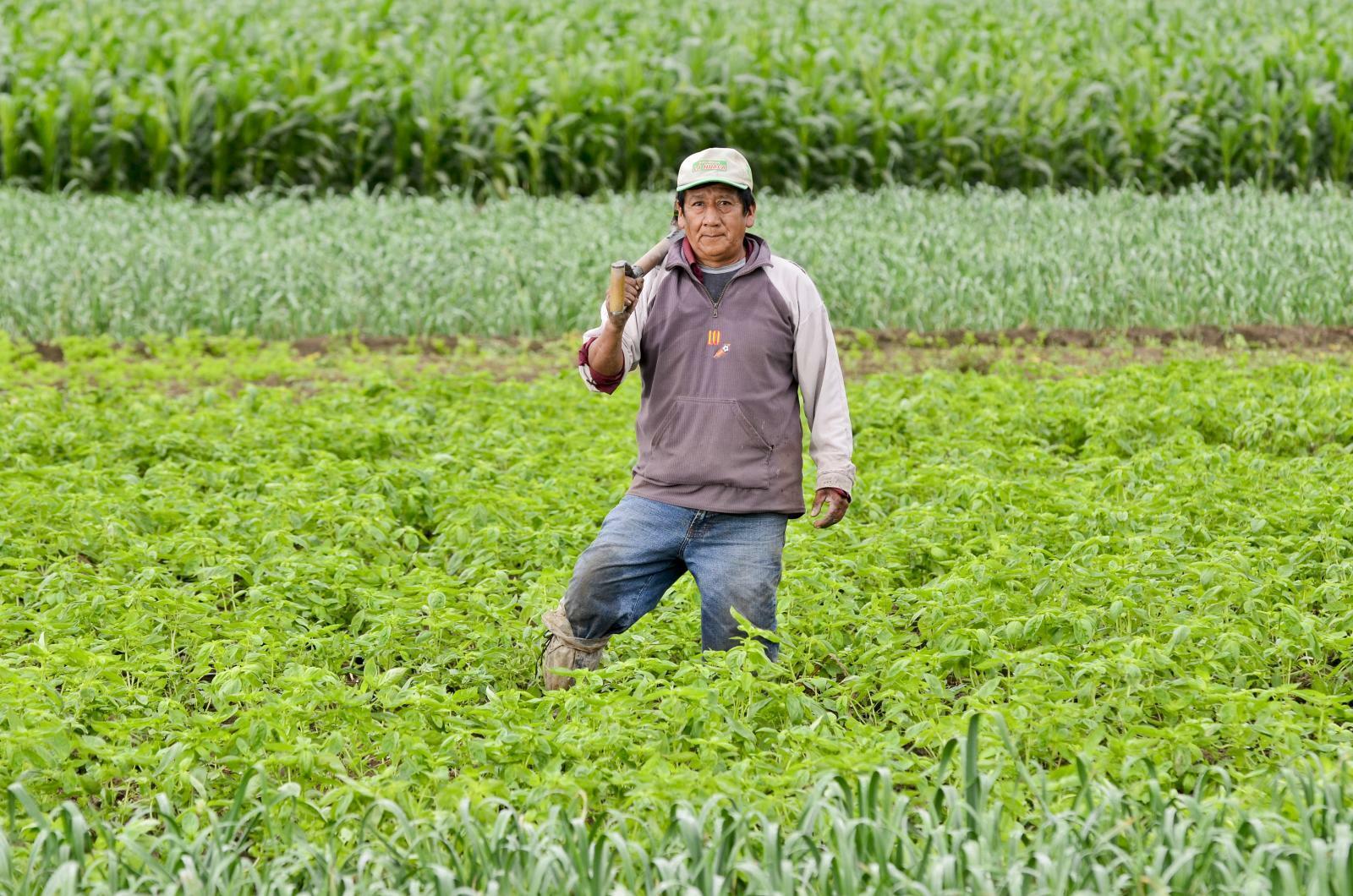
Farmer in Cañete Basin, Peru. Photo: CIAT/N Palmer
In Peru, the story is rooted in a long history of agrarian struggles, Indigenous and Andean knowledge systems, and a strong agroecological movement. The country’s policy landscape moved from instability and contradiction during the agrarian reform period, to a highly unfavorable environment in the 1990s, when neoliberal reforms, privatization, Green Revolution technologies, and industrial agriculture shaped the sector. Since the early 2000s, however, Peru has seen a gradual shift toward more supportive policies.
That shift did not happen by chance. Civil society organizations, farmer networks, academia, NGOs, and consumer movements played a decisive role. Organizations such as the Ecological Agriculture Network, the Action Network on the Use of Agrochemicals, the National Association of Organic Producers, and the Peruvian Agroecological Consortium helped build pressure for policies that recognize ecological production, family farming, local markets, farmer associations, and alternatives to industrial agriculture.
One particularly relevant detail is how unexpected alliances helped agroecology reach wider audiences. In Peru, farmer organizations worked with chefs, universities, and the gastronomy sector to connect agroecology with national identity, biodiversity, and food culture. The Mistura Gastronomic Fair, for example, became more than a food event; it helped build a public narrative linking local gastronomy with agroecological production.
Peru’s policy milestones include the legal recognition of organic or ecological production, the incorporation of family farming into national policy, and the 2021 Concerted National Plan for the Promotion and Encouragement of Organic or Ecological Production. The study notes that the term “agroecological production” entered Peruvian policy through this plan, reflecting a broader shift in how agriculture is framed: not only as production, but also as a pathway for rural development, poverty reduction, food sovereignty, and environmental protection.
Kenya’s trajectory is different. There, agroecology has entered policy debates more recently and in a context historically shaped by colonial land dispossession, Green Revolution thinking, donor influence, industrial agriculture, and political patronage. The 2010 Constitution was a turning point, opening more space for public participation, decentralization, environmental rights, and subnational policy innovation. This helped create opportunities for county-level agroecology policies, including Murang’a County’s agroecology policy in 2022 and the Vihiga County Agroecology Policy in 2025.
At the national level, Kenya drafted the National Agroecology for Food Systems Transformation Strategy in 2023. This is significant because it introduced agroecology into national policy language. However, the study finds that the strategy still carries a strong productivism and modernization-oriented framing. In other words, agroecology appears in the policy text, but often through the lens of productivity, efficiency, commercialization, and “modern” agriculture, making it closer to sustainable intensification than to a transformative agroecological agenda.
This contrast between Peru and Kenya is one of the paper’s strongest hooks. Peru shows how long-term grassroots advocacy can build a more holistic agroecological framing. Kenya shows how agroecology can enter policy spaces but risk being narrowed when donor agendas, industrial agriculture, and productivity-first narratives remain dominant.
The study also highlights the role of crises. In both countries, moments of disruption helped open policy windows: peasant uprisings, land conflicts, economic crises, electoral hostility, climate change, and COVID-19. These events exposed weaknesses in food systems and created opportunities to rethink agricultural policy. But crises alone were not enough. They only became politically meaningful when advocates could frame agroecology as a credible alternative.
The paper’s conclusion is clear: if countries want agroecology to move from isolated projects to structural transformation, policies must do more than mention agroecology. They must strengthen farmers’ self-organization, advocacy capacity, and territorial decision-making; reassess policies that favor industrial agriculture and corporate interests; and institutionalize coherent agroecological framings within government and policymaking spaces, namely, a coherent, well-structured, comprehensive, inclusive, institutionally embedded perspective on agroecology that remains true to its core principles.
Perhaps the most important message is that agroecology is not only a technical transition. It is a democratic one. Scaling agroecology requires giving farmers, communities, and local institutions greater power to shape the food systems they depend on. Without that, agroecology risks becoming another policy label: visible in strategies, but unable to change the structures that made transformation necessary in the first place. Democratic spaces for civil society advocacy and participation in Peru, together with the more democratic environment created by Kenya’s 2010 Constitution, exemplify this pathway.
This study was conducted under the CGIAR Programs on Policy Innovation and Multifunctional Landscapes.
Cover photo: FAO/Liana John & CIAT/N Palmer
