Research Articles Colombia and the Caribbean: A partnership for digital agriculture

In four Caribbean countries —Jamaica, Guyana, Saint Vincent and the Grenadines, and Saint Kitts and Nevis— farmers, cooperatives, and extension services are testing AI-powered digital tools that could transform how crops are grown, decisions are made, and climate challenges are addressed. This pioneering initiative is supported by APC Colombia, the Caribbean Agricultural Research and Development Institute (CARDI), and the Alliance of Bioversity International and CIAT.
In a region on the frontline of the climate crisis, Caribbean agriculture is at a turning point that will determine whether the region can guarantee its food security in the midst of an increasingly uncertain climate. With each passing season, farmers face intensifying challenges—from hurricanes and droughts to rising input costs and gaps in extension support. But amidst these pressures, something new is taking root: a digital roadmap for resilience.
Earlier this year, our team embarked on an ambitious journey across four countries—St. Vincent and the Grenadines, St. Kitts & Nevis, Guyana, and Jamaica—to explore how digital innovation can help future-proof agriculture across the Caribbean. What we found was both urgent and hopeful: a region ready to leap forward, and a growing appetite for tools that can make farming smarter, faster, and more adaptive. These visits were part of the regional initiative 'Transforming Agri-Food Systems: A Digital Pathway to Climate Resilience', supported by APC Colombia and led in partnership by the Caribbean Agricultural Research and Development Institute (CARDI) and the Alliance of Bioversity International and CIAT.
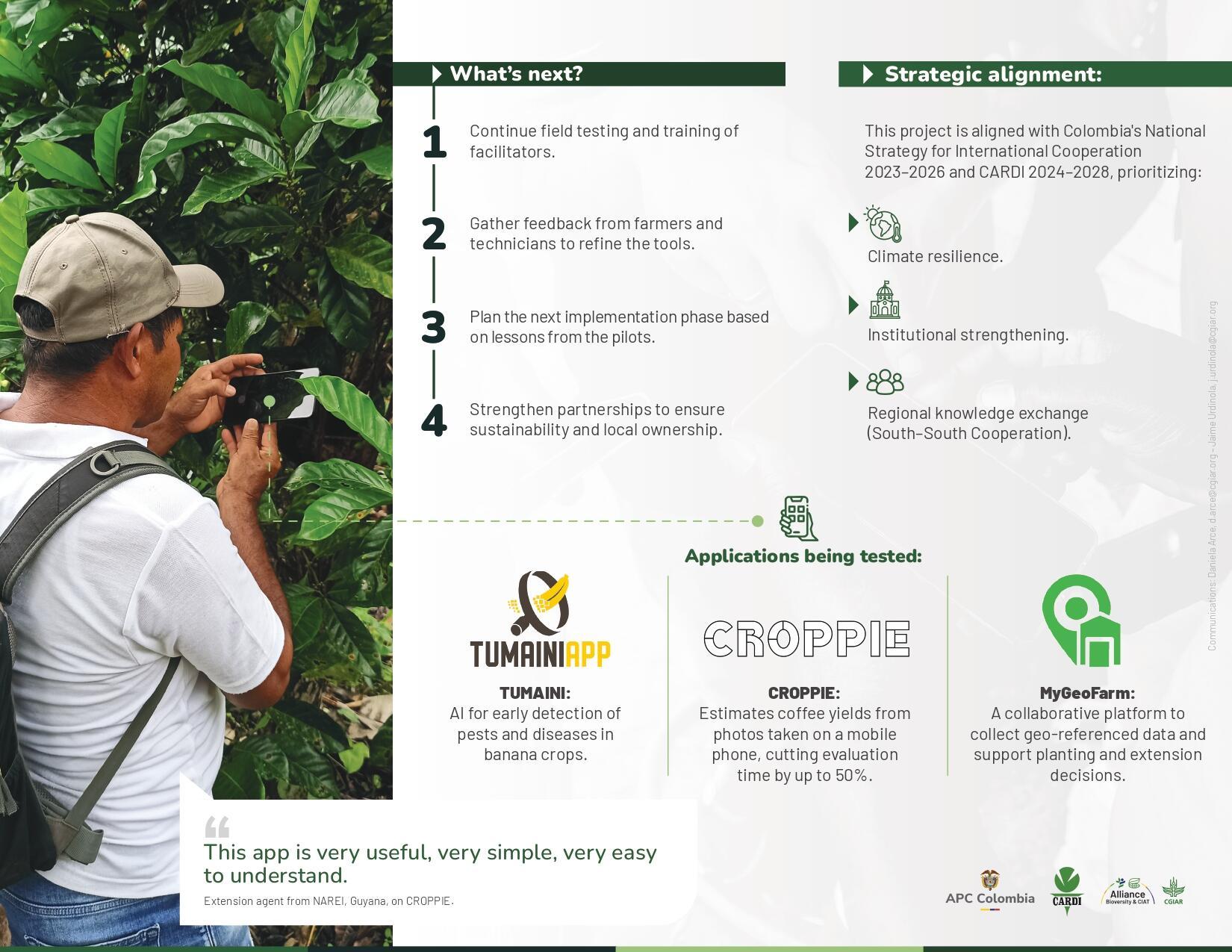
APC-Colombia’s support for digital agriculture in the Caribbean is aligned with Colombia’s 2023–2026 National Strategy for International Cooperation, which prioritizes climate resilience, institutional strengthening, and regional knowledge exchange. By sharing Colombia’s tested innovations in areas like AI-powered agriculture and climate-smart tools, this South–South cooperation fosters peer learning and builds capacity in countries facing similar climate and food security challenges.
It also reflects Colombia’s broader commitment to strengthening ties within Latin America and the Caribbean through inclusive, sustainable development partnerships. The project’s overarching aim is to improve climate, soil, and crop management knowledge across the Caribbean—helping reduce agricultural losses and building the foundations for long-term resilience. To do this, we're drawing on Colombia’s tested experience in digital agriculture and translating it into actionable, locally tailored solutions.
A step-by-step digital roadmap for resilience
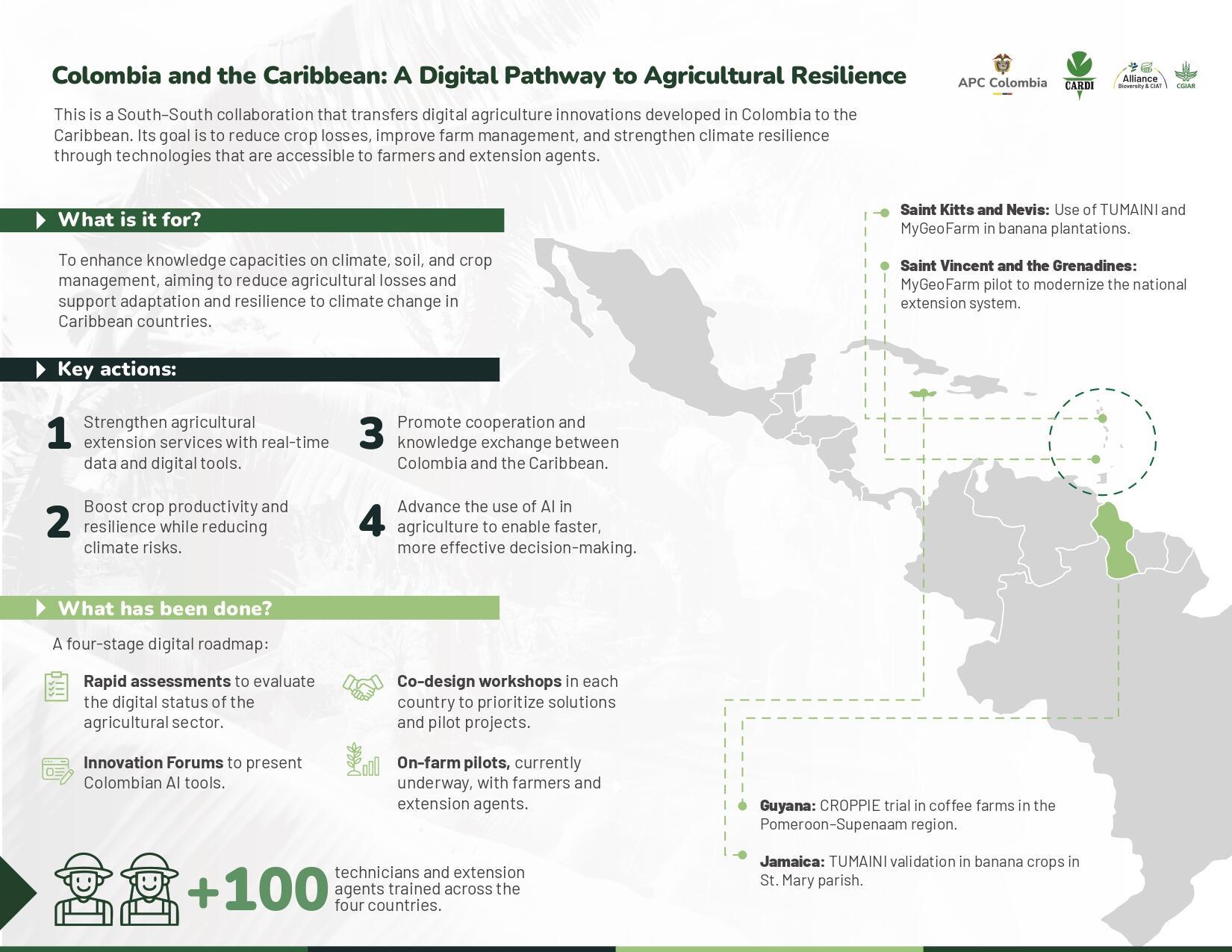
The project is grounded in a step-by-step approach:
1. Rapid assessments to understand digital readiness and sector challenges,
2. Innovation Forums, where stakeholders explored Colombia’s cutting-edge digital tools,
3. Co-design workshops in each country to prioritize solutions and design pilots tailored to national contexts,
4. Field pilots, now underway, that bring these innovations to life in real-world conditions.
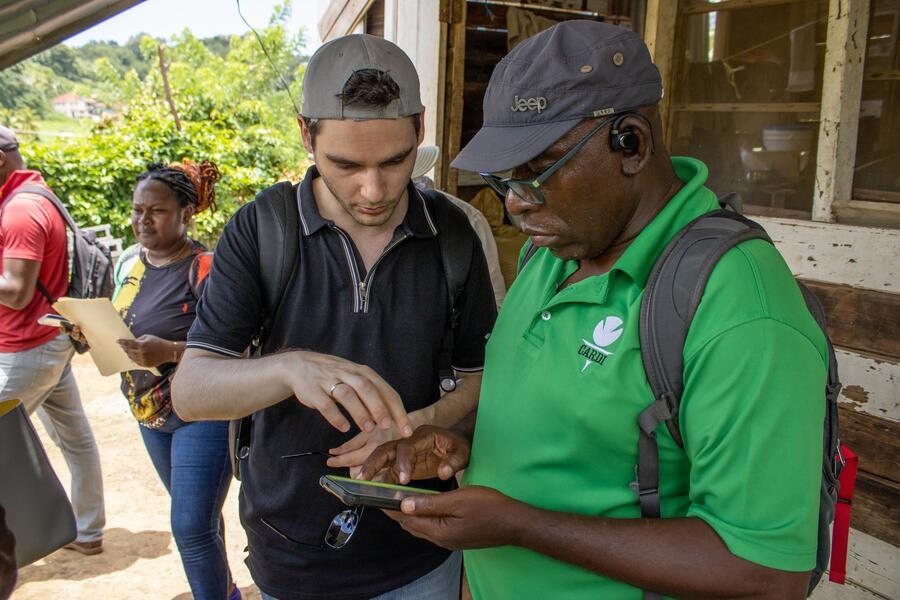
“This app is very useful, very simple, very easy to understand.”
Crop Extensionist with NAREI testing the Croppie app in Guyana.
A region ready for AI and data-driven change
During our field mission in the four countries, we trained more than 100 technicians and extensionists using our innovations. One message rang out loud and clear in every country: there is strong enthusiasm for AI-driven solutions. From disease diagnostics to yield estimation, stakeholders recognized the power of real-time, farm-level insights to break through the limitations of traditional extension services.
Among the innovations selected for pilot testing:
Digital Innovation Pilots in Action
St. Kitts & Nevis
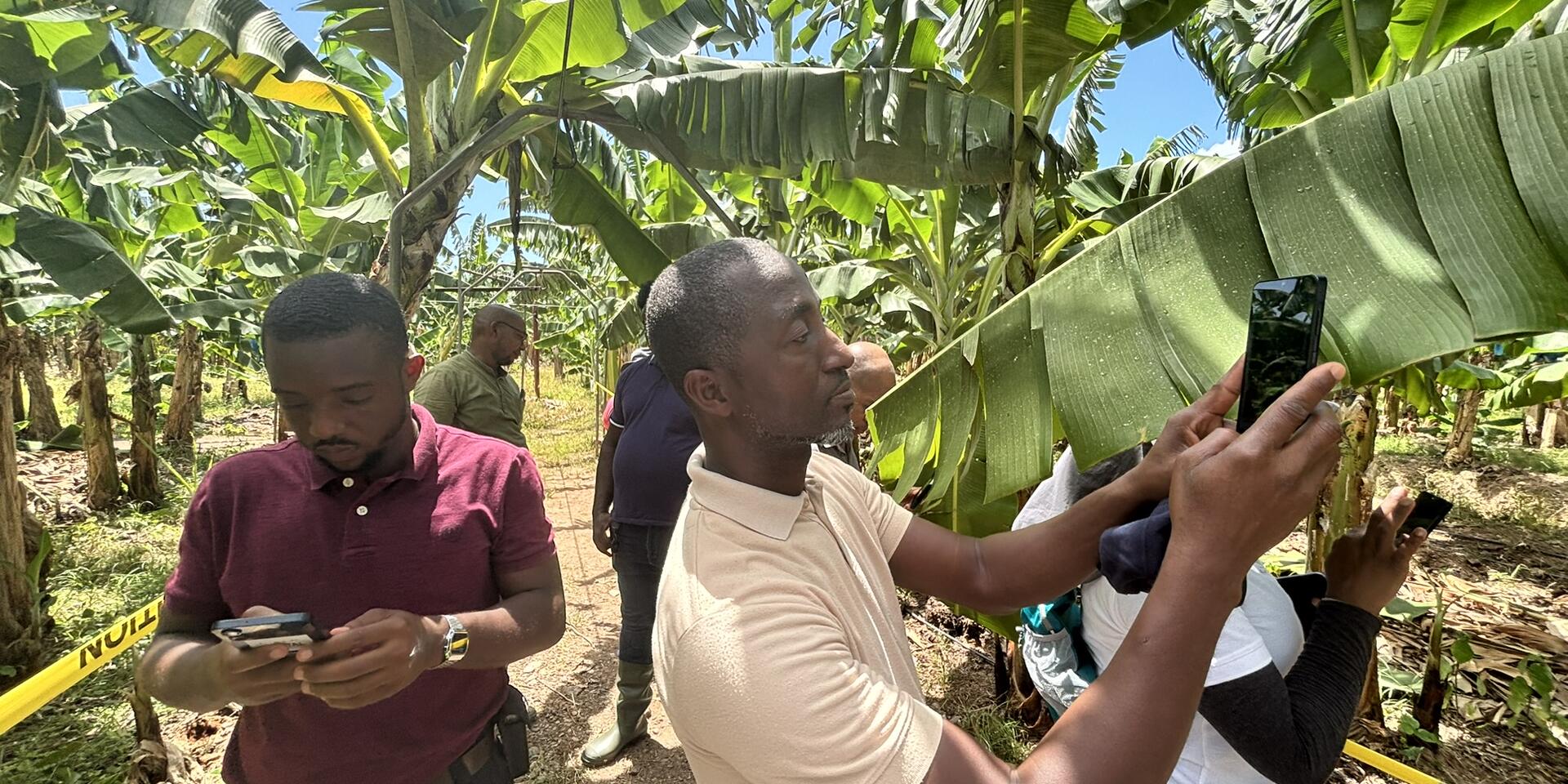
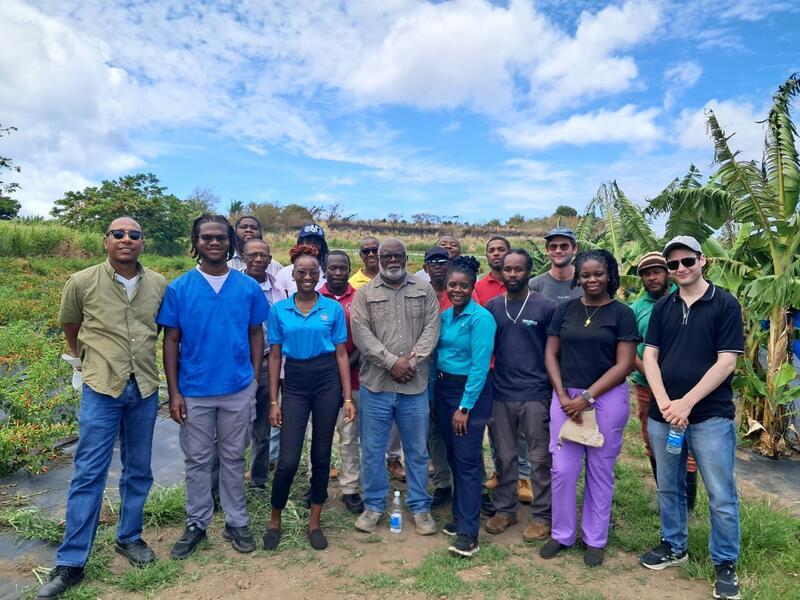
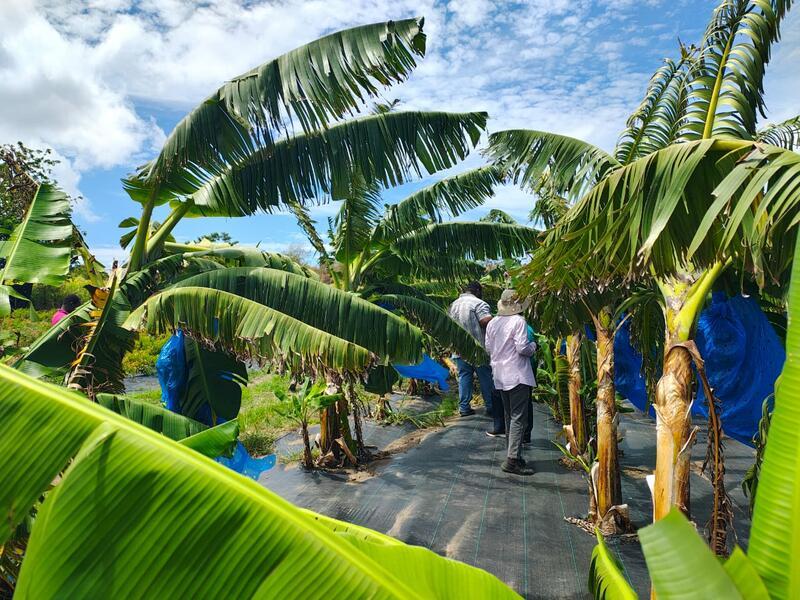
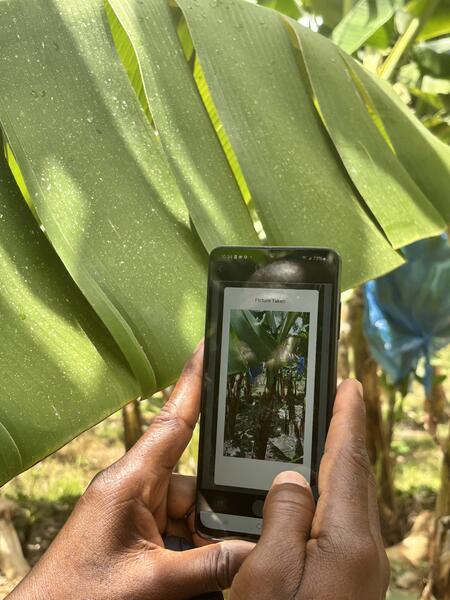
Our journey began in St. Kitts & Nevis, where we joined the Department of Agriculture and CARDI to introduce MyGeoFarm and TUMAINI. After a hands-on training, participants took to the field to test the apps on local banana farms—capturing real-time plant data and seeing AI in action.
St. Vincent and the Grenadines
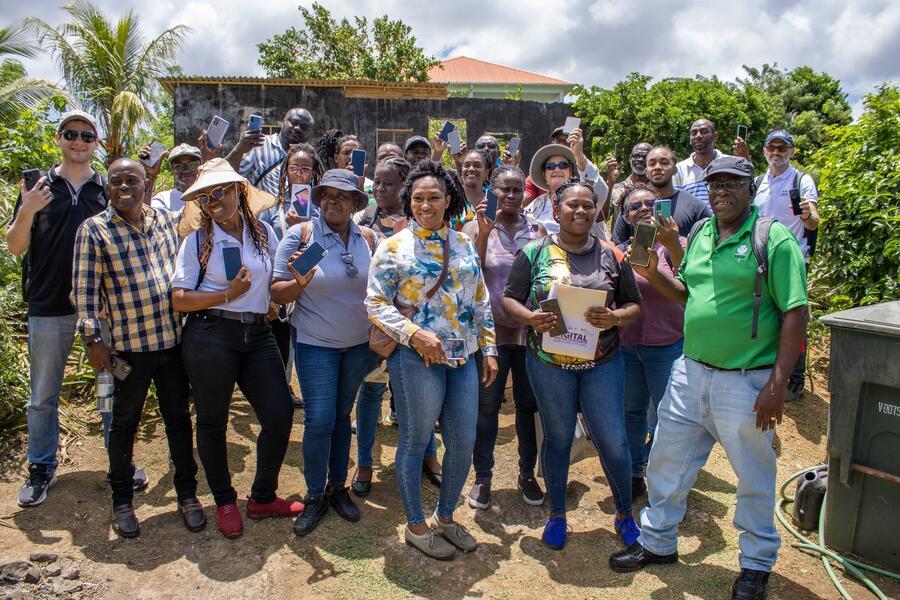
At the Dumbarton Agricultural Station, 25 participants explored how MyGeoFarm could modernize the national extension system. By facilitating structured, geo-referenced data collected at the farm level, the app empowers farmers while equipping policymakers with the information they need to respond quickly and effectively. The pilot is being carried out with the Extension Service of the Ministry of Agriculture, Forestry, Fisheries, Rural Transformation, Industry & Labour.
Guyana
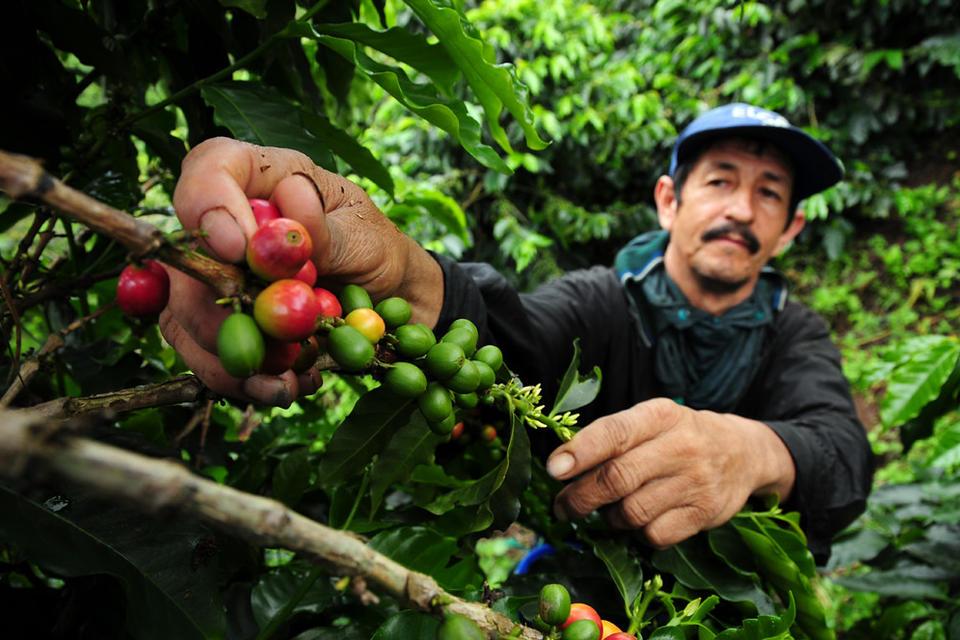
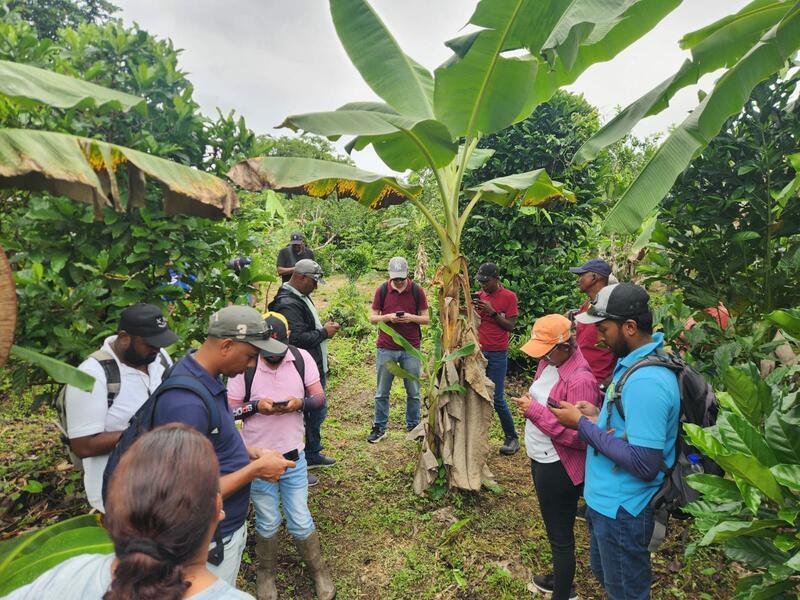
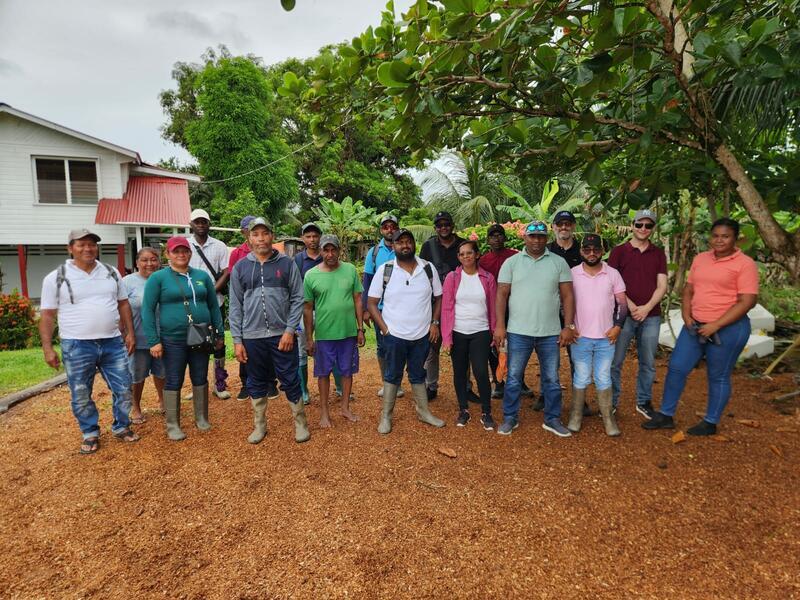
In the Pomeroon-Supenaam region—home to Guyana’s coffee producers—CROPPIE was piloted. Using just a smartphone, farmers can take photos of their coffee trees and instantly receive AI-generated yield estimates. The app reduces the time and guesswork of traditional yield assessments by up to 50%, while providing data that can inform planting, labor, and marketing decisions.
Jamaica
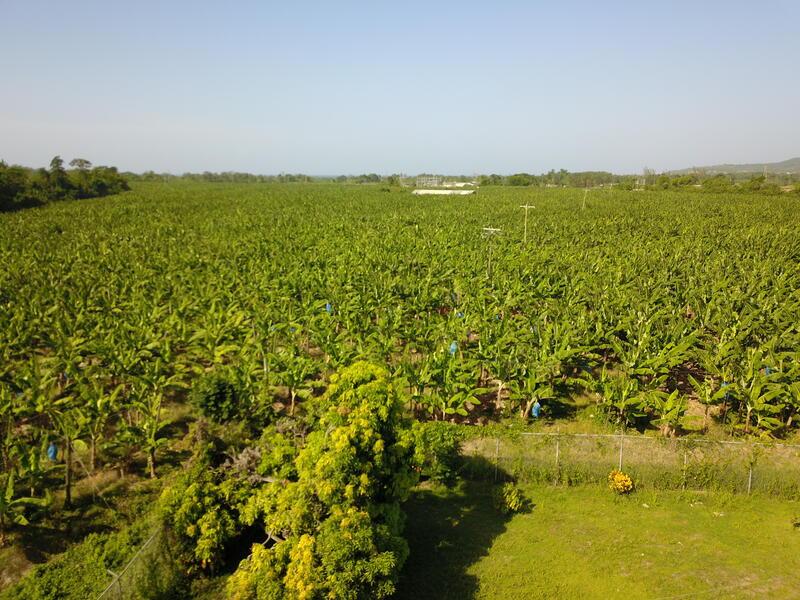
In St. Mary parish, banana farmers tested TUMAINI, an app that scans leaves, fruit, or bunches to detect pests and diseases, even from low-quality images or in challenging conditions. Participants were especially impressed by its accuracy and ease of use—key traits for adoption in real-world farming.
What Comes Next
As the pilot’s progress, field testing and facilitator training will deepen the local understanding of these tools. In a few months, we’ll collect feedback from farmers, cooperatives, and extension officers to refine the tools and plan the next phase of implementation.
But one thing is already clear: digital transformation is not just about technology—it’s about trust, empowerment, and opportunity. With the right partnerships, the Caribbean can lead the way in building a more inclusive, climate-smart future.
Further reading