Research Articles Climate risk to opportunity in East Africa: Scaling food system investment for nature and social impact

Climate risk is often treated as a barrier to agricultural investment, but it is actively reshaping where and how investment can succeed. Information asymmetry remains a core constraint with limited climate, productivity, and market data continuing to inflate perceived risk and restrict capital flows.
Seeking to provide investors with clarity, ImpactSF analyzed climate risk and agricultural value chains in Ethiopia and Rwanda, revealing two very different realities for investment in agricultural risk management (ARM) solutions.
In Rwanda, climate-resilient investments often already have strong commercial potential. The priority is unlocking scale and reducing early-stage risk. While in Ethiopia, investment potential exists but requires building foundational systems first, including infrastructure, climate data, aggregation, and finance mechanisms.
Four key insights across both countries
- Climate-resilient agriculture is increasingly investable
- Capital strategies must match market maturity
- Rwanda’s priority is scaling viable investments
- Ethiopia is building the systems that enable investment
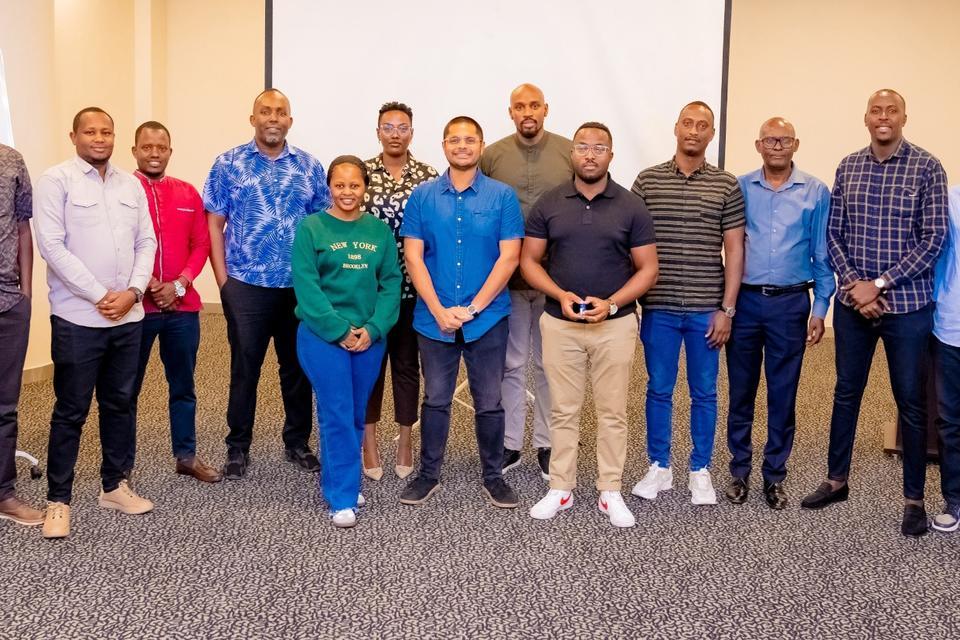
ImpactSF and Tetra Tech collaborated to deliver a set of briefs with targeted recommendations to explore where and how agriculture can remain profitable and resilient in the face of climate change in Rwanda and Ethiopia, where the sector is central to economic growth. Working with stakeholders across government, financial institutions, agribusinesses, and development partners, ImpactSF translated climate risk analysis into investment blueprints for climate-resilient agricultural systems and synthesized opportunities and recommendations for stakeholders. Each brief distills insights into actionable recommendations, outlining how climate risk management can help mobilize investment into resilient agricultural value chains.
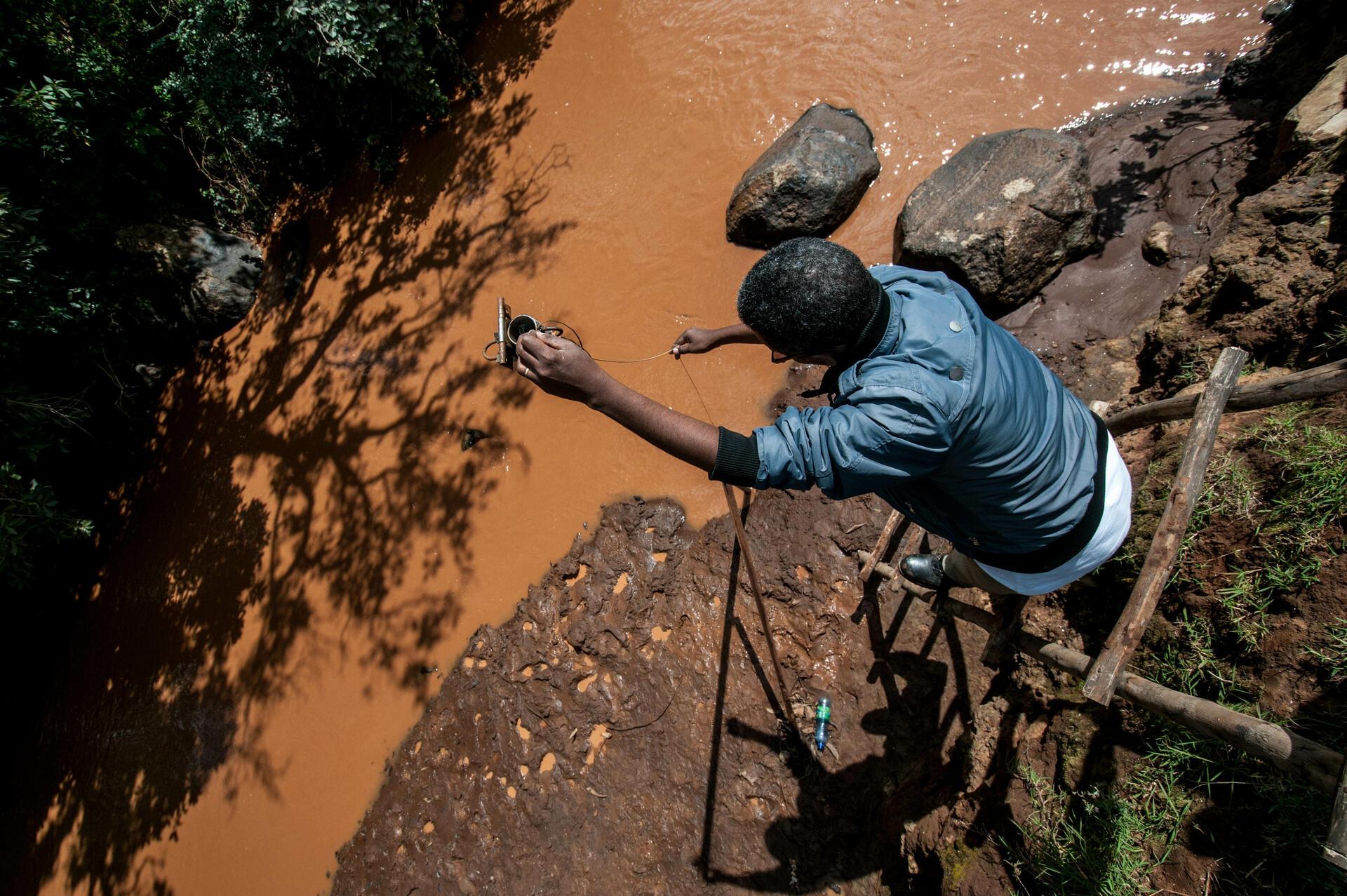
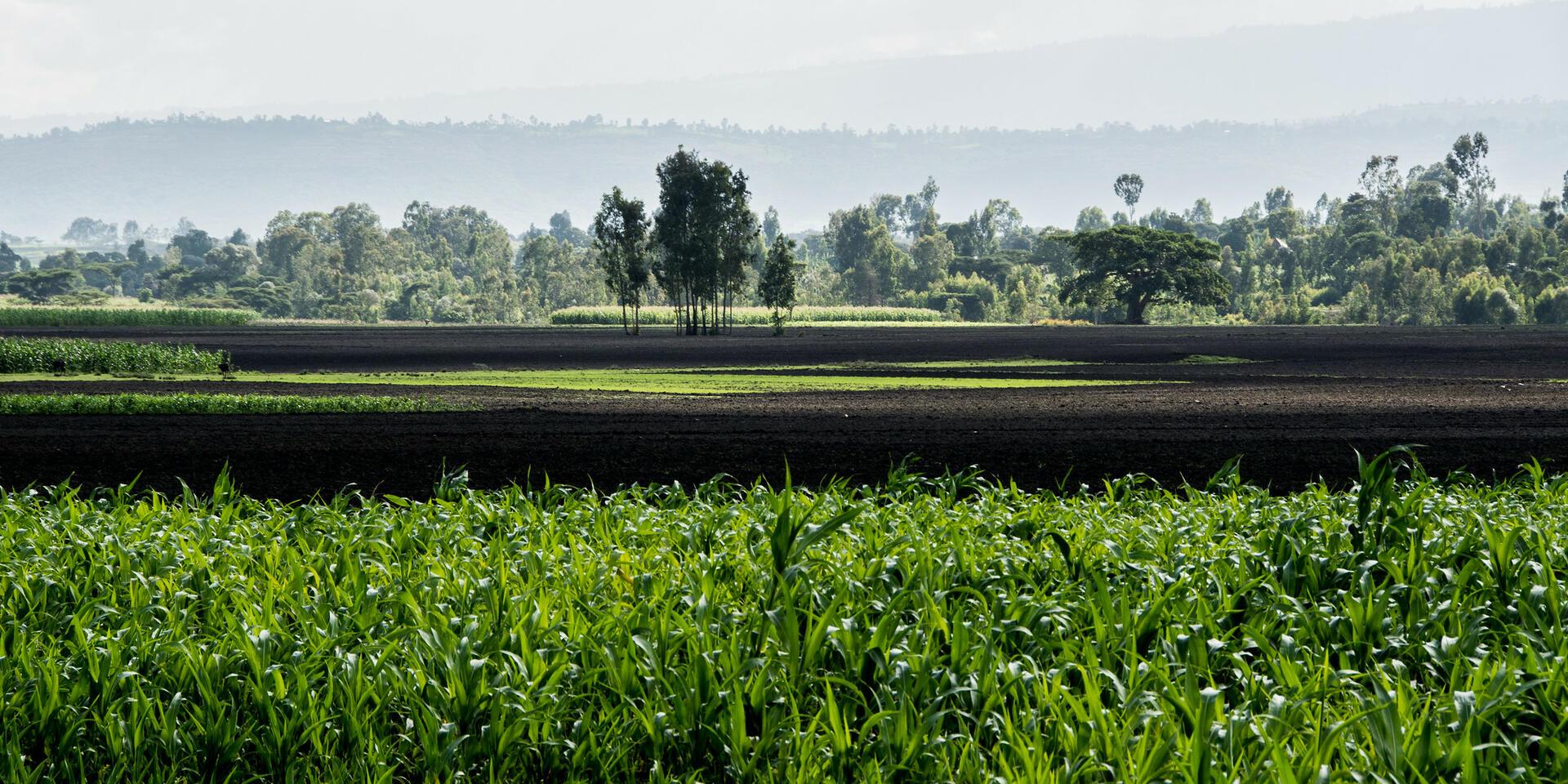
Ethiopia soil data. Credit: Georgina Smith / CIAT 2015
Matching capital to market conditions
Both countries rely heavily on agriculture for economic growth and livelihoods. Yet the structure of their agricultural sectors and the barriers to investment look very different. These differences shape the policy priorities and the investment opportunities in each country. The series of briefs lay out the risk and opportunities tailored for policymakers, investors, and donors.
|
|
Market Condition |
Primary Constraint |
Policymakers |
Concessional Capital |
Commercial Capital |
|
Rwanda |
Emerging yet investable climate-resilient agriculture |
Early-stage risk & scaling constraints |
Reduce systemic risk (climate data, irrigation, finance regulation) |
Catalytic finance to unlock scalable investments |
Scale proven models (irrigation, livestock resilience, agroforestry) |
|
Ethiopia |
Foundational systems still developing |
Infrastructure & climate data gaps, fragmented markets |
Build enabling infrastructure and financial systems |
Market-building capital for public goods & early infrastructure |
Enter gradually through lower-risk segments |
Government & Policymakers: Set the enabling environment by investing in climate data, infrastructure, and regulatory frameworks that reduce risk and unlock agricultural investment.
Donors & Concessional capital: Deploy catalytic capital to de-risk early-stage investments, build foundational systems, and crowd in private finance.
Investors & Commercial capital: Scale climate-resilient agricultural models by allocating capital to bankable opportunities where risks are structured and returns are clear.
Ethiopia: Building systems to enable investment
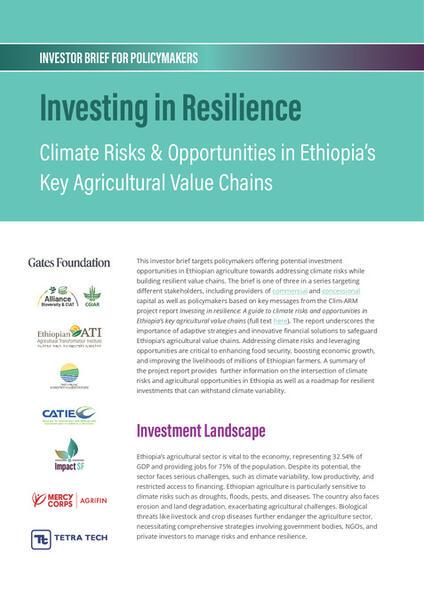
Ethiopia’s agricultural sector is large and diverse, supporting the livelihoods of most of the population. But climate variability, infrastructure gaps, and fragmented markets continue to limit private investment. Building foundational systems first by integrating holistic risk mitigation approaches and ensuring that investments are climate-proofed, Ethiopia can safeguard its agricultural sector against the unpredictable impacts of climate change, secure food security, and drive economic growth.
Priorities for Ethiopia
- Diversify investment approaches with regional tailoring: Align investment strategies with Ethiopia’s diverse agro-ecological zones to address varying risks, production systems, and market conditions.
- Strengthen integrated water resource management: Expand irrigation systems and improve water governance to reduce climate exposure and stabilize agricultural production.
- Empower women and youth as catalysts for change: Improve access to land, finance, and agricultural services to accelerate the adoption of CSA practices.
- Leverage Ethiopia’s crop diversity for resilience: Invest in staple crops such as maize, wheat, and teff to enhance productivity and strengthen climate resilience.
- Expand public–private partnerships for agricultural infrastructure: Scale investment in irrigation, storage, and logistics systems to reduce market constraints and enable greater private sector participation.
- Advance climate-sensitive policy reforms: Strengthen agricultural finance systems, insurance mechanisms, and climate data services to reduce systemic risk and support investment.
ETHIOPIA INVESTMENT SNAPSHOT
When ARM interventions are paired with appropriate de-risking, several value chains show strong financial potential:
Maize
Wheat
Teff
Dairy
Payback under four years.
Coffee agroforestry
With long-term carbon benefits.
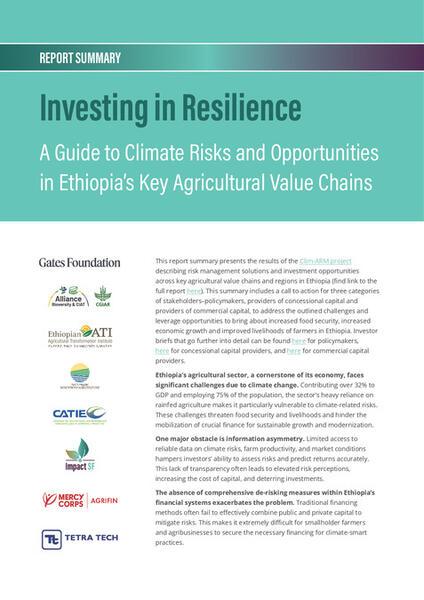
Investor brief for concessional capital providers
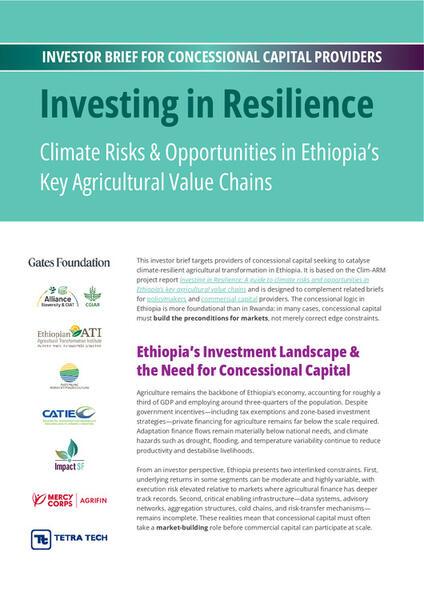
Investor brief for commercial capital providers
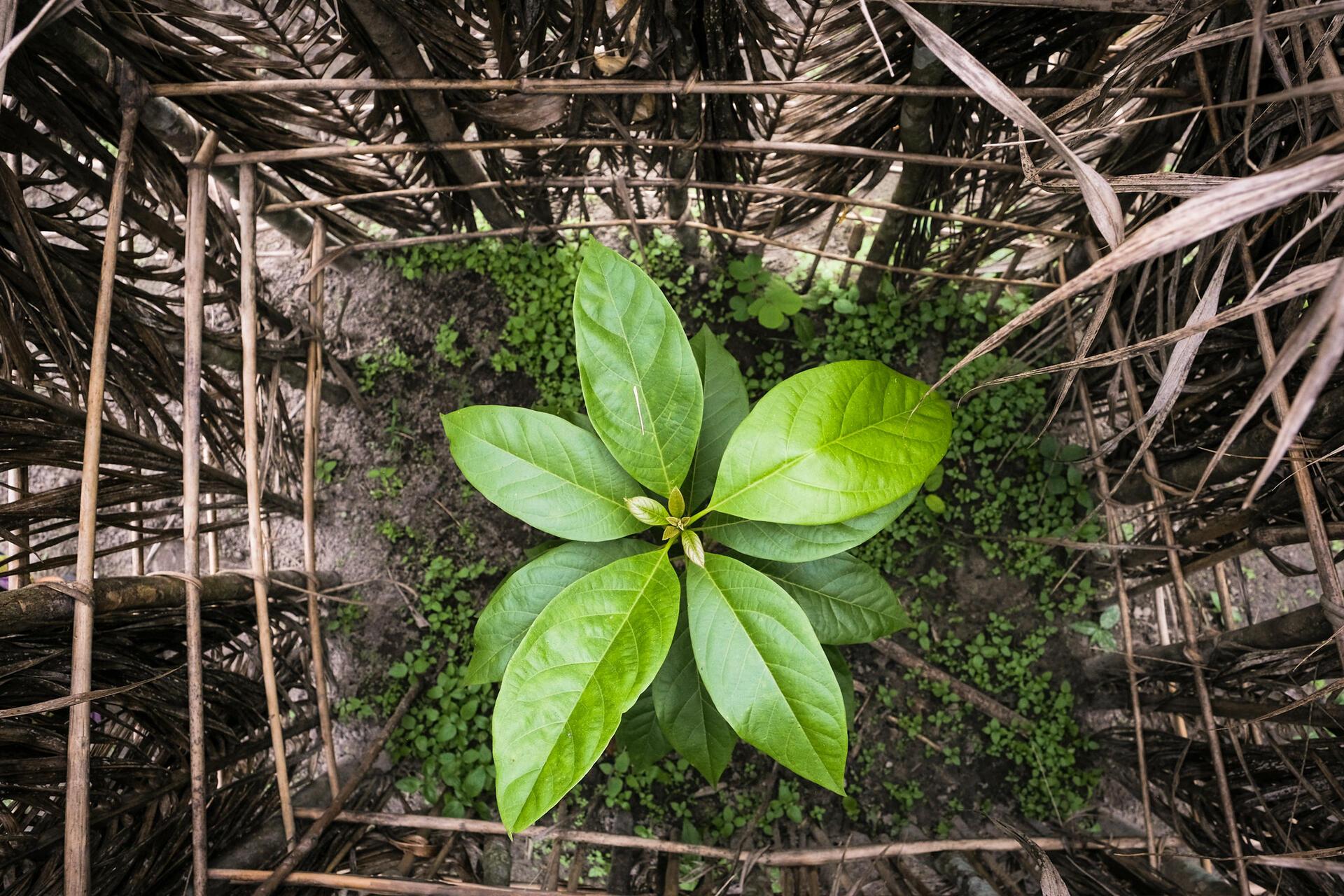
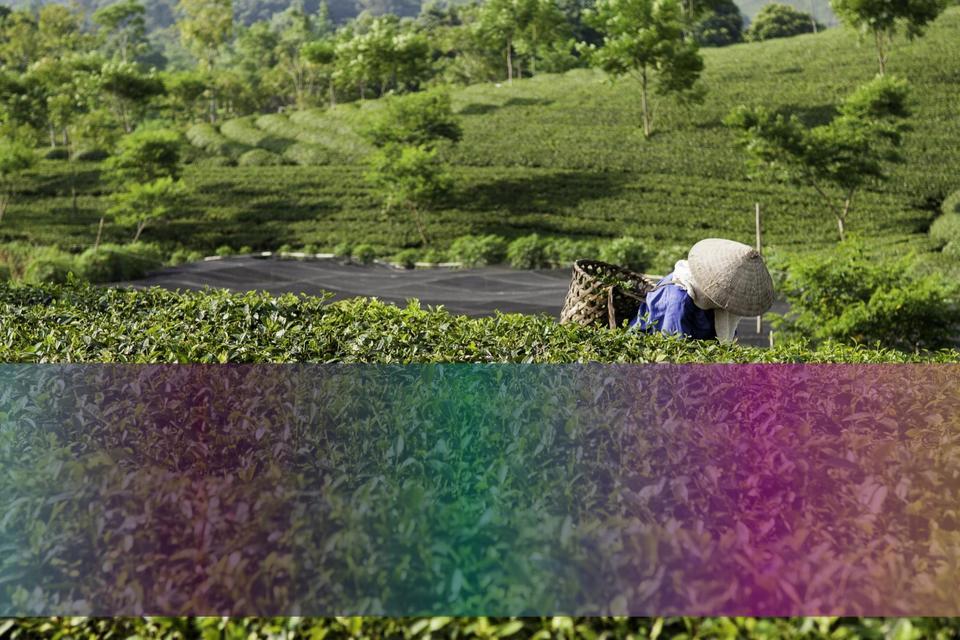
Young avocado trees. Photo credit: Axel Fassio/CIFOR
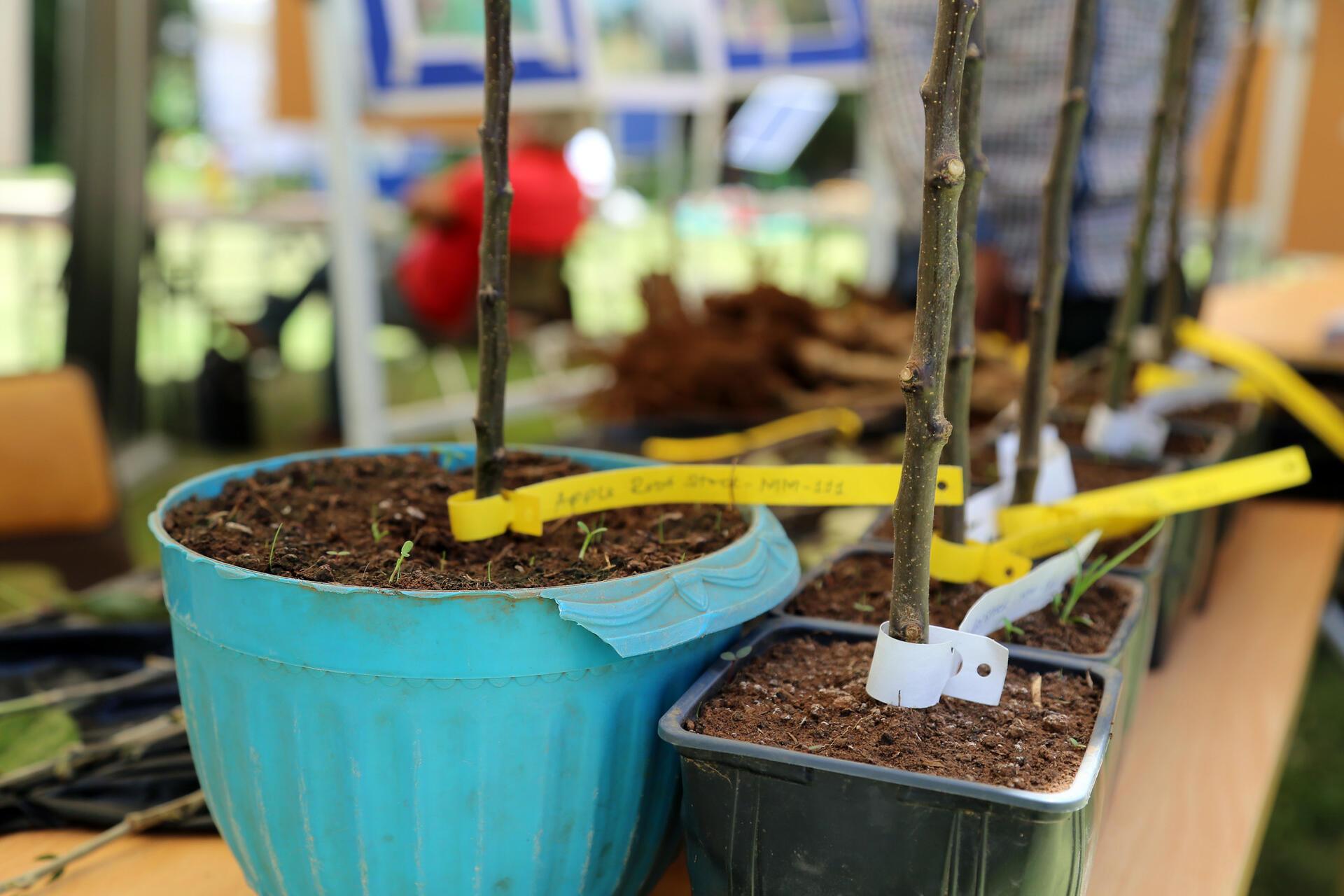
Plants ready for planting. Photo credit: ILRI/Liya Dejene
Rwanda: Scaling climate-resilient investments
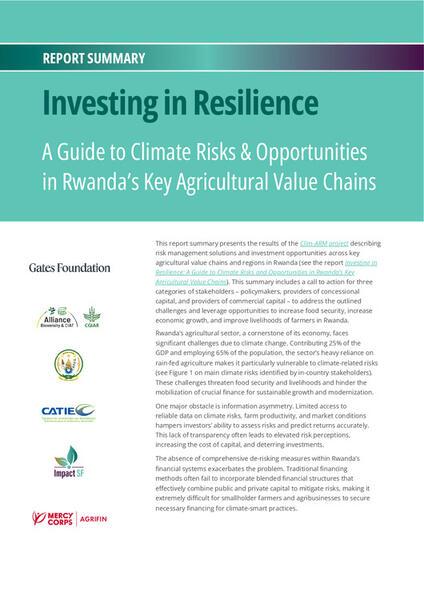
With strong government support and growing private-sector participation, Rwanda has a different starting point for ARM investment. Climate risk still threatens Rwanda’s agricultural sector, but climate-resilient production models are already demonstrating strong commercial potential across several value chains. Targeted climate risk mitigation and climate-proofing adaptation investment can unlock economic growth, social impact, and food system resilience and security.
Priorities for Rwanda
- Scale up climate-smart investments with climate proofing: Ensure investments integrate climate risk mitigation to improve long-term viability and returns by prioritizing irrigation, livestock resilience, and nature-based solutions.
- Enhance infrastructure and market access: Continue investing in irrigation systems, road networks, and logistics to improve market access, reduce post-harvest losses, and strengthen value chain efficiency.
- Strengthen data systems and climate and weather services: Improve the availability, accuracy, and accessibility of climate and agricultural data to support better decision-making by farmers, financial institutions, and policymakers.
- Unlock agricultural finance through blended and risk-sharing mechanisms: Expand blended finance structures that combine public and private capital, alongside insurance and risk mitigation tools, to reduce perceived risk and crowd in private investment.
- Support smallholder farmers through holistic de-risking approaches: Develop financial products and support systems that reduce collateral requirements and integrate climate risk mitigation, enabling farmers to adopt CSA practices.
- Strengthen private sector engagement through policy support: Use incentives, public-private partnerships, and regulatory reforms to encourage financial institutions and agribusinesses to invest in CSA at scale.
RWANDA INVESTMENT SNAPSHOT
Across Rwanda’s value chains, climate-smart investments show strong financial returns when paired with risk mitigation:
Irrigation (maize, beans, potatoes)
~4-year payback
Livestock systems
Coffee agroforestry
With ecosystem benefits
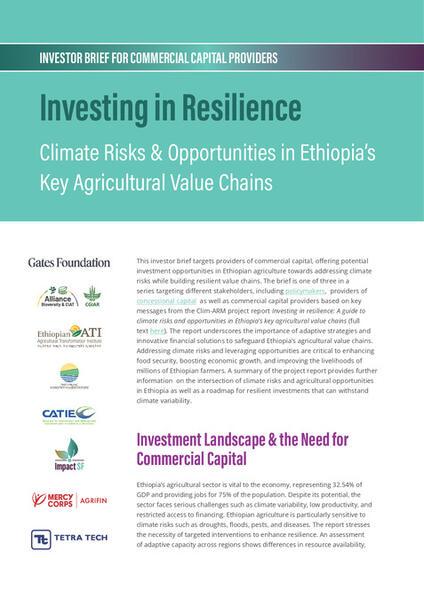
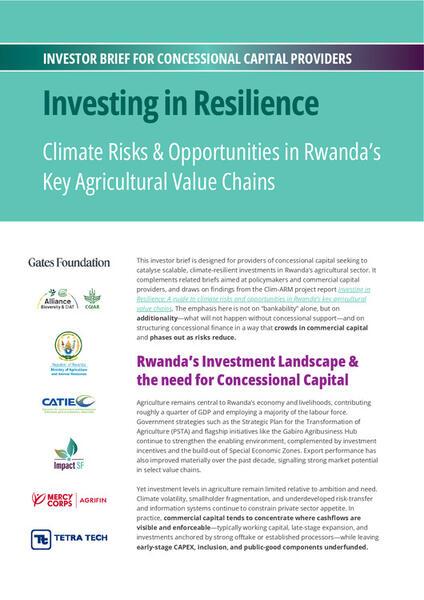
Investor brief for concessional capital providers
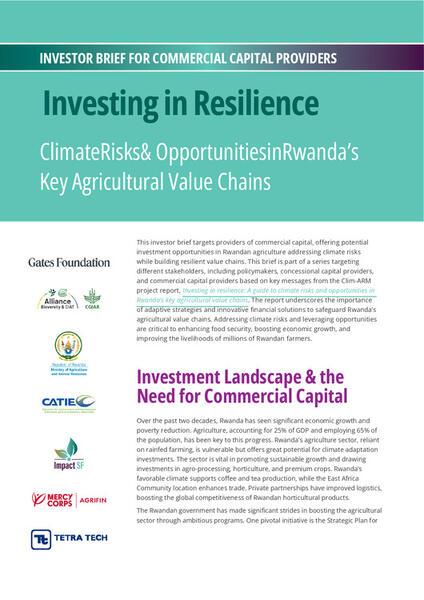
Investor brief for commercial capital providers
Climate risk reshaping agriculture investment
Climate risk is reshaping agricultural investment across East Africa, and there is no single pathway to climate-resilient agricultural investment. Ethiopia requires market-building investment to enable ARM. Rwanda requires scale-up capital to expand what is already working. For policymakers, donors, and investors, the challenge lies in aligning capital with these realities across value chains.
The analysis behind these briefs was developed with support from the Gates Foundation and in collaboration with government agencies, research institutions, and technical partners across Ethiopia and Rwanda. Between 2022 and 2023, regional workshops and interviews involving more than 350 experts helped identify climate risks, investment barriers, and solutions tailored to key value chains and local contexts. The findings are already helping inform climate-smart investment and resilience planning and implementation across the two countries’ agriculture sectors.
“The Clim-ARM report has been instrumental in supporting evidence-based decision-making, strategic planning, and the implementation of agricultural and climate resilience initiatives—particularly within the irrigation subsector. It has also helped identify opportunities for collaboration and partnerships around irrigation equipment and climate-smart agricultural inputs.” — Irrigation and Mechanization Specialist
Explore the briefs to learn more about the recommendations and investment opportunities emerging from ImpactSF’s analysis.
More about the Clim-ARM Project
Clim-arm blueprint reports
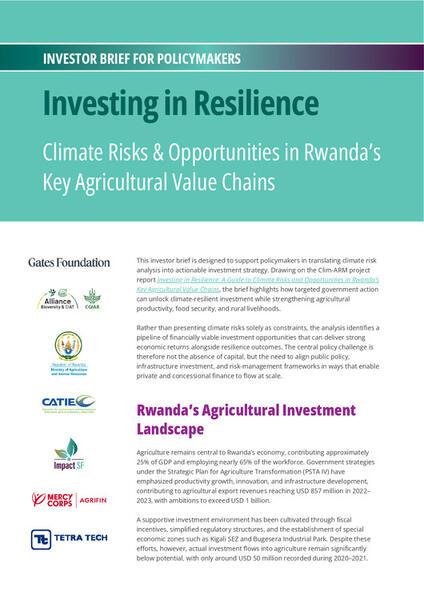
The Clim-ARM project was implemented by the Alliance of Bioversity & CIAT and CGIAR’s Sustainable Finance Hub (ImpactSF) and funded by the Gates Foundation. The project collaborated with a variety of partners to ensure a comprehensive assessment and the development of effective agricultural risk management (ARM) solutions for key agricultural value chains. The partners in Rwanda included: the Rwanda Ministry of Agriculture and Animal Resources (MINAGRI), the Rwanda Agriculture and Animal Resources Development Board (RAB), Rwanda Environment Management Authority (REMA), Rwanda Green Fund, and Meteo Rwanda. The partners in Ethiopia included: the Ethiopian Agricultural Transformation Institute (ATI), the Ministry of Agriculture (MoA), the Centre for Tropical Agricultural Research and Education (CATIE), Mercy Corps, the Ethiopian Institute of Agricultural Research (EIAR), and the Ethiopian Meteorological Institute (EMI).
The policy brief summaries and investor briefs were created in conjunction with Tetra Tech.