Research Articles Capacity building for deforestation monitoring and mitigation in Ucayali, Peru
By: Jhon Jairo Tello
Monitoring and mitigating deforestation are crucial challenges for sustainable agricultural supply chains, especially in regions such as Ucayali, Peru. From November 26-28, 2024, within the framework of the Agroecological Regenerative Cacao (ARC) project, a workshop focused on the use of Global Forest Watch Pro (GFW Pro), as an early warning tool for monitoring cacao plots, was held.
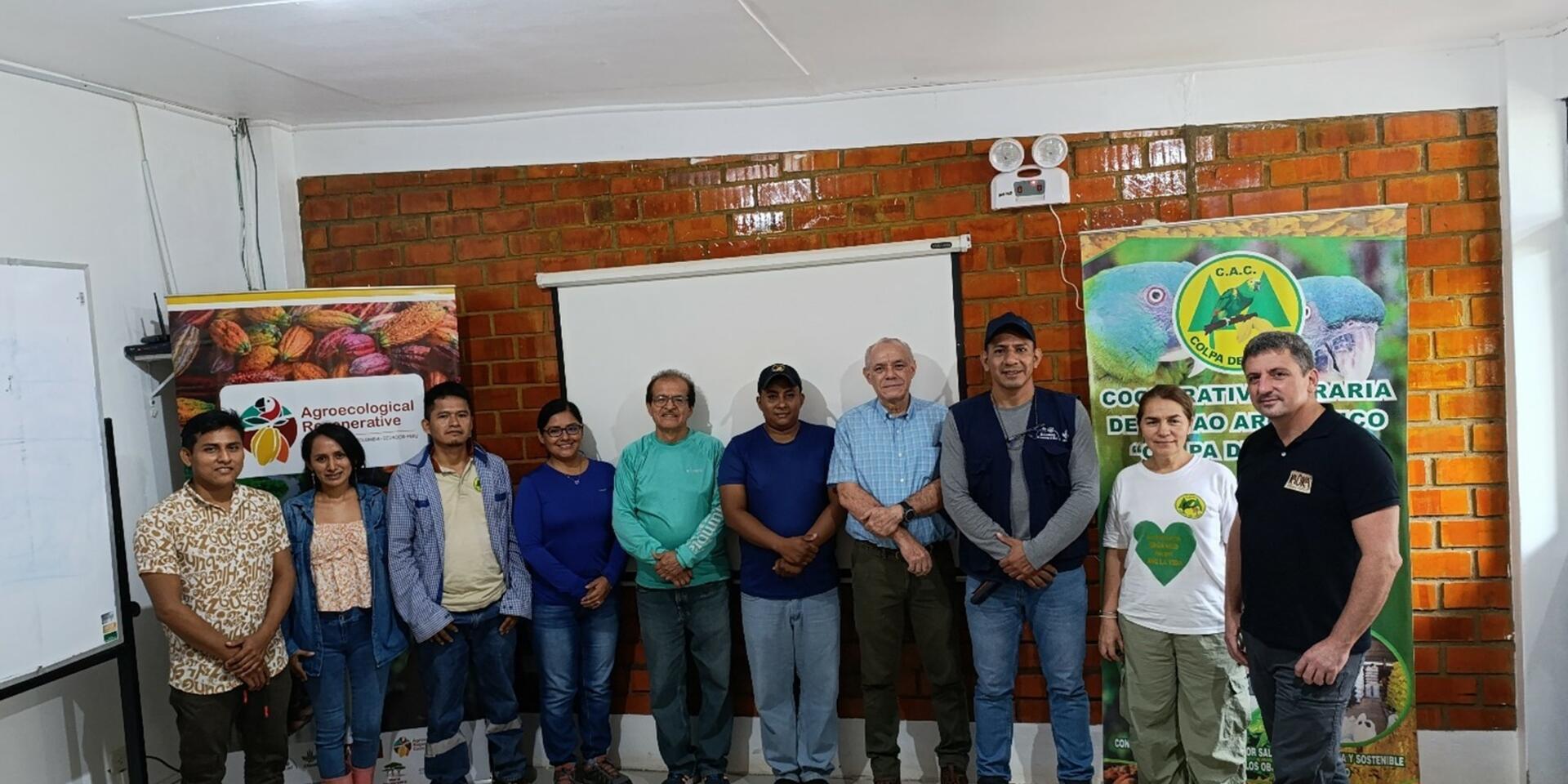
The event brought together representatives from the Colpa de Loros Cooperative, CECAO, KAOKA, and the Alliance of Bioversity International and CIAT.
Jhon Jairo Tello, researcher at the Alliance of Bioversity & CIAT, who led this workshop, highlighted: "The use of tools such as GFW Pro not only allows detecting deforestation risks, but also empowers producers by providing them with accurate and actionable data to monitor their plots and comply with international regulations".
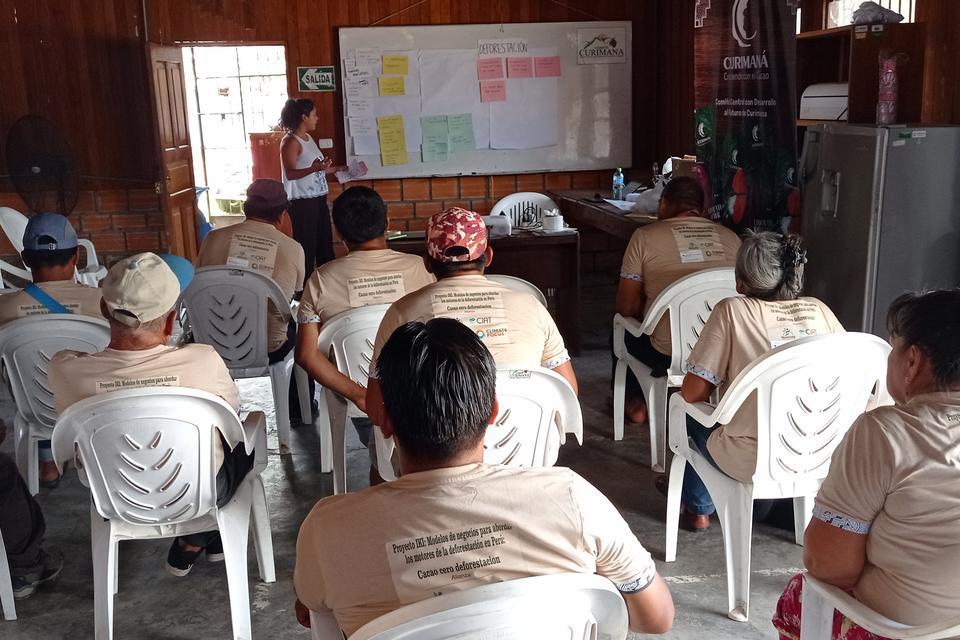
During the workshop, participants were trained in the use of GFW Pro to identify and respond to deforestation risks on agricultural plots, developing practical skills to interpret and apply the data generated by this tool, in support of compliance with the European Union Deforestation Regulation (EUDR).
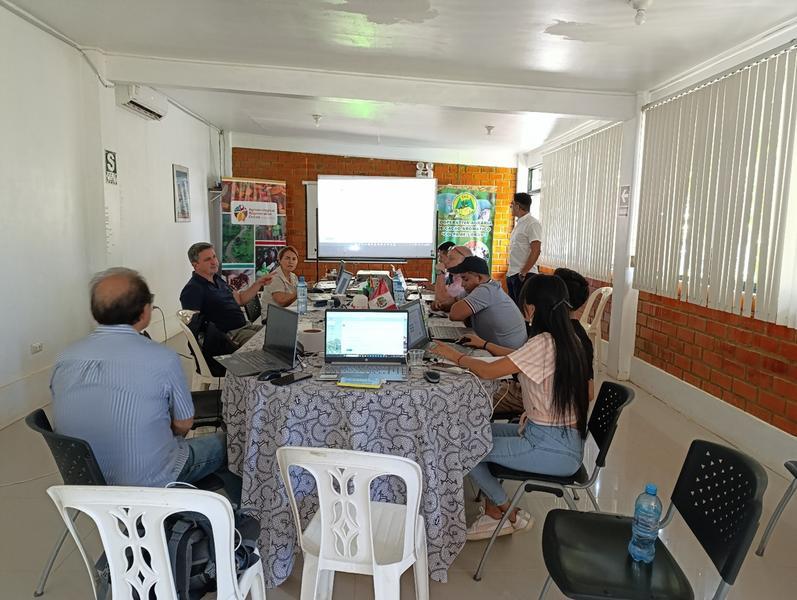
The first day began with the introduction of the participants and an introduction to deforestation monitoring systems such as Terra-i+ and GFW Pro. Key concepts of the EUDR were addressed and hands-on practice with tools such as QGIS and GFW Pro were conducted.
In these activities, participants organized and updated polygons of parcels shared by the Colpa de Loros Cooperative using QGIS software. Subsequently, farms were grouped by zonal committees to analyze historical forest losses and assess compliance with the EUDR, using layers such as SBTN and JRC. The day concluded with the download and detailed analysis of tables and reports generated by GFW Pro to identify deforestation risks in the farms.
During the second day we used the information shared in KML format by CECAO, we performed conversion processes of KML files to SHP, extraction of polygons of interest, reprojection and union of vector layers to create integrated databases.
Participants conducted independent analyses on cocoa farms in GFW Pro and presented their results. Also at the end of the day, farms were selected for field validation and the Kobocollect mobile application was configured for on-site data collection.
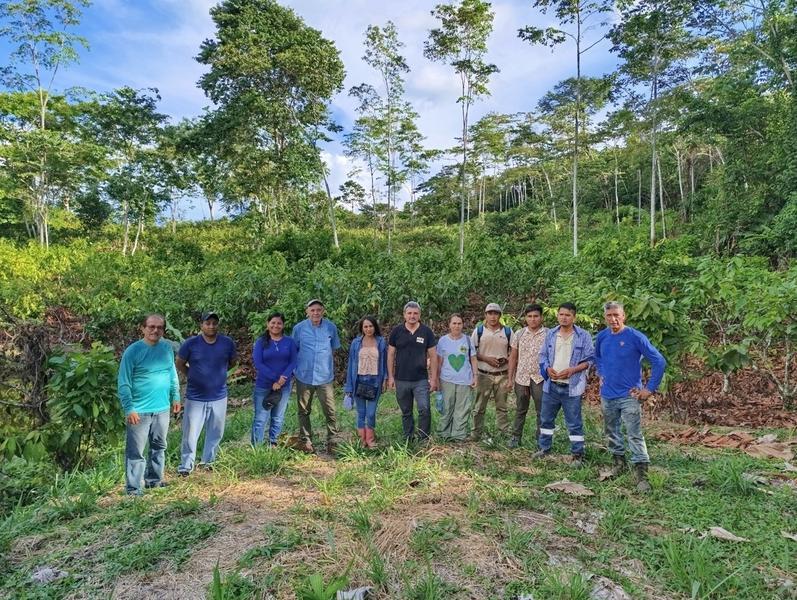
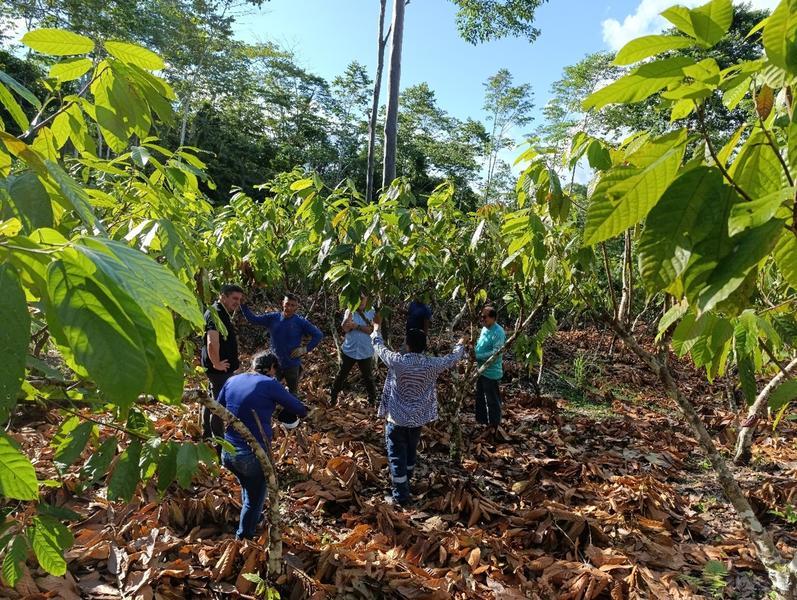
The last journey consisted of validation visits to farms with deforestation alerts detected in 2021, data collection with Kobocollect and drone overflights for visual inspection.
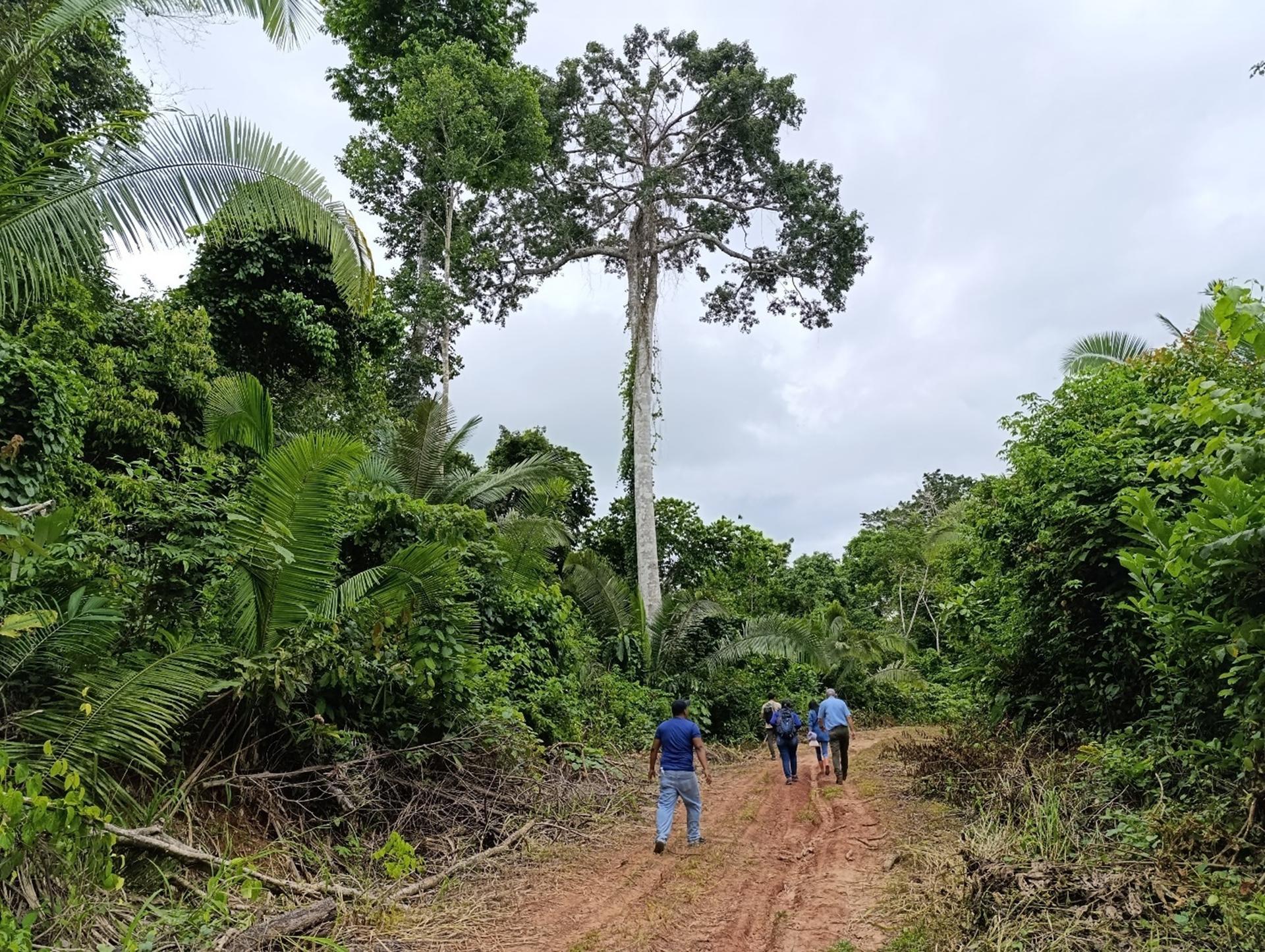
These activities allowed participants to apply the knowledge acquired and reinforce the use of advanced technologies for risk monitoring and mitigation.
"I learned how to use the analysis tools on the GFW Pro page to identify areas of high deforestation risk and develop strategies to mitigate those risks. I also found the exchange of experiences and knowledge with other workshop participants very valuable. I hope to be able to apply what I learned in my daily work and contribute to the conservation of our forests and identify cocoa plots that have been planted after 2021," said Maria Ramirez, traceability and information systematization analyst at the Cooperativa Agraria de Cacao Aromatico Colpa de Loros.
The workshop also strengthened participants' capacities to monitor and mitigate deforestation risks in their cocoa supply chains. GFW Pro proved to be a key tool for implementing due diligence systems aligned with the three steps of the EUDR: reliable information gathering, risk assessment with historical and real-time analysis, and risk mitigation through concrete actions.
"The use of tools such as GFW Pro, complemented with advanced technology such as drones and mobile applications, highlighted their importance in moving towards sustainable supply chains, protecting biodiversity and complying with international standards such as the EUDR," noted Yovita Ivanova, researcher at the Bioversity & CIAT Alliance, and coordinator of the ARC project.
Related Blogs