Press and News In Cali, eating healthy is a challenge that many families can't afford

In Cali, Colombia, 36% of families cannot afford the recommended diet, even if they spend all the money they earn on food. This is revealed in a study by the Universidad Javeriana Cali and the Alliance of Bioversity International and CIAT, published in the journal Cambridge University Press.
Cali is a city of people who do not earn enough to afford a healthy and varied diet of meats, dairy, fruits and vegetables. This is the conclusion of a recent study conducted by the Javeriana University and the of Bioversity International and CIAT, and published in the journal Cambridge University Press.
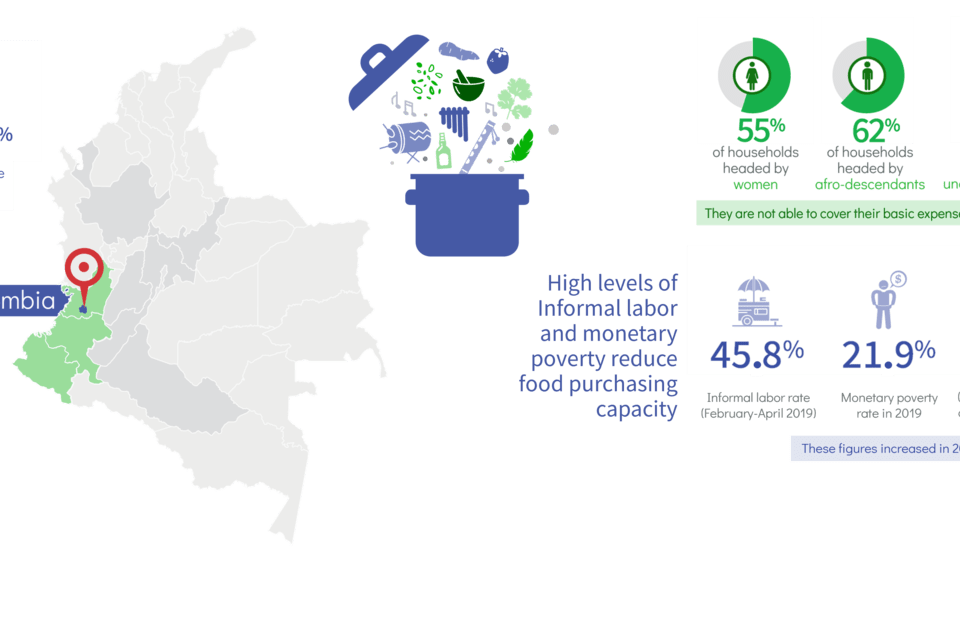
According to the research, 36.1% of families cannot afford a diet that covers their basic needs for vitamins, calcium, iron and zinc. They would not even achieve this if they allocated all the money they earn in the month exclusively to nutritious food. In addition, 42.7% of households could not even meet their minimum daily calorie requirements.
The research calculated the actual cost of three types of diet - from the most basic in calories to the most balanced in nutrients - and analyzed whether they are affordable for Cali households.
"This study shows that eating well is not just an individual decision: it is also an economic issue," explains Sara Rankin, researcher at the Alliance of Bioversity International and CIAT. "There are structural barriers that prevent many people from accessing a varied and balanced diet, as recommended by the Ministry of Health in the Food-Based Dietary Guidelines," she adds.

Sara Rankin-Cortázar
Senior Research AssociateThere is a crisis of insufficient intake of nutritious food, and the food environment does not help. A tour of the city's community kitchens confirms the finding: its users, mostly mothers who are heads of households, migrants, senior citizens and citizens who make a living by providing services - shoemakers, street vendors - argue that what they earn daily is not enough to eat three times a day.
The price of health
The Javeriana University and Alliance research compared three types of diet: calorically adequate, i.e., one that covers the minimum energy needs; nutritionally adequate, which, in addition to calories, includes all essential nutrients; and finally, the recommended healthy diet, which includes a variety of foods.
The research data showed that the most difficult (and expensive) nutrients to obtain in Cali are vitamins C, A, B12 and calcium. Iron and zinc are also in short supply in some diets, especially in young children.
Part of the problem is that three food groups: meats, dairy, fruits and vegetables account for more than 70% of the total cost of a healthy diet. But these are precisely the foods that many families cut out or restrict when the pocketbook gets tight.
In other words, eating rice with eggs or sausage may satisfy hunger, but it doesn't mean eating well. And when that is the only daily option, we are facing a serious problem of food insecurity that is not reflected in official poverty statistics and also puts the health of millions of people at risk. Furthermore: women require more expensive diets, especially if they are pregnant or breastfeeding, because of their greater nutritional needs.
The researchers also compared how much food costs in Cali with what households consume according to their income. They found that more than 40% of lower-income households cannot even meet basic caloric requirements. Furthermore, no family in the lowest strata can afford a nutrient-rich diet; and only those with moderate incomes, perhaps considered middle class, can access the recommended diet, which includes meats, dairy, legumes, fruits and vegetables.
"Hunger doesn't wait"
For María del Pilar Zea, director of the Department of Food and Nutrition at the Universidad Javeriana and one of the authors of the research, the underlying problem in Cali is twofold: low income and high food costs.
"We live in a city with high inequality. The poorest households, especially in strata one and two, cannot access an adequate diet, even if they were to spend 100% of their income on food. Only the middle class can afford a healthy and complete diet," he says.
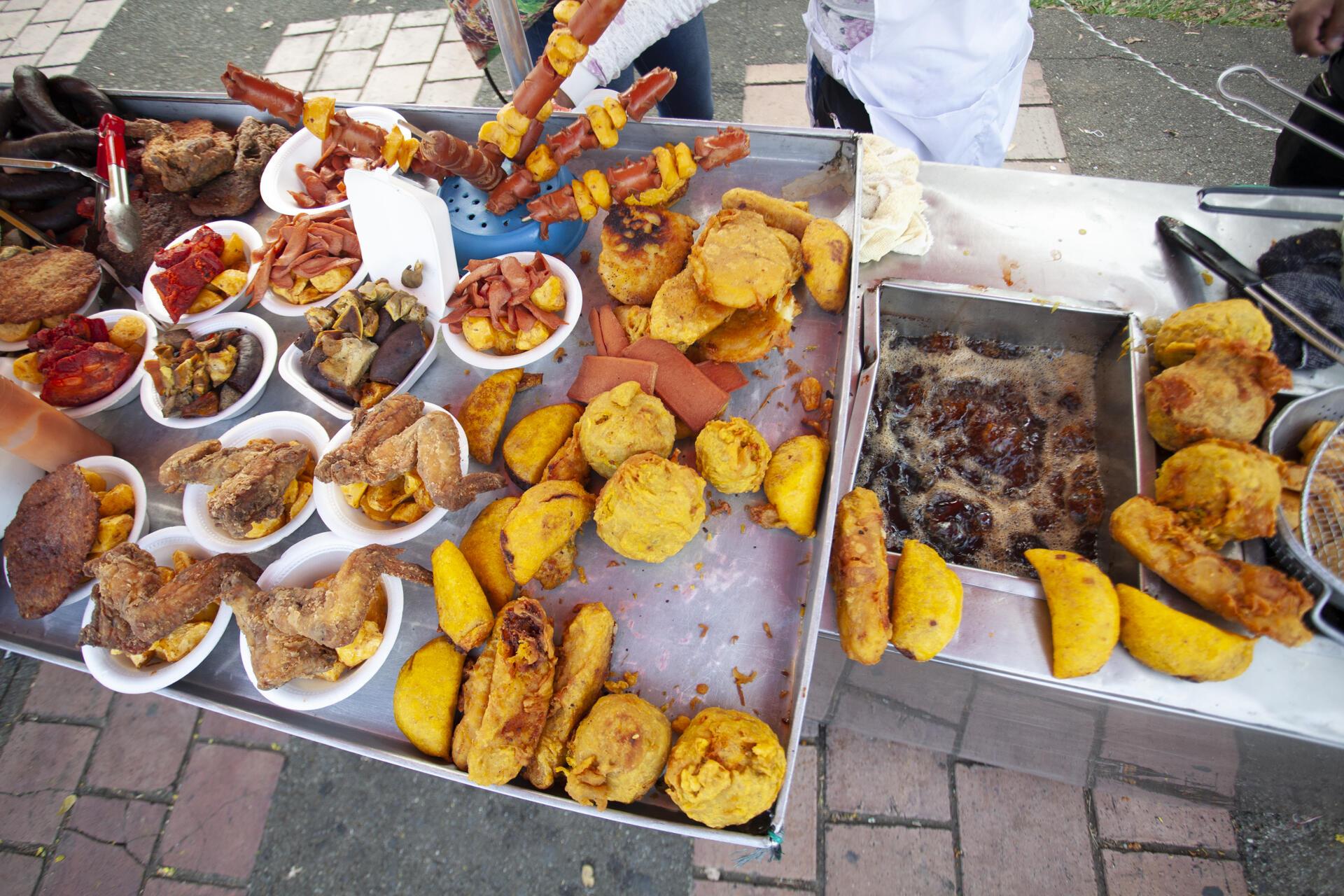
Eating rice with eggs or ultra-processed food may satisfy hunger, but it doesn't mean eating well.
The researcher also draws attention to the food system in the city: most of the food must be brought from other regions, and this intermediation increases the final price paid by consumers.
"Comprehensive policies and interventions are needed: subsidies for the most vulnerable, community kitchens, but also job training and entrepreneurship promotion. The only way to access food in the city is economic: if there are no resources, there is simply no access, even if there are community gardens," Zea adds.
The researcher also warns that the lack of a nutritious diet has a direct impact on public health, especially in children and pregnant women, the most vulnerable population groups, and aggravates chronic diseases such as obesity, diabetes and cancer.
Despite this panorama, there is hope. Cali has a Territorial Committee for Food and Nutritional Security that is active and already working on the issue.
"This is a good sign of governance. The problem is being thought of in a comprehensive way: not only with canteens, which are urgent because hunger does not wait, but also with employment, education, regulation of ultra-processed foods, price review and food quality. Because eating well is not an individual decision, but the result of the environment in which we live," concludes María del Pilar Zea.
What is at stake
The finding of the research, then, is conclusive: the food poverty threshold must be rethought. If it is measured only by the ability to buy calories, it underestimates and makes invisible the drama of thousands of families who eat every day, but do not feed themselves.
"This is a very valuable study for decision-making and the design of public policies to change this reality for thousands of people. For example, the cost of healthy eating, which should consider how much it costs to eat well in Colombia," explains Sara Rankin from the Alliance.
The study also proposes to look beyond welfare and suggests a combination of strategies against malnutrition, ranging from targeted subsidies, support programs for pregnant mothers, nutrition education from early childhood and policies that strengthen local production and the cheapening of healthy food.
The full report here. Available in English.
PlaSA board: where does what we eat come from?
The Alliance of Bioversity International ad CIAT, in partnership with other organizations, launched a new dashboard for PlaSAColombia, a digital tool that shows how food is produced, transported and consumed in Colombia. The platform gathers information on where what we eat comes from, how much it pollutes to move food from the countryside to the city, how much healthy food really costs, which municipalities are key in food production, among other relevant data to optimize the country's food system. This new dashboard dedicated to the environmental impact of the agricultural sector presents information on the tons of greenhouse gases emitted by the main crops, where the carbon footprint is concentrated in the national territory and the mobilization of food in Colombia.
The platform and all its dashboards are publicly accessible and can be consulted at www.plasacolombia.com. There, with just a few clicks, you can view maps, graphs and data by city or municipality.