Research Articles From awareness to action: Social valuation of climate change mitigation options in Kenyan dairy farming

In Kenya, where small-scale dairy farming is a vital part of the economy, farmers face increasing challenges from rising temperatures, changing rainfall patterns and degraded pastures. These climate risks affect productivity, making it crucial for farmers to adopt strategies that mitigate these effects. A recent study conducted by the CGIAR Initiative Livestock & Climate (L&C) has provided a closer look at how Kenyan dairy farmers perceive and are prepared to adopt climate change mitigation strategies.
Climate change poses a significant threat to the agriculture sector globally, with the livestock industry being a key player in both contributing to and suffering from the impacts of climate change.
A recent study conducted by L&C provided a closer look at how Kenyan dairy farmers perceive and are prepared to adopt climate change mitigation strategies. The research focuses on the social valuation of these strategies, specifically in Nandi and Uasin Gishu counties, where 46 dairy farmers participated in a social valuation experiment. The aim was to assess their knowledge of climate change, how they perceive its risks, and their willingness to act on mitigation measures.
What is social valuation?
Social valuation is a concept that helps us understand how individuals view and relate to certain practices or interventions. For this study, it focused on three components:

By assessing these components, the researchers were able to develop a social value indicator that provides a clearer picture of the barriers and opportunities facing farmers in adopting climate-smart strategies.
Key findings from the study
The study revealed that Kenyan dairy farmers have a high level of awareness regarding climate change and its impact on their farming operations, with a knowledge score of 0.962 and a perception score of 0.807. Farmers recognize climate change as a pressing issue, primarily driven by human activities, and are deeply concerned about the potential harm it could cause to their livelihoods. However, despite this strong awareness, their willingness to implement climate change mitigation strategies was much lower, with a willingness to act score of just 0.380. This gap highlights the significant challenges dairy farmers face, such as limited financial resources, insufficient technical training, and restricted access to suitable technologies. These barriers prevent them from taking meaningful action, even when they understand the importance of mitigation strategies. For example, while many farmers acknowledge the benefits of practices like adopting improved forages (e.g., Urochloa hybrids) or herd management practices, they feel ill-equipped to implement these measures due to resource constraints. The findings underscore the pressing need for targeted support—such as training, financial assistance, and improved access to climate-smart technologies—to bridge the gap between farmers' knowledge and their ability to act on climate change.
Preferred mitigation strategies
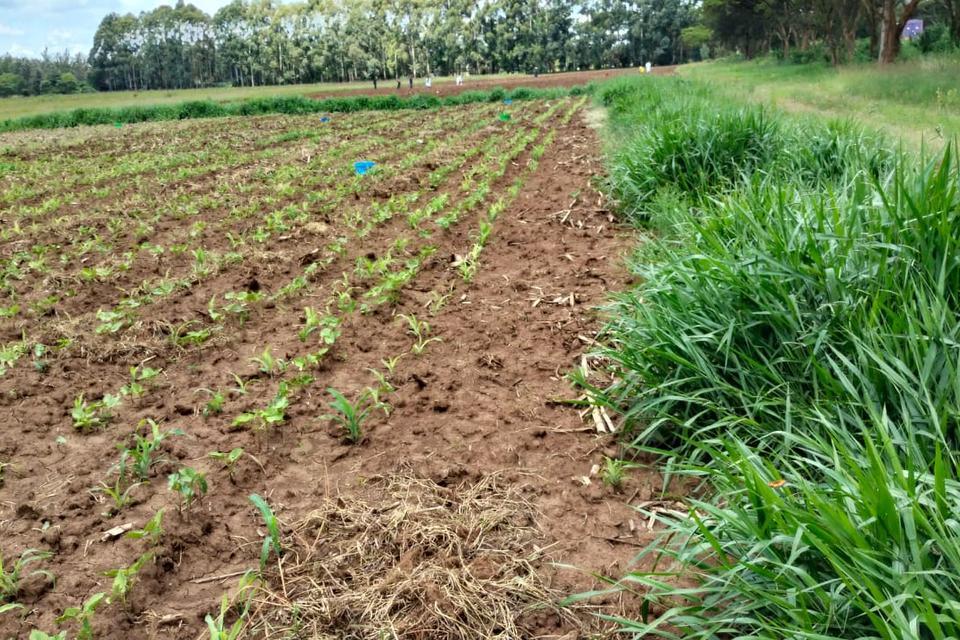
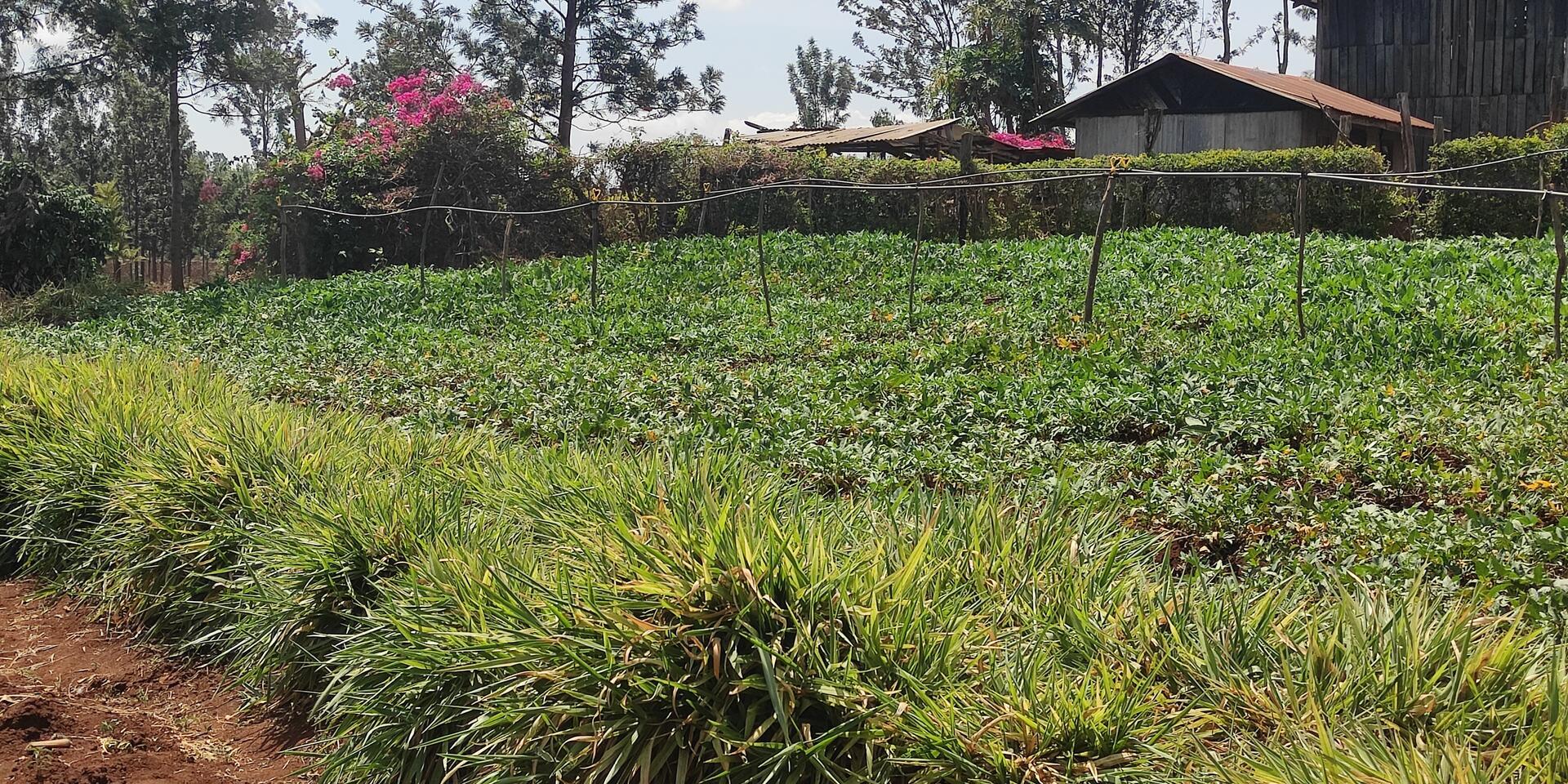
When it came to selecting climate change mitigation strategies, Kenyan dairy farmers showed a clear preference for approaches that would offer both productivity gains and environmental benefits. The most popular strategy, favored by 58.7% of farmers, involved the adoption of Urochloa hybrids combined with herd management practices, such as the removal of male animals. This combination was particularly appealing because it promised to improve milk production and increase overall farm income. In contrast, strategies like manure management received significantly less interest, with only 8.7% of farmers expressing a willingness to adopt this practice. These preferences suggest that farmers are more inclined to embrace mitigation strategies that not only address climate change but also enhance the economic sustainability of their operations. This insight is crucial for designing effective interventions that align with farmers' priorities, ultimately increasing the likelihood of successful adoption and fostering long-term climate resilience.
The need for support and capacity building
The findings from this study emphasize the importance of support in enabling farmers to take action. While they are aware of climate change and its impacts, their ability to implement effective strategies is constrained by resource limitations. As such, strengthening the capacity of farmers through training, access to finance, and the dissemination of technology is crucial. Farmers need not only knowledge but also the tools and resources to apply that knowledge in meaningful ways.
Government bodies, research institutions, NGOs, and cooperatives all play essential roles in supporting farmers by providing the necessary infrastructure, financial support, and training programs that can help overcome these barriers.
Moving forward
The study’s results highlight the need for multi-stakeholder collaboration to ensure that farmers have access to the information, resources, and support systems they need to adopt climate-smart farming practices. Governments, NGOs, and other stakeholders must work together to tailor interventions that are both practical and accessible. By aligning these interventions with farmers' preferences and capabilities, the adoption of climate change mitigation strategies can be scaled up, contributing to a more sustainable and resilient dairy farming sector in Kenya.
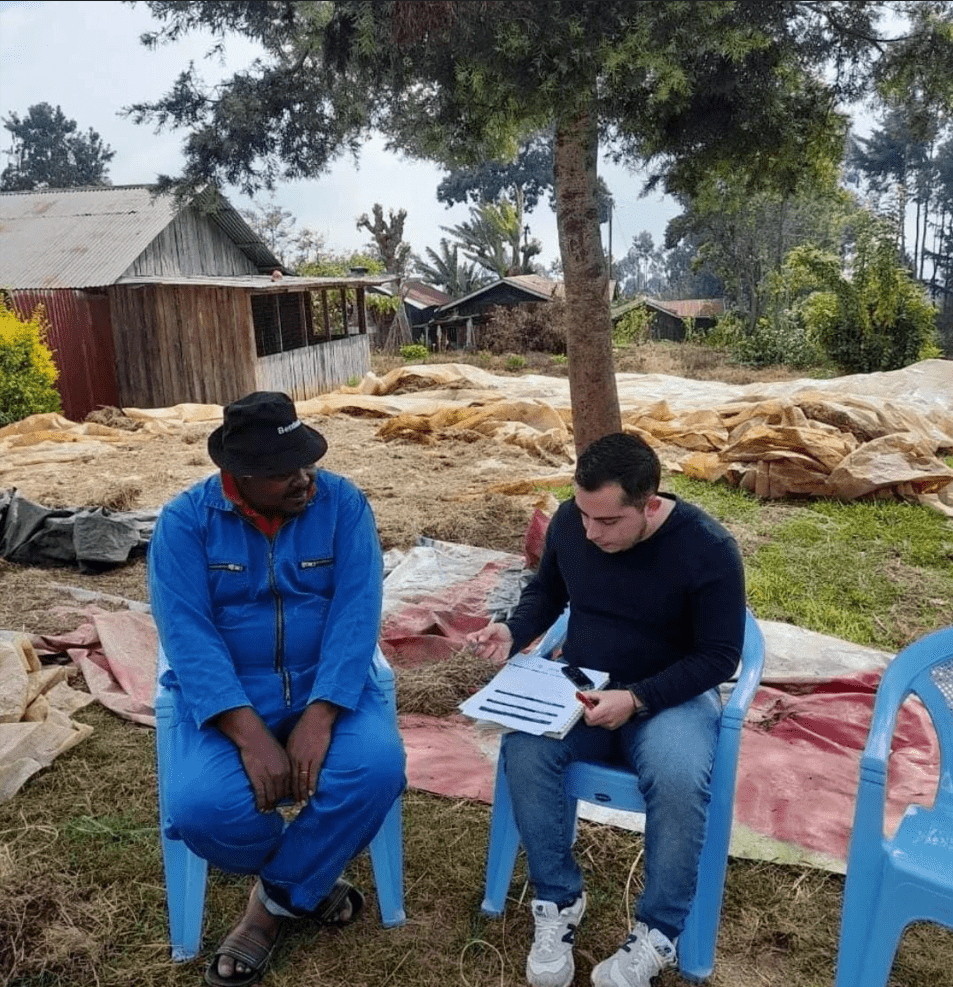
Researcher Fernando Florez surveys dairy farmers in Kenya on the adoption of hybrid and improved pasture seeds. Credit: CIAT
In conclusion, this research underscores the critical role of social valuation in shaping the future of dairy farming in Kenya. It highlights the complex interplay between farmers’ knowledge, their perceptions of climate risks, and their willingness to take action. With the right support and interventions, Kenyan dairy farmers can be empowered to play an active role in mitigating climate change while securing their livelihoods for the future.
Acknowledgements
This work was carried out as part of the CGIAR Initiative Livestock & Climate (L&C) and the CGIAR Science Programs Multifunctional Landscapes (MFL) and Sustainable Animal & Aquatic Foods (SAAF). We thank all donors who globally support our work through their contributions to the CGIAR System. The views expressed in this document may not be taken as the official views of these organizations.