Blog Amid Typhoon Yagi’s onslaught, the Alliance commits to boosting climate resilience research in Vietnam and Laos

Showing solidarity with typhoon-affected communities, the Alliance pledged VND 40 million and LAK 10 million to aid relief and research efforts addressing flooding in the two Southeast Asian countries impacted by Typhoon Yagi.
As Asia’s strongest storm of 2024 ravaged parts of the region’s mainland, leaving billions in dollars in agricultural losses, the Alliance of Bioversity International and CIAT reaffirmed its commitment to bolster research collaboration on agricultural climate resilience, particularly in typhoon-stricken Vietnam and Laos.
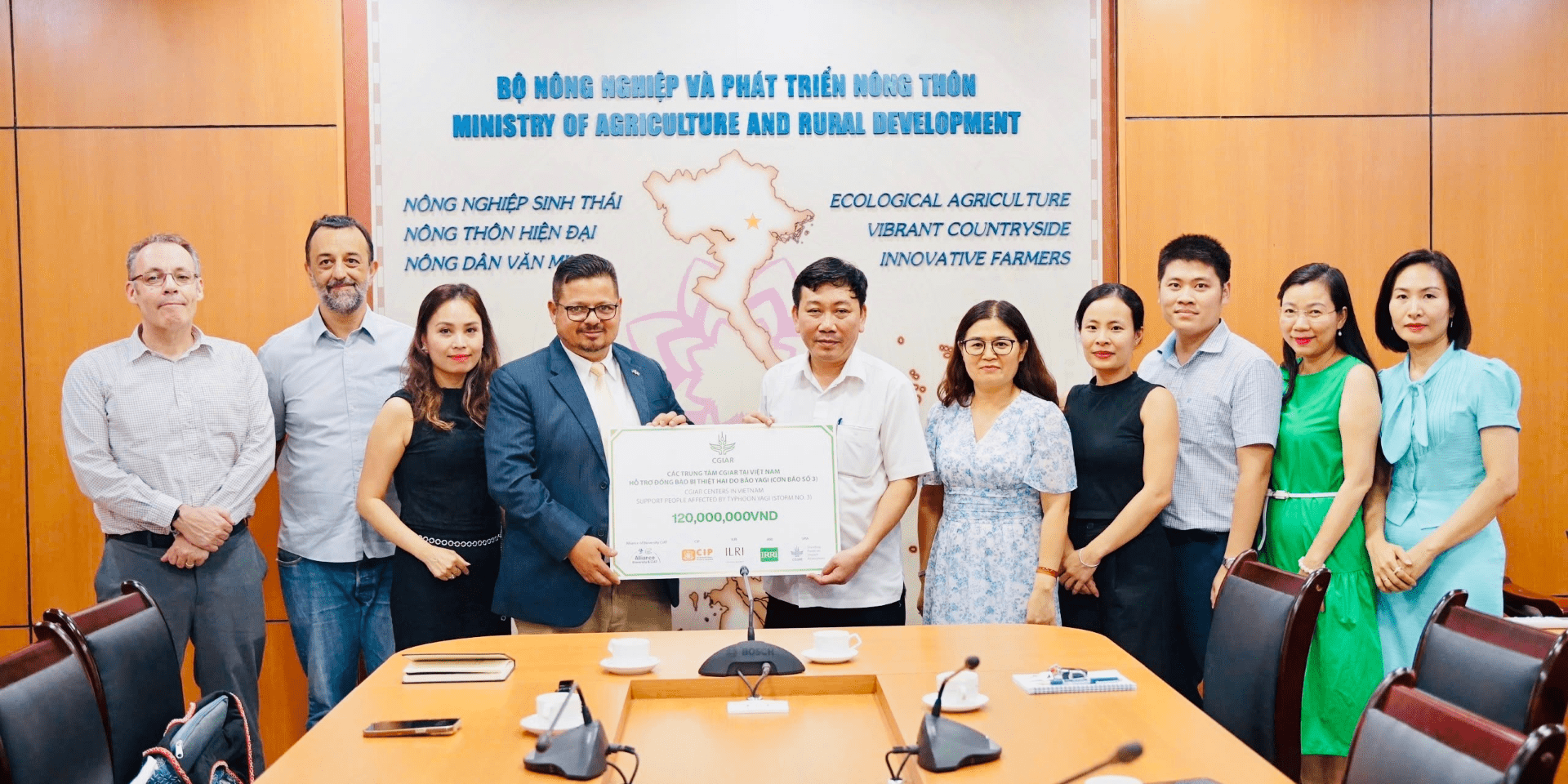
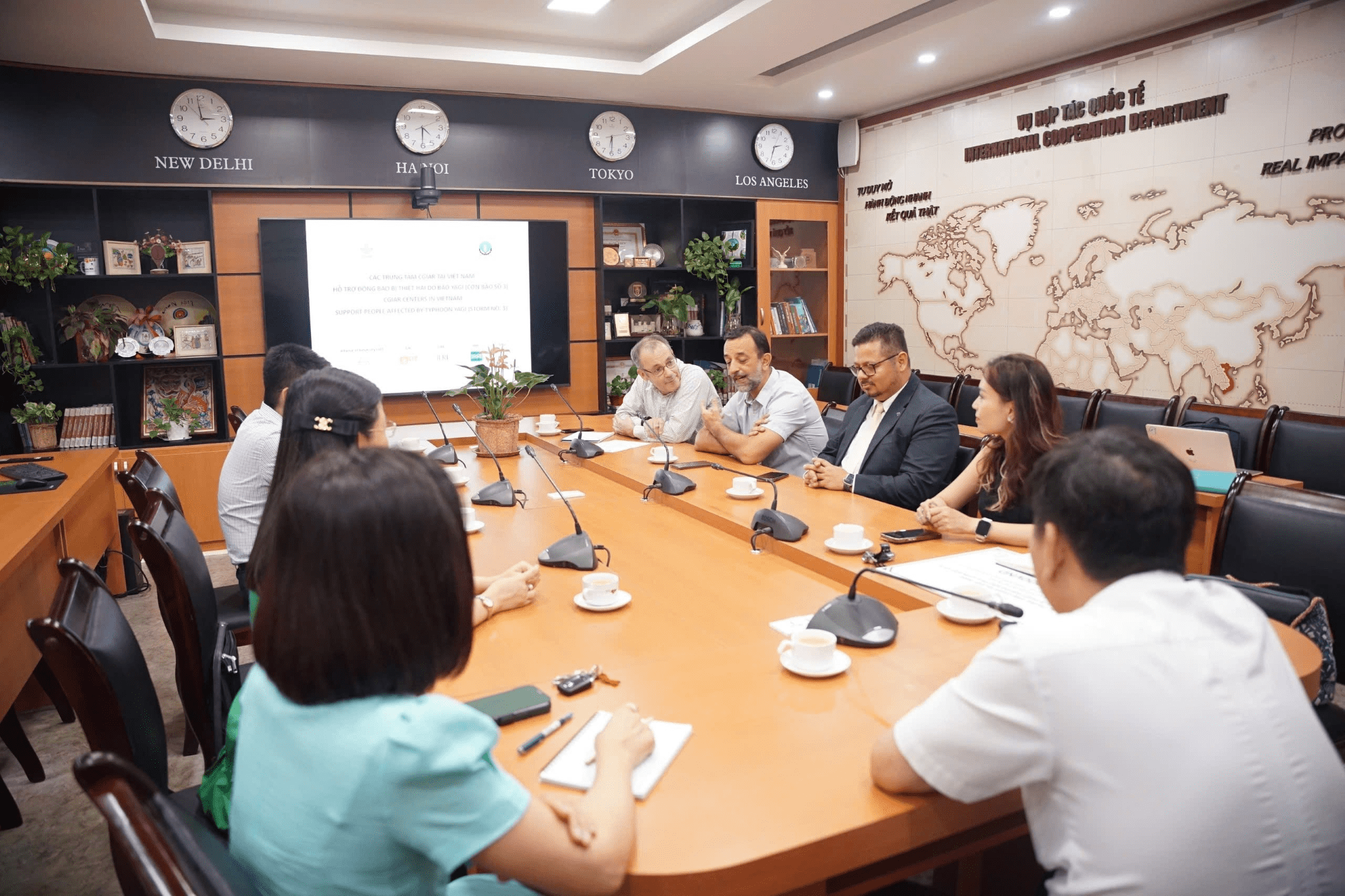
The Alliance in Vietnam – along with the Standing Panel on Impact Assessment and three fellow CGIAR centers (the International Livestock and Reseach Institute, the International Potato Center and the International Rice Research Institute) – has pledged to continue its partnership with the Ministry of Agriculture and Rural Development (MARD) in developing innovative strategies and providing long-term solutions against future extreme weather events.
In a report, MARD’s Deputy Minister Hoang Trung said Typhoon Yagi wreaked havoc on Northern Vietnam’s agricultural sector, with damages estimated at VND 60 trillion ($2.44 billion).
Following the storm’s aftermath, the centers also donated VND 120 million to the Vietnamese government to support relief efforts among flooded communities across the country.
Thanking the CGIAR for its timely support, Dr. Nguyen Do Anh Tuan, Director of the Department of International Cooperation-MARD, underscored the crucial role of the research community in providing expertise to enable the country’s shift from a reactive approach to disaster response to a more proactive focus on building resilience.
In Laos, the Alliance offered a significant sum of LAK10 million in assistance to research efforts seeking to address the serious flooding in the country’s Louangnamtha province:
“The contribution will be invaluable in helping us understand the causes and impacts of these floods and develop effective mitigation strategies,” said Dr. Phetmanyseng Xangsayasane, Deputy Director General of the National Agriculture & Forestry Research Institute in Laos.
Climate services in action
The Alliance in Asia has built on its decades of experience in delivering integrated solutions to promote climate action at various levels—spanning across Southeast Asia and the Mekong Delta countries.
In Vietnam, in particular, the Alliance partnered with MARD’s Department of Crop Production to deliver localized recommendations, aligned with climate adaptation and mitigation strategies based on seasonal, monthly, and 10-day climate and weather forecasts, across 13 provinces in the Mekong River Delta. This work on Agro-Climatic Bulletins was recognized by MARD with a Certificate of Merit after reaching more than 270,000 farmers to make informed crop decisions and enabling them to better manage risks and prepare against unpredictable climate conditions.
Months prior to the unexpected onslaught of Typhoon Yagi, the Alliance and Vietnamese partners have already expressed plans to scale out the bulletins to reach more smallholder farmers beyond the delta region. By optimizing the quality and dissemination process of the bulletins through incorporating low-emission, nutrition-sensitive, and conservation agriculture practices advisories, the Alliance is keen that these climate information services will reinforce and accelerate agricultural productivity while helping farmers stabilize their livelihoods amidst future climate shocks.
In Laos, the Alliance also capitalized on digital technology to bring local farmers adapt to climate change. Through the Laos Climate Services for Agriculture, the Alliance worked with more than 110,000 farmers in co-creating agrometeorological services that sought to guide Laotian smallholder farmers on better crop management while bolstering climate resilience.
The ICT-based platform demonstrates the critical role in establishing a two-way connection between the meteorological and agricultural sectors, where local government officials and farmers can mutually benefit.