Gene Editing Platform
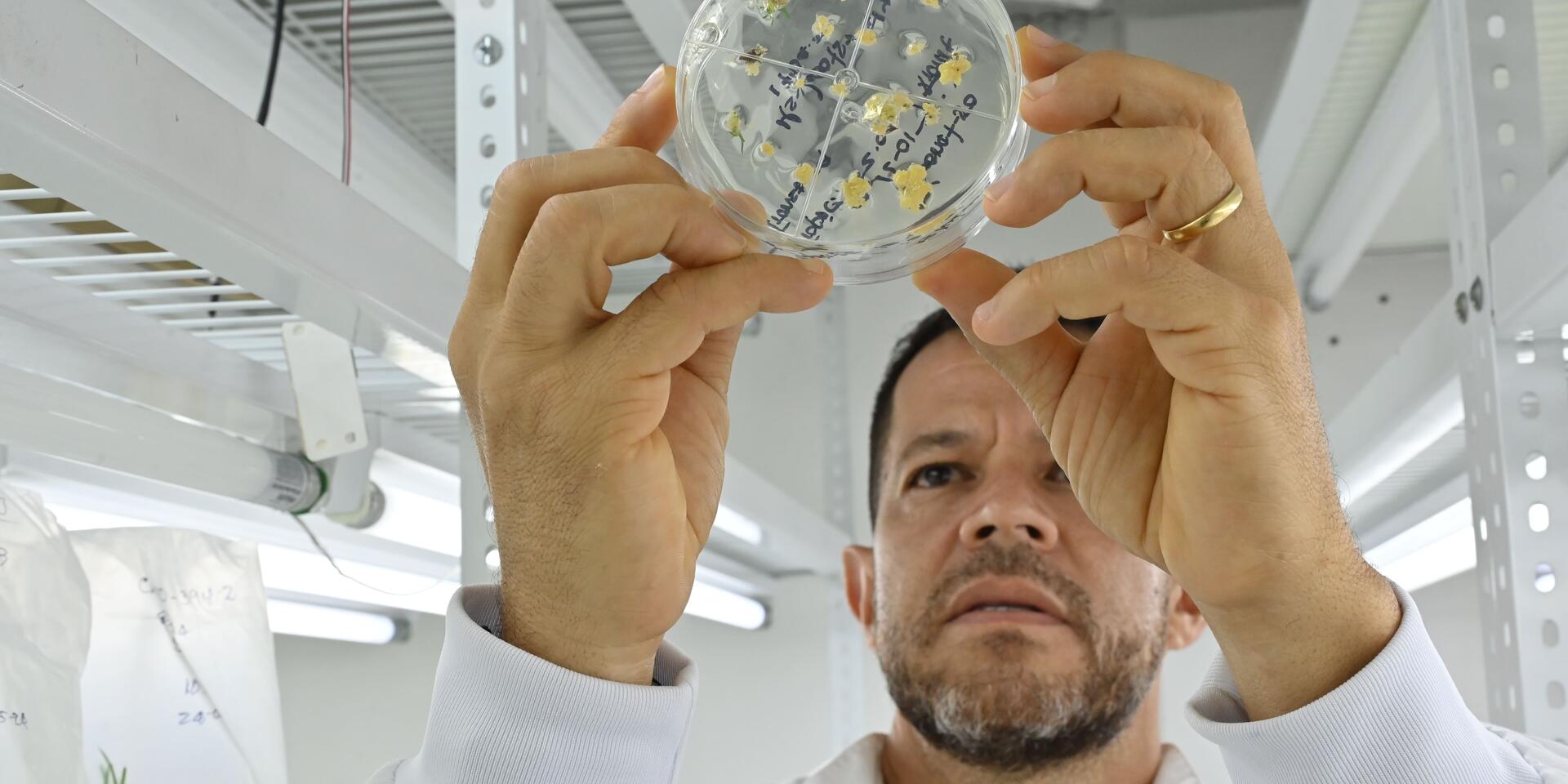
Gene editing can make important contributions to food security, nutrition and climate change adaptation. By allowing scientists to select genes that increase agricultural productivity and resilience to drought, diseases and more, these technologies can accelerate progress towards global goals. Explore the process and history of gene editing, as well as the Alliance's approach and progress in applying these technologies.
What is gene editing?
Genome editing is the most precise and rapid technology for making desirable changes to the genes of crops for food and animal feed, for the benefit of production and sustainability. For example, CRISPR technology can triple rice yield - a crop that provides 20% of the world's calories - by introducing point mutations in a single gene. This approach helps conserve the planet's biodiversity by avoiding the need to expand agricultural land.
In times of climate change, disease spreads, putting further pressure on crop production. Precise editing of disease susceptibility genes in rice and cassava has enabled the development of new varieties that are resistant to bacterial strains that affect these crops in Asia, Africa, and Latin America. In Colombia, gene-edited rice lines resistant to bacterial leaf blight are now considered conventional crops. Additionally, gene editing can help produce healthier foods by reducing the absorption of heavy metals such as cadmium and arsenic in rice and cacao.
Unlike transgenic modification - where DNA from a different species is introduced into the plant - gene editing is used to “flip a switch” in the plant's existing genes to achieve positive traits.
What is the difference between GMOs and gene editing?
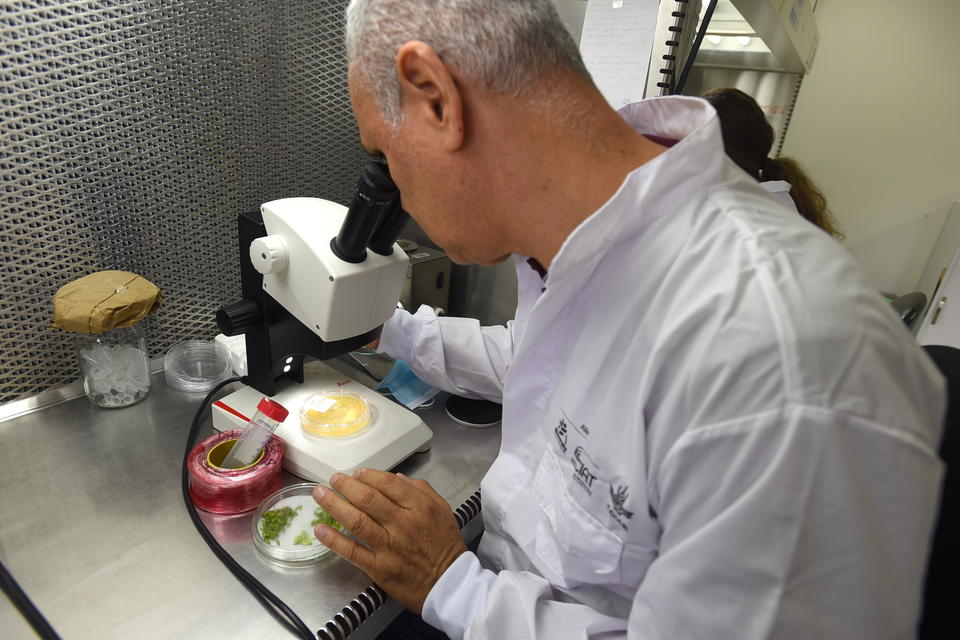
"GMO" is typically referring to the result of transgenic modification, when DNA from a different species is introduced into a plant. In contrast, gene editing is used to “flip a switch” in the plant's pre-existing genes to achieve positive traits.

The research approach at the Alliance
Most CGIAR centers' work on crop and animal genetic improvement is based on conventional breeding methods. However, in the last 15 years, genome editing technologies have been integrated into various research programs. Initially, CGIAR centers used genome editing primarily as a laboratory tool to validate gene functions.
Today, the Alliance incorporates genome editing into research projects to develop new varieties with improved traits. We have also established institutional policies, procedures, and committees to ensure appropriate decision-making, stewardship, and quality control in crop improvement research and product development.
Plants and animals whose genetic changes result from genome editing - where no foreign DNA is integrated - should not be treated differently from those modified through conventional breeding methods to achieve similar outcomes.
CGIAR centers are committed to respecting the sovereign right of all countries to regulate scientific research, development, and the release of genome-edited crops and animals. We consistently comply with applicable laws and regulations in the countries where we conduct research and where our research products are disseminated.
History of Our Research
Where we work
Target countries with regulatory framework for gene edited crops
Rice:
Kenya, Malawi, Pakistan, India, Bangladesh, China, Japan, Philipines, Indonesia, Honduras, Costa Rica, Colombia, Ecuador, Brazil, Uruguay, Paraguay and Argentina.

Common Bean:
Honduras, Guatemala, Colombia, Brazil and Kenya.

Cassava:
Colombia, Brazil, Kenya and Nigeria.

Forages:
All countries that feed cattle with forages (Colombia, Brazil and Kenya).

Cocoa:
Honduras, Costa Rica, Colombia and Ecuador.
Status of Potential Gene-edited Products in Colombia
Gene Editing

The regulatory status of potential gene-editing products in agriculture and livestock for Colombia is granted by the Colombian Agricultural Institute (ICA), based on resolution No.29299, that determines whether a gene edited organism is considered a GMO or a conventional one.
Using Gene Editing for Breeding
| Relevance | ||||||
| Crop | Trait (Genes) | Healthier Crops | Environment Protection | Climate Change | Gene Validation | Breeding |
| Rice | Xanthomonas Resistance (SWEET) |  |
 |
|
 |
|
| Rice | Resistance to Rice Hoja Blanca Virus-RHBV (AGO4) | |
|
|
||
| Rice | Pyricularia (Black) Resistance | |
|
|
||
| Rice | Enhanced Recombination | |
 |
|||
| Rice | Waxy Starch (GBSS) | |
||||
| Rice | Male Sterility (TDF1) | |
|
|||
| Rice | Grain Number (GN1A) | |
 |
|
||
| Rice | Reduce Cadmium Uptake (OsNRamp5) | |
|
|||
| Rice | Reduce Arsenic Uptake (Lsi1, Lsi2, OsPT8) | |
|
|||
| Rice | Photosynthetic Efficiency (OsHXK1) | |
|
|
||
| Rice | Root Architecture/Angle (AUX1) | |
|
|
||
| Rice | Thermotolerance (undisclosed) | |
|
|||
| Rice | Drought Tolerance (WEEP) | |
|
|||
| Rice | Herbicide Tolerance (undisclosed) | |
|
|
||
| Cassava | Waxy Starch (GBSS) | |
||||
| Cassava | Xanthomonas Resistance (SWEET) (SWEET10a) | |
|
|
|
|
| Cassava | Thermotolerance (knockout mutants) | |
|
|||
| Cassava | Haploid Induction (NLF/PLP2) | |
|
|||
| Cassava | Herbicide Tolerance (PPT) | |
||||
| Cocoa | Reduce Cadmium Uptake (TcNRamp5) | |
|
|
||
| Common Bean | Reduced Antinutrients (Satchyose/Raffinose Synthases) | |
|
|||
| Forages | Anti-Methanogenic Compounds | |
|
|
|
|
Capacity Building, Training, and Education
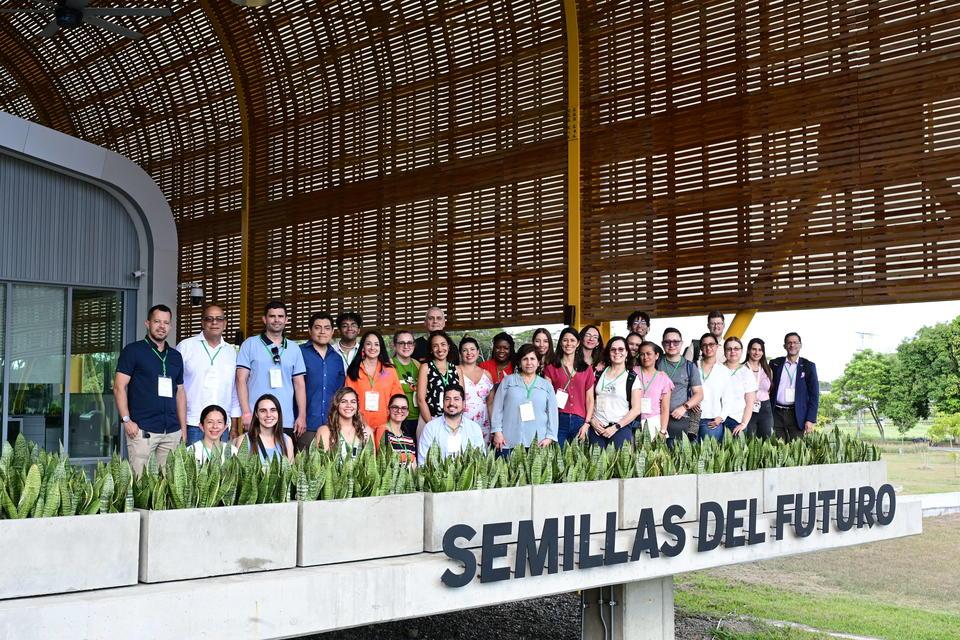
We educate, develop capacity and transfer technology to our stakeholders in Latin America mainly. In the last 10 years we have run five international courses and a symposium on Gene Editing for diverse audiences, from university students to regulators from all over Latin America; four science fairs, and multiple Open Houses for specific audiences like Gates AG-One, Bezos Earth Fund, the Duchess Sofia of Edinburgh, and the CGIAR Executive Managing Director, Ismahane Elouafi.
We promote the creation of more gene editing platforms in the region, specifically with the National University of Colombia and the FACEN of the National University of Asunción in Paraguay.
Our main supporters in these tasks have been the Inter-American Institute for Cooperation on Agriculture - IICA, and the Association of Agricultural Plant Biotechnology - AGROBIO, with whom we have trained more than 3,600 people since 2016.
Multimedia
multimedia
News and Stories
See Also
See Also
Recent Publications
- Latin American researchers use gene editing to breed hardier crops
- Paul Chavarriaga-Aguirre - Head of the Platform for Advance Breeding at CIAT working on genetic transformation/gene editing of crops
- Genome Editing in Agriculture: Innovations for Sustainable Production and Food Systems
- A Clearinghouse for Genome-Edited Crops and Field Testing
- Efficient Agrobacterium-mediated Transformation of the Elite–Indica Rice Variety Komboka
More on our Gene Editing Program
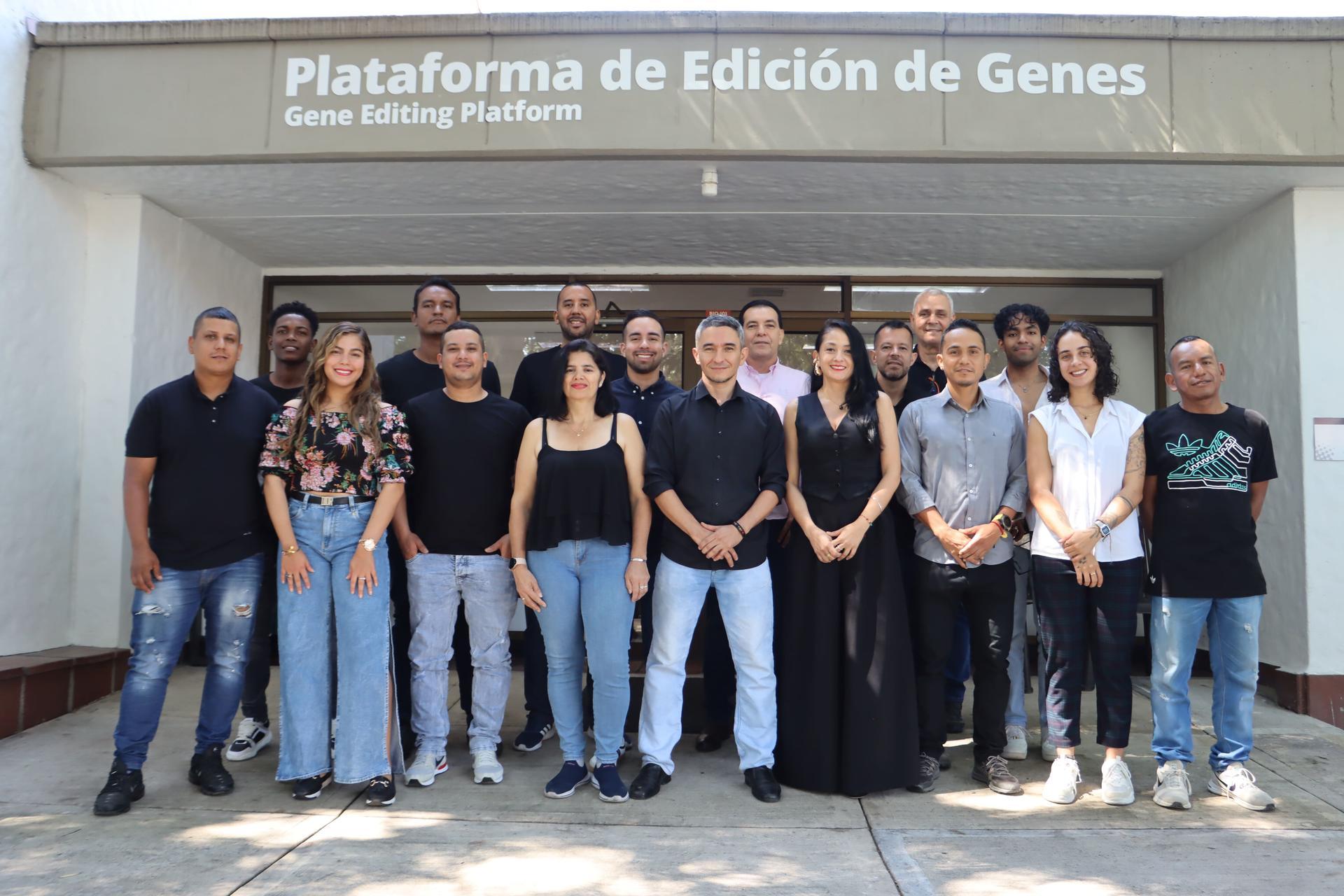
Our Team
Partners and Sponsors
Our Leaders

Paul Chavarriaga
Biotechnology Program Leader and Gene Editing Platform Leader
Sandra Patricia Valdés Gutiérrez
Senior Research Associate
Francisco Sanchez Chamorro
Research Associate