Blog Beyond tools, toward transformation: ACAT 2025 presses for collaborations
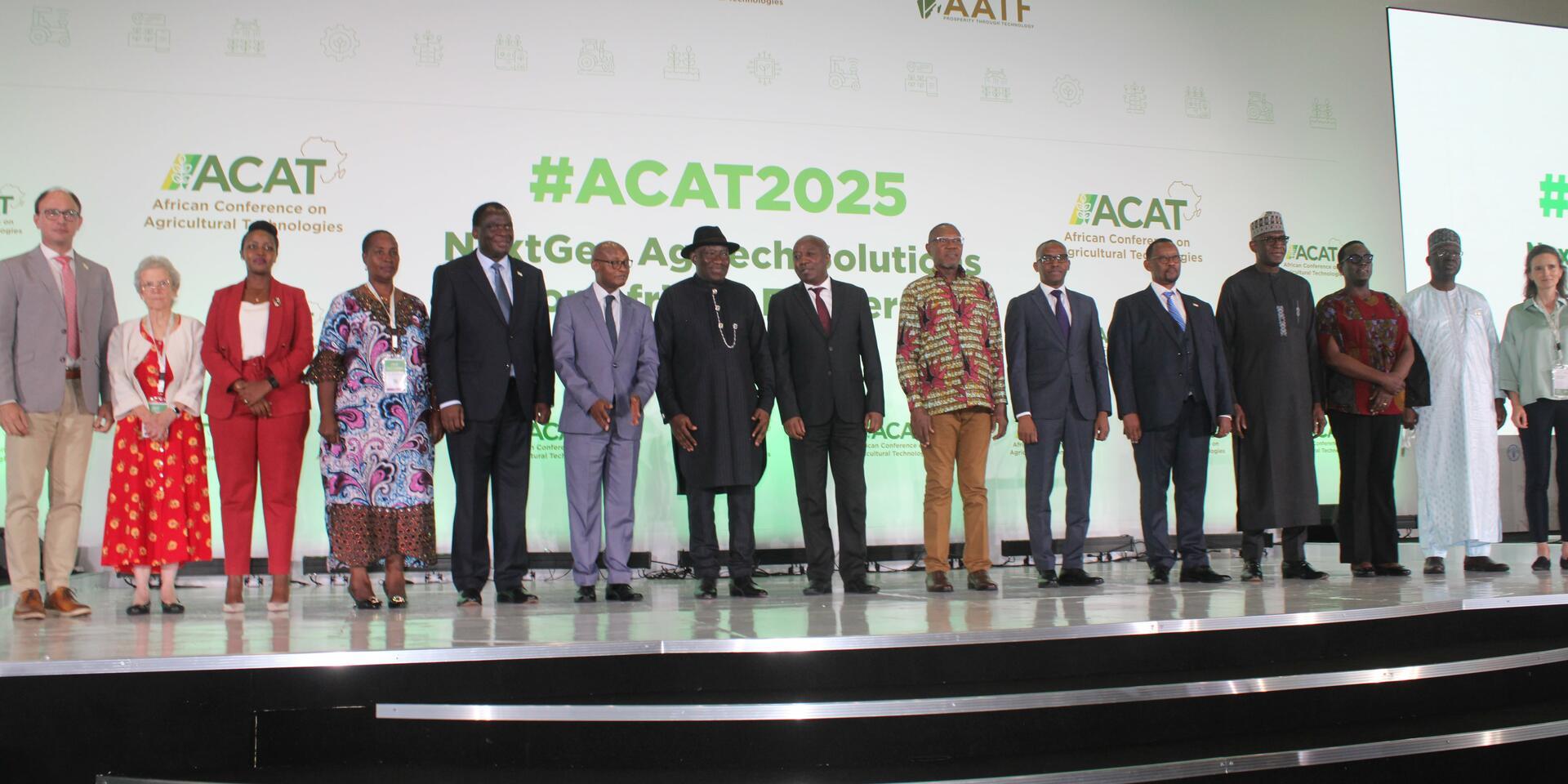

Over 800 delegates gathered in Kigali Rwanda for ACAT 2025 to explore agri-tech solutions for Africa. They emphasized collaboration, farmer-centered innovations, and partnerships to drive sustainable agriculture and food security across the continent.
Africa - home to 1.5 billion people - is approaching a critical threshold. Climatic shocks, soaring population growth, land degradation, and deep-rooted inequalities are converging to strain already fragile food systems. In eastern and southern Africa alone, food demand could surge up to ninefold by 2050, while climate change threatens to push up to 30 million people into hunger. But, when challenges grow, so too does the call for innovation.
Against this backdrop, over 800 delegates drawn from across the continent and beyond, including government representatives, industry thought leaders, policymakers, technical experts, private sector actors, farmers, women and youth, converged in Kigali, Rwanda, for the second edition of the African Conference on Agricultural Technologies (ACAT) 2025.
Hosted by the Government of Rwanda through the Ministry of Agriculture and Animal Resources (MINAGRI) in collaboration with the African Agricultural Technology Foundation (AATF), ACAT sought to explore and deliberate on next-generation agricultural technologies: tools that could reimagine African agriculture and empower those who till its soil.
A call to collaborate
With a resonant message echoing through the halls, Africa’s agricultural future hinges on bold, strategic partnerships. NextGen AgTech Solutions for Africa’s Farmers emerged as the rallying call—spotlighting innovation and collaboration as the twin engines needed to transform agriculture and nourish a continent on the edge.
Rwanda’s Prime Minister, Dr. Edouard Ngirente, emphasized that integrating technology into agriculture is no longer a choice but a necessity. He added that empowering smallholder farmers, the backbone of Africa’s food systems, must go hand in hand with supporting young innovators, mitigating climate and market risks through smart insurance and resilient seeds, and expanding access to digital tools that boost productivity and improve market access.
“Technology is not just about tools and platforms; it is about people,” he said. “It is about a farmer, young or old, in a rural village using a mobile phone to check crop prices. It is about a young innovator developing a drone to monitor pests and diseases. It is about a continent that believes in its capacity to feed itself and to thrive.”
However, achieving this vision demands more than ambition. As former Nigerian President Goodluck Jonathan rightly put it, no single country, institution, or actor can transform African agriculture alone, but through unity.
“Transforming Africa’s agriculture can only happen if countries and institutions collaborate across borders and sectors. African governments must work together with private sector players, research institutions, civil society and most importantly, with the farmers themselves, to foster and sustain a new era of farming and food production,” he urged.
“This is a high-paced era that leaves no room for excuses. Africa must make progress and move forward.”
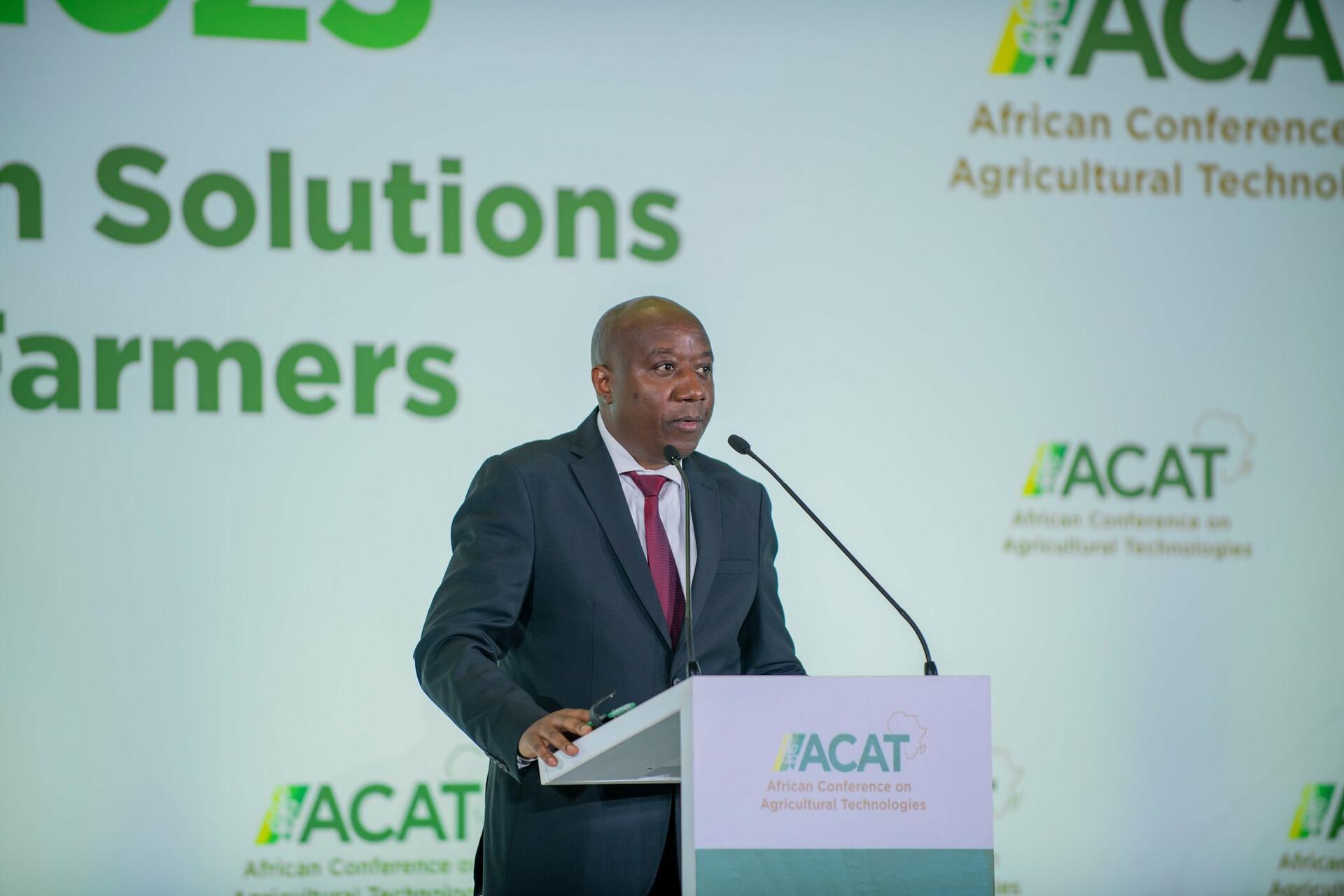
Frame 3: Former Nigerian President Goodluck Jonathan (left) emphasized the importance of increased collaboration

Frame 3: Former Nigerian President Goodluck Jonathan (left) emphasized the importance of increased collaboration
Beans and beneficial insects shine at ACAT
At ACAT 2025, the Alliance of Bioversity International and CIAT reaffirmed a core belief: partnerships without action are as good as dead. Through the Pan-Africa Bean Research Alliance (PABRA), the Alliance showcased tangible results born from strong, long-term collaborations, demonstrating that innovation backed by partnership delivers real impact.
One of the standout moments was the exhibition of fortified, bean-based food products developed by Rwanda-based Rainbow Healthy Food Ltd, with technical support from the Alliance. These nutrient-rich composite flours and porridges, enriched with high iron beans (HIB), gained attention not only for their impressive nutritional profile but also for their strong consumer appeal, validated by recent sensory evaluations.
Working closely with PABRA, Rainbow Healthy Food Ltd refined its formulations using NutriSurvey linear programming to ensure optimal nutrient density and taste. The result was three innovative flour blends containing 8.33%, 12%, and 16.67% HIB, each carefully balanced to boost protein, iron, and vitamin B intake.
The formulations blended roasted beans, soybeans, maize, rice, peanuts and sugar in precise ratios, and were roasted, milled and packaged at Rainbow’s facility in Bweramvura. These products are now being piloted within communities to gather feedback and prepare for potential scale-up.
Beyond Rainbow, Emma Uwera of I & J Harvest also celebrates a longstanding collaboration. At ACAT 2025, she showcased bean varieties she has grown over the years—fruits of both science and partnership.
“My journey with The Alliance and PABRA began in 2012 during my Master’s research, supervised by Dr. Clare Mukankusi at Kawanda, Uganda,” she said. “That foundation led me to start my own company. I began with just five tons of bean seed, and today we produce 60 tons of both bush and climbing beans. We work closely with farmers as we continue to grow.”
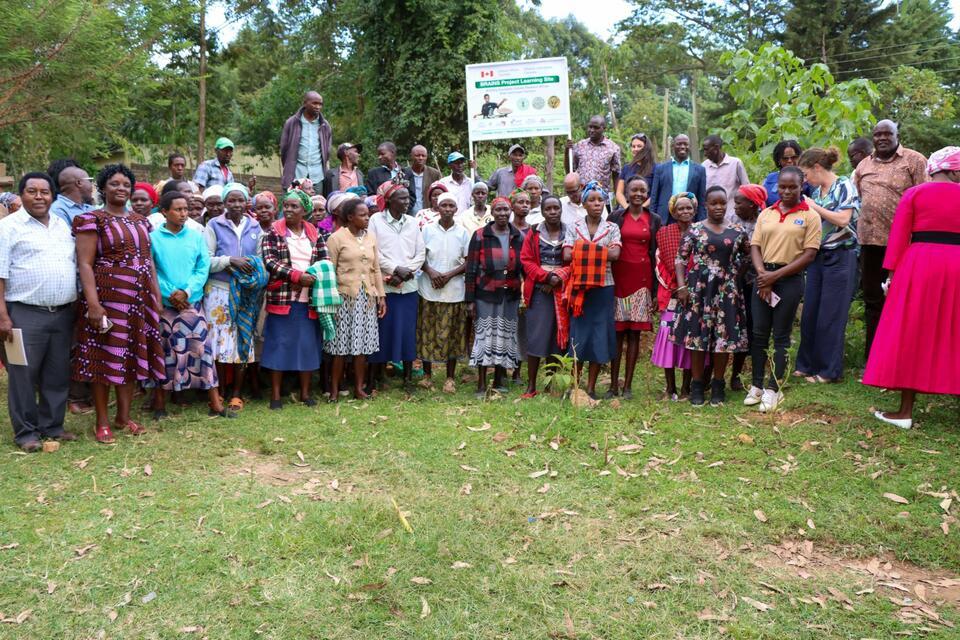
Also featured at the event was the Building Equitable Climate-Resilient African Bean & INsect Sectors (BRAINS) Initiative, which is a collaboration between PABRA and the International Centre of Insect Physiology and Ecology (icipe). This project integrates beans, beneficial insects, fruit trees and 'integrated pest management' to promote low-carbon farming and climate resilience, particularly among women and youth. icipe showcased climate-smart technologies including fertilizers made from beetle and locust frass, honey production, as well as the incorporation of black soldier flies.
“My key takeaways are the importance of developing farmer-centric technologies, engaging communities, and above all partnerships, partnerships, partnerships. I’m especially excited about the BRAINS Initiative, which brings together farmers across diverse value chains to improve their livelihoods,” said Ayuka Fombong, Research Scientist at icipe.
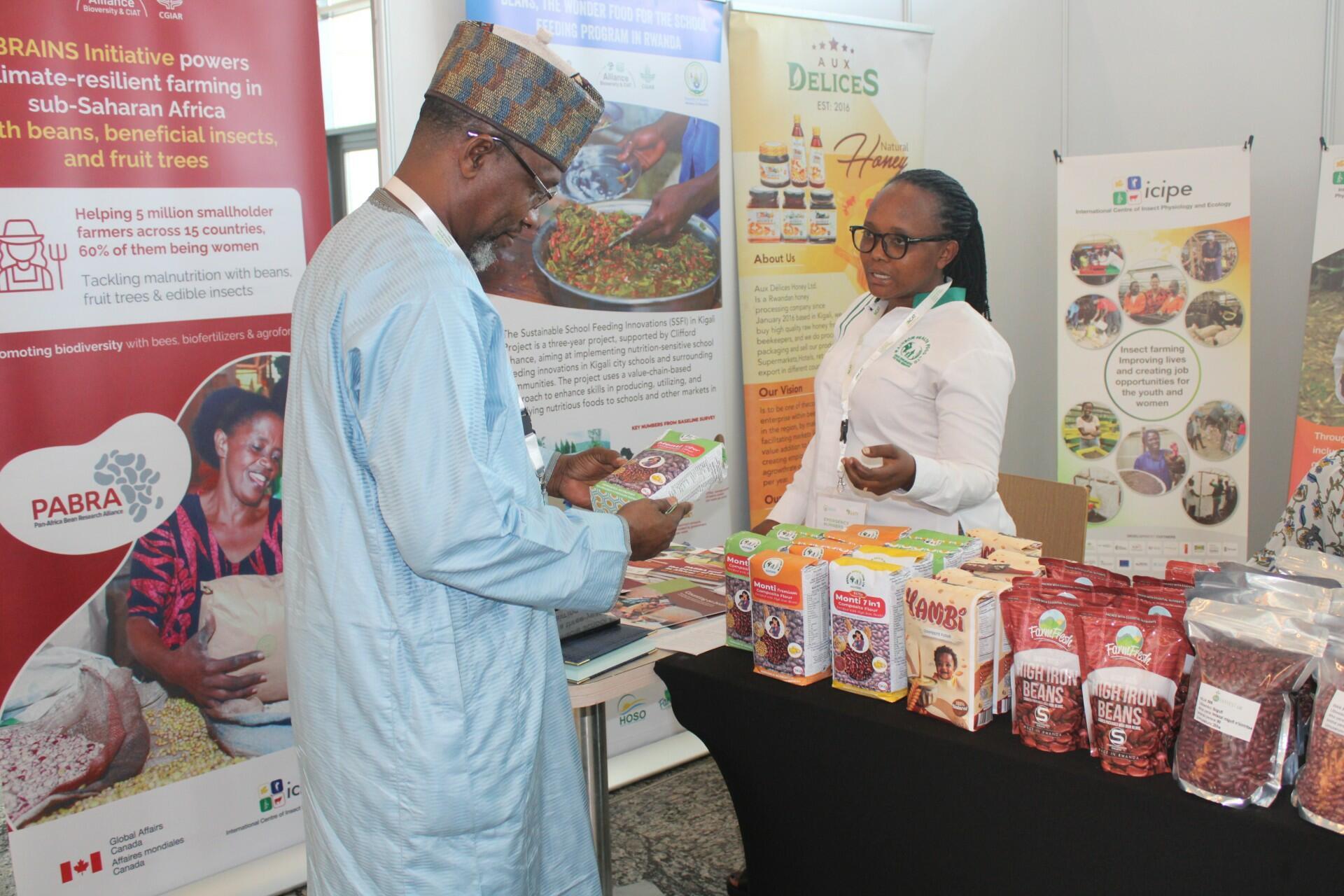
Frame 4: Diane Mukamuremyi (right) from Rainbow Healthy Foods exhibiting her products during ACAT
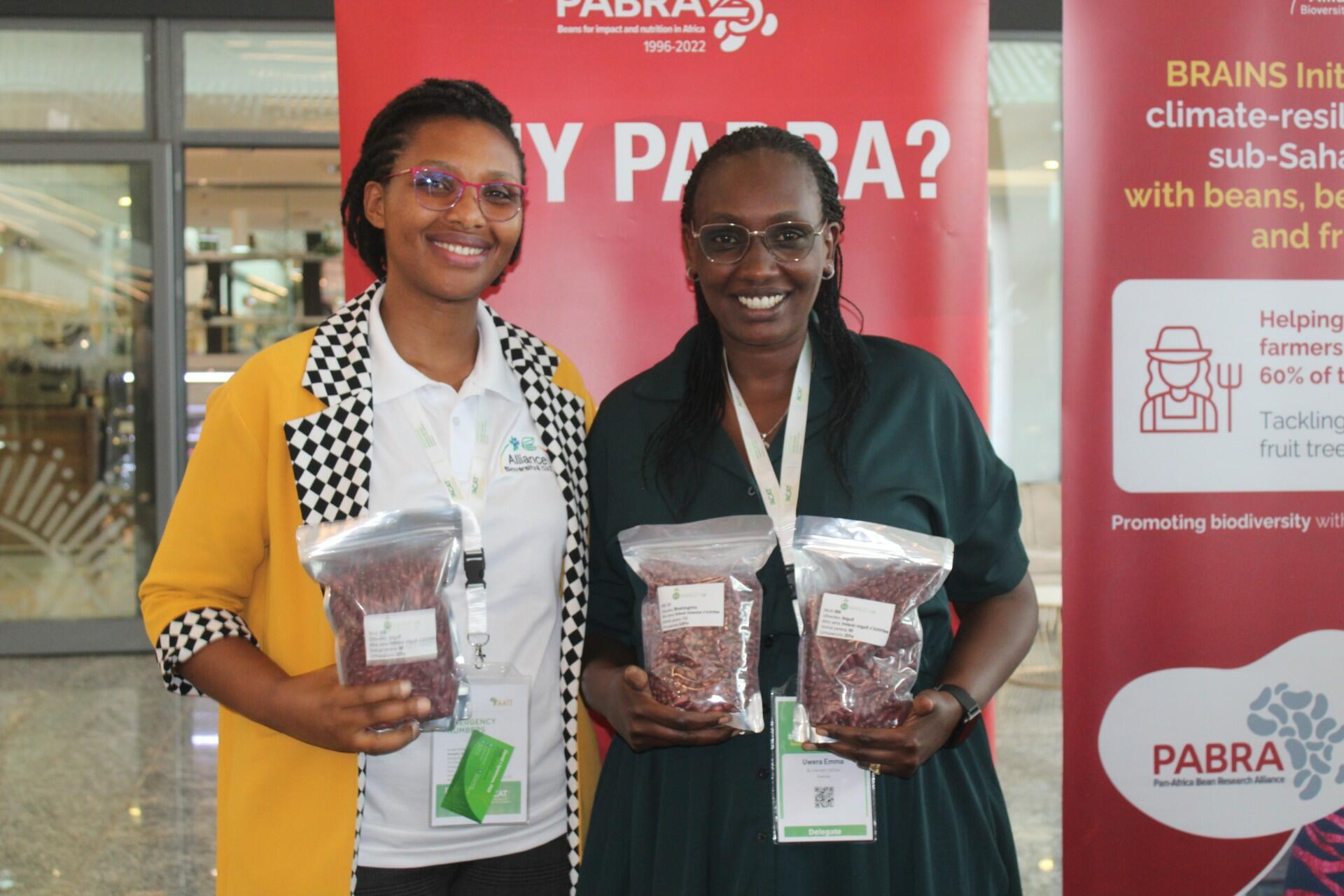
Frame 5: Emma Uwera (right) and Alliance Scientist Yvonne Munyangeri proudly displaying a selection of the bean seeds I & J produces
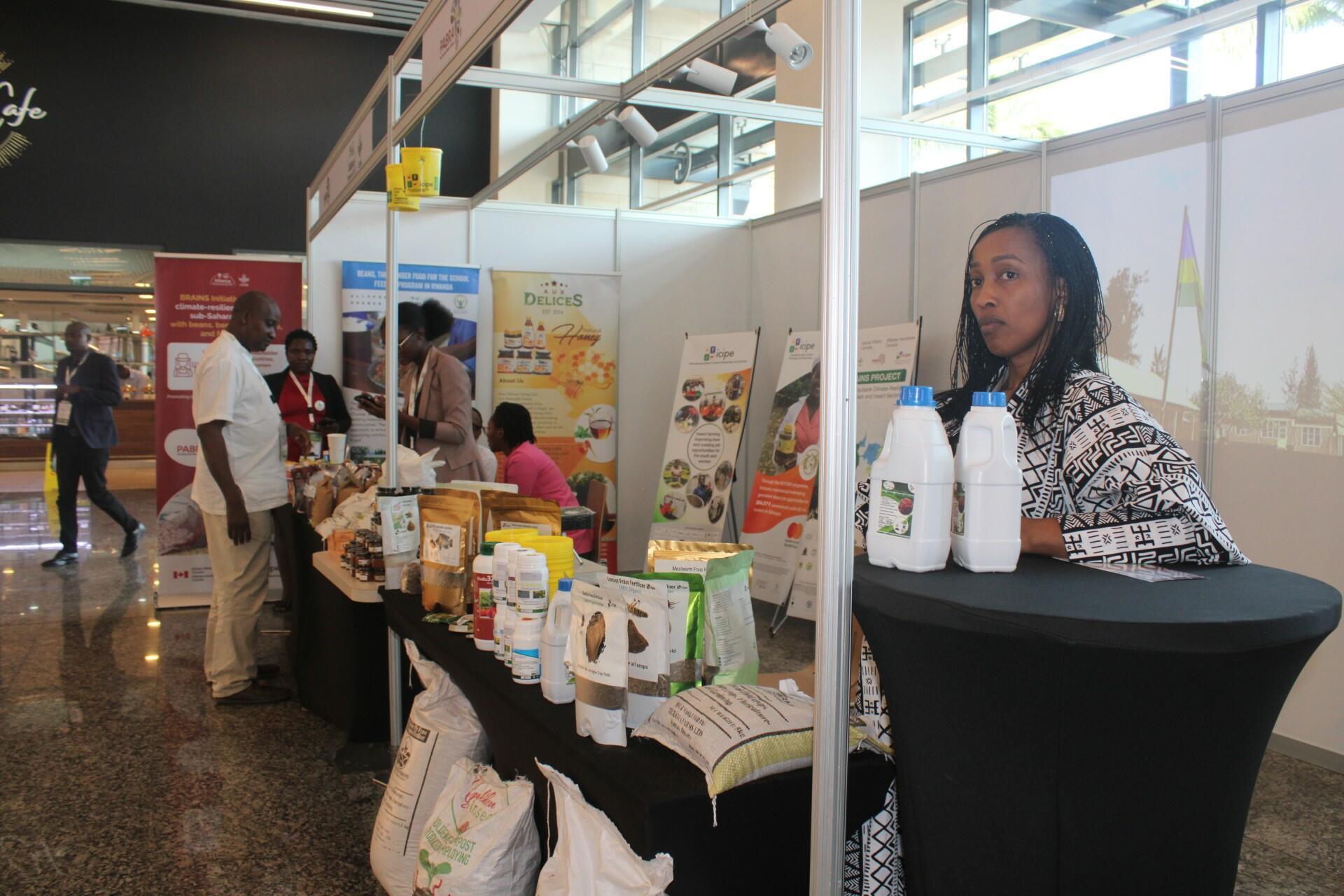
Frame 6: A selection of products developed by icipe on display at ACAT
From vision to soil
According to Justin Mabeya - Scientist at the Alliance and PABRA, and the Alliance’s Lead at ACAT - the true effectiveness of partnerships lies in ensuring that developed agricultural technologies speak the same language as farmers. One of the biggest challenges for institutions, he noted, is making sure that research and technologies developed over the years don’t stay in labs but are successfully transferred to farmers and embedded within real-world food systems:
“Through PABRA, we’re committed to ensuring our research benefits farmers and ultimately reaches the market and consumers. This aligns well with the goals of the conference. In Rwanda, we have a strong presence, connecting several of our programs and initiatives on the ground,” he explained.
Eliud Birachi, Rwanda Country Representative for the Alliance and a Project Leader and Market Economist, echoed similar views during a panel discussion. “Ultimately, what we need are demand-driven partnerships built around compelling business cases that ensure the sustainability of these technologies,” he emphasized.
At the heart of tech-driven agriculture lies one undeniable truth: partnerships are essential. Still, as echoed throughout the room, “If the technology is not compatible with farmers, then it does not make sense.” For Africa to meet its growing food demand, technology developers must create solutions that truly serve those working the land.
As Dr. Canisius Kanangire aptly put it, “It is not the seed in the field that feeds the nation it is the seed in the soil that feeds nations.”
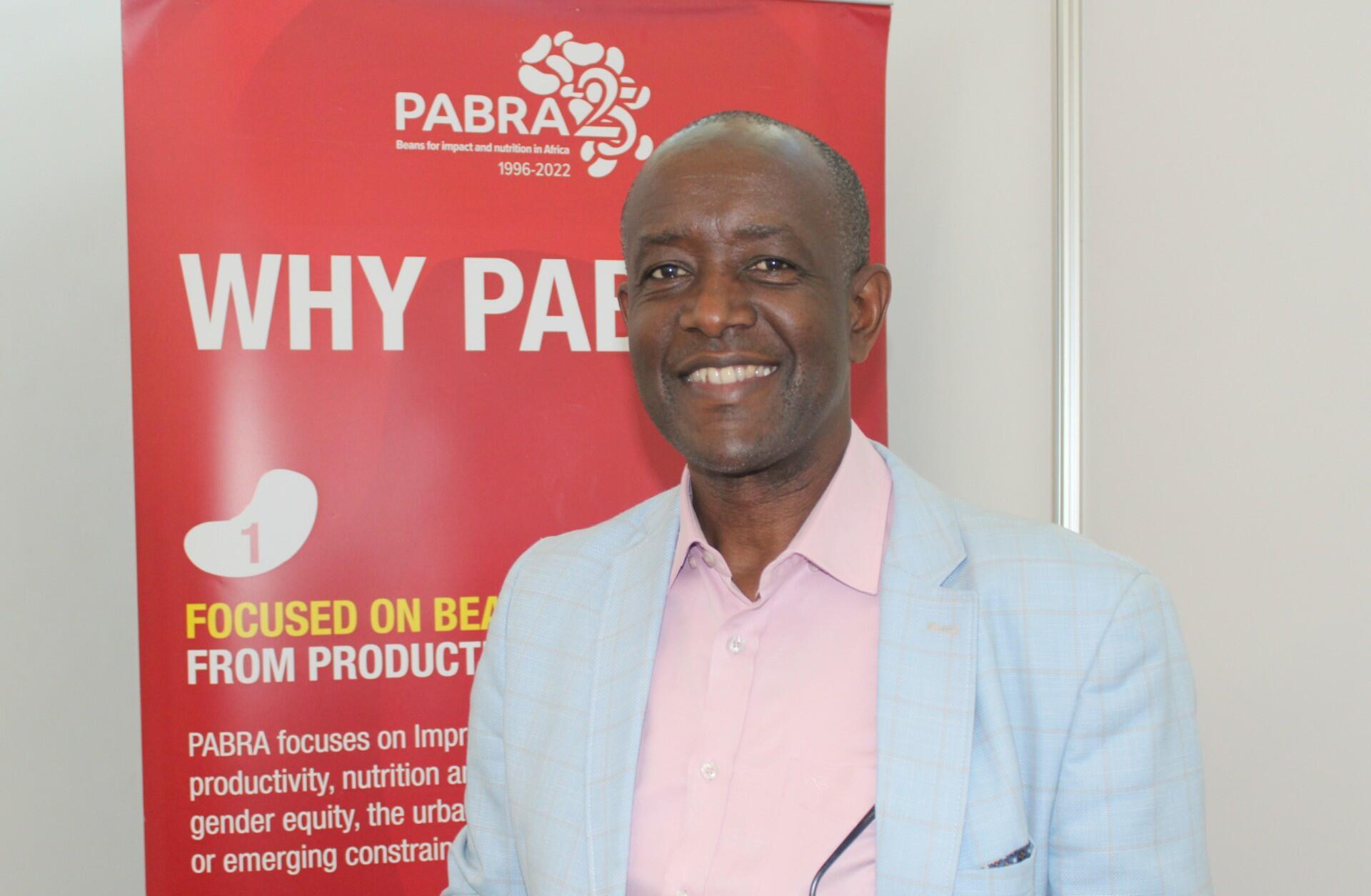
Frame 7: Mabeya advocates for research-driven approaches that directly benefit farmers

Eliud Abucheli Birachi
Project Leader, Country Representative for RwandaFrame 1: ACAT brought together experts, policymakers, youth, and farmers to strengthen partnerships and foster collaboration