
Blog There is a science to milking
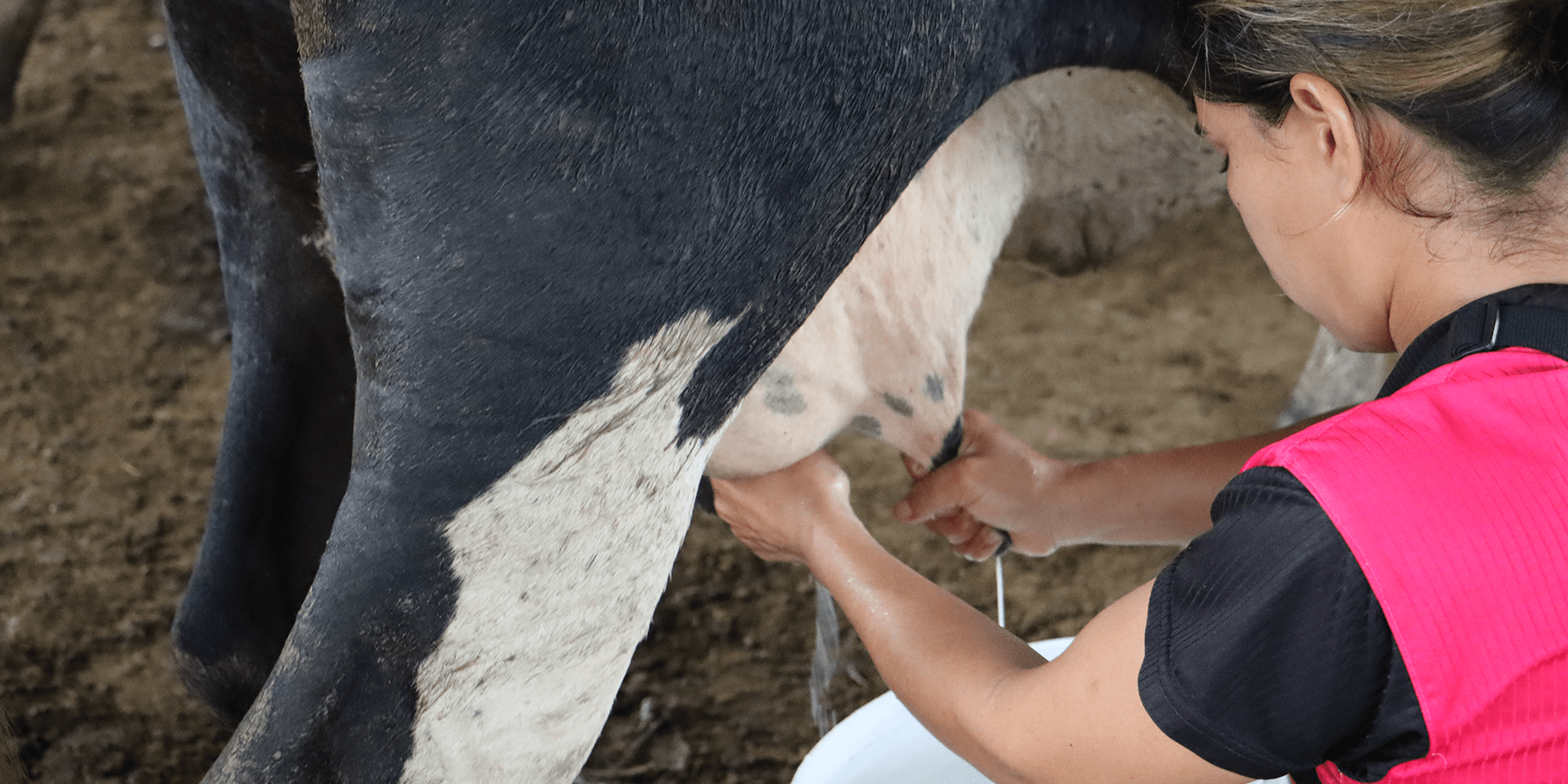

Thousands of farmers get up early every day to collect the milk that is their main source of sustenance and food for their families. Many of them do it the same way for years, using the technique their parents taught them, which has always worked for them. The level of sophistication of these techniques varies greatly from one farm to another, and so does the quantity and quality of milk produced.
With the aim of contributing to the improvement of the dairy sector in the department of Caquetá (Colombia), the European Peace Fund’s Rutas PDET Program is supporting producers in improving and standardizing their milking practices, so that they can achieve higher yields and better quality while ensuring animal welfare.
In the department of Caquetá, a dairy-producing region where an estimated 1,873,000 liters of milk were produced daily in 2022 according to the Caquetá Departmental Committee of Cattle Ranchers, the Rutas PDET Program has been a strategic partner in this transformation implemented by the Adelco Network, ICCO Conexión, and the Alliance of Bioversity International and CIAT. This program employs a co-design approach that encourages producer participation in training sessions, advisory services, and specialized workshops, where they are given the opportunity to identify their specific needs, co-create solutions, and apply technologies that improve their livestock practices, taking into account the unique characteristics and strengths of each farm in the region.
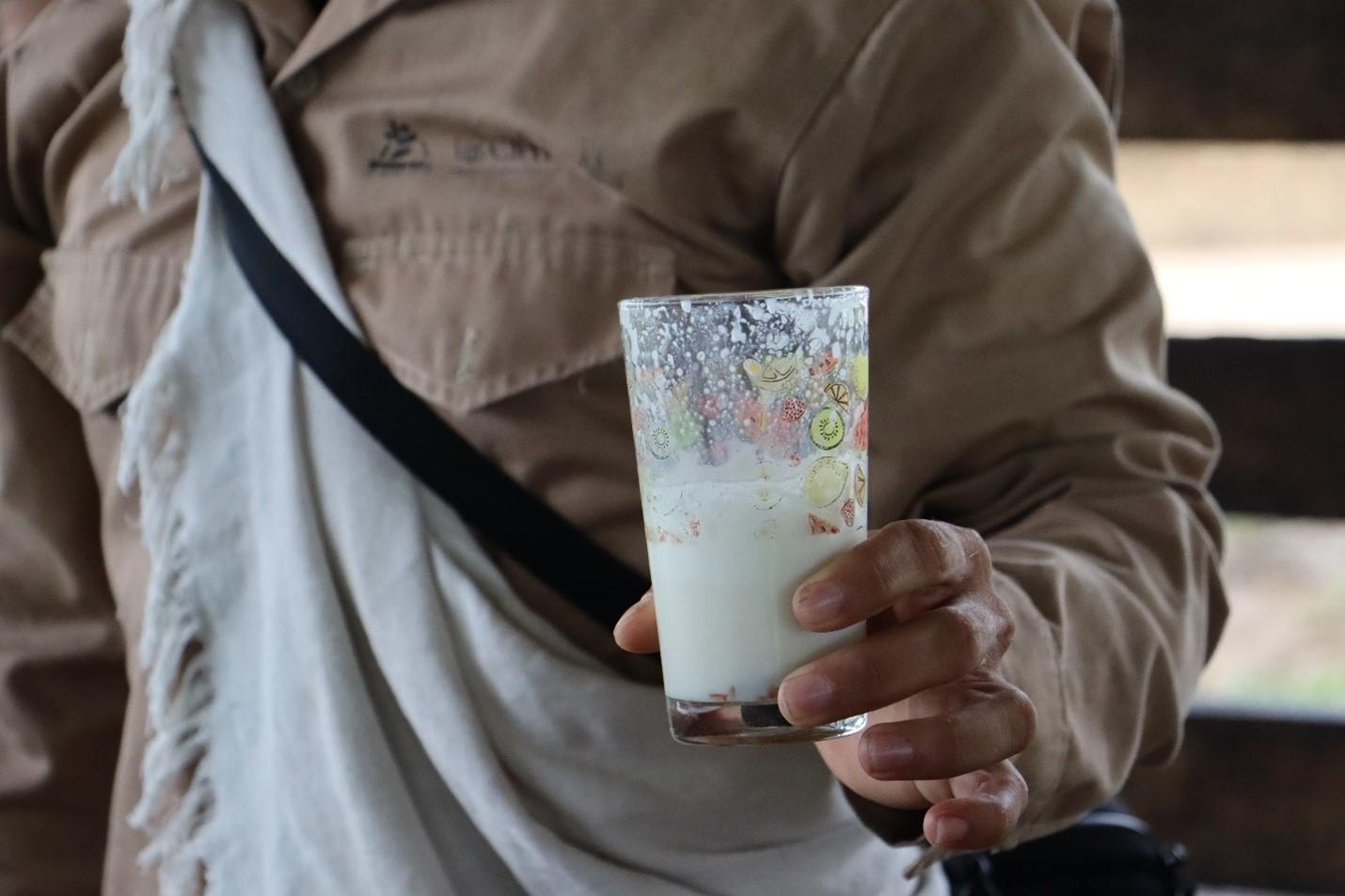
According to the FAO, milk and dairy products have become a key ally in the fight against hunger and food insecurity due to their high content of macronutrients (carbohydrates, fats, and proteins) and micronutrients (vitamin A, vitamin B12, calcium, and magnesium), which make them a good source of nutrition at every stage of life.
Photos: Anny Yedra
When it comes to milking, the process is an art in itself, and both farmers and scientists agree that “there is a science to milking.” It is not simply a matter of extracting milk from the cows' udders, but rather of following a routine—one that even the cows have already learned—that encompasses the time before, during, and after milking. This is what gives rise to Good Milking Practices (GMP), which involve implementing appropriate hygiene and handling protocols within this routine to ensure both the welfare of the cattle and the quality of dairy products.
It all starts in the grasslands
The Tropical Forage Program of the Alliance of Bioversity and CIAT has promoted the implementation of six technology packages to ensure sustainable livestock and dairy production across 370 beneficiary farms. Notable among these technology packages is the establishment and/or renewal of pastures + application of soil amendments, which focuses on assisting livestock farmers by introducing improved forages if their current pastures have lost productive capacity, and on implementing good management practices, such as the application of soil amendments (products to improve soil conditions), to increase productivity on farms that already have improved pastures.
Approximately 55% of the variation in milk composition is due to genetic factors, while the remaining 45% is attributed to environmental factors, herd management practices, and, of course, diet.
The nutritional quality of forage can affect the volume and proportion of solids in milk, primarily fat and protein. “Depending on the type of feed they are given, cows will reflect that in their milk yield (if it’s milk) or in their weight (if it’s meat). So, the idea behind implementing improved pastures is to identify the best combinations of these systems—such as silvopastoral systems, grasses, and legumes—to incorporate them into their diets and improve those quality and production parameters,” according to Mauricio Sotelo-Cabrera, researcher and coordinator of the livestock component of the Rutas PDET program.
Although these parameters can be thoroughly verified in laboratories and collection centers, the project’s beneficiary producers have begun to notice positive changes in the milk’s properties: “When people buy our milk, they immediately notice the difference because it’s creamier and has a more intense flavor. That’s because our cows seek out different types of forage, whether it’s browsing or other pastures,” says Francy Martínez of the Villamaría farm in the municipality of Paujil, Caquetá.
Animal welfare as an essential ingredient
Recently, there has been growing awareness that livestock operations (and all activities involving animals) must also fulfill a social responsibility to ensure respect for and proper care of the animals in this production chain. And in the case of milking, committing to ensuring the welfare of cows not only impacts public interest, since when cows are stressed, uncomfortable, or suffer any form of mistreatment during milking, it can trigger negative physiological responses that affect milk production.
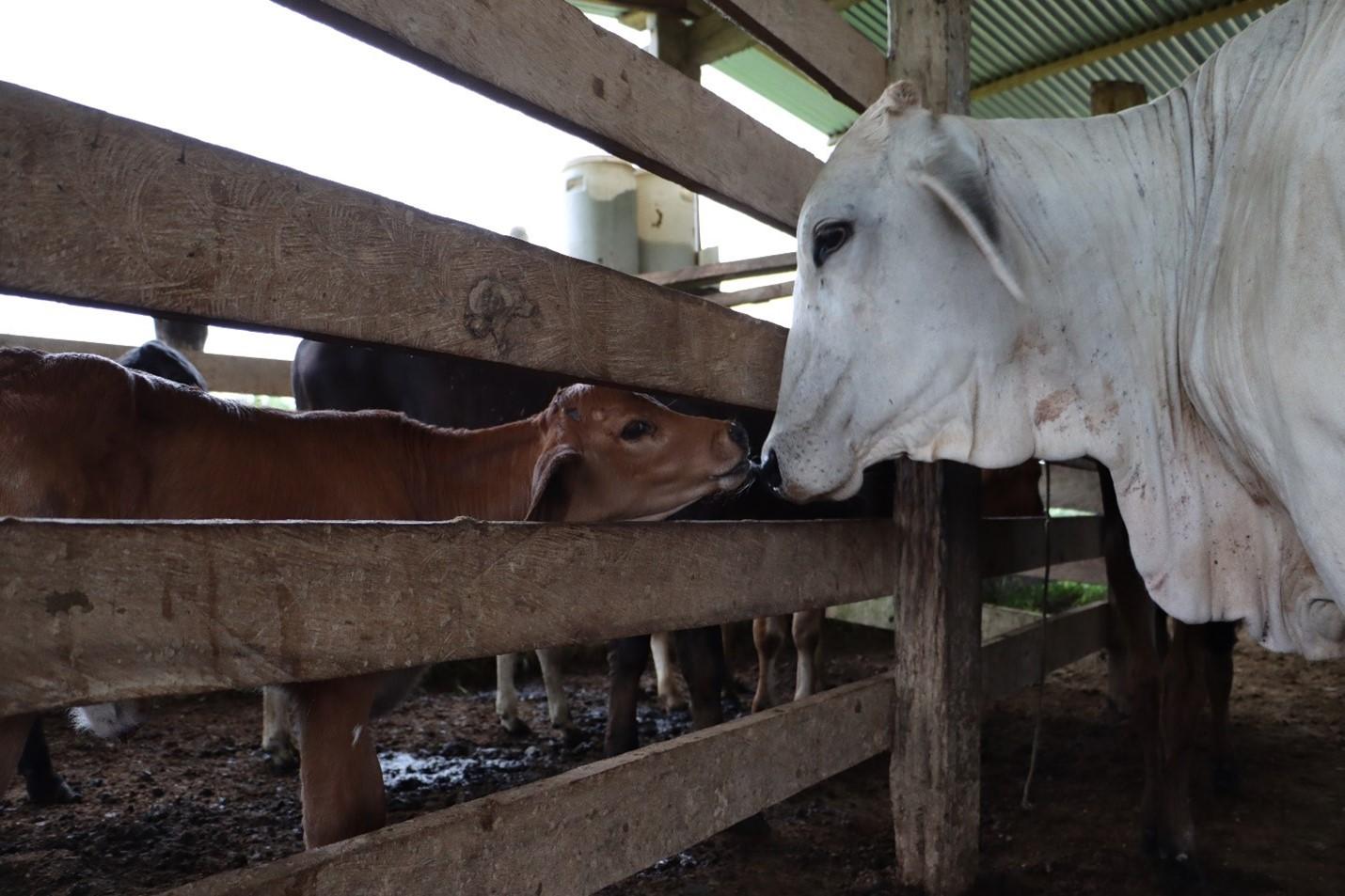
“When a positive stimulus occurs in the hypothalamus (such as when the calf approaches to suckle), a hormone called oxytocin is released, which is responsible for triggering milk ejection. But during times of stress, the hormone adrenaline is released, which blocks the release of oxytocin and thus prevents milk production,” explains Jeison Velasco, an agricultural engineer with the Tropical Forage Program.
Therefore, it is essential to provide a calm and safe environment for the cows during this process, including comfortable facilities and training in milking techniques that minimize stress for the animal. Ensuring animal welfare is even one of the requirements that several national and international companies in the dairy sector demand producers meet to purchase milk from them.
“The treatment of the cows is evident during visits by observing how they respond to a stranger, the amount of manure in the pen, the movement of their tails, the comfort of the facilities, and whether scare dogs are used for herding.” These observations verify that the animals are treated well, according to Gilberto Camacho, Nestlé’s farm advisor for the Caquetá region.
The value of quality
Implementing Good Milking Practices (GMP) benefits not only consumers but also producers, who can secure better prices and increase their profitability under Resolution 017 of January 20, 2012, through which the Ministerio de Agricultura y Desarrollo Rural (MADR) established a new payment system for producers; starting that year, the payment amount is determined by the compositional and hygienic quality of the dairy product. According to Camacho: “In Caquetá, the price difference can exceed $320 (US$ 0.1) per liter between a producer who implements the GMP and uses an efficient cooling process and one who does not.”
In the case of milk, its compositional quality is determined based on physicochemical characteristics, which include the proportion of water, proteins, lipids (fats), carbohydrates, minerals, and vitamins present in it; and organoleptic characteristics, which refer to the product’s sensory attributes (taste, smell, texture, and visual appearance).
As for hygienic quality, this refers to the level of hygiene under which the milk is obtained and handled, and its assessment is based on the total bacterial count, expressed in Colony-Forming Units per milliliter (CFU/ml). This microbiological concept refers to a unit of measurement used to quantify the number of live microorganisms in a liquid. Price bonuses or penalties for milk are based on the index, which, in Caquetá, can range from 201,000 to 300,000.
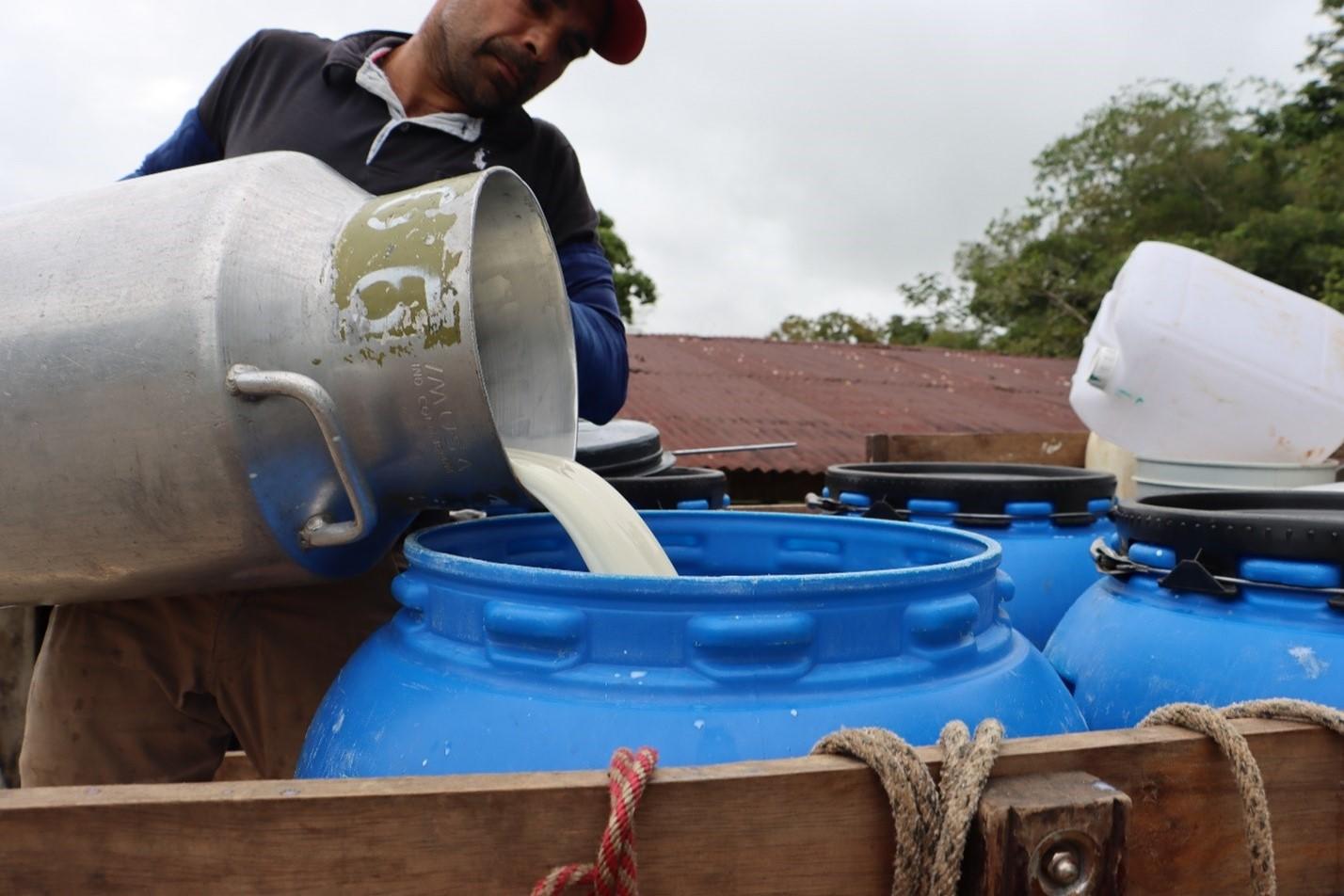
In Caquetá, milk producers who are part of the Rutas PDET program produce an average of 3.3 liters of milk per day.
“One of the program’s objectives is to improve milk yield (more liters per lactation) and milk quality (lower CFU and somatic cell counts), without compromising its compositional quality (fat, protein, and solids), through the implementation of good milking practices and forage strategies based on mixed forage mixtures, the inclusion of improved pastures, and better grazing management practices, among others—all aimed at strengthening producers’ capacity to adopt and manage sustainable production systems”, said Alejandra Marín, program coordinator for Alliance of Bioversity International and CIAT.
For this reason, the Rutas PDET Program has prepared a video summarizing the key considerations when implementing the GMP. This video is part of a training materials package distributed not only to program beneficiaries but also to any livestock producer in the region who wishes to improve their farm’s production and who visits one of the seven demonstration farms the Program maintains in the municipalities of Caquetá.