From the Field Small seed, bigger harvest: How Waithera is winning Kenyan farmers' trust
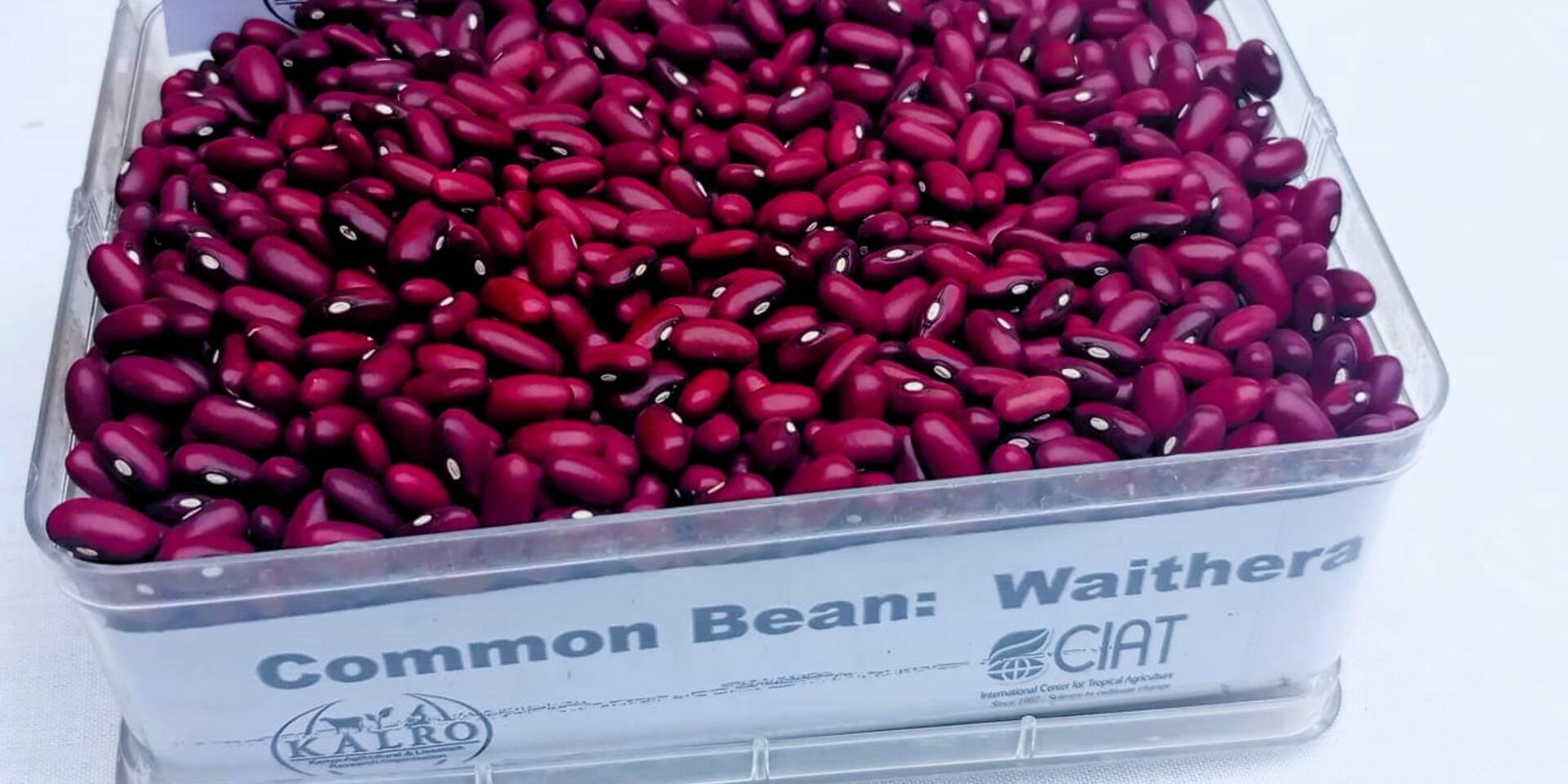

In Kenya’s farms, change is arriving without fanfare, but humbly in a small packet of seed passed from an extension officer to a farmer, who is trying something different.
That is how Waithera, a local name symbolizing “abundance”, is entering the country’s bean fields.
Developed through a long-standing partnership between the Kenya Agricultural and Livestock Research Organization (KALRO) and the Pan-Africa Bean Research Alliance (PABRA) program of the Alliance of Bioversity International and CIAT, Waithera is being positioned to replace the widely adopted Wairimu variety, while refining its weaknesses and retaining the traits farmers already value.
At KALRO Katumani, researchers describe it as a “re-engineered” bean, which is familiar in the kitchen but more productive in the field. It cooks faster, tolerates drought better, and delivers higher yields. It is also sweeter and produces less flatulence, a small but decisive detail in household conversations that often determines whether the variety is accepted or rejected.
“The Waithera variety retains the desirable characteristics of the Wairimu bean but is specifically bred to produce less gas, offering a more comfortable consumption experience while maintaining the familiar colour after cooking,” said David Karanja, KALRO’s National Coordinator for Grain Legumes. “It cooks fast, is sweet, and contains medium levels of zinc and iron.”
Those nutritional gains matter in a country where beans are a daily staple and a key source of micronutrients for millions of households, especially women and children.
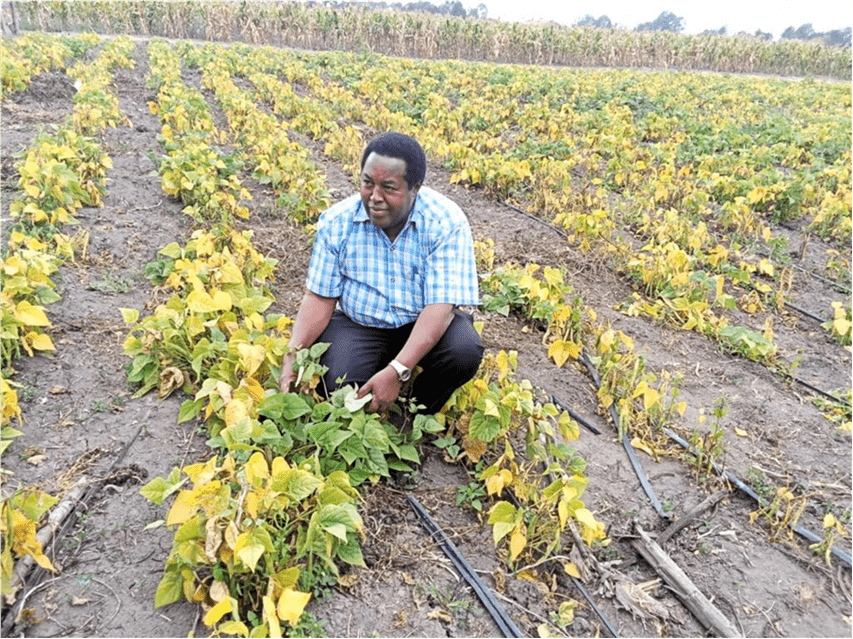
David Karanja, National Coordinator for Grain Legumes at KALRO, in a Waithera Bean Field.
A yield story hard to ignore
If nutrition explains the need for Waithera, yield is what is driving the excitement. Under optimal conditions, Nyota, introduced in 2017, can return about 26 kilograms for every one kilogram of seed planted. Waithera more than doubles that. In trials and farmer-managed plots, it has reached as high as 55 kilograms from just one kilogram of seed.
In Narumoru, Kieni East, Nyeri County, farmers trained by KALRO are already reporting yield in high volumes, coinciding with what researchers describe as “exceptional responsiveness” to good management: adequate soil fertility, timely planting, and proper spacing translate directly into higher pod formation and sustained production. In a country where beans are second only to maize as a staple food, those figures could mean more food on the table and more money in farmers' pockets.
The Alliance team
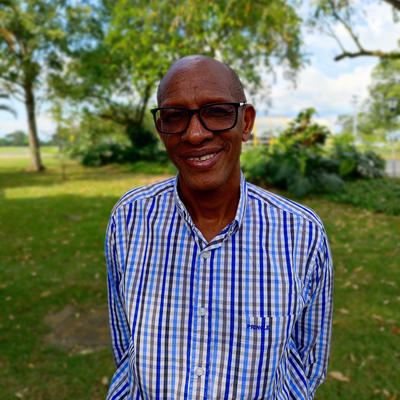
Jean Claude Rubyogo
Leader, Global Bean Program, and Director, Pan Africa Bean Research Alliance (PABRA)