Blog Women to the front: Rural women strengthen their advocacy skills for land rights in The Gambia

Despite representing more than half of the agricultural workforce - and being recognized anecdotally as the backbone of the country’s food systems – women in The Gambia own less than 4% of land.
This discrepancy in women’s land ownership is not an unfamiliar phenomenon, but it has tremendous impact on food systems and the livelihoods of rural people. Put simply: when women do not own land, they are unable to fully participate in or equally benefit from agricultural activities. Barriers that limit women’s access to and control over land vary from place to place and are rooted in patriarchal norms that do not serve the best interests of women and their communities at large.
With this in mind, the Global Initiative for Gender Transformative Approaches (GTAs) for Women’s Resource Rights (WRR) was initiated in six countries by the International Fund for Agricultural Development (IFAD) in 2021. The Alliance of Bioversity International and CIAT has been leading the work in The Gambia and Kyrgyzstan, and are now wrapping up and consolidating lessons learned. The key objective of the Global Initiative has been uncovering the structural drivers of land ownership inequality at local level and designing pilot GTAs alongside local stakeholders to address them.
Through an extensive analysis of secondary and primary data and consultations with local stakeholders, ActionAid in The Gambia (AAITG) was identified as an ideal local partner to engage in this process. They have a well-established presence nationwide and a long-standing partnership with the Rural Women’s Assembly (RWA), a women-led community-based organization with a country-wide presence, working around issues of climate change, food security and land tenure security. In August 2022, AAITG launched a five-day Land Rights Caravan Campaign with the Rural Women’s Assembly and the NGO Activista, so they already had a tried and tested approach to engaging with communities and decision-makers to inform the design of the WRR pilot in The Gambia.
The co-created pilot consisted of regional and district-level consultations with communities, local leaders, and regional staff from the IFAD ROOTS Project to build a platform for rural people who wish to campaign and advocate for gender transformation. Thirty-six people – including RWA members, local authorities, ROOTS staff, and more - were trained as platform coordinators through AAITG’s Human Rights-Based Approach. The coordinators learned skills to engage effectively with communities on WLR and created a plan for rolling out an advocacy campaign, which was led by the RWA members.
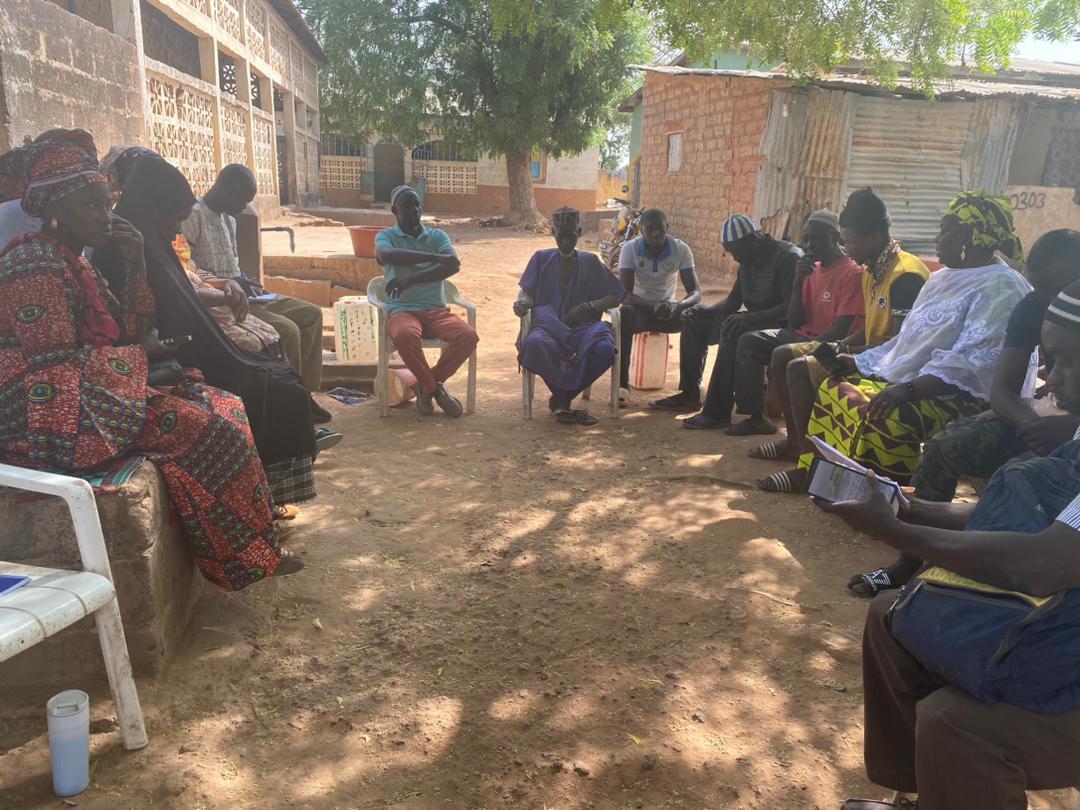
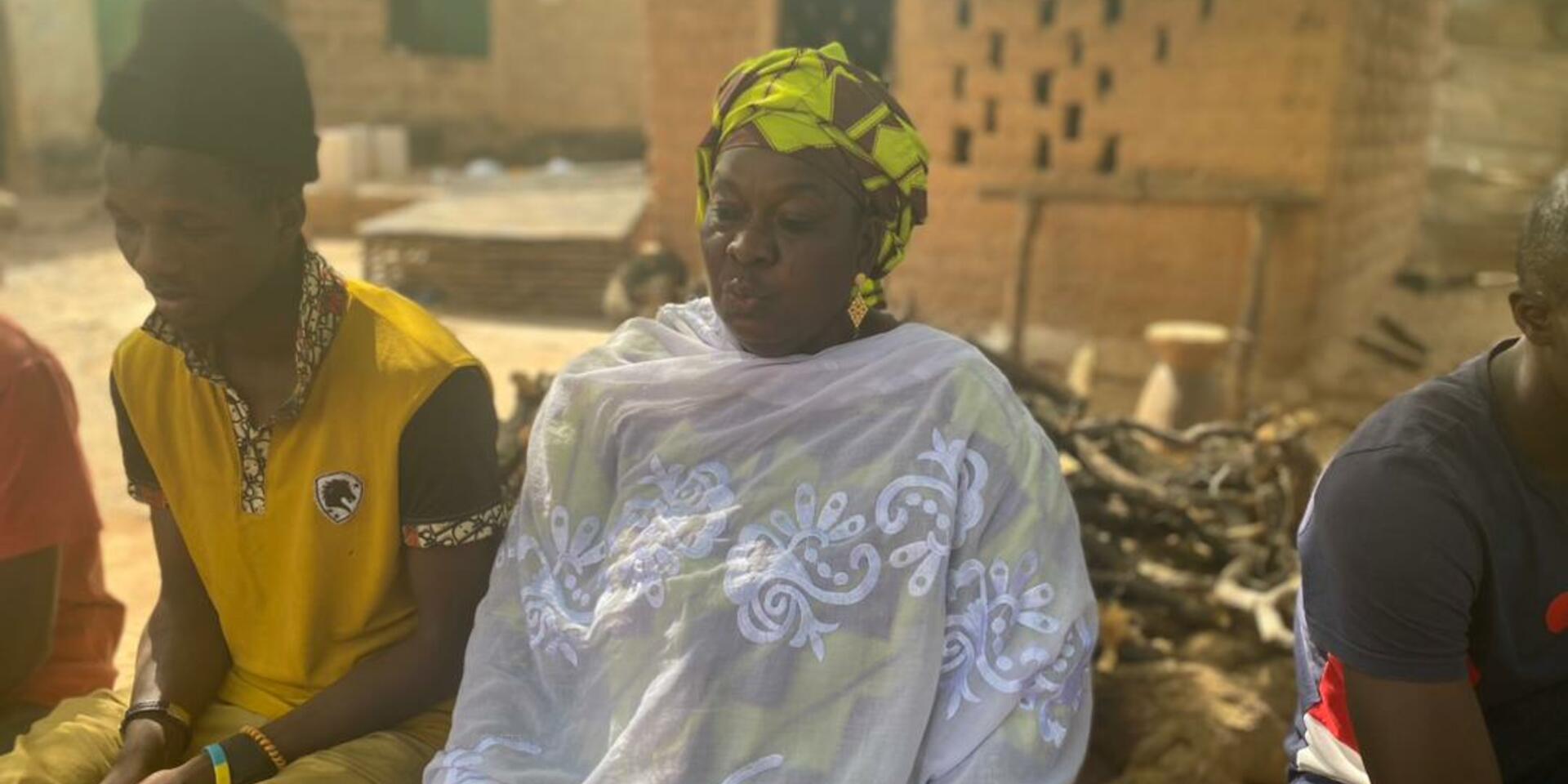
Campaign team meeting with the elders and women of Pacharr, Central River Region. Credit: ActionAid in The Gambia
The campaign visited 29 communities in five project districts to advocate for WLR and elicit first-hand experiences of women trying to exercise their land rights. Some villages were more receptive to changing the status quo than others, but the campaign received overall positive feedback from the communities. In many discussions, participants were pleasantly surprised to hear that women have equal access to land under Gambia law, and saw the connection to Sharia law, under which women have equal land and property rights and are entitled to inherit one share of land for every two shares inherited by their male family members.
In The Gambia, the customary and legal land tenure systems overlap in nuanced ways from community to community. Traditional village chiefs, called Alkalo, are responsible for allocating land, and the only privately owned land is in Banjul and Kanifing Municipalities; a legacy of colonialism. The legal system recognizes the role of the Alkalo in land allocation, and the Alkalo’s endorsement of tenure is a vital part of formalizing a title through the legal system.
The Gambia is the smallest country on the African continent, and with pressure on land increasing due to issues like land-grabbing and population growth, it’s important that women can demonstrate legal land ownership and secure their tenure in the event of a dispute.
Without a direct allocation from the Alkalo, women are usually allocated parcels of their family plots for vegetable or rice production. However, allocations can be easily revoked by the family, or even by the Alkalo. The way these decisions are usually made leaves out the women involved, so many women are uninclined to plant long-term crops since farming on borrowed land is like farming on borrowed time.
Rural women in general also saw the process of land registration as cumbersome and unnecessary, and felt that the allocation of land from the local authority was enough to secure tenure, however, in Gambian law, only formal tenure is indisputable and overrides the Alkalo’s stamp.
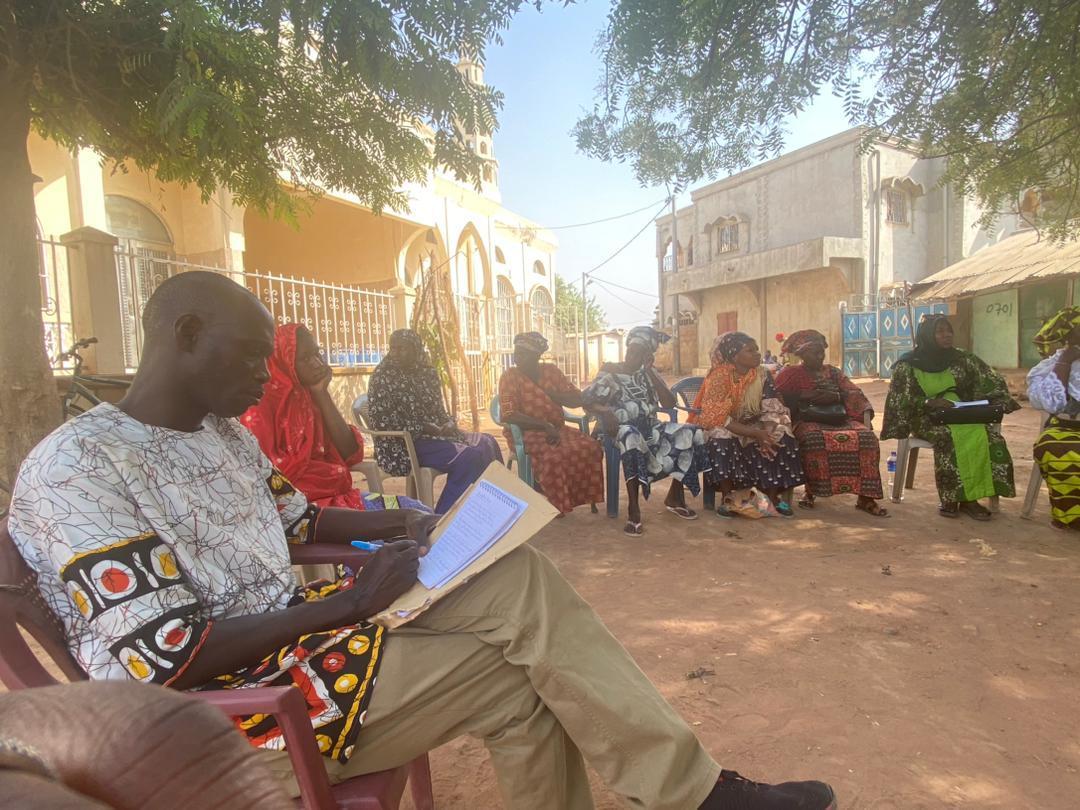
Discussions underway in Dampha Kunda, Upper River Region. Credit: ActionAid in The Gambia
During the advocacy campaign, Amie Mboob from the community of Sandu Misira, Upper River Region, shared her experience with land issues:
“One project wanted to support [our women’s group] with a garden and the Alkalo gave us land, but it was not documented. When he died, one of his sons wanted to get the land from us. Although he did not get the land from us, it was very tough for us and delayed our vegetable production that year.”
The campaign opened a space for rural women to share their experiences in dialogue with local leaders, and it was particularly effective since it was led by their peers. RWA member Fatou Trawally reflected that the advocacy training helped her and her co-coordinators effectively engage communities and strengthen WLR in the Regions.
“Everyone can understand through dialogue,” she said. “Change isn’t easy; if you want to make change you need a strategic approach through discussion and consensus.”
On 27 March 2024, key government stakeholders, RWA members, platform coordinators, ROOTS project staff, AAITG staff, and more came together to reflect on the WLR campaign. RWA speakers and panelists that day called on the government to increase support for upholding WLR and raising awareness. Government officials who were present expressed great interest in the campaign and shared their intention to involve AAITG and the RWA in the process of creating The Gambia’s first-ever land policy, which is in its early stages of development and consultations.
The event followed a two-day training of trainers for the platform coordinators and other local land rights advocates on the use of the Legal Guide to WLR in The Gambia, produced by the Female Lawyers Association of The Gambia (FLAG). The guide was a component of the GTA pilot and aimed to simplify and facilitate understanding of the process of registering land titles and the importance of this for women and communities. Energized by the training and the success of the national event, the RWA members set to work with the support of AAITG and FLAG to deliver step-down trainings on the Legal Guide to WLR in communities. In total, the RWA visited twenty-five communities across the country, training 793 rural people (622 of whom are women) on the contents of the Guide.
President of the Tambasansang Women's Group, Siranding Manneh, shared that the group has been farming on land that is not documented. She shared that the training made the process of registering land, and the importance of doing so, very clear, and that the group would certainly follow up on this process. This was echoed in several communities, where Women’s Groups and individuals now have the resources, interest, and increased community support to secure their land tenure.
Sana Giani, and his ROOTS Project peers, works closely with communities to build climate resilience amongst farming communities, which WLR is essential to achieving. “I and my colleagues learnt lot of new things about land rights,” he shared. “We will use the knowledge gained to train communities especially women to increase their knowledge on land rights."
Moving forward, RWA members, AAITG, FLAG, and the ROOTS Project are committed to leveraging the momentum catalyzed by the GTA pilot. With strengthened connections - and a cohort of rural women who are equipped with tools and motivation - they are ready to usher in a new era for women's land rights in The Gambia.
Learn more about the process of engaging rural women in the GTA pilot brief co-produced with ActionAid in The Gambia
See Also