From the Field The Power of Human-Centered Design Applied to Digital and Climate-Resilient

In agriculture, innovation does not begin with technology, but with people. Listening to, understanding, and co-creating with them is the starting point of Human-Centered Design; the approach through which the Alliance of Bioversity International and CIAT transforms science into sustainable solutions with real impact in rural territories.
HCD, or Human-Centered Design, is a working approach that places people at the center of research and innovation processes. It means designing “with” people, not “for” them, recognizing that they are the ones who best understand their own contexts, challenges, and opportunities. Rather than starting from predefined hypotheses or models, design is built from the voices of those who directly experience the effects of climate change: farmers, technicians, associations, rural communities, and others.
For Emmanuel Zapata-Caldas, researcher at the Alliance of Bioversity International and CIAT, this paradigm shift redefines what we understand as innovation: “Effective innovation is not measured by how technically complex it is, but by how easily it is understood, used, and embraced by communities.”
HCD builds a bridge between science and reality. Instead of generating results that remain in reports and tools that are rarely used after a project ends, it opens a back-and-forth process where empathy becomes evidence and participation becomes a guarantee of adoption. Every step strengthens the relevance of knowledge and expands its impact, ensuring that scientific solutions remain alive and useful beyond the lifespan of a project.
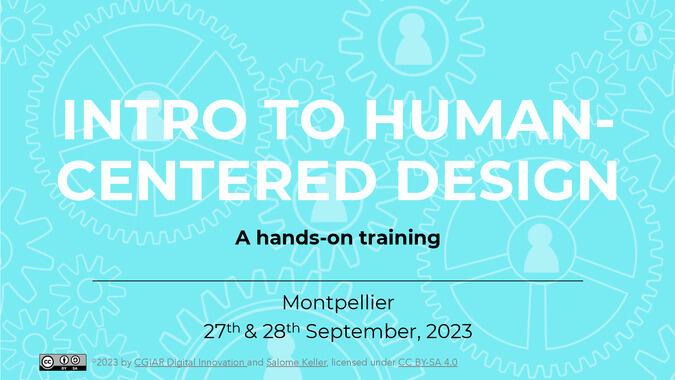
At the Alliance of Bioversity International and CIAT, this approach is embodied in the HCD cycle. Inspired by Design Thinking, the cycle encourages scientific teams to look beyond the laboratory and accompany communities from problem identification to the scaling of solutions. Through five interconnected stages: examine, explore, create, implement, and scale, the process integrates technical and local knowledge, generating learning that feeds back into each phase. In this way, innovation stops being a static product and becomes an evolving process that grows together with the people who make it possible.
Unlike traditional approaches, HCD does not seek to impose technological innovations, but rather to co-generate useful and adoptable knowledge. In this framework, each phase informs the next, creating continuous learning that allows interventions to be refined and strengthened.
The stages are described below:
1. Examine: enables understanding real challenges, not assumptions. Problems and opportunities are identified together with communities, contrasting technical perspectives with local experience.
2. Explore: deepens understanding of the social, economic, and climate context. Through user research, interviews, workshops, and focus groups, it uncovers how people perceive challenges, which solutions may be viable, and what enabling environments exist.
3. Create: focuses on co-designing and prototyping solutions with people, who not only test functionality but also help shape products and services.
4. Implement and test: brings prototypes into the field to validate their comprehension, usefulness, and effectiveness.
5. Scale: formally launches products for real-world use, refines them through monitoring and evaluation, and expands them to new populations and territories.
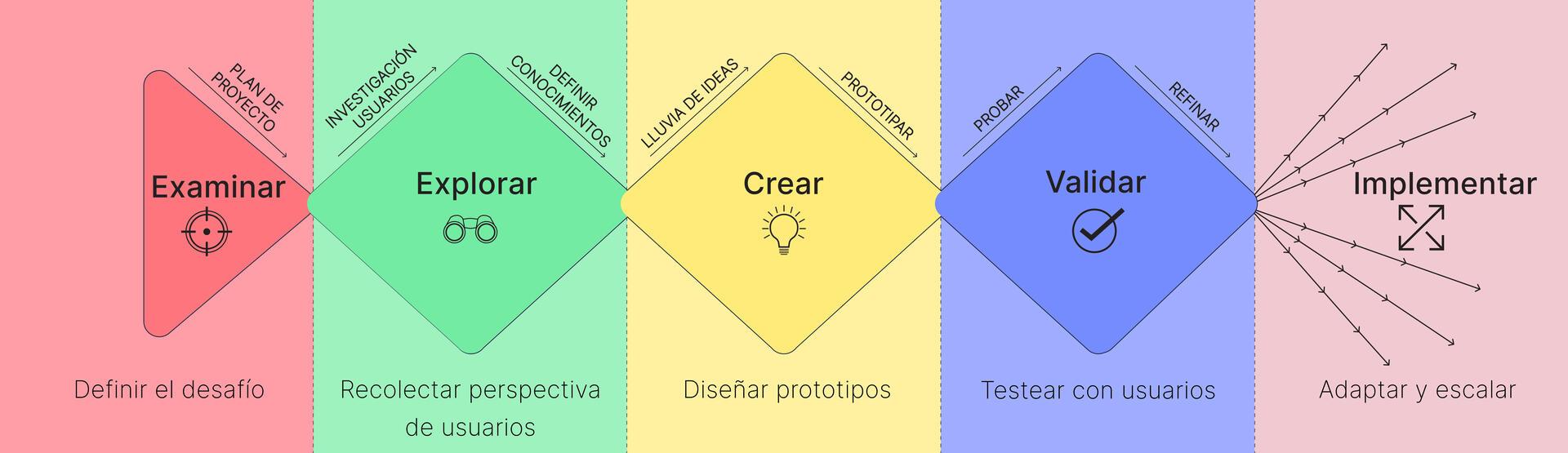
Design cycle implemented at the Alliance of Bioversity International and CIAT
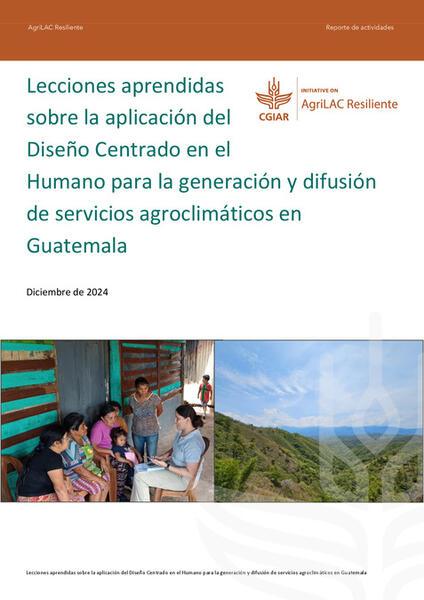
To date, Latin America has already seen concrete results from applying this approach in territories where science meets everyday life. In Guatemala, for example, HCD was applied to redesign climate services, particularly agroclimatic bulletins for farmers. The initiative started from a clear diagnosis: although valuable climate information existed, its language and format made it inaccessible to those who needed it most. The bulletins, often filled with technical terminology and complex graphics, did not necessarily connect with the realities and rural contexts of farming communities. Learn more in the study Lessons Learned from the Application of Human-Centered Design for the Generation and Dissemination of Agroclimatic Services in Guatemala.
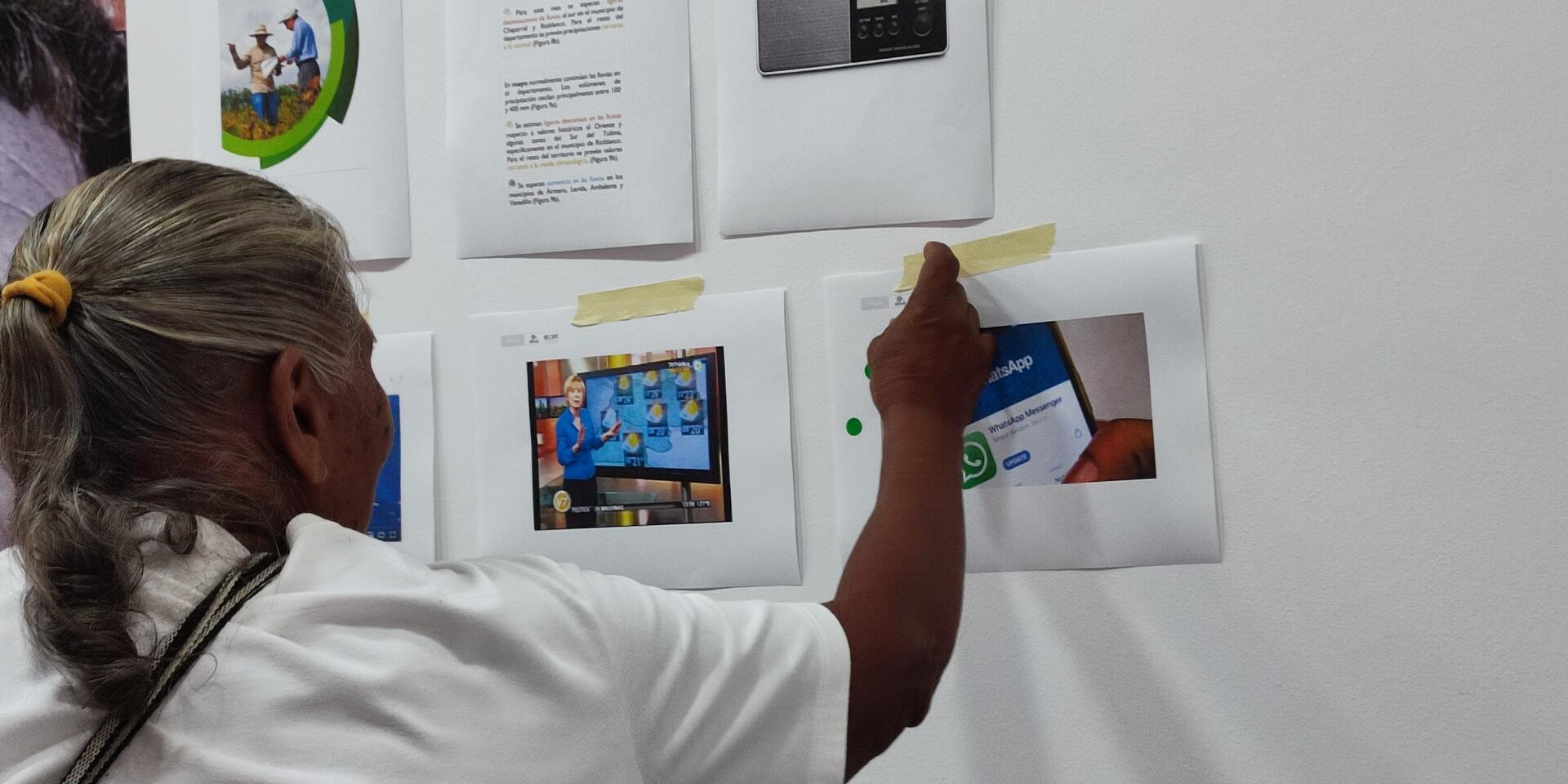
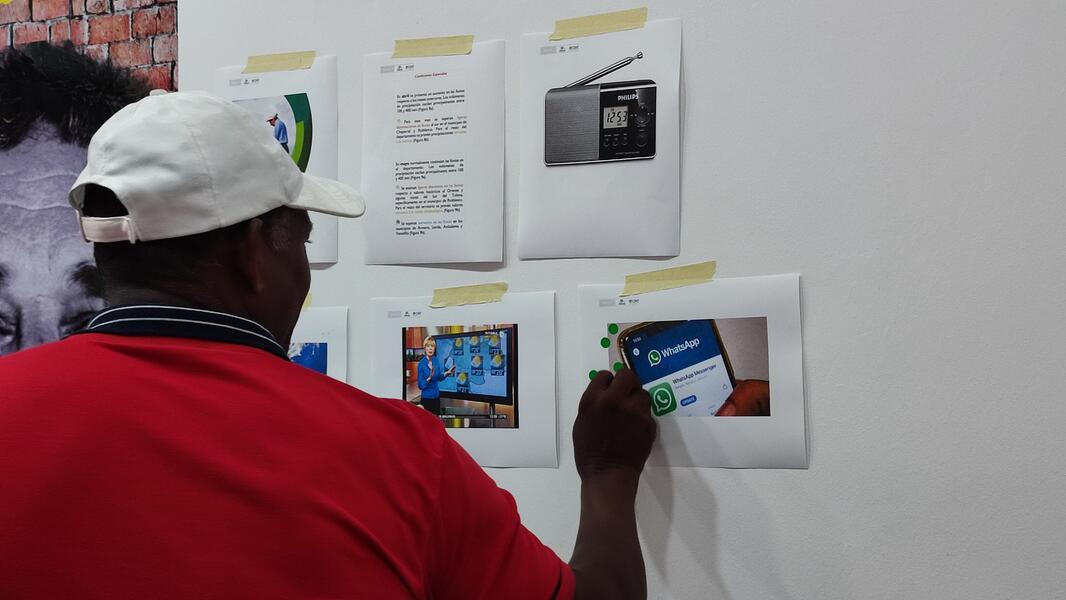
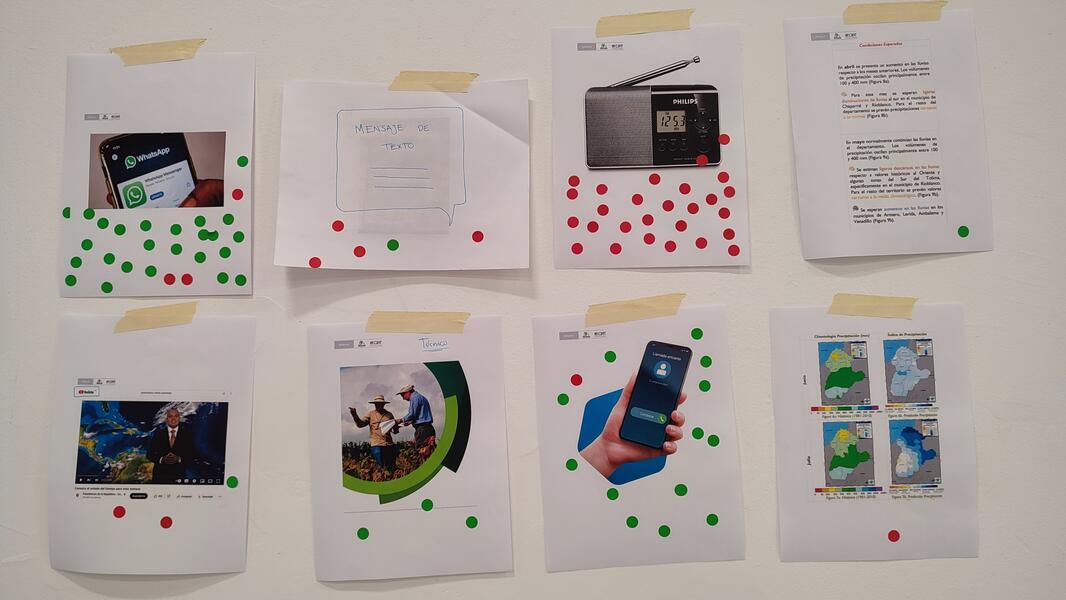
The research team then shifted its perspective. Instead of continuing to refine technical instruments, they decided to listen. Through interviews and workshops, they discovered that many farmers received information through WhatsApp and Facebook, but the files were too heavy or difficult to understand. This active listening led to a profound redesign: the bulletins were transformed into lighter, more visual, and user-friendly formats, with clear icons and practical recommendations. Each version was validated directly with communities before dissemination.
The impact was immediate. The bulletins began circulating more effectively, rural families started applying the information in planting and harvesting decisions, and recommendations became concrete climate adaptation practices. Scientific language was translated into messages that resonated with farmers’ lived experiences, strengthening trust and local ownership.
What began as a pilot in Chimaltenango has since expanded to Santa Rosa and Zacapa, demonstrating how knowledge can scale organically when built from empathy. Adoption, in this sense, begins when science learns to speak the same language as communities.
This case revealed that HCD not only improves the relevance and comprehension of scientific products, but also strengthens the climate resilience of territories. Farmers involved in the co-design process not only better understood climate information, but also became multipliers of knowledge, sharing community bulletins within their own networks. What was collectively designed was collectively sustained.
This relationship between design, sustainability, and scaling is essential. When a solution emerges from dialogue with people, it is not only adopted: it is transformed, adapted, and multiplied. That is why the final phase of HCD integrates the concept of “Scale,” which involves not only expansion but also refining and strengthening what already works. This principle allows innovations to remain relevant as they grow, preventing them from being imposed outside local contexts.
“Human-centered design positively impacts scaling because it ensures that the product reflects users’ real needs and adapts to their context. In this way, when a solution expands, it is not imposed: it evolves alongside the people who made it possible,” explains Emmanuel Zapata-Caldas
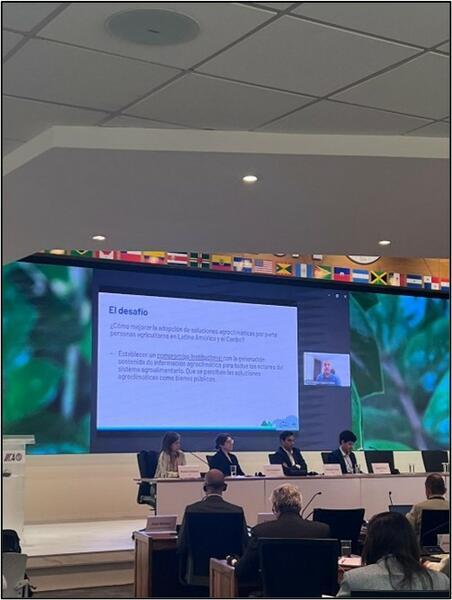
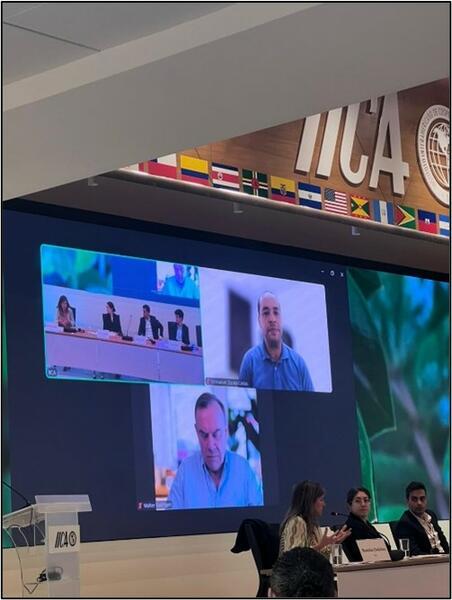
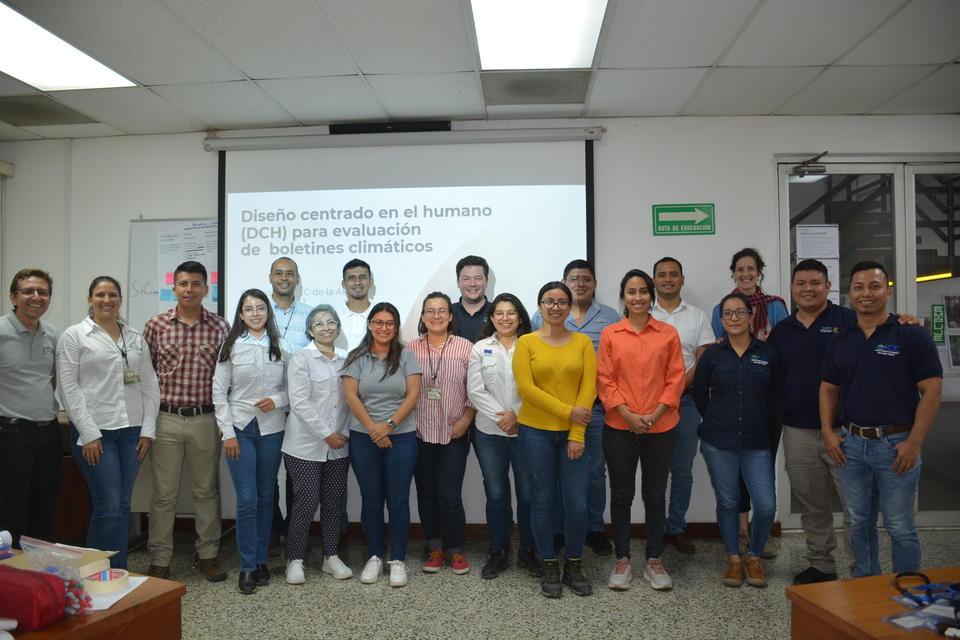
Images from Emmanuel Zapata Caldas’ participation in the panel on digital technologies for the development and distribution of climate services during IICA’s Digital Agriculture Week
HCD, by creating co-constructed knowledge, encourages communities to become custodians of change. What is designed with them is sustained by them, and this is the foundation of sustainability: solutions that outlive projects because they are rooted in everyday life and local capacities.
In addition, the approach contributes an added value to agricultural research by generating social evidence. Each stage of the process, from observation to validation, produces data on perceptions, behaviors, and decision-making, expanding scientific understanding of how people adapt to climate change. This learning, in turn, informs public policies and guides new research agendas, demonstrating that participatory knowledge not only transforms territories but also the way we do science.
This vision gained strong momentum during Digital Agriculture Week 2025 (DAW 2025), organized by IICA in Costa Rica, where the Alliance of Bioversity International and CIAT shared its experiences applying HCD in the development of climate services. During his presentation, Emmanuel Zapata-Caldas highlighted how empathy and collaboration can strengthen digital agriculture: “An innovation that makes no sense to farmers will not be used. That is why we design from their reality, not from the office.”
His participation marked an important milestone by bringing forward a key reflection: digital agriculture will only be transformative if it is also human-centered. Integrating Human-Centered Design into research and innovation is not a trend, but a necessity to ensure digital inclusion, project sustainability, and the effectiveness of agroclimatic tools in Latin America.
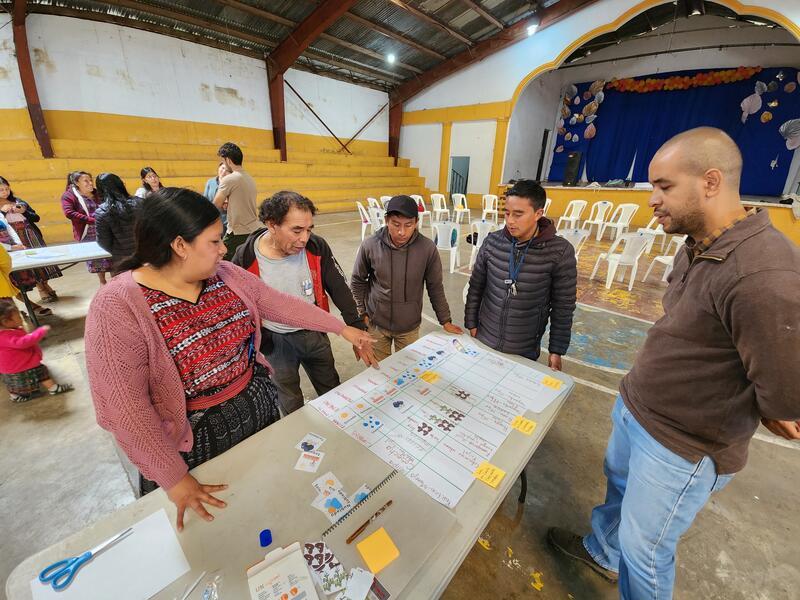
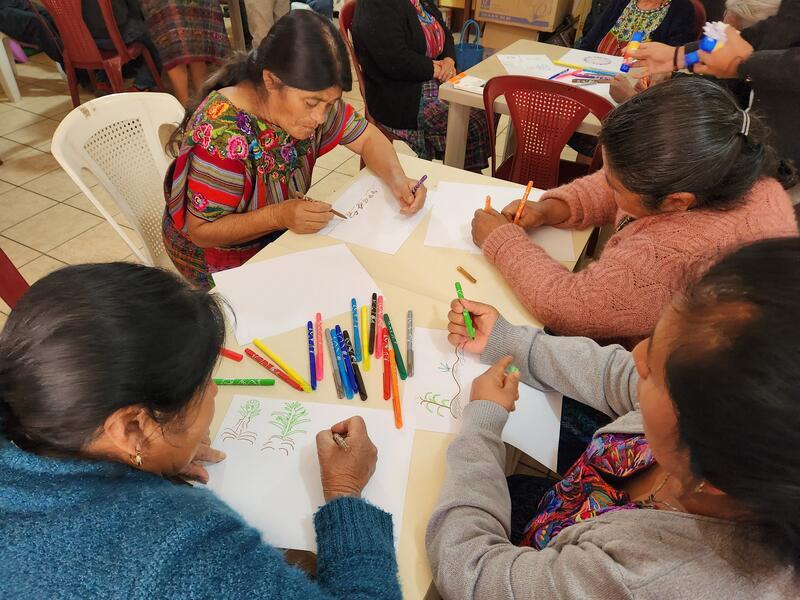
In a world where climate change is redefining the rules of the game, science has the responsibility to listen to and learn from those living on the frontlines of its impacts. HCD offers a pathway to do so: it connects research with territorial realities, translates evidence into action, and builds resilience through collaboration.
Every field experience, such as the one in Guatemala, demonstrates that when science is designed with empathy, its impact multiplies. Climate services stop being simple forecasts and become instruments of Climate Action and rural empowerment. Communities do not merely adapt, they lead transformation processes.
Ultimately, Human-Centered Design reminds us that true innovation for Climate Action emerges from dialogue: from scientists who listen, communities who share their knowledge, and solutions built together with those who face the effects of climate change every day. In rural territories, empathy is not simply a methodological approach, it is the starting point for driving sustainable and resilient transformations.
Faced with climate challenges and the urgent need to transform agrifood systems, technology alone is not enough. Climate Action requires collaboration, active listening, and co-creation processes that connect science with the realities of farming communities. Human-Centered Design enables the development of impactful solutions capable of strengthening resilience, promoting climate adaptation, and generating sustainable and scalable change across territories.