Blog Seeing through their eyes: How Photo Voice amplifies rural perspectives
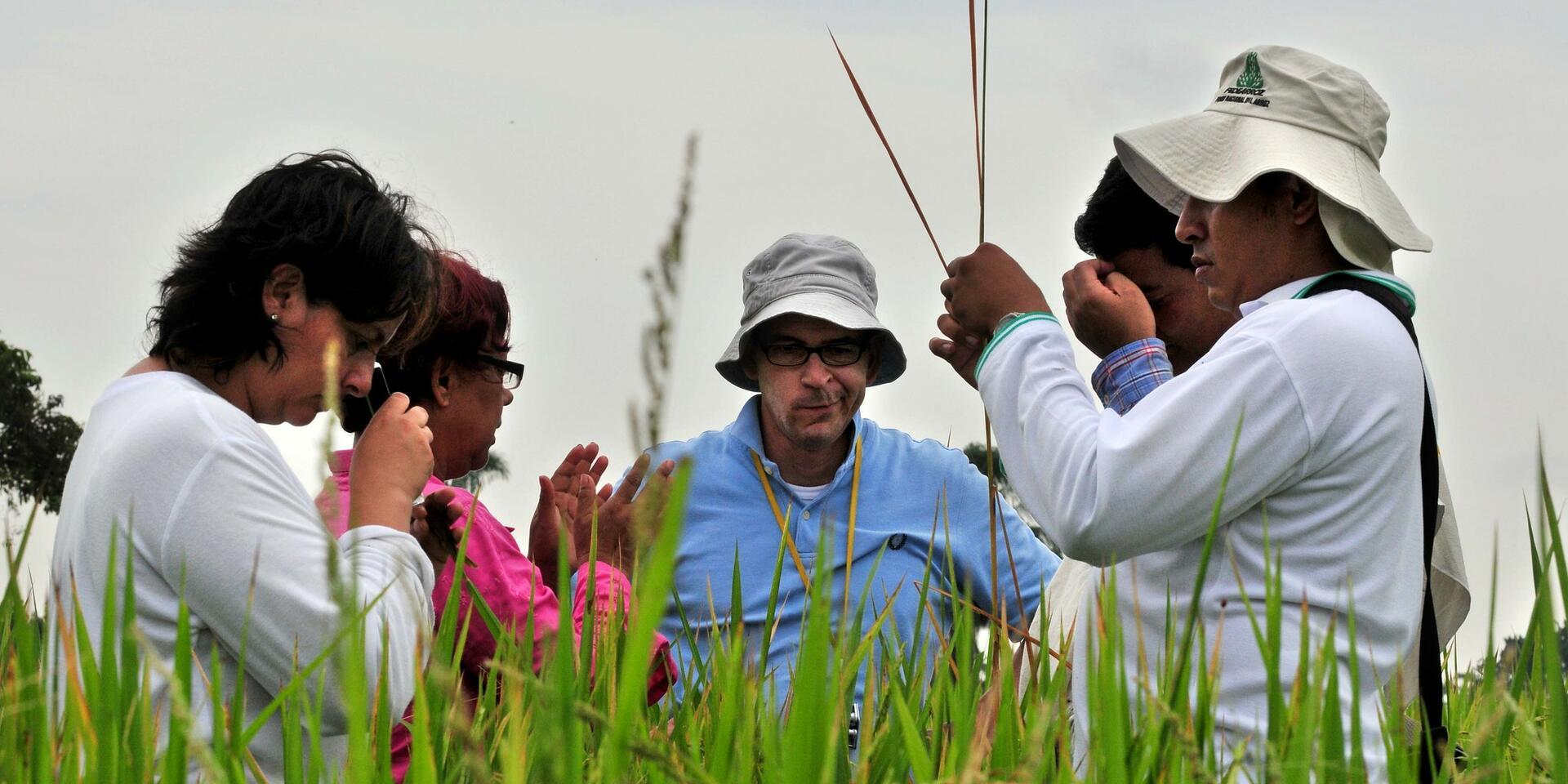

When communities capture their daily lives through a camera lens, new stories emerge: stories of resilience, challenges, hopes and everyday realities often difficult to be represented. This is the power of Photo Voice, a participatory visual methodology that invites people to photograph their world and share what those images mean to them.
More than a research method, Photo Voice is a way to shift perspective: it makes communities not only participants, but storytellers, observers and analysts of their own environments.
In a recent session led by Nicola Espinosa at the Alliance of Bioversity and CIAT, researchers reflected on experiences using Photo Voice in rural contexts, including an initiative with youth in Curimaná, Peru. The results showed how photography can uncover rich, emotional and meaningful insights into agroecology, community dynamics and rural aspirations, directly from the voices of those living it.
Why it matters
In settings where communities may feel unheard or historically silenced, Photo Voice opens a path for expression. By placing the camera in participants’ hands, the method:
- empowers individuals to decide what stories matter,
- brings emotions, values, and personal realities into research, and
- generates visual evidence that can spark change and inform policy.
For researchers working on food systems transformation, Photo Voice offers a unique bridging tool connecting lived rural experience with research objectives and produces data that resonate both analytically and emotionally. It also strengthens trust and engagement, encouraging participants to reflect on their environments and pathways for improving their livelihoods.
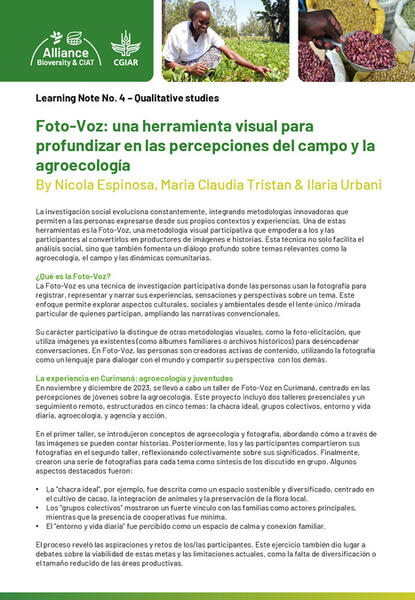
Do's and don’ts in practice
Do’s:
- Provide participants with equipment and basic photography guidance
- Ask participants to explain what their photos communicate instead of assuming meaning
- Plan follow-up workshops and activities, keep engagement active, not just remote
- Recognize and motivate participation (e.g., photo exhibitions, contests, certificates)
- Obtain informed consent for all images used and for the people appearing in them
Don’ts:
- Don't promise anonymity, as photos reveal identity
- Don't share photos without participant approval
- Avoid taking images out of context or interpreting them without participants' input
- Don’t treat photos as data only; they are personal stories and must be handled with care.
Because images carry personal, social, and emotional meaning, Photo Voice requires careful ethical practice ensuring informed consent, protecting identities when needed, and honoring the stories behind each photograph. Respect for participants' voices and agency is central to responsible use of this method.
Lessons from practice
Photo Voice requires commitment from both participants and facilitators. In Curimaná, youth documented themes such as the “ideal farm,” collective work, daily life, and agroecology. Their images revealed values like family unity, connection to land, and aspirations for sustainable farming.
However, the team also learned key lessons: reliable connectivity, ethical preparation and continued engagement are essential. When trust is built and space is created for creativity, Photo Voice opens conversations that would rarely emerge in direct interviews.
As one practitioner reflected: “When people take the camera, they gain agency. They decide what matters and we, as researchers, learn to see through their eyes.”
Mapping stories, inspiring action
Photo Voice shows that images can be as powerful as words in shaping understanding and guiding research. It not only generates nuanced qualitative data but strengthens community voice, builds confidence, and supports more inclusive and grounded decision-making.
By empowering rural youth and farmers to represent their realities, this method becomes more than documentation: it becomes a catalyst for reflection, dialogue, and change.
As the Alliance continues to explore participatory and visual methodologies, Photo Voice stands out as a reminder that sometimes, insightful research begins by simply asking people to show us their world.
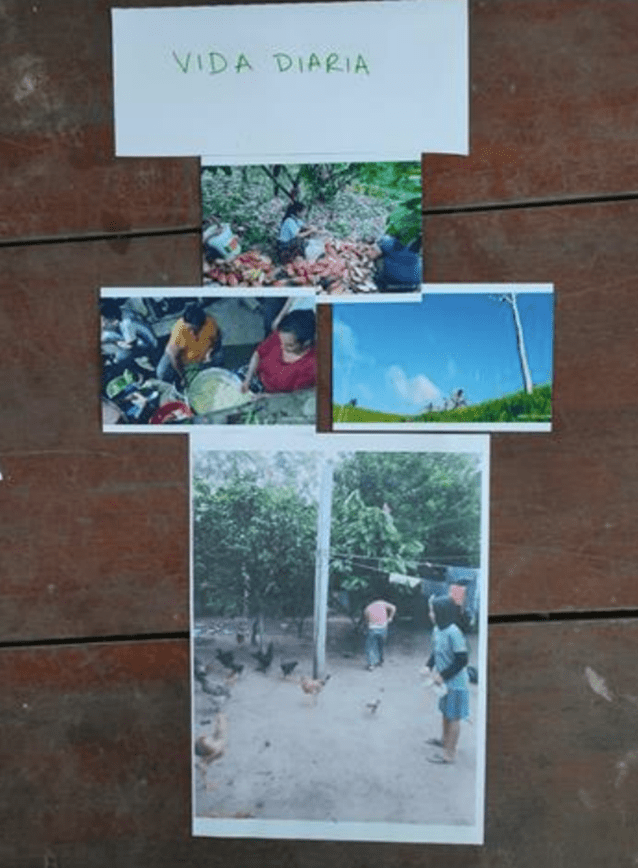
Group series by the young people of Curimaná about their daily life – Nicola Espinosa